Please disregard messages from this profile promoting cryptocurrencies. My twitter account was hacked. I'm working to strenghten the account security. Thanks.
This paper is now featured in the JWRPM Editor's Choice Collection which means it's open for free for the next couple months (if you register on the website)
#SUSEditorialChoice
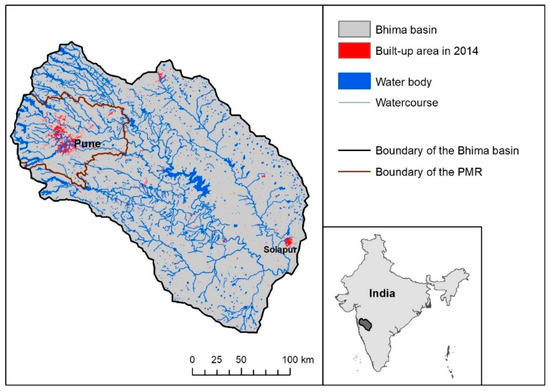
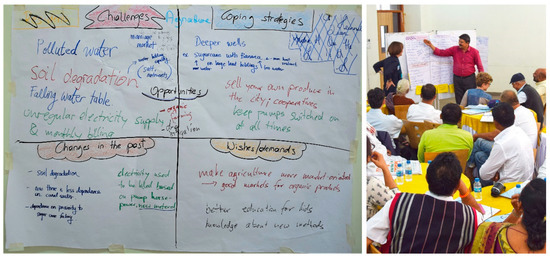
What are key issues of the Food-Water-Energy Nexus in a rapidly urbanizing region in India? We co-created 22 PSIR challenges and translated them into a conceptual systems model to evaluate responses
by Raphael Karutz, et al.,
https://t.co/w6XvsrI2fu
6) It's a work in progress. We certainly don't have all the answers. If we work to center equity, in big ways or small, as a regular, iterative part of our engineering practice, we can advance our field together. What are your suggestions?
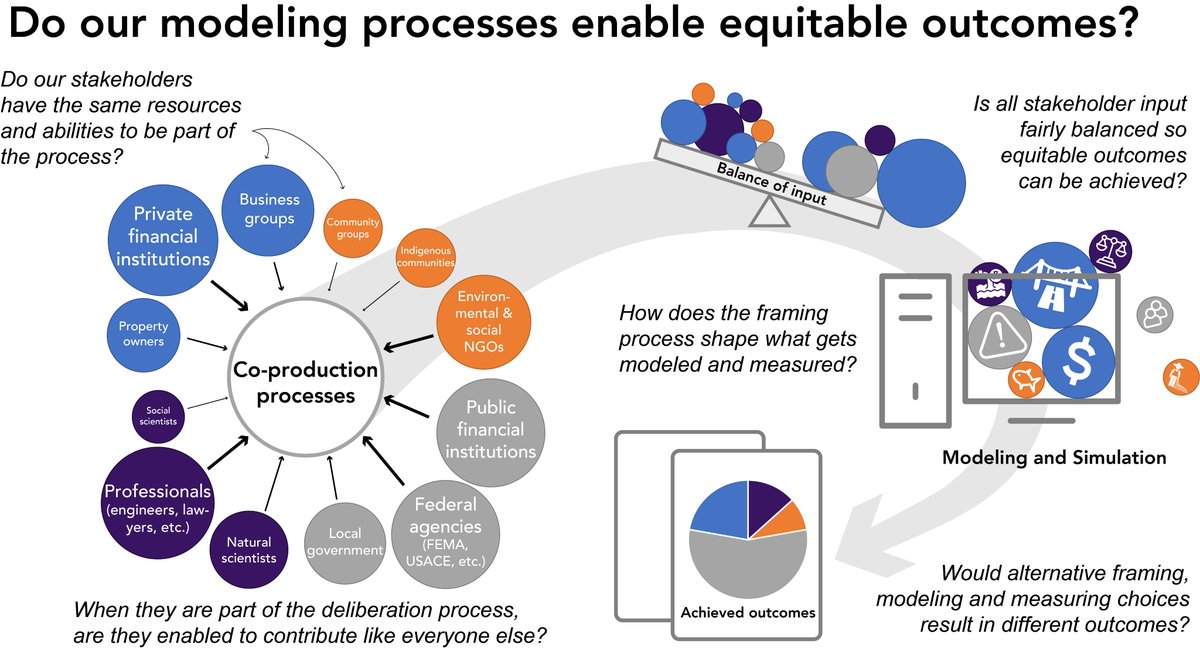
5) Transparency and visualization help. Exploratory modeling approaches that focus on illuminating tradeoffs across a range of indicators rather than prescribing solutions can make your model more accessible and include diverse framings
4) Advance methodological modeling gaps. For example, many models require finer spatial and temporal resolution to assess outcomes for marginalized communities. This can be a great way to contribute without participatory modeling; just be clear that your focus is methodological
3) Design performance metrics with care. Many common measures of inequality in decision-support modeling, like the Gini index, aren't focused on the interests of marginalized communities. Exploring multiple metrics can prevent over-reliance on an imperfect metric
2) As engineers, we should draw on the expertise of social scientists and EJ scholars. We're not experts in defining what equity means, and we don't have to be! Our job is to operationalize concepts of equity in engineering models and solutions. Collaboration can help.
1) Consider the audience your model serves. Participatory modeling with diverse stakeholders can give marginalized communities a voice in decision processes and improve distributional equity through embedding community values in the model design, but must be done with care.
Excited to share our new paper "Equity in Water Resources Planning: A Path Forward for Decision Support Modelers" in JWRPM. We make recommendations for the process and design of decision-support modeling: 🧵1/n https://t.co/eugG3V1fK7
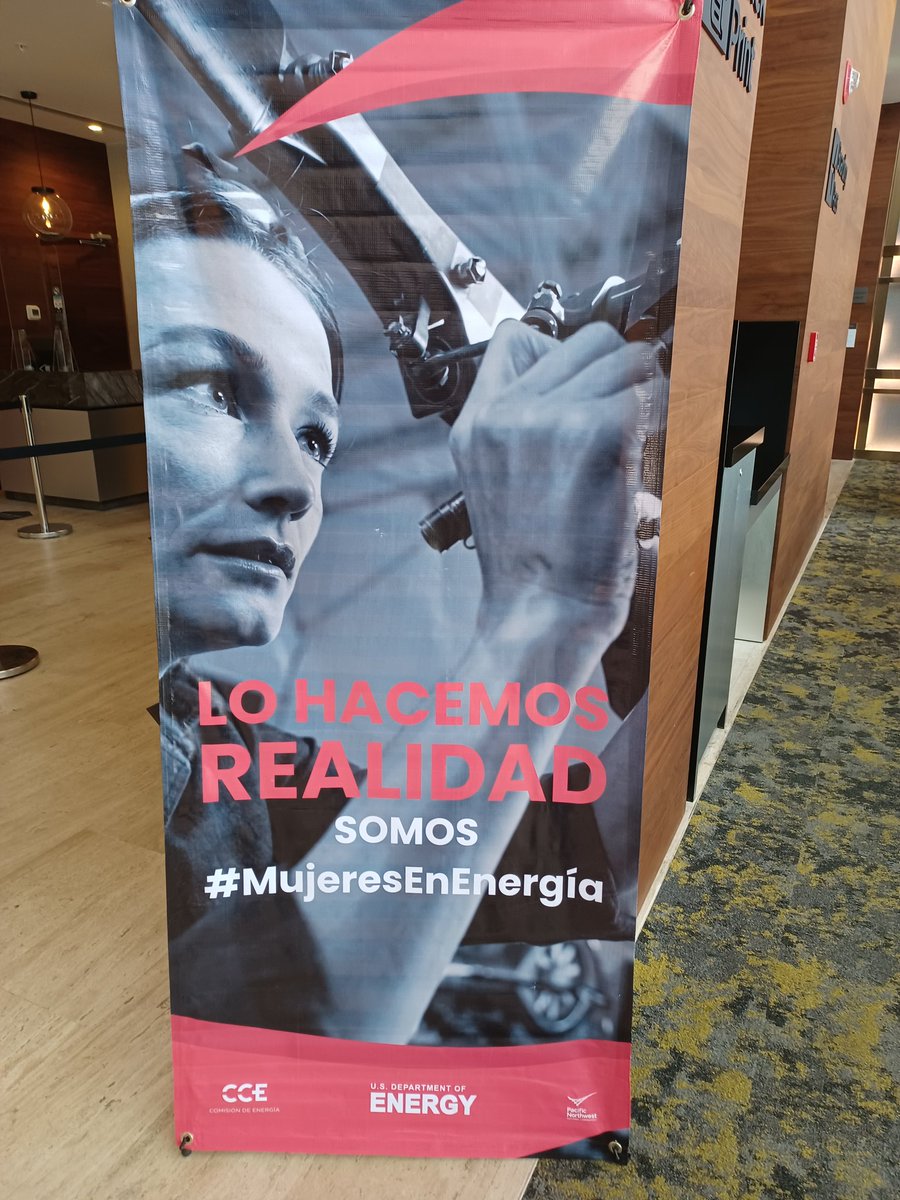
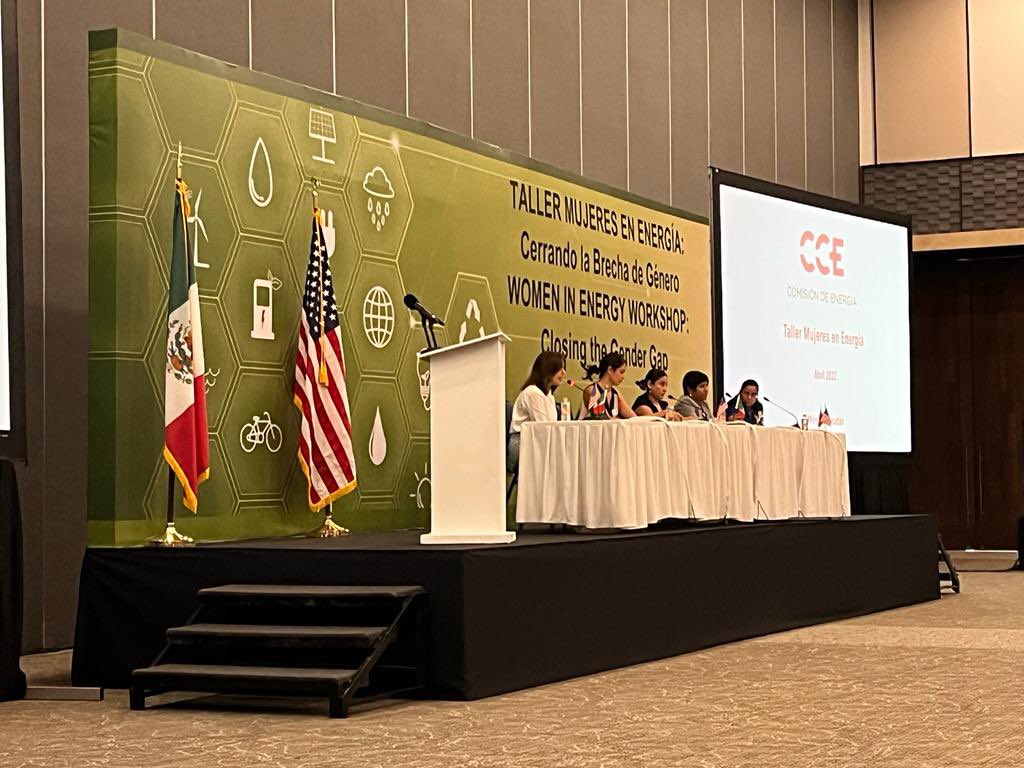
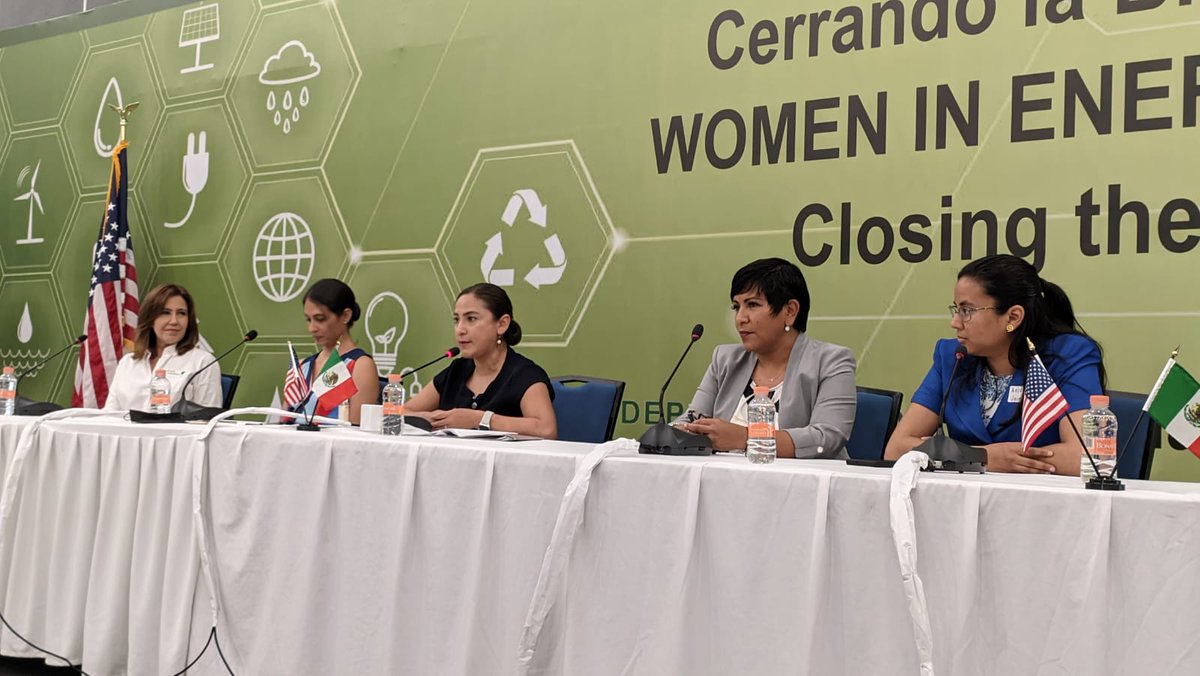
“Si a la gente le preguntas 5 nombres de científicas, sólo te nombrarán a Marie Curie. Debemos generar conciencia de las mujeres que han brindado aportes históricos a la ciencia; voltear al pasado para motivar al futuro”, Dr. Anjuli Jain-Figueroa. #MujeresEnEnergía
"Nosotros implementamos la estrategia de educación #STEM para desarrollar la fuerza laboral del futuro y asegurar el acceso e inclusión a nuestros colaboradores y colaboradoras".- Marisela Linares-Mendoza, @PNNLab. #MujeresEnEnergía
Termina el panel "Programa educativo #STEM e inclusión de género" de "#MujeresEnEnergía. Cerrando la brecha de género". Gracias por acompañarnos, les esperamos en nuestro último taller para dar cierre a esta conversación.
Mañana iniciamos el taller "Mujeres en Energía. Cerrando la brecha de género", que contará con la participación de diversos especialistas en el tema.
¡No te lo pierdas!
📆27/04
🕐9 h
¡Te esperamos! 👉🏽 https://t.co/K73fP1XsYT
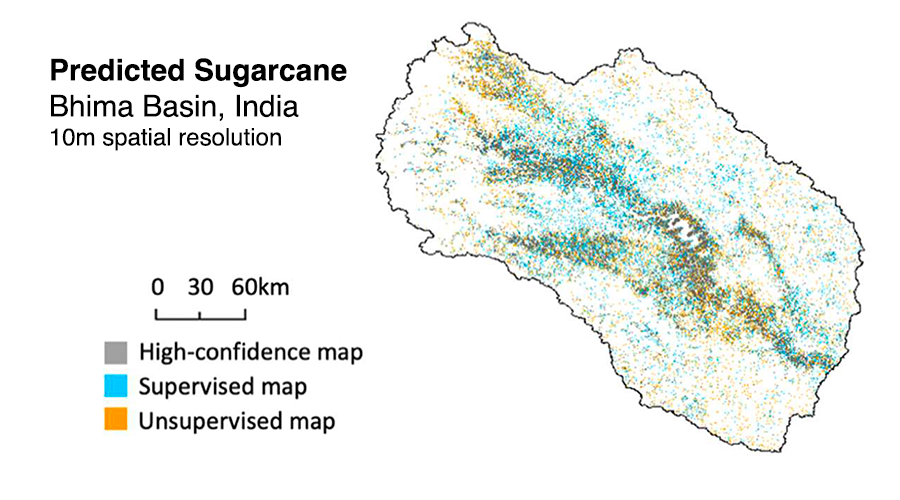
India is the 2nd largest producer of sugarcane globally, and sugarcane maps are needed to understand how cultivation affects freshwater resources and food security. Our paper on mapping sugarcane at 10m resolution, led by Ju Young Lee, is now in Remote Sensing.
A summary 🧵 1/n