Anunciado el proceso de clasificación para formar parte del equipo europeo en la Ryder Cup 2027
Se celebrará en el recorrido de Adare Manor del 17 al 19 de septiembre del próximo año
https://t.co/oQOFW6SU61
Students should interrogate the darker chapters of U.S. history, but these political and moral blemishes often earn more attention than notions of liberty, reform and the quest for a more perfect union, writes @mj_koch.
Read more: https://t.co/9YrerXpzAW
Some of Lionel Messi’s all-time records:
🥇 Most Ballon d’Ors - 8
🥇 Most major trophies - 46
🥇 Most goal contributions - Over 1,320
🥇 Most World Cup goals - 17
🥇 Most La Liga goals - 474
🥇 Most La Liga assists - 192
🥇 Most goals in a calendar year - 91
🥇 Most goals for a single club - 672 (Barcelona)
🥇 Most goals for Argentina - 121
🥇 Most European Golden Shoe awards - 6
And many, many more 🤯
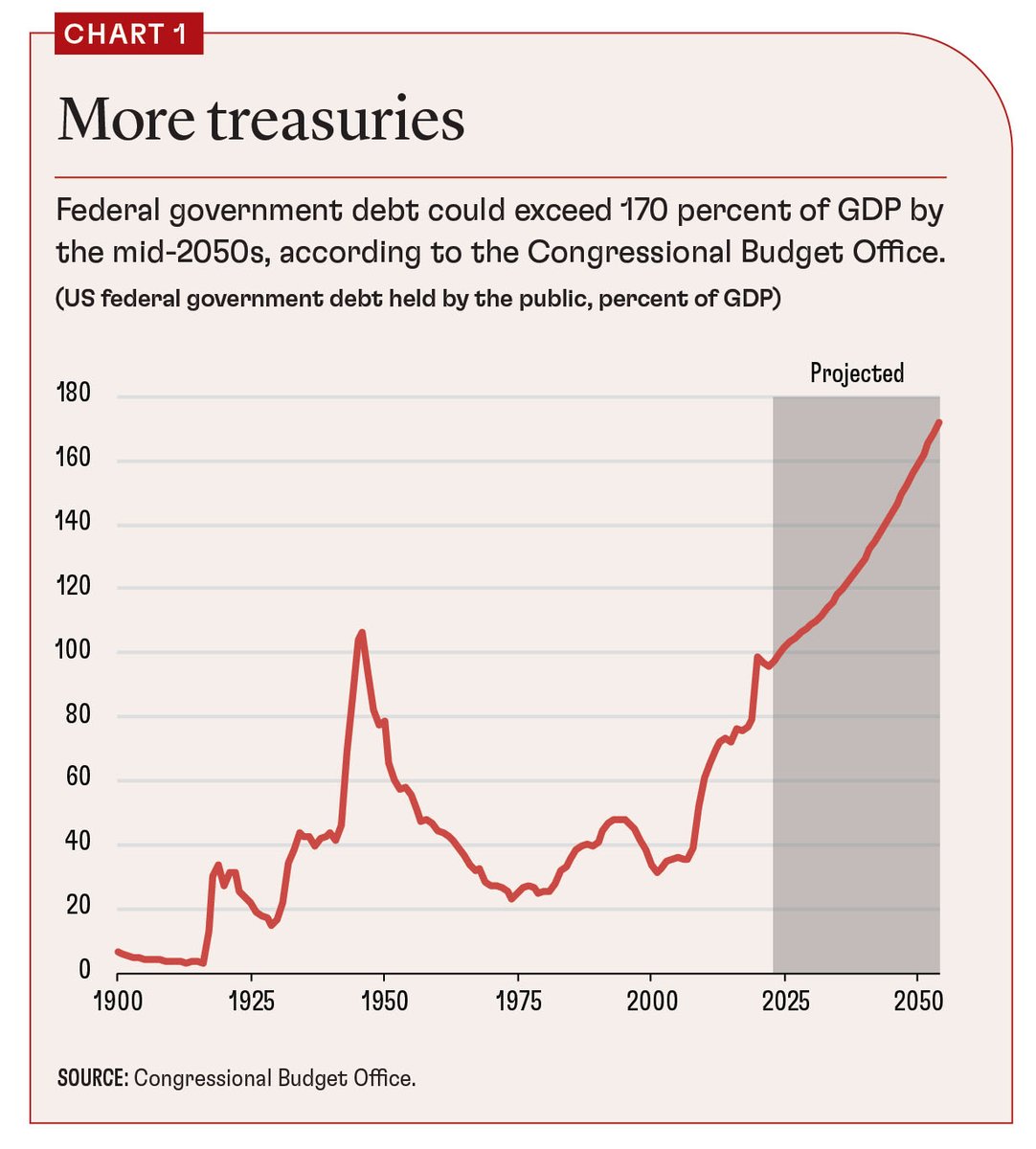
These FT charts capture the core variables in the US "fundamentals" tug-of-war: a large, growing debt burden versus the outlook for higher productivity and growth—essentially, debt obligations vs. the capacity to meet them.
This dynamic is complemented by risk-adjusted valuations (including US debt relative to the rest of the world), technical issues (such as issuance versus available investible funds), and socio-political factors.
Altogether, it forms an equation that is becoming increasingly less sustainable, though it remains unclear just how close it is to a truly unsettling tipping point.
#economy #markets #debt #growth @FT
The US job market needs help:
Since December 2023, the healthcare and social assistance sector has added +1.76 million jobs.
Over the same period, all other private sector industries have collectively lost -127,800 jobs.
Private sector employment, excluding healthcare, has fallen in 14 of the last 25 months.
As a result, private payrolls excluding healthcare have fallen by an average of -12,000 each month over the last year.
The biggest decline was recorded in February, when -110,000 jobs were shed in these sectors.
The job market has never been more reliant on medical services.
Goldman Sachs Research has lowered its US recession probability. Despite the possibility of adverse outcomes from the Iran conflict, US economic activity has remained strong and oil prices have not risen as much as expected. Sign up for our weekly newsletter, Briefings, for more insights: https://t.co/GmNzbMrZyh
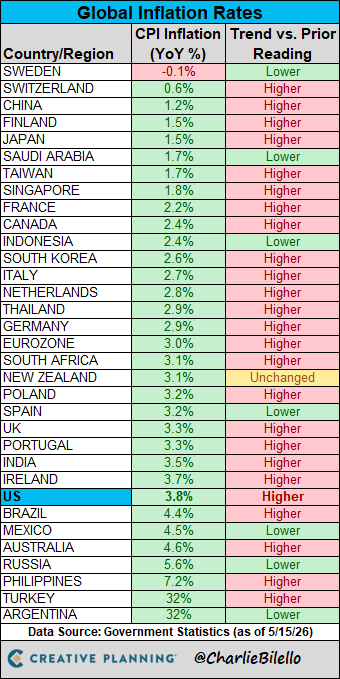
Global Inflation Rates are on the RISE...
Australia and Norway have already started hiking rates to attack higher prices.
The ECB is expected to join them and hike rates in June.
The Fed should do the same. They are once again behind the curve.
"US corporate profits have been growing faster than the domestic economy since the year 2000. The relationship between the two sits at/near record highs:" @DataTrekMB Meanwhile, "American workers’ share of economic activity has been declining rapidly over the same timeframe"
The 6 biggest US banks posted a record $45 billion in trading revenue during Q1, up 17% YoY.
Their stock prices have soared over the past year...
$C: +110%
$GS: +81%
$MS: +78%
$BAC: +46%
$JPM: +34%
$WFC: +27%
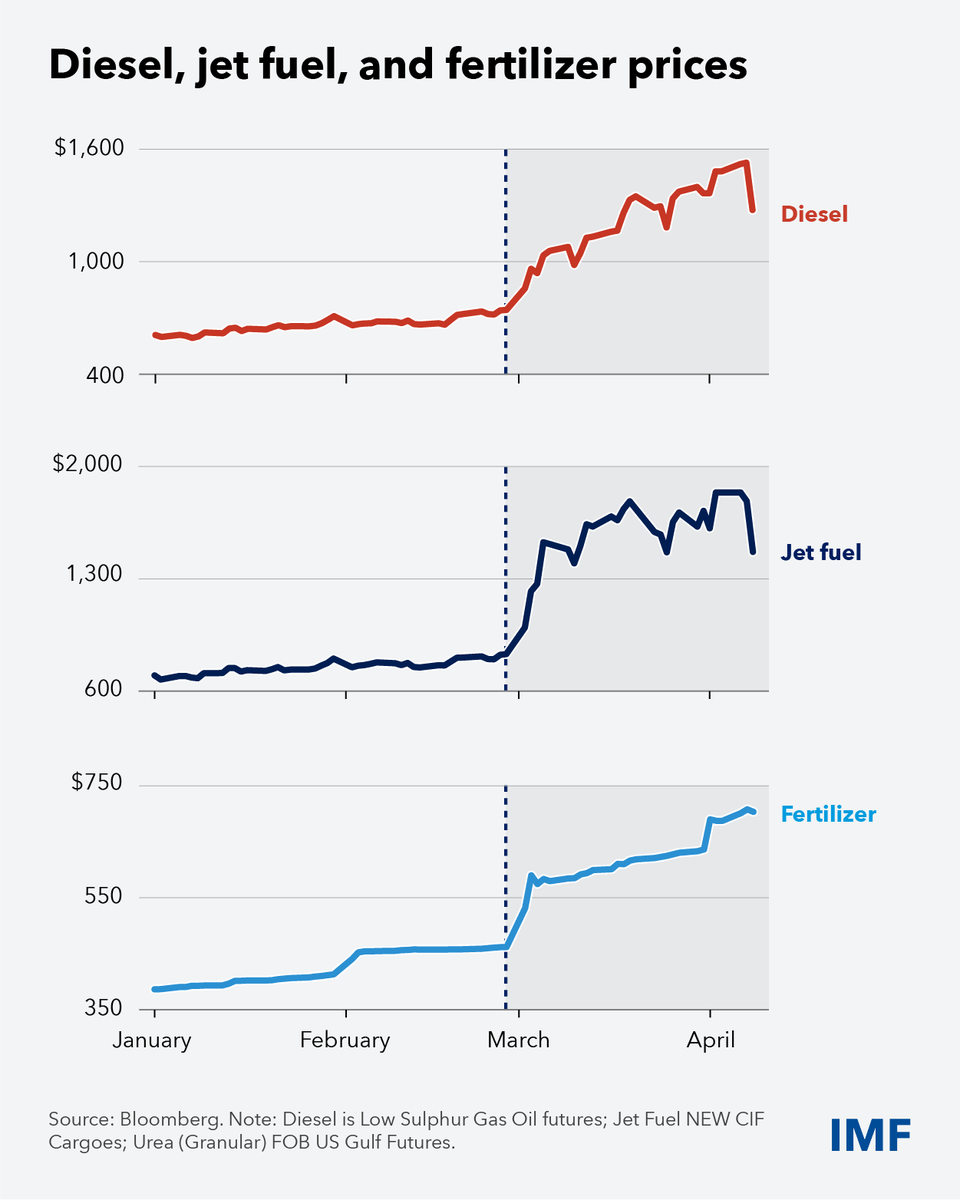
Higher fertilizer prices and supply chain disruptions could push another 45 million people into hunger, resulting in a total number of over 360 million. At the #IMFMeetings Curtain Raiser, I shared how this could get worse over time: https://t.co/fHYzyuzlYD
Oil price moves have become the key driver of equities:
The 10-day correlation between the S&P 500 and WTI Crude Oil futures is down to -0.6, the most negative reading since October.
This means that as oil prices surge, stocks decline, and vice versa.
Historically, this pattern holds during geopolitical conflicts, with stocks negatively correlated with oil in 6 out of last 8 major events.
The longer a conflict lasts and the higher oil prices rise, the deeper the equity drawdown.
The worst S&P 500 drawdowns were -19.3% during the 2011 Libyan Revolution and -15.9% during the 1990 Gulf War.
This comes as oil prices rallied as much as +36% in 2011 and +130% in 1990.
Oil is the single most important asset to watch right now.
When Treasury markets break down, central bank intervention may be unavoidable, but it must be targeted and clearly separated from monetary policy, @ChicagoBooth's Anil Kashyap and @Harvard's Jeremy Stein write in F&D magazine. https://t.co/F3NAvrfU2M
BREAKING: President Trump says “I think the war is very complete, pretty much.”
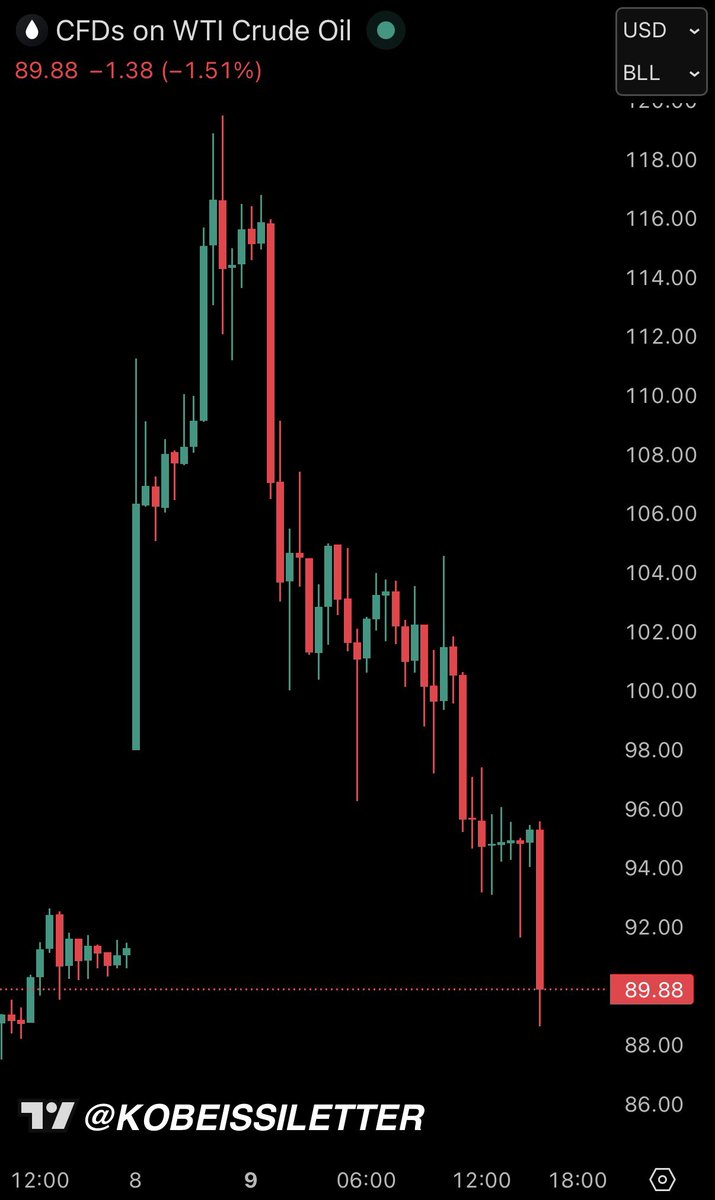
Oil prices officially turn negative on the day, erasing a gain of +30%, in one of the largest daily reversals ever recorded.
WSJ EDITORIAL BOARD: “.. his rant in response to his tariff defeat at the Court was arguably the worst moment of his Presidency.”
@WSJopinion
https://t.co/vuh9Udgf0F
Regarding this Axios chart: Part of the story is demographics, part is wealth and income distribution, and a smaller part is life-cycle dynamics. Together, they raise interesting economic and sociopolitical issues.
@axios#economy
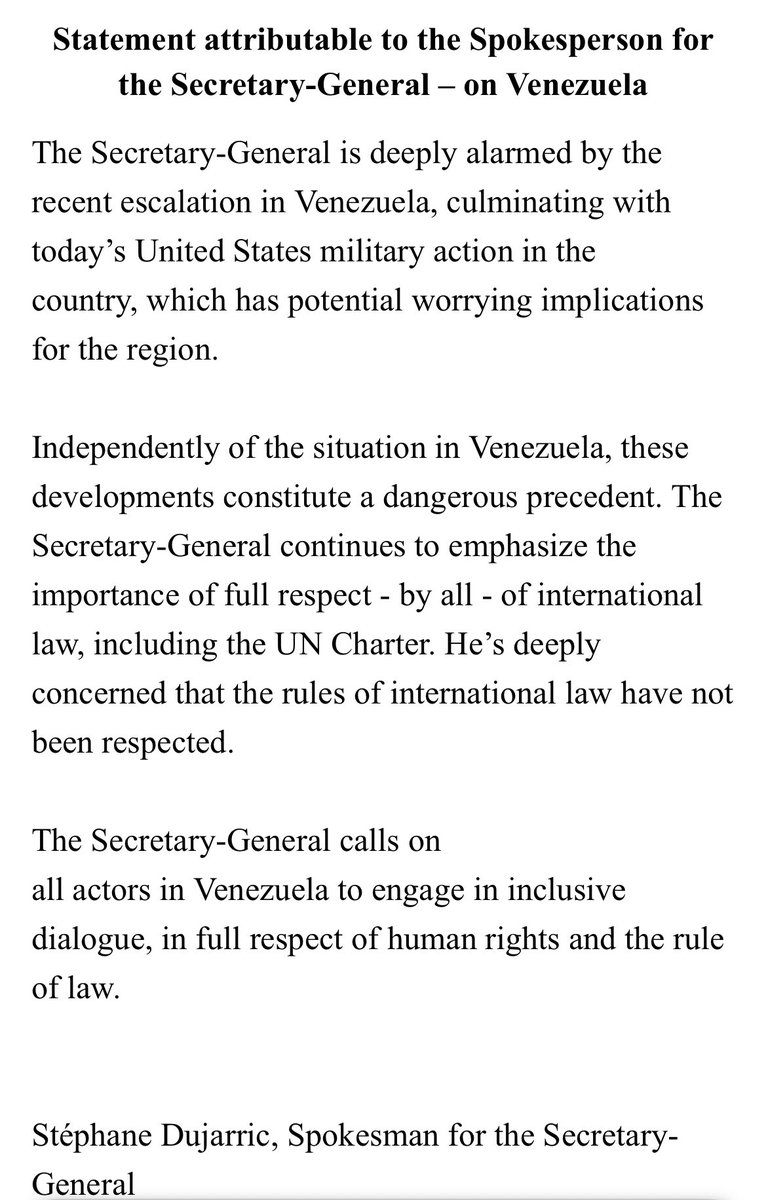
🔴URGENTE. El Secretario General de la ONU considera que la acción militar de Estados Unidos en #Venezuela sienta un "peligroso precedente"
"Le preocupa profundamente que no se hayan respetado las normas del derecho internacional"
@antonioguterres
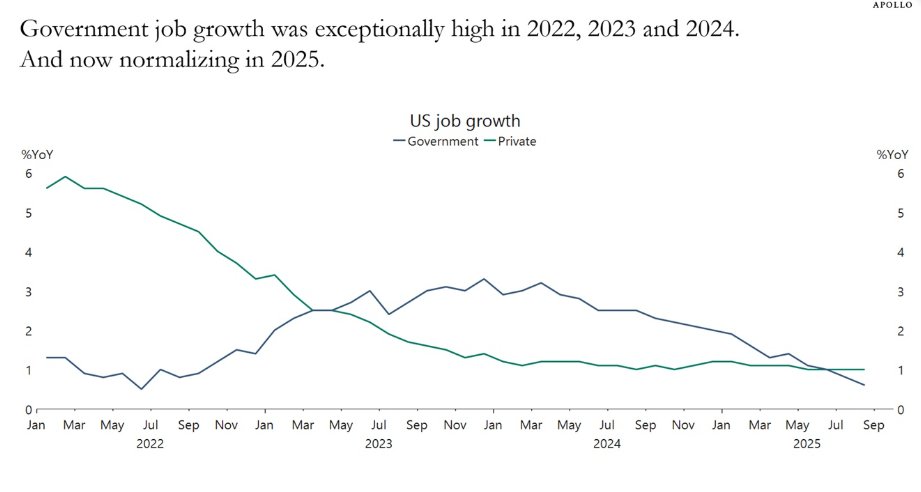
Why is job growth so slow when GDP is so strong, Apollo's Torsten Slok asks. His answer: Lower immigration, AI implementation and fewer government jobs. https://t.co/C74CTdrcPg