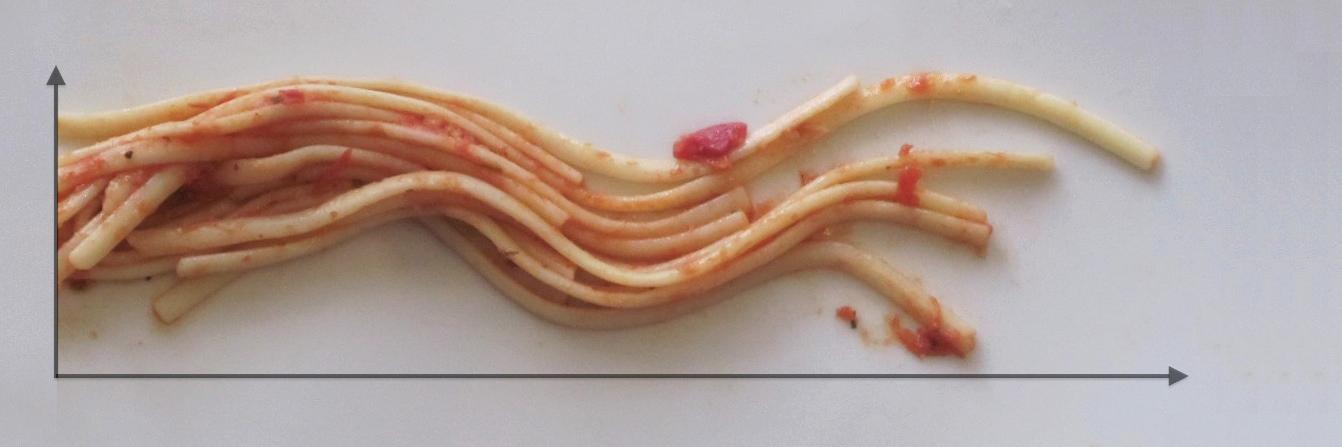
There's a great 5 minute explanation of causal graph discovery here! (min 20:24)
Any DAG can fit the data equally well, so we search for the DAG that leads to fitted models that are (for example) sparse.
https://t.co/BhRAW396Lj
Excited to share my latest paper with @amoafo_linda and Elizabeth Platz; it develops a sensitivity analysis tool for evaluating the influence of unmeasured confounding in observational studies with time-to-event outcomes https://t.co/zJ4lB7qtvE
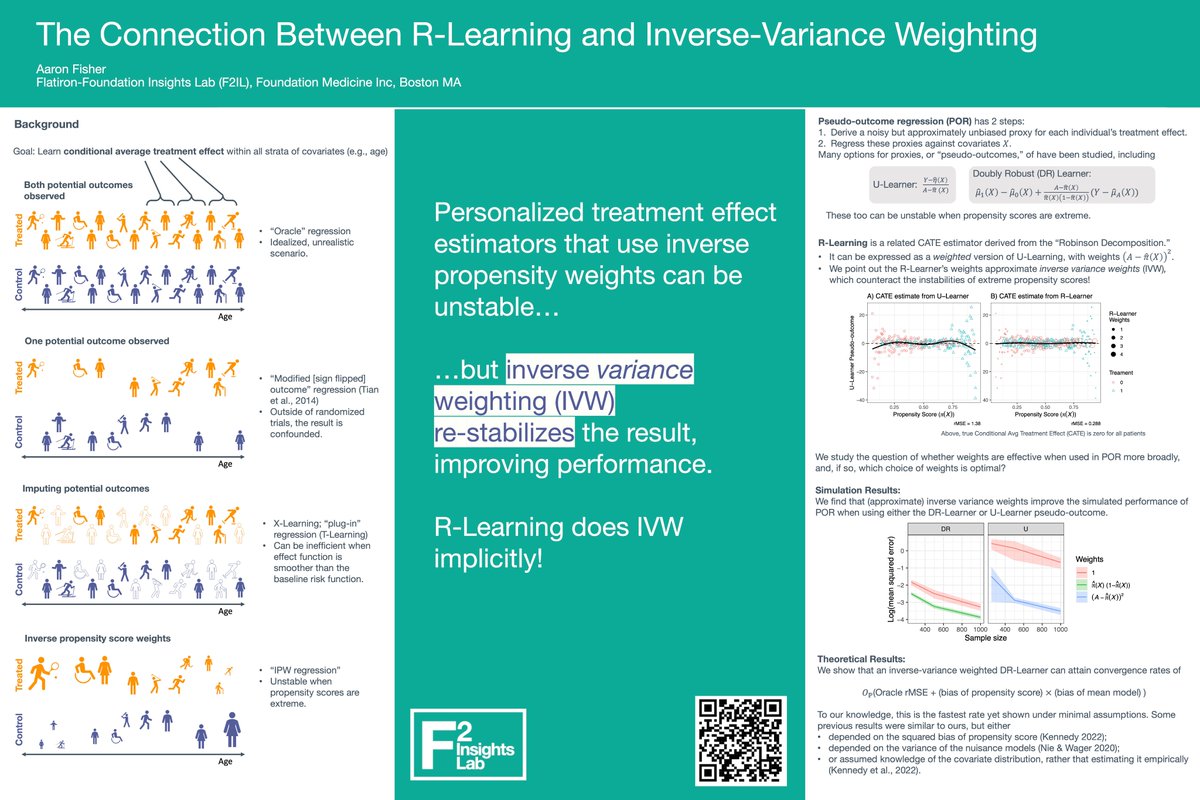
Super excited to present this poster at #ENAR2024!
Inverse propensity score weights can lead to unstable conditional treatment effect estimates 😢
but inverse *variance* weights re-stabilize the estimate without adding bias 🎉
It turns out R-Learning does this implicitly!
We (Blue Rose Research) are hiring again !
Come use statistics to advise progressive organizations as we gear up for the 2024 election.
https://t.co/1f2TIcUkSt
If you're interested in working at the intersection of quantitative and qualitative medical research, I have heard great things about Modus!
https://t.co/6rFQMTEn0h
A few years ago I posted about why we divide by n-1 for the sample variance
In case it's of interest, I just made some minor updates to that post, simplifying the steps involved!
Confused about why we divide by n-1 for the sample variance?
The variance tells us how much people tend to be different from each other. And, for each person in our sample, there are only n-1 people we can compare them to.
More in my blog post: https://t.co/I9FrRhusmK
Kristen @kr_maynard & I are #hiring a Research Associate to work on 📊 funded by R01DA055823 involving 🤩 technologies Multiomics & Spatial Transcriptomics (Visium) by @10xGenomics https://t.co/TRW1xfOfCM
Come join us! Requires undergrad + yrs or Masters
https://t.co/apQIjLzpEn
A thought that's kinda ruining a lot of sci fi for me recently:
If sci fi writers abandoned the epic idea that terraforming new planets would somehow be more promising than fighting climate change, would billionaires spend less energy building space ships?
How to read a paper in your field (thread):
1. Run across the title. Small panic. Isn’t that exactly the same idea you were testing??
2. Read Abstract. Relief. It’s clearly not the same. Or is it? 😱
@timtriche@paperpile Ah, so say there's a paper called "paper X" that's highly relevant to my topic.
By upward & downward, I mean looking through everything paper X cites, and also everything that cites paper X.
I'd say that's the idealized level of thoroughness. Don't always achieve it, but I try