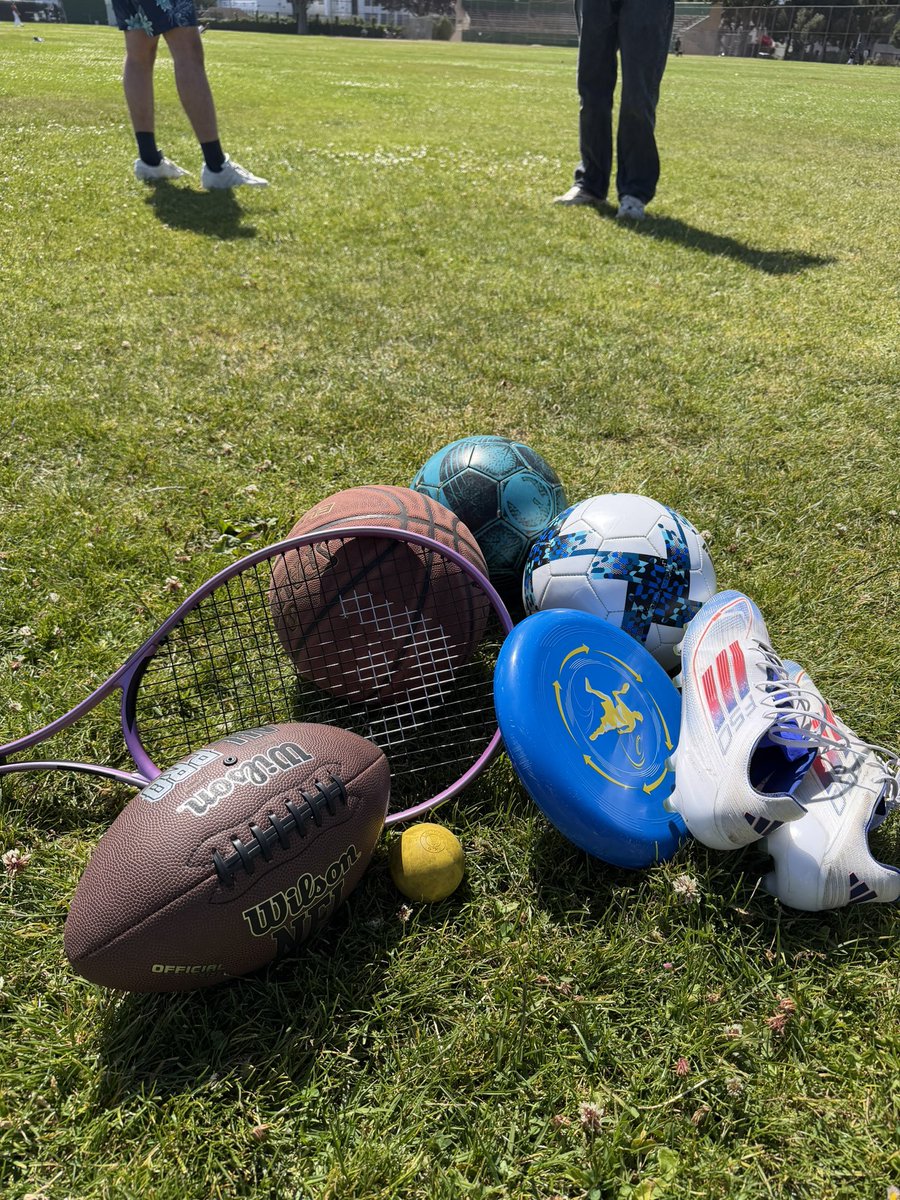
Was great meeting everyone at the @GoogleDeepMind Startup x Research event at their Seoul office after ICML last night. A fun mix of founders and researchers, perhaps the most SF-pilled event so far at ICML??
This is a great point, but endoscopes are a bit more nuanced. They have dynamic zooming, and a lot of times are ~30 degrees forward-oblique telescopes which are rotated during surgery to adjust the FOV. These zooms+rotations change the camera parameters. It's still feasible to calibrate, but requires more hassle and is less accurate than the traditional distortion correction cases!
@nliulab Hi Prof. Liu, would love to chat about broad problems in AI and healthcare particularly around deskilling and surgery. Send me a DM let’s grab coffee!
We evaluated on surgical scenes captured via an endoscope. There’s fisheye distortion, diffuse fluid medium with bubbles and all kinds of blur, slightly deformable objects, everything’s really cramped/confined, and baselines are super narrow (since everythings really cramped haha). Definitely kind of a niche scenario but I think it’s the epitome of “ugly” in-the-wild data
actuator materials research matters quality-wise too! thermal fluctuations cause microscopic expansion/contraction, repeated vibrations also add mechanical stress, etc which all lead to drift in IMUs. this means egocentric robots often need to be continually re-grounded using external references which is a huge bottleneck
@ztqakita Pretty interested in this + the FAIR poster on "latent action world models in the wild", reusability between observations (and trajectories) seems to be an promising area of expansion. Let's meet up during ICML to chat, send me a DM!
@tmlabonte Super cool. Brings to mind one of my fav learning analysis papers (that I also messed around with for a personal project), Zhou et al. (2021)(https://t.co/OBxa1Ujdow). Maybe can view these phase transitions from their formulation of SGD as a Lévy SDE + basin-shape preferences
Stoked to be at #ICML2026 🇰🇷 next week! We'll be presenting our latest work on conversational multimodal emotion regime detection (and augmentation) at the Efficient Multimodal QA (EMM-QA) workshop on the 11th. Feel free to stop by and/or DM if you want to chat about multimodal AI, human-AI interaction, world models, applied AI research in the industry, or anything really!
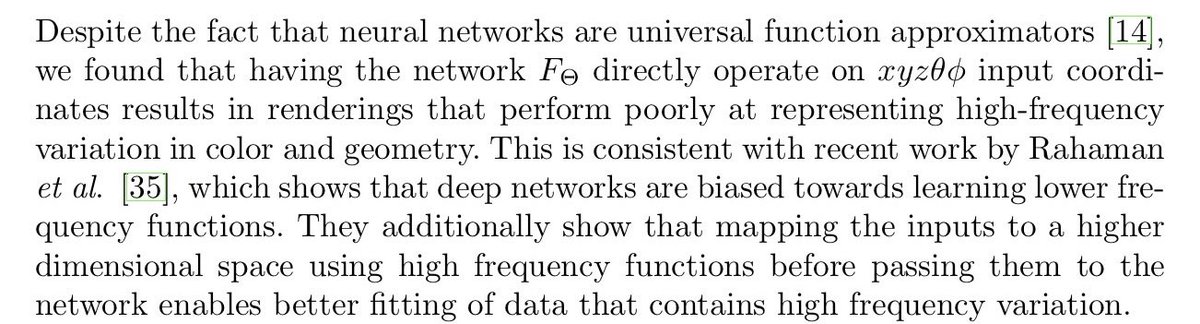
Revisiting the NeRF paper and noting this little spectral bias gem, wonder if we can add a frequency-aware noise schedule in diffusion forcing for autoregressive video gen. Just start w/ low-freq components then increase cutoff to add in less salient high-freq variation later in training