@Bitcoin_Teddy The code will change to be a natural structured language.
The .MD files (skills) demostrarte this.
We are moving from abstract paradigm to match the computers language, to a natural paradigm to adapt our normal way of comunícate, but with a more structured and lean method.
@avianca estamos cansados de sus prácticas y desplantes... Cancelaciones y reprogramaciones que afectan a los usuarios sin claridades. @AerocivilCol ¿Cuales serán las medidas?. @NoticiasUno ayuda! Que esto sea conocido
@avianca como es posible que después de tantas quiebras y salvadas del estado... Este. Nuevamente en una crisis tan grande que hasta tienen que revender vuelos afectando a cientos de personas... El colmo,Una cancelación/retaso de 1 día con 3h de aviso anticipado.
despite being an Angular developer for several years, this year I decided to try with React for a serious project to see what all the hype is about. so I worked hard with React for 5 months straight, had ups and downs and in the end it became clear that Angular is better by an order of magnitude. then I had to rewrite everything for Angular 😅
Imaginando un mundo donde Norman mantuvo el título de "La psicología de los objetos cotidianos" en vez de "El Diseño..." y así el Pensamiento Centrado en las Personas no habría sido secuestrado por artistas visuales que creen que UX es agregar espacio en blanco a un landing page
𝗛𝗼𝘄 𝘁𝗼 𝗧𝗲𝘀𝘁 𝗬𝗼𝘂𝗿 𝗦𝗼𝗳𝘁𝘄𝗮𝗿𝗲 𝗔𝗿𝗰𝗵𝗶𝘁𝗲𝗰𝘁𝘂𝗿𝗲𝘀?
A standard problem development organizations face is that code implementations often need to be more consistent with the original design and architecture. The problem is common enough, especially on large projects.
Software architecture is essential for codebases' comprehensibility, changeability, and adherence to software quality goals. When it comes to the codebase, three significant software architecture goals are 𝗺𝗮𝗶𝗻𝘁𝗮𝗶𝗻𝗮𝗯𝗶𝗹𝗶𝘁𝘆, 𝗿𝗲𝗽𝗹𝗮𝗰𝗲𝗮𝗯𝗶𝗹𝗶𝘁𝘆, 𝗮𝗻𝗱 𝗲𝘅𝘁𝗲𝗻𝘀𝗶𝗯𝗶𝗹𝗶𝘁𝘆.
To keep a software system in good shape, you need to ensure that it is modular and that interdependencies are as small and correct as possible, leading to 𝗵𝗶𝗴𝗵 𝗰𝗼𝗵𝗲𝘀𝗶𝗼𝗻 𝗮𝗻𝗱 𝗹𝗼𝗼𝘀𝗲 𝗰𝗼𝘂𝗽𝗹𝗶𝗻𝗴. These goals can be met by introducing specific patterns and code conventions that are documented and communicated by and to the entire development team that has agreed to them.
We can use 𝗙𝗶𝘁𝗻𝗲𝘀𝘀 𝗳𝘂𝗻𝗰𝘁𝗶𝗼𝗻𝘀 to ensure that our architectural goals are met. They are promoted by Neal Ford, Rebecca Parsons, and Patrick Kua in the book "Building Evolutionary Architectures," With fitness functions, we can write tests that measure a system's alignment with architectural goals (attributes such as security, resilience, or stability) in a similar fashion to TDD. Such functions should be drafted in a testing framework and included in appropriate CI/CD pipelines.
𝗢𝗻𝗲 𝗲𝘅𝗮𝗺𝗽𝗹𝗲 𝗼𝗳 𝘀𝘂𝗰𝗵 𝗮 𝗳𝘂𝗻𝗰𝘁𝗶𝗼𝗻 would be in the context of a web application, where one of our architectural goals is that our app should respond to user requests within 200ms (check the image below). Here, we measure the response time for an API endpoint. If we want to automate it, we can put this function into your CI/CD pipeline to run automatically whenever new code is pushed.
Also, some tools can test that a code implementation is consistent with the defined architecture. 𝗔𝗿𝗰𝗵𝗨𝗻𝗶𝘁 is a small, simple, extensible, open-source Java testing library for verifying predefined application architecture characteristics and architectural constraints. At the same time, 𝗡𝗲𝘁𝗔𝗿𝗰𝗵𝗧𝗲𝘀𝘁 is a fluent API for .NET Standard that can enforce architectural rules in unit tests.
Check the links in the comments.
_______
If you like my posts, please follow me, @milan_milanovic, and hit the 🔔 on my profile to get a notification for all my new posts.
Grow with me 🚀!
#technology #softwareengineering #softwaredesign #techworldwithmilan #softwarearchitecture
In this week's episode:
- @Enea_Jahollari on ISR (powered by rx-angular @PushBased): https://t.co/ZmfMHyfo0n
And new minor releases such as
- @Cypress_io 13.2: https://t.co/MZ08j7us2V
- @playwrightweb 1.38: https://t.co/2F6lEactl3
Enjoy!
#Angular
Beginners make simple designs because their skills are still basic.
Masters make their designs simple because the best solutions are usually simple.
Only people between those stages think complexity is a sign of sophistication.
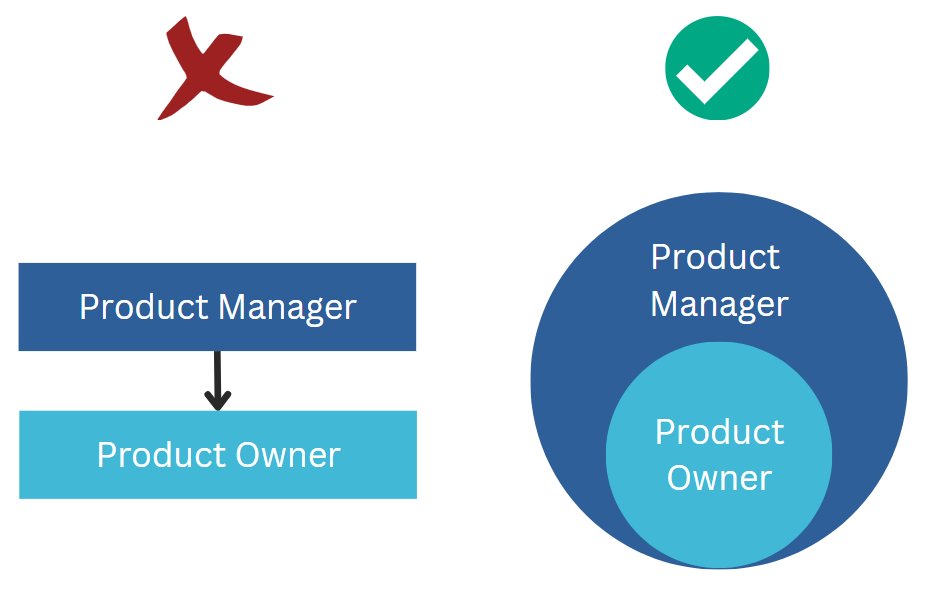
That's crazy. It turns out that in some organizations, Product Owner and Product Manager are different job titles 😮
In this setup, the Product Manager typically talks to the business and customers, and the Product Owner (“backlog administrator”) works closely with developers, collecting and documenting “the requirements.”
I consider this one of the worst anti-patterns in Product Management.
A typical argument is that combining two roles is "too much work for a single person."
That might happen if you spend days attending useless meetings or writing detailed instructions. But if you empower others, prioritize work, and focus on value without BS, things go smoothly.
I agree with @cagan, who wrote that to succeed as a Product Manager, you need:
- Direct access to Users and Customers
- Direct access to Business Stakeholders
- Direct access to Engineers and Designer
Without proxies. Product Owner included.
The only valid setup is that the Product Manager and Product Owner are a single person with the end-to-end responsibility.
In particular, it’s essential that the Product Manager, Product Designer, and at least one Engineer conduct Product Discovery together.
Finally, if you work in Scrum, as PSPO III, I’d like to emphasize that the Product Owner is just an accountability. The Product Owner’s accountability is best fulfilled by an experienced Product Manager.
Do you agree? Disagree?
Let me know in the comments.
-
More information:
- PM vs. PO according to Marty Cagan: https://t.co/uoRz7zOK2U
- Product Trio YouTube video (6:56 to 8:21): https://t.co/NpTxZobqRZ
---
P.S. If you liked this post, consider joining a community of 33,000+. Get 1 actionable tip for PMs every Saturday: https://t.co/FavdxsEBr7
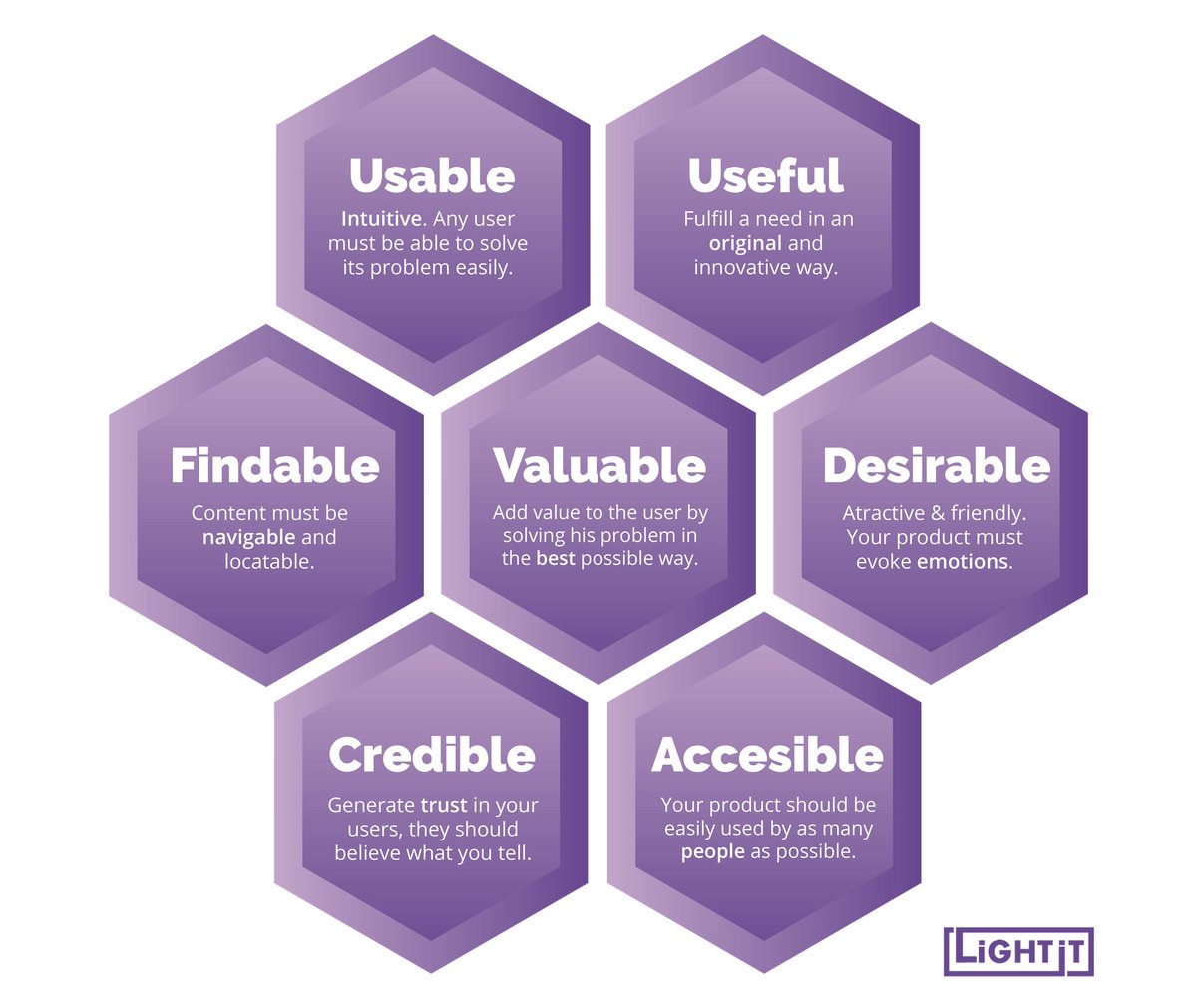
Peter Morville’s User Experience Honeycomb is a classic UX diagram outlining the seven essential aspects of UX for a PM.
This framework can be a valuable tool to help you think through the product experience with your team.
Here's a breakdown of each facet of the honeycomb👇