HOW DO YOU FIX A PERSON’S BEHAVIOR?
You don’t begin with behavior.
You begin with the heart.
This is where the Gospel differs from every self-improvement program in the world.
The world focuses on changing actions.
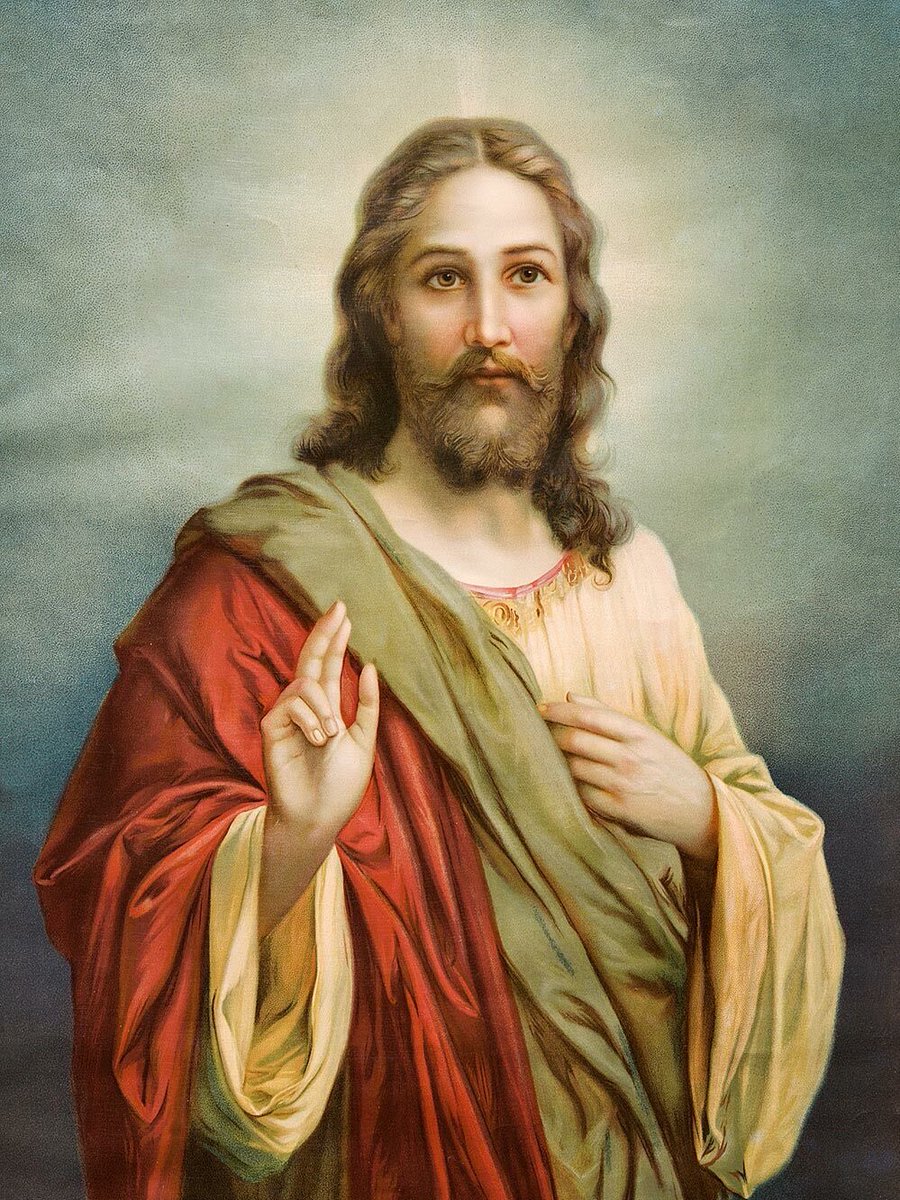
Jesus Christ transforms the person.
You can threaten someone with punishment.
You can reward good behavior.
You can teach discipline.
You can even change someone’s habits.
But unless the heart is converted, the change will rarely last.
That is why Jesus said:
“For from within, out of the heart of man, come evil thoughts, sexual immorality, theft, murder, adultery…” (Mark 7:21)
Sin is not merely a problem of actions.
It is a problem of the heart.
The Catholic Church has always understood this.
She does not simply tell us to “try harder.”
She gives us the ordinary means by which Christ transforms us:
✝️ Confession restores us when we have fallen.
✝️ The Holy Eucharist unites us with Christ, who strengthens us to live a holy life.
✝️ Daily prayer opens our hearts to God’s grace.
✝️ Sacred Scripture renews our minds with the truth.
✝️ Fasting disciplines our passions.
✝️ Works of mercy teach us to love as Christ loves.
This is why the saints changed the world.
They did not begin by demanding that everyone behave better.
They first allowed Jesus Christ to transform their own hearts.
St. Augustine was not saved by human wisdom alone.
St. Mary Magdalene was not restored by public shame.
St. Peter was not defined forever by his denial.
Each encountered the mercy of Christ, repented, and was transformed by His grace.
If you want to help someone change, remember this:
You cannot force conversion.
You cannot argue someone into holiness.
You cannot shame someone into sanctity.
But you can pray for them.
You can speak the truth with charity.
You can forgive.
You can be an example of the Gospel.
And you can invite them to encounter Jesus Christ in the sacraments, where His grace heals what human effort alone cannot.
The greatest transformation in history was not a change in behavior.
It was a change of heart.
Saul became Paul.
A fisherman became the Rock.
A thief entered Paradise.
Not because they discovered a better philosophy.
Because they encountered the living Christ.
The goal of Christianity is not merely to create well-behaved people.
It is to make saints.
When Christ changes the heart, the behavior follows.
🙏 Don’t ask God merely to improve your habits. Ask Him to give you a new heart, and let your life become a witness to His grace.
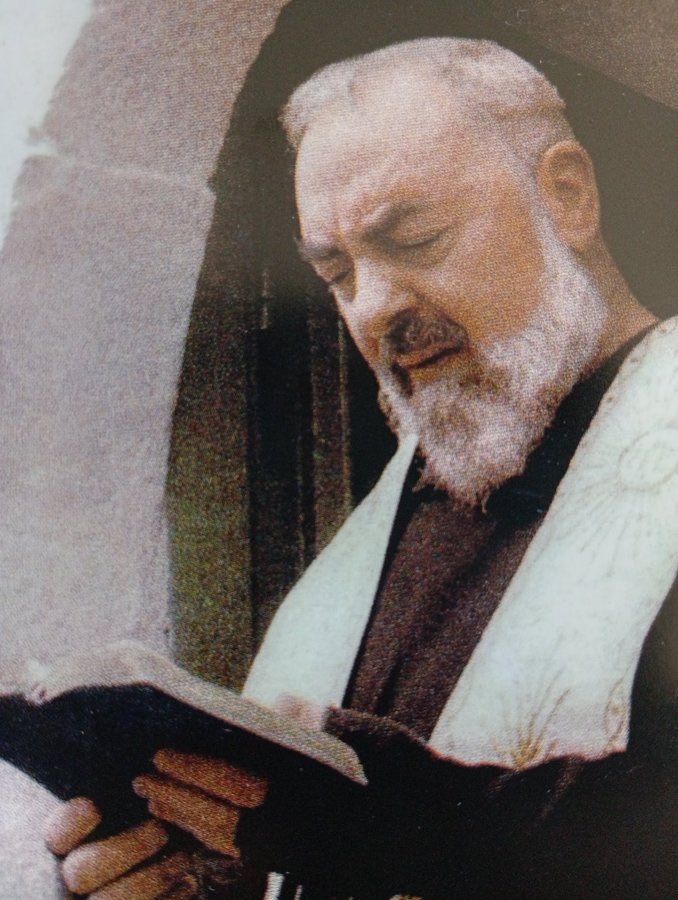
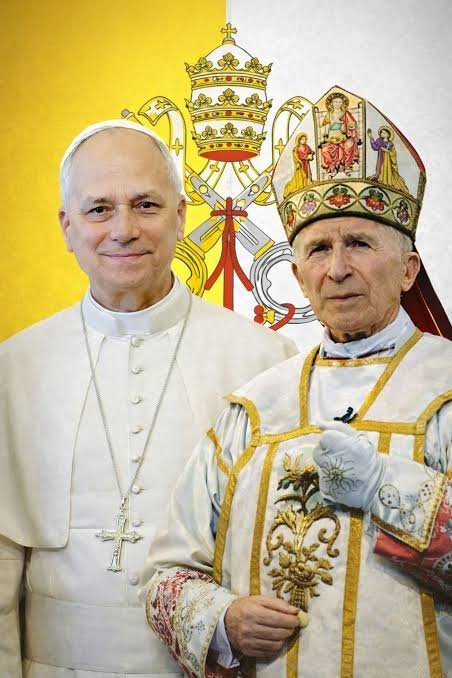
Many SSPX and other Tridentine Catholics love Saint Padre Pio. But what if I told you that Padre Pio remained obedient to the Pope after the Second Vatican Council?
On September 12, 1968, Saint Padre Pio wrote this letter to Pope Paul VI:
"...I know that your heart is suffering much these days... because of the lack of obedience of some, even Catholics, to the high teaching that you, assisted by the Holy Spirit and in the name of God, are giving us.»
I offer you my prayers and daily sufferings as a small but sincere contribution... that God may give you comfort with His grace to follow the straight and painful way in the defense of eternal truth, which never changes with the passing of the years.
Also, in the name of my spiritual children and the Prayer Groups, I thank you for your clear and decisive words, especially those contained in the encyclical Humanae Vitae; and I reaffirm my faith and my unconditional obedience to your illuminated directions."
Just 11 days later, on September 23, 1968, Saint Padre Pio died.
The last gesture we knew about Padre Pio was not one of rejecting the Pope or breaking communion with the Church. It was a witness of prayer, fidelity, and unconditional obedience to the Successor of Peter.
Make of that what you will.
In 1979, not long before he died, Archbishop Fulton Sheen gave his final interview to Marie Torre of WABC. The 5 most important things he said in the interview were....
1. Modern erotic culture is a failure of purpose, not merely a failure of rules.
2. The family depends on sacrificial love, not mutual self-satisfaction.
3. The human heart wants life, truth, and love in an absolute form; this desire points to God.
4. The Church cannot become credible by copying the world.
5. Children require moral formation, not permissive abandonment disguised as freedom.
When he gave this interview, no one knew it would be his. Let us never forget his wisdom.
Leaving Vietnam as a refugee 51 years ago and returning today as the Acting Secretary of the Navy is a powerful, full-circle reminder of what is possible when blessed with freedom and opportunity.
Our productive visit strengthened US-Vietnam relations and our naval partnership.
Progress often starts simply: two Sailors sitting down, sharing a common bond, and working together to achieve mutual goals. What we accomplished extends beyond the pier—strengthening the trust to keep sea lanes open, defend freedom of navigation, and preserve peace through strength across the Pacific.
Thanks @POTUS, @SecRubio, and @SecWar for your leadership and commitment to ensuring our @USNavy and @USMC have what they need to maintain maritime dominance.
In Tokyo, it is ordinary to see a seven-year-old board a train alone with a yellow safety cap and a perfectly folded permission form in a backpack.
Japan's school commute culture runs on trust layered over systems.
Many elementary students walk or take public transit without a parent — in surveys across major cities, the vast majority of first graders already go to school on their own or with classmates, not because parents are careless, but because neighborhoods, schools, and communities designed for it over decades.
Station staff know the regular faces.
Drivers watch the platform.
Older students quietly guide younger ones to the right car.
A child in a yellow hat stands on tiptoe to tap his IC card, serious and proud.
A shopkeeper near the school gate watches until the last straggler passes, then nods.
An American parent visiting Japan sees this for the first time and feels something complicated — then watches a local grandmother bow to the child, and understands it is village-scale care, not abandonment.
Safety built from habit, signage, and a whole town paying attention.
Some independence is not loneliness.
It is a community holding the edges so a child can walk the middle.