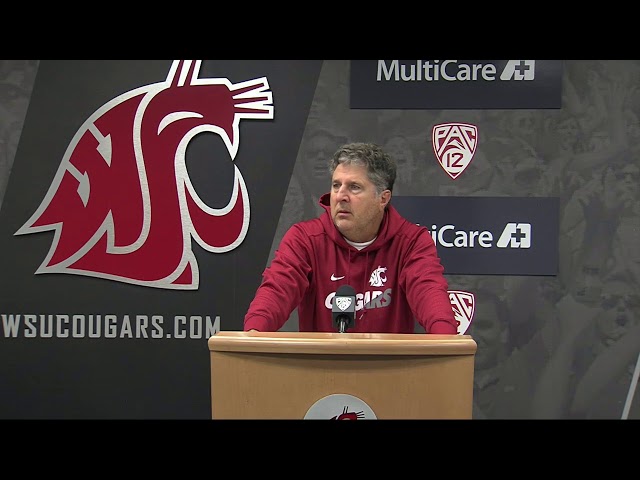
Every training camp I had at Washington State University, Coach Leach would share the same story.
The story of two kids. The rich kid and the poor kid.
The rich kid has two choices. He can become spoiled, entitled, lazy, and expect everything to be handed to him because he has been given more. Or he can take every advantage of what he has been given—resources, coaching, opportunities—and use it to become even better.
The poor kid has two choices too. He can say, “I never had a chance. Nobody gave me anything. The world is against me.” He can feel sorry for himself and use it as an excuse. Or he can say, “I may not have what they have, but I am going to outwork everybody.” He can become tougher, more driven, and more relentless than everybody else.
It was a powerful message in a locker room full of people from different backgrounds, different families, and different life experiences. Some guys came from wealth. Some came from almost nothing. Some had every opportunity. Others had to fight for every inch.
But despite all of those differences, everybody still had the same choice.
You can take ownership and use what you have as fuel.
Or you can become victim-minded. You can look for excuses, blame your circumstances, become entitled, and convince yourself that because of what you have—or because of what you do not have—you cannot become what you want to be.
It is not about how you start. It is about what you choose to do with how you start.
The rich kid can waste what he has been given or use it to build something greater. The poor kid can use his circumstances as an excuse or as fuel.
In the end, greatness does not come from starting with more or less. It comes from which person inside of you that you choose to feed.
If you like these Mind Strength Messages, click below to join our free newsletter and get a new Mind Strength Message every Monday to start your week on the right foot.
https://t.co/g0MfutOHjG
#MindStrength
@PositivFuturist It told me NYC didn't have a Democratic Socialist mayor. I asked who is the mayor and it replied Zohran Mamdani, who is associated with democratic socialism. I said, "so you agree that zohran is a democrat associated with socialist ideas?" Then, it tells me he isn't the mayor.
Nick Saban walked up to the interview podium after practice one day.
“Okay, y’all ready for a lecture?” he asked.
What followed was a powerful lesson on entitlement and doing your best.
Saban on the Importance of Nothing:
“Let’s talk about the importance of nothing. You get up every day, you’re entitled to nothing. Nobody owes you nothing.
“You have talent, but if you don’t have discipline, you don’t execute, you don’t focus, what do you get? Nothing.
“If you’re complacent and not paying attention to detail, what does that get you? Nothing.
“So, nothing is acceptable but your best.
“Everything is determined by what you do and trying to be your best. There should be nothing else but that, for everybody.
“That’s what we need to stay focused on. We need to not accept anything but our best in terms of what we’re doing in preparation.”
–
It’s a simple, but profound message.
Some key takeaways:
1. Entitlement is a disease. It stunts growth and erodes culture.
2. Success has a one-day life cycle. Yesterday doesn’t dictate today.
3. Nobody is owed anything. When your feet hit the floor in the morning, it’s on you.
4. Talent matters, but it’s far from all that matters.
5. The actions you take drive success. Talent only amplifies those actions.
6. Even the best can’t afford complacency. There are competitors trying to defeat you every day.
7. If you’re entitled, the biggest competitor is yourself.
8. If you’re owed nothing, that means nobody else is either. Therein is your opportunity.
9. You can have the best strategy, the best business model, the best talent and … none of it matters if you don’t execute.
10. There are no guarantees. Relish the unknown.
|||
Hope this is helpful. Follow me @TMitrosilis for more writing.
I also write a weekly newsletter on the process of improvement → https://t.co/Akm89Spodg
After his second year at Michigan, Tom Brady wanted to transfer.
He wasn't playing in games, and he was so low on the depth chart that he only got 2 reps in practice.
Brady met with his coach to express his frustration, “The other quarterbacks get all the reps.”
Coach replied,
“Brady, I want you to stop worrying about what all the other players on our team are doing. All you do is worry about what the starter is doing, what the second guy is doing, what everyone else is doing. You don't worry about what you're doing.”
Coach reminded him, “You came here to be the best. If you're going to be the best, you have to beat out the best.”
And then he recommended that Brady start meeting with Greg Harden, a sports psychologist who worked in Michigan's athletic department.
Brady went to Harden's office and whined, “I'm never going to get my chance. They're only giving me 2 reps.”
Harden simply replied, “Just go out there and focus on doing the best you can with those 2 reps. Make them as perfect as you possibly can.”
“So that's what I did,” Brady said. “They'd put me in for those 2 reps, man, I'd sprint out there like it was Super Bowl 39. 'Let's go boys! Here we go! What play we got?'”
“And I started to do really well with those 2 reps. Because I brought enthusiasm, I brought energy.”
Soon, it went from getting 2 reps to getting 4 reps. Then from 4 to 10, “and before you knew it,” Brady said, with this new mindset that Greg instilled in me—to focus on what you can control, to focus on what you're getting, not what anyone else is getting, to treat every rep like it's the Super Bowl—eventually, I became the starter.”
Takeaway 1:
Greg Harden telling Brady to just focus on being great during his 2 reps reminded me of a piece of advice from the entrepreneur Mark Cuban.
“People come to me all the time and tell me they're stuck,” Cuban explained. “They're stuck in a job they don't like. They're stuck working for a boss they don't like. They're stuck on a team they don't like.”
“I just tell them, 'Be great.'”
“The reality of life is that you can't just always quit your job. You can't just always go to your boss and say, 'Give me the promotion, or I'm out of here.'” You can't just always go to your coach and say, 'Give me more reps, or I'm transferring.'
“So when you're stuck, you've gotta find it within yourself to say, 'Ok, this is where I am. And if I'm going to be here, I'm going to be great.'
Because if you're great at your job, typically other people and companies find out, so it creates opportunities.”
Takeaway 2:
I've written before about “lead measures”—the actions and behaviors that predictably drive success.
The core characteristic of a lead measure, the authors of The 4 Disciplines of Execution (4DX) write, is that “a lead measure is influenceable; it can be directly influenced by you.”
To achieve your goals, they recommend (echoing what the Michigan Coach told Brady), apply a disproportionate energy to the things that are in your control.
Starting at Michigan and for the rest of his career, that’s what Brady did, that’s what drove his success.
In his first media call after he was selected by the New England Patriots with the 199th pick in the 2000 draft, Brady was asked: “Are you aware that [along with starting quarterback, Drew Bledsoe] there’s another quarterback here that they drafted last year?”
Brady said he was aware of that. “And I know he’s a heck of a player,” Brady said. “But I’ve always really concerned myself just with the things I can control. I don’t put a lot of thinking into the other guys because I know I’m not at my best when I’m not just thinking about playing as well as I possibly can.”
- - -
“I never once in my life ever said I wanted to be the best of all time. Ever. I wanted to be the best I could be, period. I learned that in college. It didn’t matter what the other guys were doing. It mattered what I was doing.” — Tom Brady
Follow @bpoppenheimer for more content like this!
10 Things I would tell myself as a young player:
1. The work you put in away from your team is where real growth happens. Take your personal development into our own hands. Stop waiting for others to help you.
2. The game will be hard on your body. Take care of it.
3. Accountability will be one of your biggest weaknesses. Get better at it ASAP!
4. Everyday you play catch you are a pitcher. Even if you're not slated to pitch that day, while you play catch, be a pitcher. Work on your throwing mechanics, throw your off speed pitches and hit spots on your partner.
5. GET STRONGER!!
6. Be a student of the game. When you watch the game on TV, watch it more like a student than a fan. Watch how they move their bodies. How they move around the field. Read up on mental toughness. Seek out those with more experience and ask questions.
7. You're a pitcher. Just because you threw a pitch, you're job is not over. The only time you should find yourself still standing on the mound after a hit ball is if there is no one on base and a GB is hit to your 3B or SS. Any other time you are either moving towards 1B to cover if needed or backing up a base somewhere. Stop spectating!
8. You will have some great coaches in your life and some who have no business being in that position. But you can learn something from all of them, even if that means learning how you DON'T want to be as a coach someday.
9. Playing with and through discomfort is part of it. You shouldn't have to feel 💯 to give 💯. You better develop some toughness in that area if you want to last.
10. Someday you will play in your final game. Be grateful for what the game gave you. Respect the game. Remember as much as you can. Enjoy your teammates and when you're ready, give back as much as you can.


![bpoppenheimer's tweet photo. After his second year at Michigan, Tom Brady wanted to transfer.
He wasn't playing in games, and he was so low on the depth chart that he only got 2 reps in practice.
Brady met with his coach to express his frustration, “The other quarterbacks get all the reps.”
Coach replied,
“Brady, I want you to stop worrying about what all the other players on our team are doing. All you do is worry about what the starter is doing, what the second guy is doing, what everyone else is doing. You don't worry about what you're doing.”
Coach reminded him, “You came here to be the best. If you're going to be the best, you have to beat out the best.”
And then he recommended that Brady start meeting with Greg Harden, a sports psychologist who worked in Michigan's athletic department.
Brady went to Harden's office and whined, “I'm never going to get my chance. They're only giving me 2 reps.”
Harden simply replied, “Just go out there and focus on doing the best you can with those 2 reps. Make them as perfect as you possibly can.”
“So that's what I did,” Brady said. “They'd put me in for those 2 reps, man, I'd sprint out there like it was Super Bowl 39. 'Let's go boys! Here we go! What play we got?'”
“And I started to do really well with those 2 reps. Because I brought enthusiasm, I brought energy.”
Soon, it went from getting 2 reps to getting 4 reps. Then from 4 to 10, “and before you knew it,” Brady said, with this new mindset that Greg instilled in me—to focus on what you can control, to focus on what you're getting, not what anyone else is getting, to treat every rep like it's the Super Bowl—eventually, I became the starter.”
Takeaway 1:
Greg Harden telling Brady to just focus on being great during his 2 reps reminded me of a piece of advice from the entrepreneur Mark Cuban.
“People come to me all the time and tell me they're stuck,” Cuban explained. “They're stuck in a job they don't like. They're stuck working for a boss they don't like. They're stuck on a team they don't like.”
“I just tell them, 'Be great.'”
“The reality of life is that you can't just always quit your job. You can't just always go to your boss and say, 'Give me the promotion, or I'm out of here.'” You can't just always go to your coach and say, 'Give me more reps, or I'm transferring.'
“So when you're stuck, you've gotta find it within yourself to say, 'Ok, this is where I am. And if I'm going to be here, I'm going to be great.'
Because if you're great at your job, typically other people and companies find out, so it creates opportunities.”
Takeaway 2:
I've written before about “lead measures”—the actions and behaviors that predictably drive success.
The core characteristic of a lead measure, the authors of The 4 Disciplines of Execution (4DX) write, is that “a lead measure is influenceable; it can be directly influenced by you.”
To achieve your goals, they recommend (echoing what the Michigan Coach told Brady), apply a disproportionate energy to the things that are in your control.
Starting at Michigan and for the rest of his career, that’s what Brady did, that’s what drove his success.
In his first media call after he was selected by the New England Patriots with the 199th pick in the 2000 draft, Brady was asked: “Are you aware that [along with starting quarterback, Drew Bledsoe] there’s another quarterback here that they drafted last year?”
Brady said he was aware of that. “And I know he’s a heck of a player,” Brady said. “But I’ve always really concerned myself just with the things I can control. I don’t put a lot of thinking into the other guys because I know I’m not at my best when I’m not just thinking about playing as well as I possibly can.”
- - -
“I never once in my life ever said I wanted to be the best of all time. Ever. I wanted to be the best I could be, period. I learned that in college. It didn’t matter what the other guys were doing. It mattered what I was doing.” — Tom Brady
Follow @bpoppenheimer for more content like this!](https://pbs.twimg.com/media/F85l1KpWUAAeAcO.jpg)