“The journey of our human space mission is very long and difficult. But if we are determined, even the stars are attainable.”
— Subhanshu Shukla, IAF Group Captain & ISRO gaganyatri
Hear his ISS journey at India Science Festival 2026
📍 IISER Pune | 🗓 10–11 Jan
#ISF2026
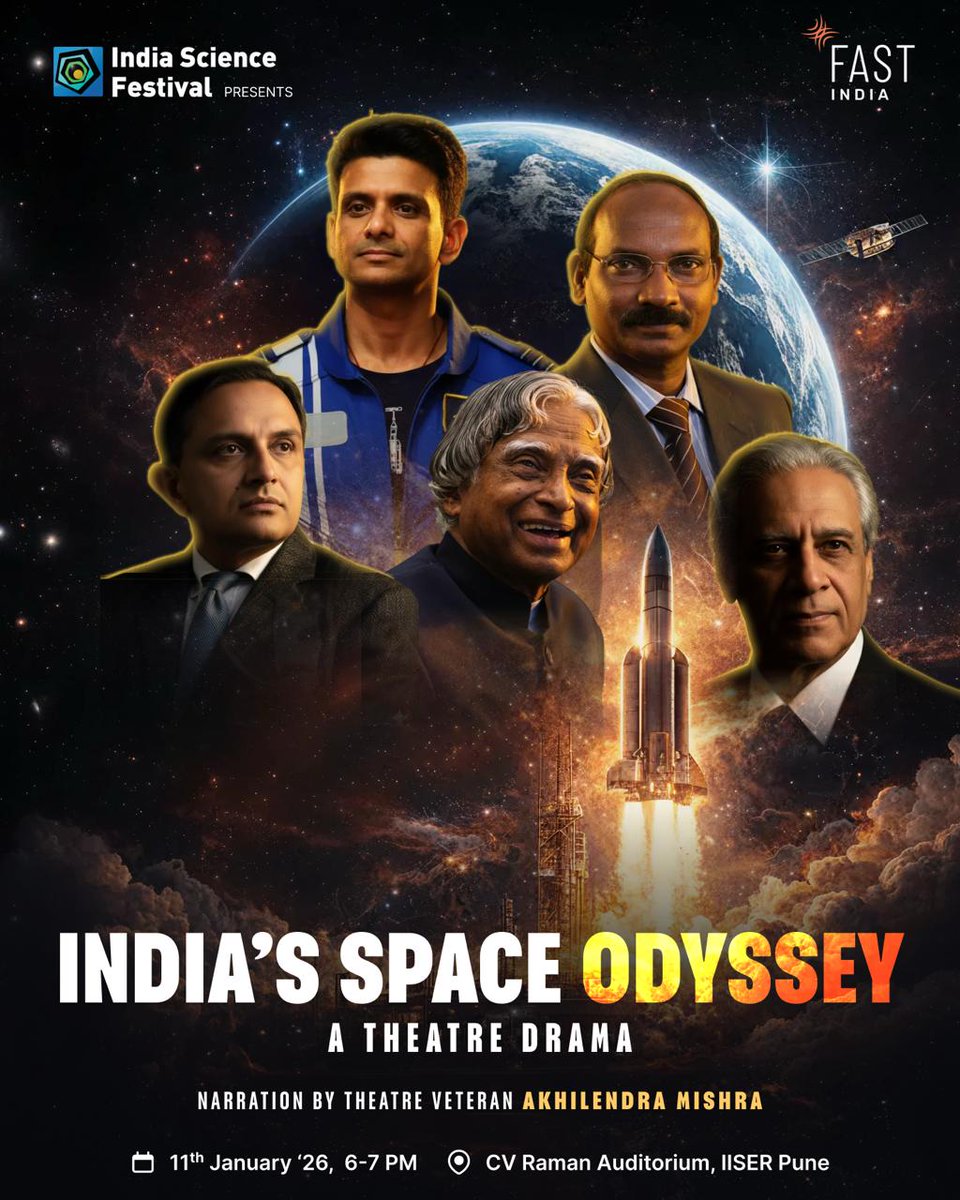
From Vikram Sarabhai carrying rocket parts to Chandrayaan-3 at the Moon’s south pole - watch this journey unfold on stage
India’s Space Odyssey — a theatre drama at ISF 2026, narrated by Akhilendra Mishra.
Don't miss the chance to catch this one-of-a-kind production!
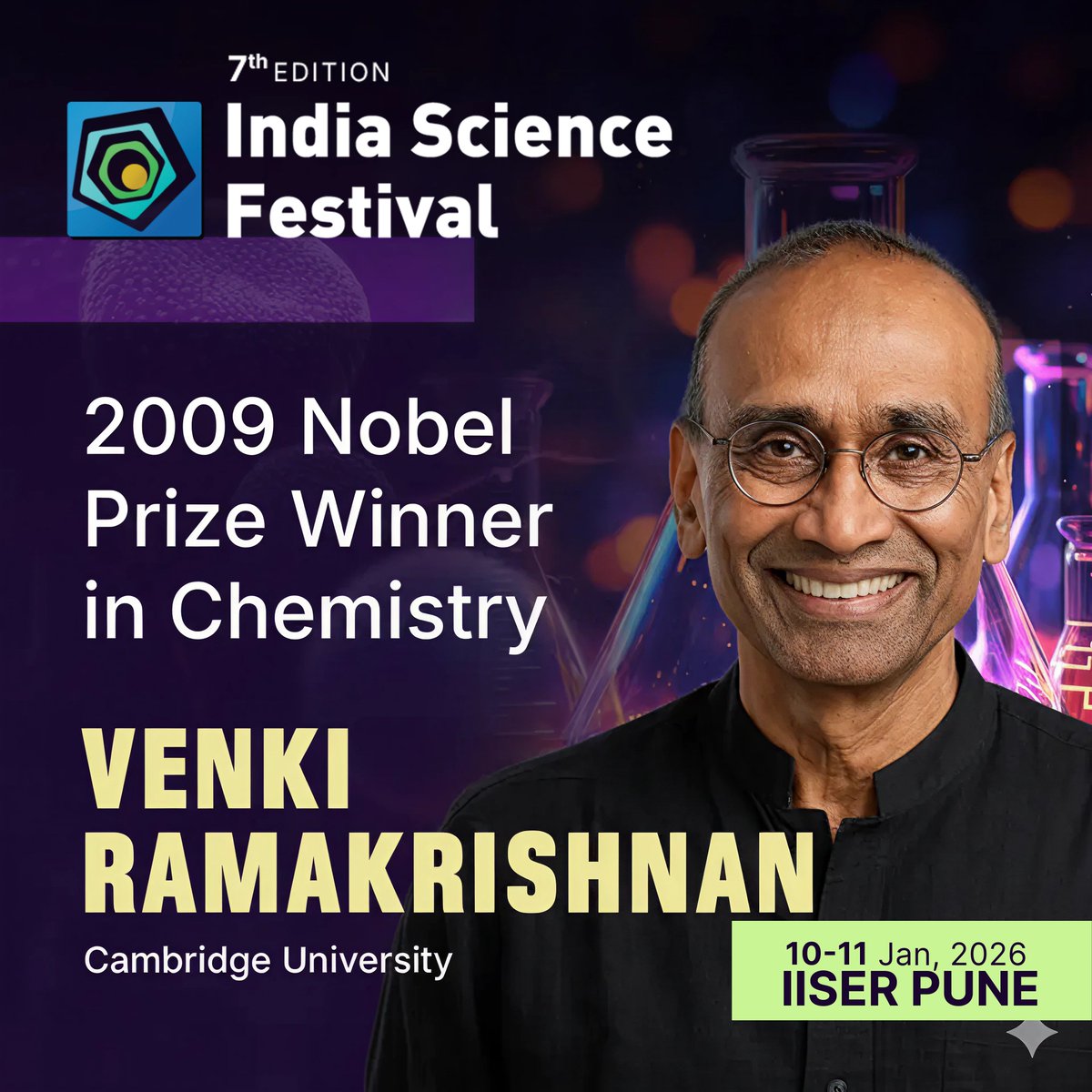
Nobel laureate Venki Ramakrishnan—whose work revealed the structure and function of ribosomes—joins India Science Fest 2026. Scientist, author, and champion of science communication, don't miss the chance to catch him at ISF 2026!
📍 IISER Pune | 🗓 10–11 Jan 2026
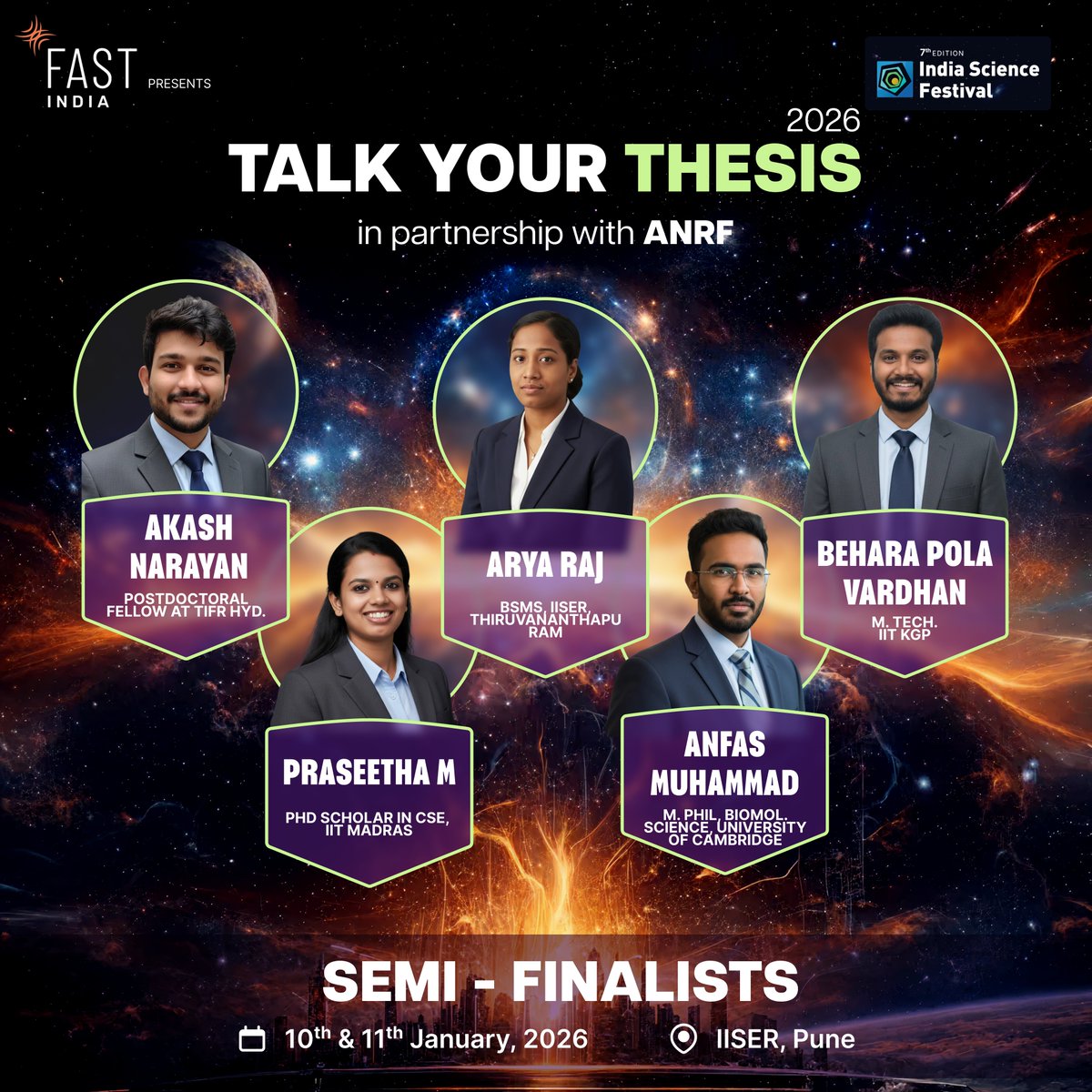
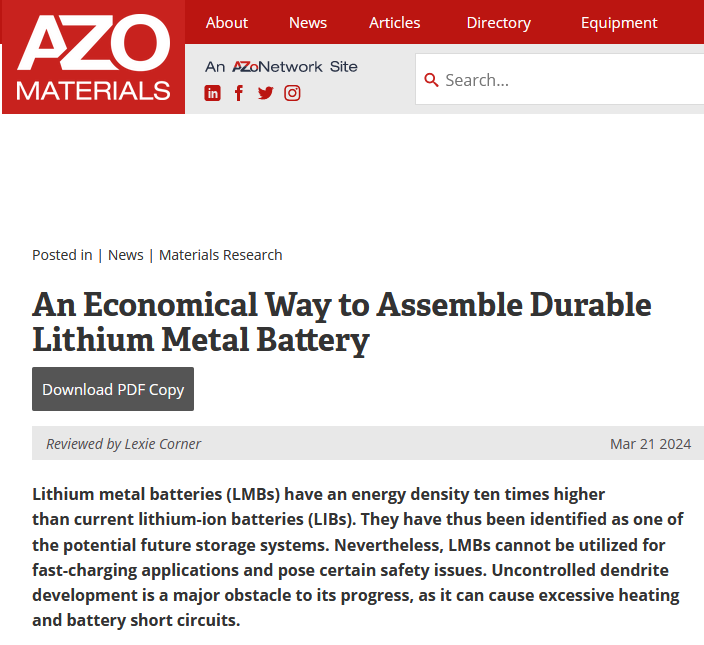
From malaria proteins to the search for life beyond Earth, smarter batteries to tiny bit flips with big consequences—researchers turn complex science into compelling stories as a part of Talk Your Thesis at #ISF2026.
📍 IISER Pune | 🗓 11 Jan 2026
Today, we are launching the first publicly available AI Scientist, via the FutureHouse Platform.
Our AI Scientist agents can perform a wide variety of scientific tasks better than humans. By chaining them together, we've already started to discover new biology really fast. With the platform, we are bringing these capabilities to the wider community. Watch our long-form video, in the comments below, to learn more about how the platform works and how you can use it to make new discoveries, and go to our website or see the comments below to access the platform.
We are releasing three superhuman AI Scientist agents today, each with their own specialization:
A general-purpose agent (Crow);
An agent to automate literature reviews (Falcon); and
An agent to answer the question “Has anyone done X before” (Owl).
We are also releasing an experimental agent, Phoenix, that has access to a wide variety of tools for planning experiments in chemistry. More on that below.
The three literature search agents (Crow, Falcon, and Owl) have benchmarked superhuman performance. They also have access to a large corpus of full scientific texts, which means that you can ask them more detailed questions about experimental protocols and study limitations that general-purpose web search agents, which usually only have access to abstracts, might miss. Our agents also use a variety of factors to distinguish source quality, so that they don’t end up relying on low-quality papers or pop-science sources. Finally, and critically, we have an API, which is intended to allow researchers to integrate our agents into their workflows.
Phoenix is an experimental project we put together recently just to demonstrate what can happen if you give the agents access to lots of scientific tools. It is not better than humans at planning experiments yet, and it makes a lot more mistakes than Crow, Falcon, or Owl. We want to see all the ways you can break it!
The agents we are releasing today cannot yet do all (or even most!) aspects of scientific research autonomously. However, as we show in the video, you can already use them to generate and evaluate new hypotheses and plan new experiments way faster than before. Internally, we also have dedicated agents for data analysis, hypothesis generation, protein engineering, and more, and we plan to launch these on the platform in the coming months as well. Within a year or two, it is easy to imagine that the vast majority of desk work that scientists do today will be accelerated with the help of AI agents like the ones we are releasing today.
The platform is currently free-to-use. Over time, depending on how people use it, we may implement pricing plans. If you want higher rate limits, especially for research projects, get in touch. @m_skarlinski, @andrewwhite01, @_tnadolski, Remo Storni, @semajazarb, @ludomitch, @MichaelaThinks, as well as @jasonjoyride and his team for making such fantastic videos of us!
ANNOUNCEMENT!
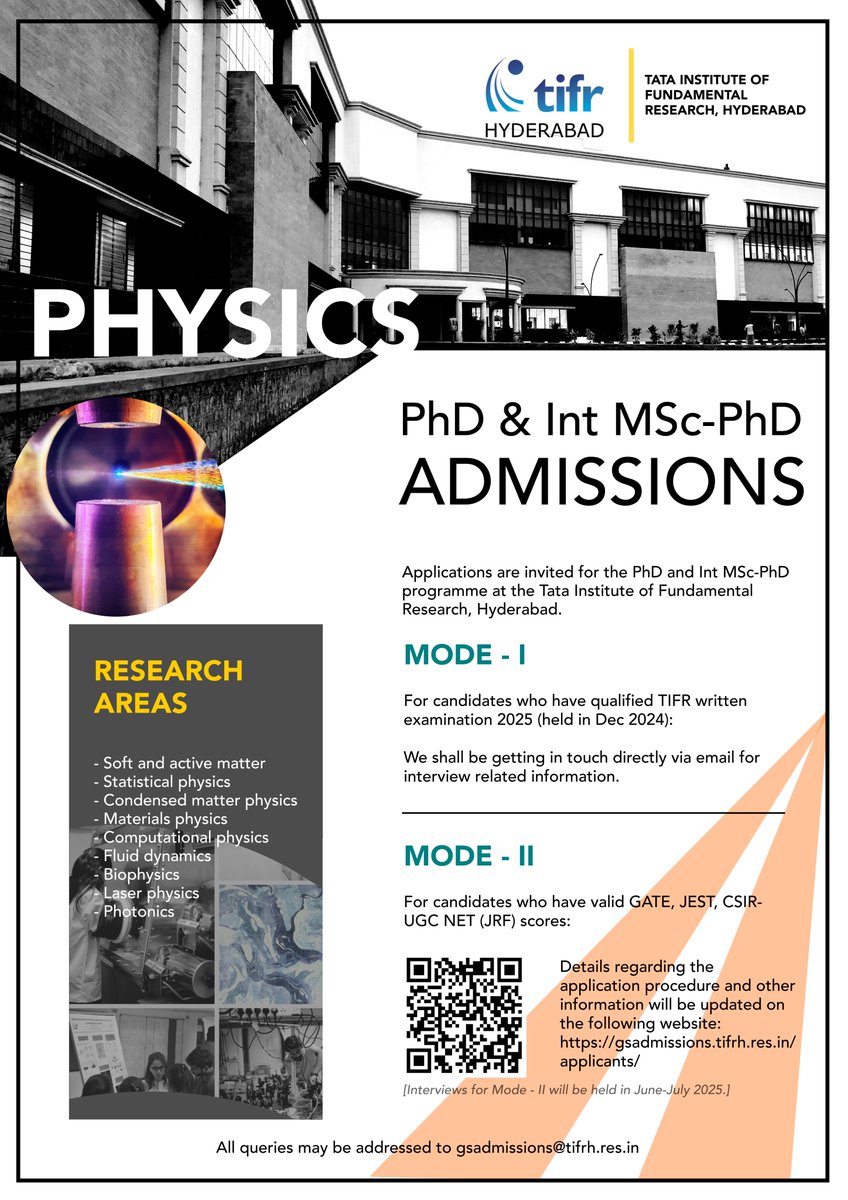
PhD and Int MSc-PhD programme admissions @TIFRH_buzz: Physics, Chemistry, and Biology-oriented programmes
Further details available here: https://t.co/rLels7OhJn
BREAKING NEWS
The Royal Swedish Academy of Sciences has decided to award the 2024 #NobelPrize in Chemistry with one half to David Baker “for computational protein design” and the other half jointly to Demis Hassabis and John M. Jumper “for protein structure prediction.”
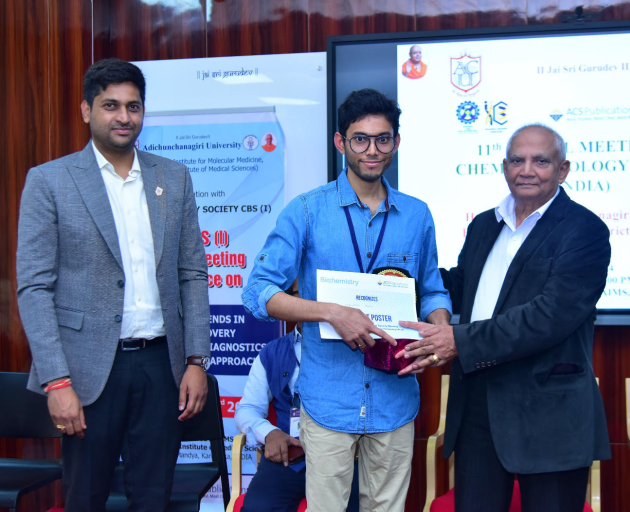
Congratulations to Mrinmoy Jana on receiving the best poster in biochemistry at the 'Current Trends in Drug Discovery and Advances in Diagnostics: Chemical Biology approaches', 11th Annual Meeting of Chemical Biology Society-India, held at Adichunchanagiri University, Karnataka.
Congratulations to Vishal Malik and Sameer Singh (Kalyaneswar Mandal's lab) on receiving Best Talk Awards at the 4th Student Indian Peptide Symposium held at GBU (Gujarat Biotechnology University), organised by the Indian Peptide Society.
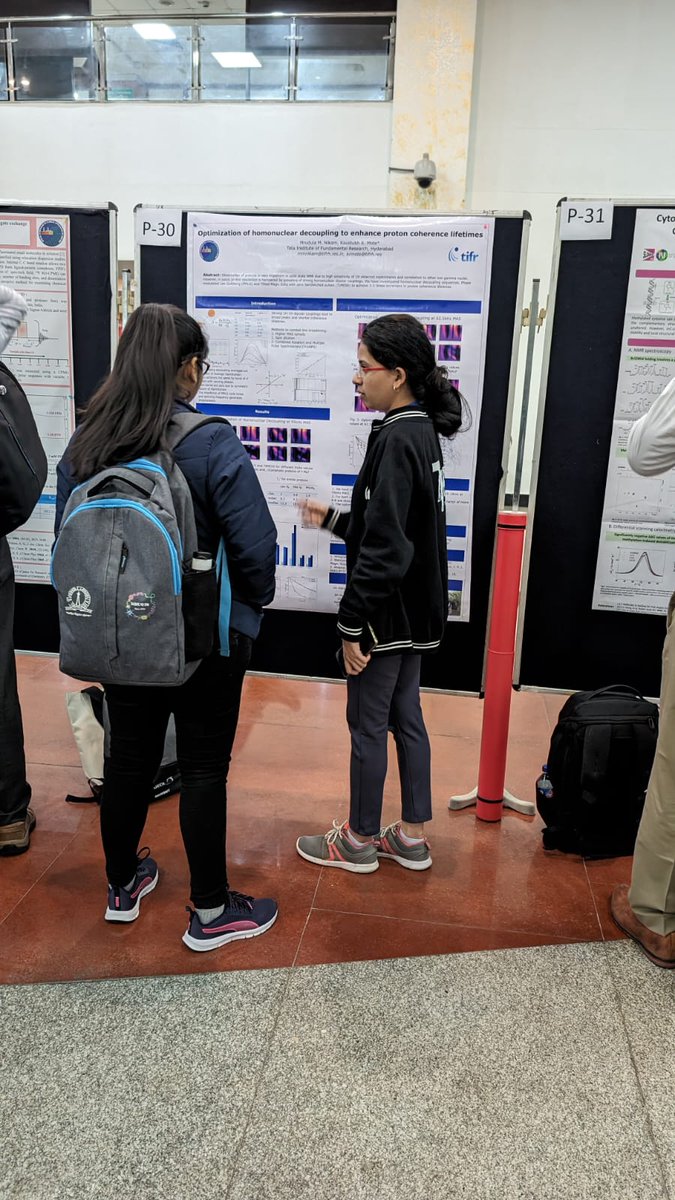
Congratulations to Pragyan Parimita Parida & Mrudula Nikam (grad students @TIFRH_buzz) on receiving the Best Oral Presentation and Best Poster awards at the 29th Annual Meeting of National Magnetic Resonance Society of India (in association with ISMRM, Indian Chapter).
@black_tank_top@ohuelab Thank u so much for helping me out. I've one more query, if I choose to get top-ranked relaxed structure [pdb: 1SFI], then in pymol (in "stick" display) the C-terminus shows COOH and N-terminus shows NH2, and thus peptide is breaking up. I might be missing something. Please help.
The nationwide entrance examination for the TIFR Graduate School Admissions will be conducted on December 10, 2023.
Apply here: https://t.co/3L5r1Khw7k
Last date to apply: Nov 02, 2023 (Noon)
FAQs: https://t.co/2GizX0hGnK