Very proud of this study!
Two fundamental processes in gene expression are less tightly connected than we thought. Their relationship may help explain surprising vulnerabilities of cancer cells.
Huge thanks to Agata and Deepshika for years of hard work, and to all collaborators
🔬 Interested in biological research? NCBS-TIFR’s 2-year MSc (by Research) programme offers research from Day 1, interdisciplinary training and a monthly scholarship. August 2027 intake applications open soon!
📩 [email protected]@TIFRScience
Check out our Roadmap for Condensates in Cell Biology 💧 🧫, which summarizes the stimulating discussions we had at @KITP_UCSB last summer! 🤓🌴
Big thanks to @ZwickerGroup for leading this effort!
https://t.co/sD1rsO9oqN
Excited to share our latest work on how signals from Mtb infected macrophages propagate to neighbouring bystander cells and promote population wide trained immunity like responses. Excellent collaboration with @DimpleNotani. Thanks @NCBS_Bangalore.
https://t.co/3y3F6owe8E
🧬 Pleased to share our team's new paper published in #HumanGenetics: "Blending borders: reconstructing the genetic history of the Sindhi population." We present a high-resolution, genome-wide analysis of the demographic history and genomic architecture of the Sindhi diaspora. 🧵👇@bhupro@VCofficeBHU@GuDbfs540@ChanchalD1998
(1/16) Our 3-lab collab (Mirny & Zechner) led by Harvey, Henrik & Jack is out:
Q: How do enhancers & promoters interact in space (contact vs. action-at-a-distance) and time (stable vs. transient)?
A: Transient E-P contact (~25-42 nm lasting ~10-20 sec): https://t.co/wyPaLyvR8A
Surviving deletions are depleted not just for known essential genes, but some non-coding regions as well, giving us a direct, annotation-agnostic measure of what's essential in the genome of one human cell line.
We are able to put empirical bounds on dispensability of 50-96%!
Our new preprint: Chromatin at ~10–100 kb scales behaves far beyond standard polymer expectations. DNA-PAINT data reveal broad fluctuations and sharp local bends. Our study suggests emergent active forces at these scales and quantifies the nature and strength of this activity.
Excited to share this preprint from our team and collaborators at UCSD
Transcription initiation profiling defines the regulatory logic of astrocyte gene regulation https://t.co/cN2wS0V24i
We asked how do astrocytes decide which genes to turn on during inflammation?
A growing role for ER-Ca2+ release and store-operated Ca2+ entry in neuronal physiology and pathophysiology
now available at https://t.co/TEcjcrCjCV
@NCBS_Bangalore@DBTIndia
New Lab Alert! 🧬 https://t.co/B060mwrZe4
Thrilled to start the Labade Lab at @AshokaUniv! @TSB_Ashoka@KCDH_A
Join us to explore expansion microscopy, nanoscale spatial genomics, and the epigenetics of aging.
PhD Program at Ashoka for 2026-27 intake. Apply by 20 April 2026: https://t.co/ycPUkIUDPj
We’re investigating how "inflammaging" alters the epigenome and how to decipher and ultimately reverse those changes.
We build new technologies to visualize genome & epigenome changes at the nanoscale and explore ways to make the genome more resilient to aging.
#PhD #SpatialGenomics #ExpansionMicroscopy #Inflammaging
Happy to share our Current Opinion review on the key challenges in accurately predicting 3D distances between chromatin segments and computing their dynamics. Thanks to Daniel Jost @djost_physbiol & Luca Giorgetti for the invitation to write this review @DuttaShuvadip@BsbeIitb
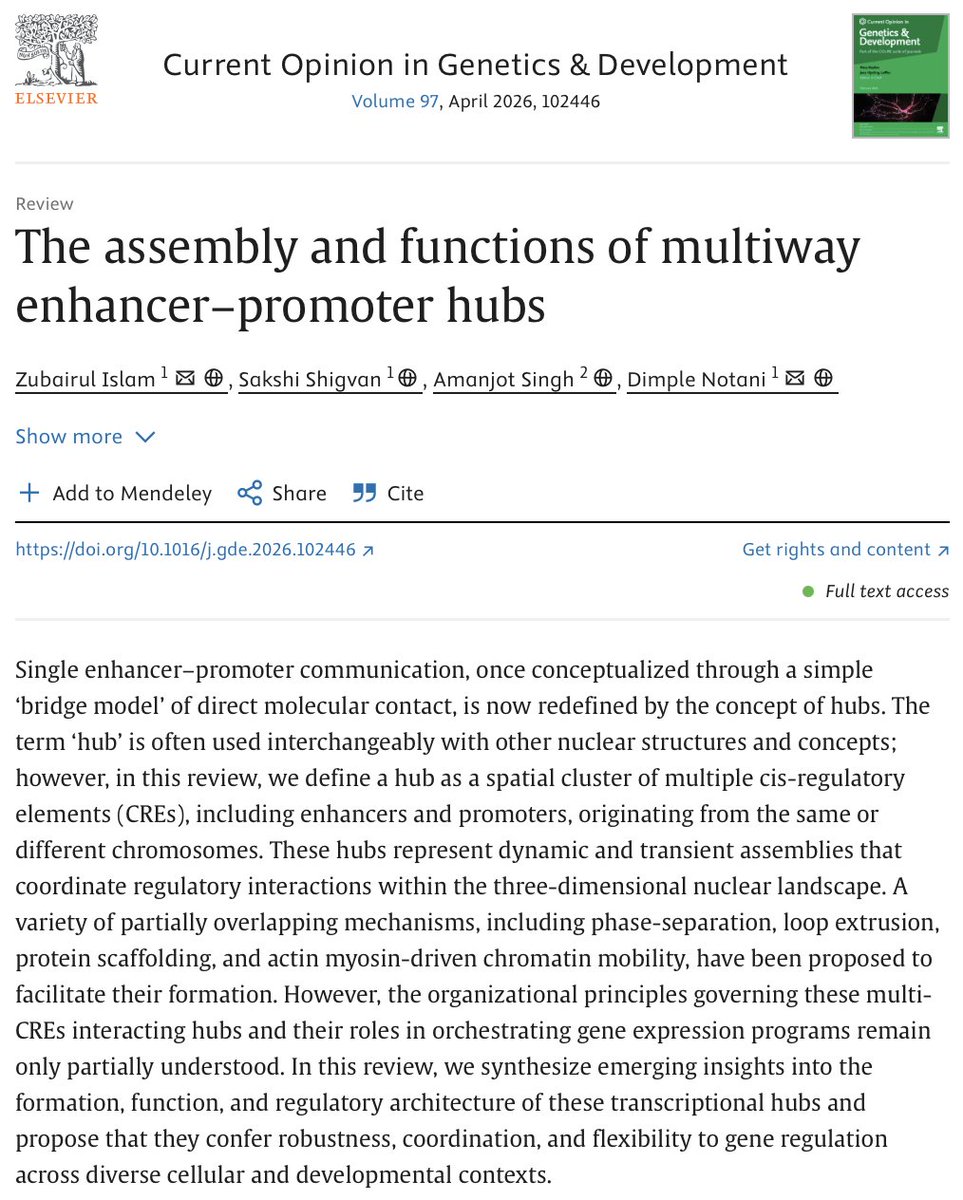
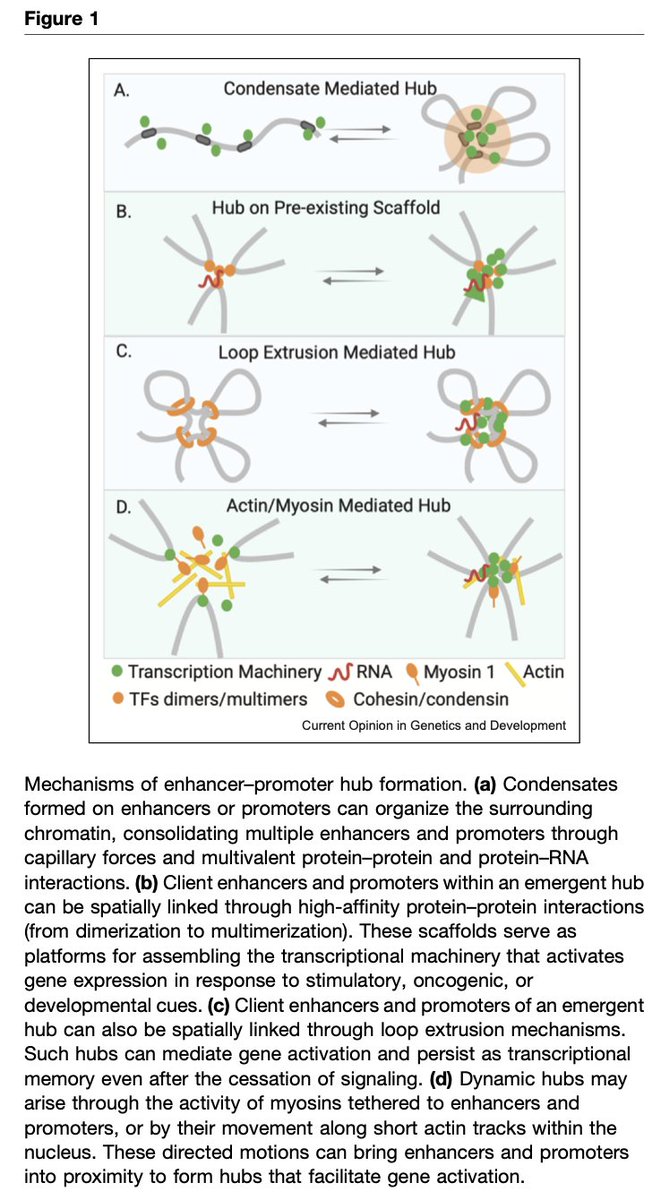
Exited to share Current Opinion review on how chromatin hubs involving multiple enhancers and promoters are formed, and their potential roles in gene regulation: https://t.co/E0bB0IgRWM. @zubi___@Sakshi_Shigvan@Amanjsingh1996@NCBS_Bangalore
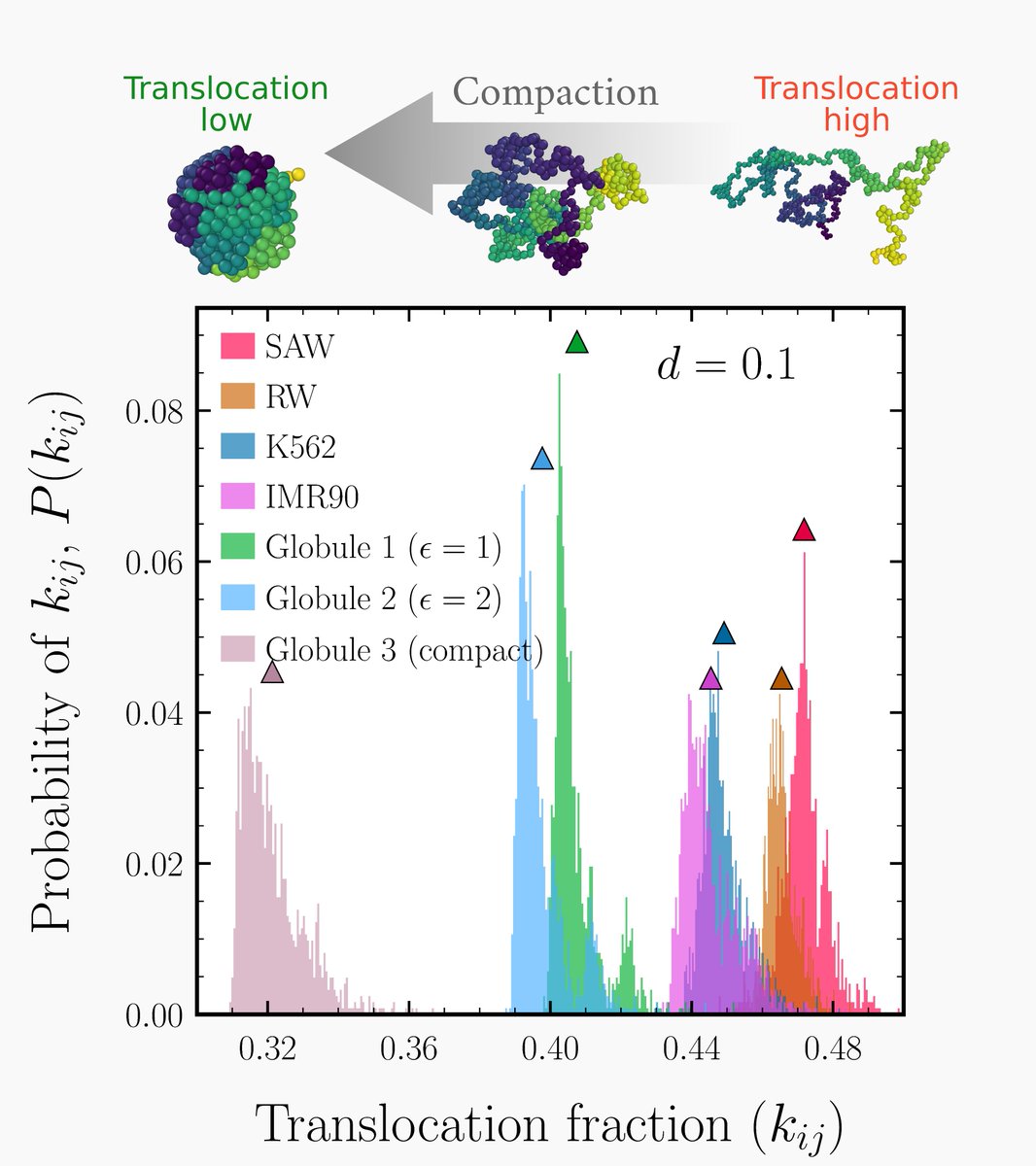
♦️Tightly packed chromatin ➡️ lower chance of a particular harmful translocation♦️
Latest article from @LabRanjith, led by Anirudh, on how chromatin compaction and DNA breaks⚡ govern translocation statistics.
🔗https://t.co/19vHqmf3Pz
(1/5)
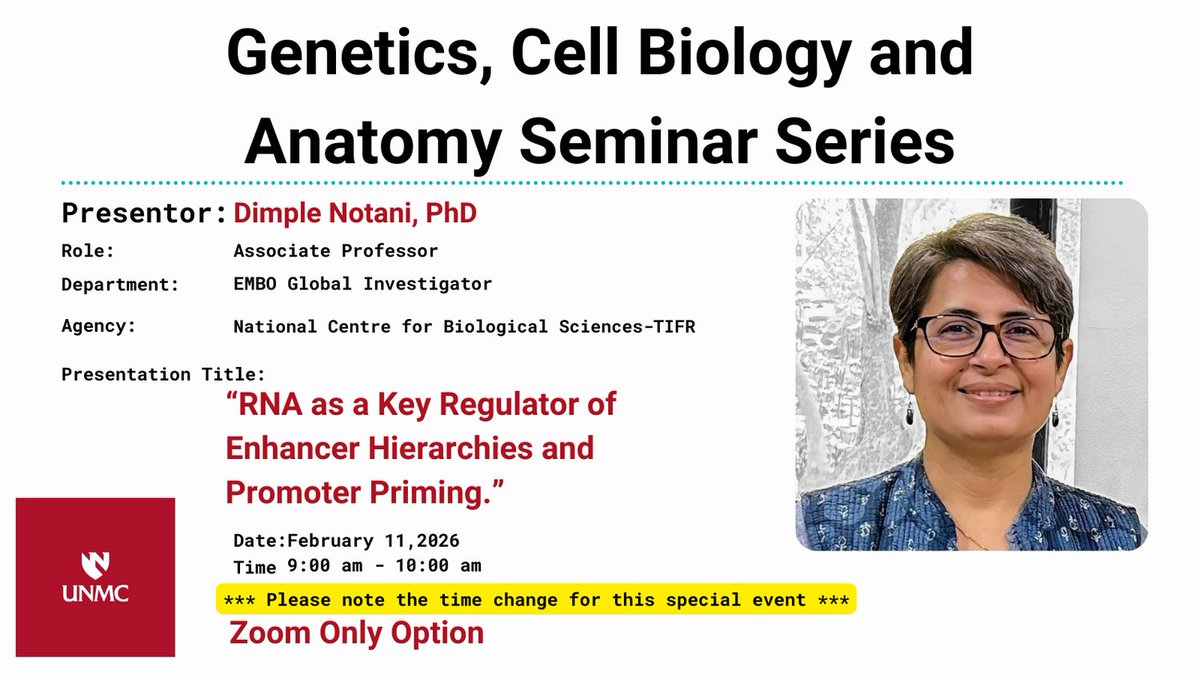
GCBA Seminar Series announces Dimple Notani, PhD, EMBO Global Investigator, National Centre for Biological Sciences - TIFR presenting "RNA as a Key Regulator of Enhancer Hierarchies and Promoter Priming." @DimpleNotani@UNMC_GCBA@UNMC_BISB
Check this new work on BRD4's role in preventing the premature activation of developmental transcription factors via #Polycomb, providing new mechanistic insights into the pathogenesis of neurodevelopmental disorder #CdLS#NDDs, #chromatinopathies https://t.co/H3x3WJ9cUK