"great" looks different at every company. no shortage of people from places like stripe and square apply for our roles. we want those who run toward ambitious work, and we have found the trial filters for exactly that. it's not for everyone, and that's fine. it's what's kept us executing fast. if it stops working, we'll iterate
@bnjorogedev@JoshuaOgundu we've had employed folks do the trial because IMO it poses no more risk than W2 employment. most states are are at-will. while a work trial sounds riskier than W2, it's the same thing, just with an exit gate and explicit alignment on fit.
@fncischen@JoshuaOgundu those are exactly the people we’re using this process to disqualify. we want senior folks who come in ready to build, not ones who get scared off because it’s too much work.
@JoshuaOgundu there’s a lot of market uncertainty right now with the all of the layoffs, so maybe I’m not seeing a correlation because more people are willing to do non-traditional things given that fear. but it’s working well for us
@nico_laqua gets it.
we also run work trials with every candidate. we have found that nothing exposes fit faster.
we met an engineer, Mike, on Monday. we ran him through our process this week and decided Thursday. we flew him in from Seattle the yesterday to help him find a place in LA and build with us all weekend.
Mike is sitting next to me as I tweet this. he's already shipping code with the some of our engineering staff.
at @frame_payments we hire people who just care about shipping. the work trial repels everyone who doesn't. that's the whole point.
"If you are not working 7 days per week, you are going to lose".
Corgi Insurance is the most intense workplace culture in startups.
- The company works 7 days per week.
- Founder (@nico_laqua) lives and sleeps in the office.
- He built a cafe in the office because there was no local cafe that was open 24/7.
- 2/3 of the first 30 team members have the Corgi logo as a tattoo.
Today I went behind the scenes with Nico, who has used this culture to scale the company to a $2.6BN valuation in just two years.
My condensed notes below:
1. If You Are Not Working 7 Days Per Week, You Are Going to Lose:
Whatever you can get done in 5 days, you'll get more done in 6 and 7. If you are trying to solve the world’s hardest problems, a standard 5-day workweek will not cut it.
2. Work Trials Repel the Mediocre:
Corgi forces candidates into mock work trials over the weekend. If seeing a full office on a Saturday scares them, they don't belong. True intensity acts as a natural filter to attract killers and repel clock-watchers.
3. Lead from the Front Lines
You can’t demand 7-day weeks while sitting on a yacht. Nico sleeps 3–4 hours a night on a mattress inside the office. If you want your troops to bleed, you have to be in the trenches with them.
4. Culture Only Means One Thing: Winning
Forget superficial jargon like "hackers" or "ex-founders." Strip away the corporate fluff. A great startup culture is aggressively optimized around one single word: Winning.
5. Lifespan vs. Victories
Building something world-historic requires radical sacrifice. When asked if he'd rather build a trillion-dollar company and die at 50, or fail and live to 80, the answer was easy. "I would rather measure my lifespan in victories."
6. Reject the Comfort of "Quiet Quitting."
If you are operating in a hyper-growth environment and your days off happen to be Saturday and Sunday every single week, you are quiet quitting. To win, you must deliberately bypass the off-ramps of personal comfort and low volatility.
Corgi isn't for everyone—and that’s exactly the point.
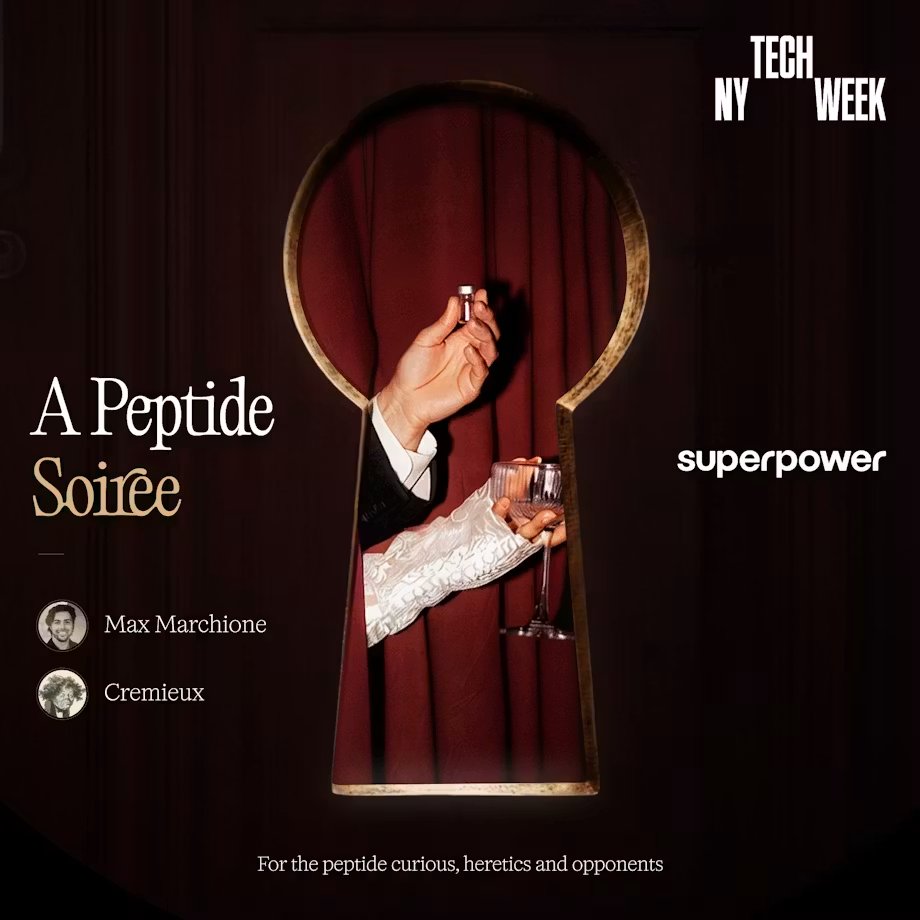
Since no one else is talking Peptides at New York Tech Week, we're taking it from URL to IRL and having a soiree for the curious, the lovers, haters, and everyone else. Much like the prohibition-era speakeasy kept itself a little hidden, you'll have to find your way in here too.
we've built parts of frameOS for the peptide merchants who refuse to cut corners. licensed pharmacy, licensed prescriber, lab-tested compounds, domestic fulfillment. that version of this market exists and we're rolling out the infrastructure they deserve.
Peptide merchants have been stuck choosing between processors that don't understand the category and buyers who don't care where the product came from.
We built for the merchants who want neither of those things.