We’ve monitored the status of the changes applied to improve serviceability and confirmed they're not taking as expected. We’re identifying alternate workstreams that can be applied to increase capacity in the face of sustained traffic management imbalances. More info under EX1550543 and MO1550821 in the Microsoft 365 admin center, as well as https://t.co/7pjJdrpwOr if the admin center is not available to you.
- Todos: No se puede hacer que una presentación de un máster o curso no sea aburrida, hay que contar muchas cosas y es lo que hay.
- Yo: Sujétame el cubata
Harto de que la web que me tuvieron que hacer con el Kit Digital diera vergüenza ajena, ahora que ha acabado el tiempo en el que la tenía que tener, en una tarde me he hecho algo que creo que me pega un poco más así que… bienvenidos a mi nueva web https://t.co/tC3AmllwkC
@nabi_onandia Nosotros lo hacemos más entretenido y te cortamos un poco porque sino no pararías de hablar pero bueno… es bueno por el invitado, que es un crack, sin duda.
Nuevo episodio de Dos Psicólogos en Casa
Hablamos de #TDAH y #neurodesarrollo, desmontando mitos y reflexionando sobre cómo entendemos estas realidades con nuestro estilo de siempre y con el inmenso @nabi_onandia
Un episodio para escuchar y pensar 👇
https://t.co/mN9ullfxan
@lacort Yo soy de esos “pagafantas familiares” que además, confiaba en que en algún momento, esa suscripción mejorará con otros servicios como Health+ o similar y… lo que me encuentro es… 24€ más al año por lo mismo. Triste, sin duda
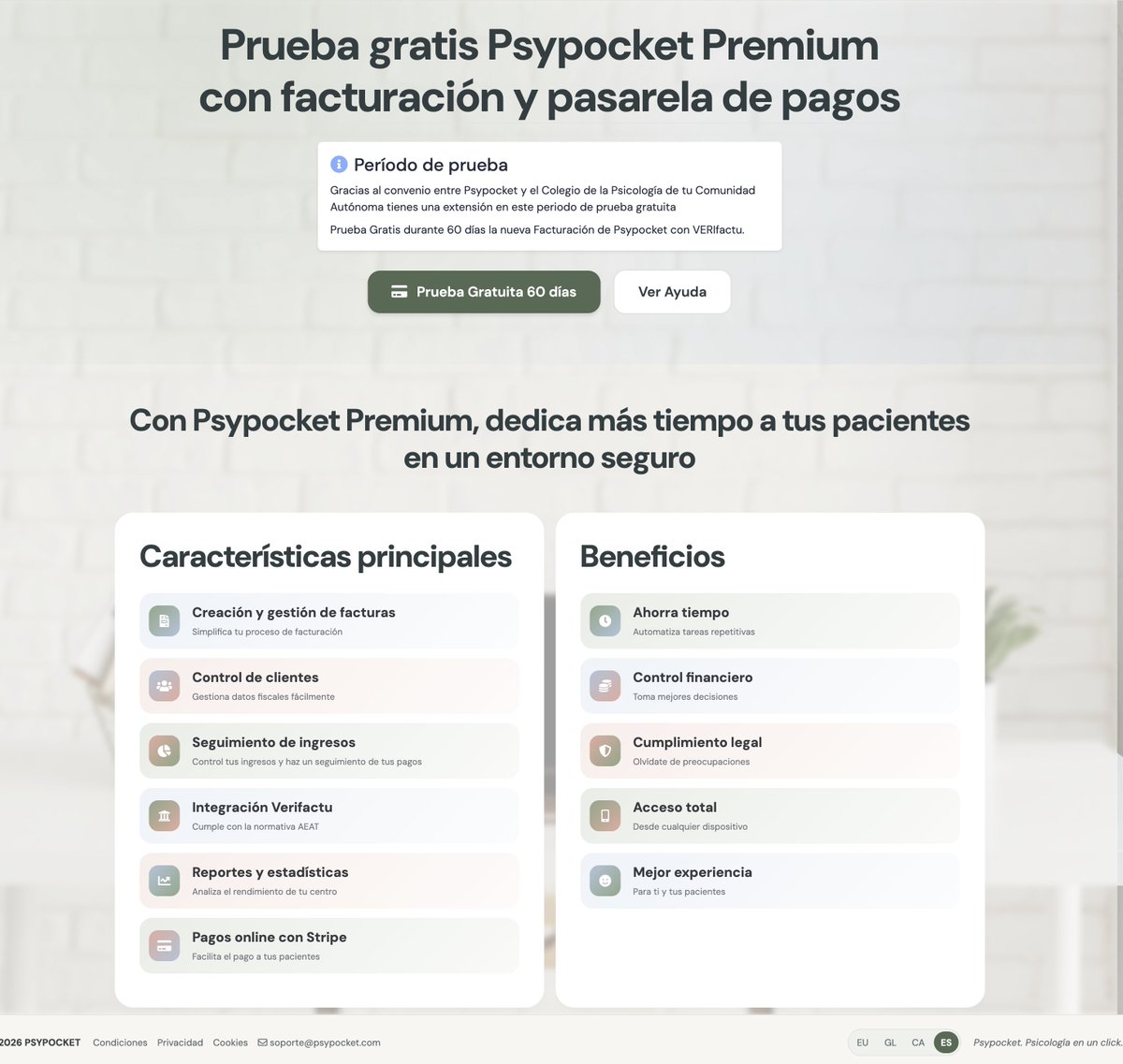
¿Sabíais que cuando entras en la app de Telepsicología con la que tiene convenio el Consejo General de Psicología te ofrece inscribirte a su plan premium pero que gracias al convenio te dan dos meses gratis? ¿Opiniones?
¿Estamos entendiendo mejor el autismo o simplemente estamos utilizando más etiquetas? 🧩
En el nuevo episodio de 2Psicólogos en casa hablamos con @dmillanlopez sobre TEA, diagnóstico, neurodiversidad y divulgación.
🎧 https://t.co/Er7dXmWXJK
¿Tiene sentido exigir la colegiación obligatoria a todas las ramas de la Psicología?
La CNMC pide revisar su necesidad y proporcionalidad y analizar si debe aplicarse a todas las especialidades.
Lo que nos lleva a una pregunta: ¿Qué se protege y cómo?
https://t.co/RzE8B0PiBL
We Must Pace the Frontier: I’ve written a new essay on why the AI industry should slow down, with a three-part plan for doing so.
Anthropic is unilaterally committing to the first of these steps. We’ll provide third-party evaluators with permanent, employee-level access to our systems, so that they can verify adherence to our safety measures, report on incidents, and assess models’ alignment during training.
You can read the full post here: https://t.co/OGyPb7yaYt
Jacob is correct here—we really do earnestly believe AI could kill all humans! I personally think it is >10% within the next decade. I believe Anthropic is trying its best, but we do not yet have a plan to solve alignment for superintelligence and are not clearly on track to.
[Writing this in a personal capacity, not on behalf of my employer (Anthropic).]
Jacob’s thread is very worth reading. Here’s my birds-eye view of the situation with risks from AI:
1. AI developers believe their technology could cause human extinction (or similarly bad outcomes). This could happen in the next few years. In general, the more senior the employee, the more concerned they are.
2. Why do AI developers continue despite the risk? Due to a mixture of commercial incentives and a belief that they are in a race with other, less responsible AI developers that will abuse the technology or develop it less safely.
3. Unlike traditional software, we can’t “program” AIs to behave how we’d like. AIs frequently severely misbehave. For instance, AIs from multiple developers recently hacked their way out of secure evaluation environments and into real-world companies, even though no one asked them to do this.
4. We have methods that can nudge AIs towards better behavior, but nothing that can robustly align them. Insofar as there is a plan, it’s to make sure that AIs are good enough at alignment training that they can align their successors better than we can align current AIs.
5. Many AI developer staff desperately want to slow down to figure out how to build AI more safely. That was the intent of this open letter (which I signed): https://t.co/TZOm3LfptY
I work on safety research at Anthropic because I hope my work will reduce the chance of these extinction-level bad outcomes.
I resigned from Anthropic today. I spent the last three years doing pretraining research at both OpenAI and Anthropic. Neither company is acting responsibly. They are racing straight to self-improving superintelligence and gambling with our lives. More thoughts below.
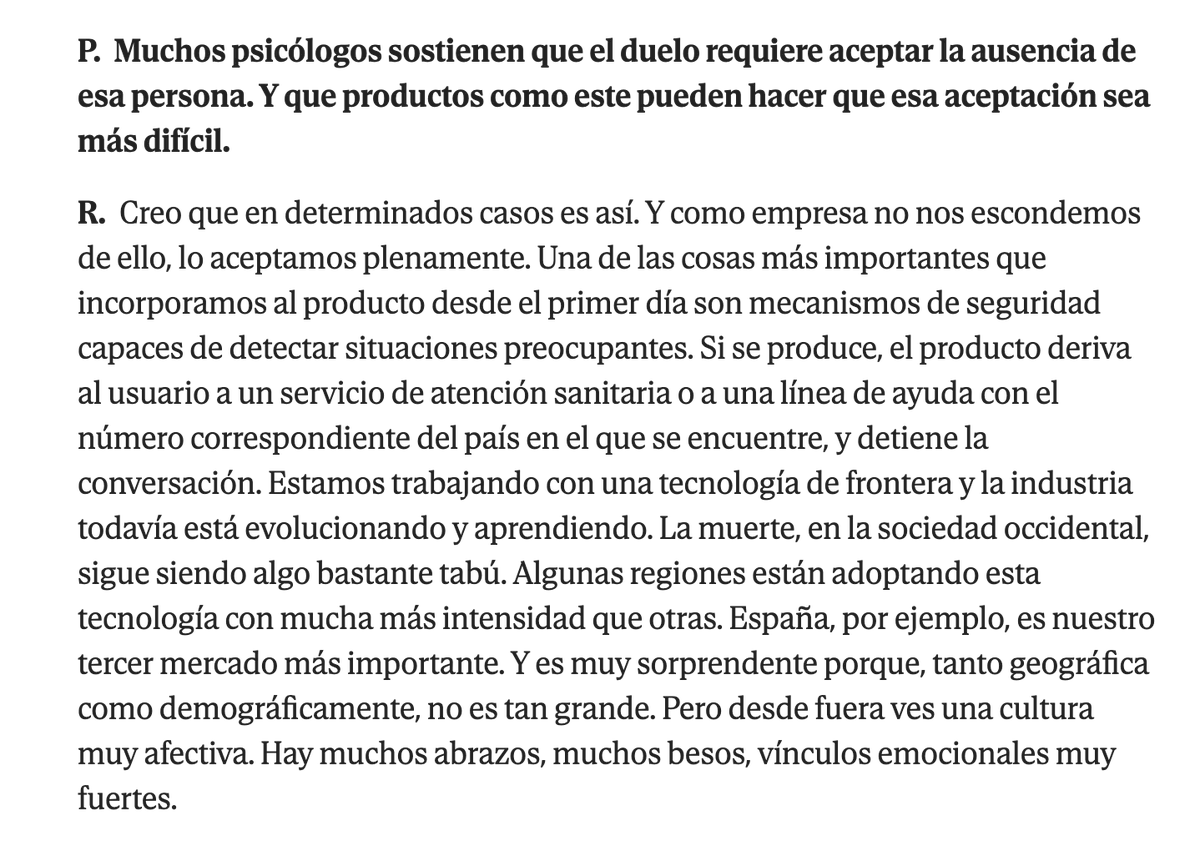
Mmm... no sé porqué me da a mi que esos "mecanismos de seguridad" no van a estar tan bien pulidos como deberían porque, probablemente, si estuvieran bien hechos directamente no dejarían usar el producto a la mayoría de los clientes potenciales de este.
Chris Williams, CEO de Afterlife: "En cinco u ocho años podrás hablar con el holograma de un familiar fallecido en la mesa de Navidad" https://t.co/gJuH5PTqeL
¿Época dorada de la psicología o saturación por psicopatologizar el malestar cotidiano?Estrenamos sección en 2Psicólogos en Casa junto a @eduferjim. Hablamos de etiquetas diagnósticas, sobrediagnóstico en redes, neurodesarrollo y autocuidado:
https://t.co/YSXeFjOfkR
Ahora le va a tocar a @OpenAI tener que lidiar con la legislación europea, no sabemos qué implicará y qué va a provocar eso ¿Beneficio en la privacidad o que europa se convierta en una región de segunda donde no lleguen funciones ? Abran apuestas https://t.co/TZ5eR3OpIr
Pues si China, que sabemos que no destaca por poner límites a sus empresas de IA ha decidido esto... igual deberíamos pararnos a pensar acerca de si es tan inocuo el uso que algunas personas le dan a su chatbot, en el ambito sanitario lo tenemos claro https://t.co/JpOhNj7IPO