Apple is becoming a company I no longer trust with my privacy or personal safety. It's moving towards technology capable of processing our private conversations and surroundings, despite spending years convincing customers that privacy was one of the biggest reasons to buy its products.
Their relationships with governments has only grown stronger over the past few years.
I think Motorola's partnership with GrapheneOS could become one of the most significant developments in the mobile industry since the introduction of the first iPhone.
I founded a telecoms testing company in 2002 and was Head of Testing for O2 in the UK. Every product and service went through my team, including every mobile device O2 brought to market. I signed the NDA for the first iPhone launch outside the US on behalf of O2 when my team was responsible for testing and certifying it.
I lived through the years when Nokia, Motorola, Samsung, Sony Ericsson, BlackBerry and others competed to introduce new devices, features and capabilities. It all started with picture messaging (MMS).
Competition was relentless. Then Apple launched the iPhone and fundamentally changed the industry. BlackBerry eventually disappeared from the consumer smartphone market, Nokia lost its dominance, and Apple and Google came to control the operating systems used by almost every smartphone.
We've spent years choosing between iOS and Android, which effectively means choosing between Apple and Google. Samsung dominates most of the premium Android market, but its phones still rely on Google's OS.
GrapheneOS offers something different. It's an open source mobile operating system focused on privacy and security, but until now, official support has been limited to Google Pixel devices. That means people who want to escape Google's ecosystem have still had to buy hardware from Google.
Motorola could change that.
Motorola is now owned by China's Lenovo, and its partnership with GrapheneOS is expected to produce officially supported devices in 2027. If Motorola delivers competitive hardware with the security capabilities GrapheneOS demands, people could finally have a serious alternative to Apple and Google.
The timing could be extraordinary because Apple is introducing technology capable of listening to conversations, processing speech and generating transcripts and summaries. It claims these capabilities protect privacy because processing happens within dedicated hardware and the original audio is deleted.
I'm no longer prepared to accept Apple's privacy assurances simply because Apple makes them.
A device capable of processing conversations has access to information that previously existed only between the people speaking. Deleting the original audio doesn't change the fact that the information was processed, and generating a transcript or summary means information from that conversation can be preserved in another form.
This is just the tip of the iceberg but the list is now too long to write.
Apple's growing investment in these capabilities represents a fundamental change in the relationship between its products and the people who buy them.
I also have serious concerns about Apple's dependence on Israel for the development of core iPhone technology. Israel is home to Apple's largest chip development operation outside the US, and Apple has spent billions acquiring Israeli companies responsible for technologies involving processors, storage, cameras, facial recognition and biometric sensing.
Its latest acquisition, Q(.)ai, makes technology capable of interpreting speech through facial movements and detecting biometric information. Israel is also home to NSO Group, whose Pegasus spyware has demonstrated that iPhones can be secretly compromised to access private communications and personal information. Apple is building more and more intrusive technology using Israeli engineering, while asking customers to trust its promises about privacy. I no longer do.
For me, trust is no longer something a tech company can earn through advertising or promises about privacy. I want technology whose security protections can be independently examined and whose capabilities I can control.
There's also an extraordinary irony in the prospect of a Chinese owned company helping to bring a privacy focused smartphone to a market dominated by American tech companies.
Personally, I'd trust China with my data before I'd trust the governments and intelligence agencies of Western countries. That's my assessment of my own circumstances, not a claim that China offers stronger privacy protections. I live in the West, my work involves investigating Western governments and surveillance technology, and I have no intention of travelling to China.
The governments whose surveillance capabilities concern me most are the ones with the greatest opportunity to affect my life.
I don't automatically trust technology because it comes from the US, Israel, the UK, the EU, Canada or Australia. Their governments have surveillance powers, intelligence relationships and legal mechanisms that compel companies to provide information or assistance. Scratch that. They no longer have to compel them because they're working hand in hand.
That's why I care about who controls the operating system, who can change its software, what permissions applications receive, what information devices process and whether their security claims can be independently verified.
GrapheneOS has an opportunity to demonstrate that mobile security and privacy can be delivered through technical protections rather than corporate promises.
If Motorola produces an exceptional smartphone that supports GrapheneOS without compromising its security requirements, we could see something the mobile industry hasn't experienced in 20+ years: a credible new reason for people to abandon Apple and Google.
I've seen how quickly the mobile market can change when customers are offered something substantially better.
I hope Motorola gets this right.
The European Commission is deliberately withholding practical child safety guidance from parents while promoting legislation and compulsory identity verification that threatens everyone's privacy and online anonymity.
I've examined the Commission's extensive website dedicated to protecting children online. Despite all the information about child safety and mental health legislation coming down the pipe, it doesn't tell parents how to configure the parental controls already installed on their children's smartphones.
There's guidance buried elsewhere on a different EU website, but the Commission doesn't promote it on its main child safety website. Instead, parents are presented with information promoting the Digital Services Act and the EU's approach to regulating online services.
Apple and Android smartphones already provide parental controls that allow parents to block social media apps, restrict websites, control communications, prevent downloads and purchases, and limit screen time. Millions of parents and schools already use these capabilities.
The European Commission knows these protections exist and chose to hide the information on one of its own websites. Yet rather than making practical instructions readily available to every parent, it's pursuing legislation designed to make identity verification compulsory for access to online services.
Millions of parents who don't know how to activate the protections already available on their children's devices are being denied easily accessible information that could help them protect their children today.
The Commission is prioritising its legislative agenda over educating parents about existing protections. Every day it fails to promote those protections, children remain exposed to risks their parents could already be preventing.
The EU claims protecting children is its priority, yet its own child safety website promotes government regulation instead of teaching parents how to protect their children.
That's a political decision with consequences for children's safety and everyone's civil liberties.
"The problem with vibe coding is no one really knows what's going on in all of those lines of code, so if someone else has to come along and fix it, they won't know what to look for because no single human fully understands it."
Todavía no dimensionamos lo importante que había sido la reforma para tener un sistema de jubilación privada el cual, aunque era perfectible, elegimos destruir.
Hoy Argentina habría despejado su problema previsional y podría haber bajado significativamente sus impuestos.
Pero salieron a aplaudir el Paris-Dakar el día en que el DJ de Mar del Plata les afanó las cuentas.
A ustedes les prometieron obras en el 2021
No se las cumplieron
Pero si me votan yo las voy a cumplir
Axel kicillof, gobernador de buenos aires desde 2019
La "Apertura Indiscriminada" que hizo Milei... jajaja
Si la industria textil quebró porque Argentina es del 9% menos libre del mundo....... imaginate lo mierda que era.
Imaginate haber gobernado un país rico durante 16 años y que tus grandes logros sean los subsidios, los planes sociales, las villas y los comedores populares. Y encima, tener el descaro de presentar todo eso como un modelo exitoso.
Morocco is supposedly one of the most moderate Muslim countries. Let me show you what that “moderation” looks like.
As a Moroccan convert to Christianity, if I moved back to Morocco, among the many things I will face, for now I will pick the one small detail; restrictions even trying to name my son Peter, Mark, or John, not even in Arabic: Boutros, Morcos, or Youhanna!
Why? Because they’re Christian names.
The Moroccan state doesn’t even officially recognize my conversion. I can abandon Islam, but the government still treats me as Muslim.
Now imagine a Western country telling a convert to Islam: “You cannot name your son Muhammad or Omar because you were born Christian.”
Imagine the international outrage!
Yet ask Moroccans whether their country has religious freedom, and many will proudly say YES!
Here’s the catch: That freedom is largely reserved for foreigners.
A foreigner can be Christian in Morocco. A Moroccan who becomes Christian faces persecution, discrimination, and a lack of legal recognition.
In Morocco, your passport determines how much religious freedom you enjoy.
Apparently, freedom of religion means freedom to remain in the religion you were born into.
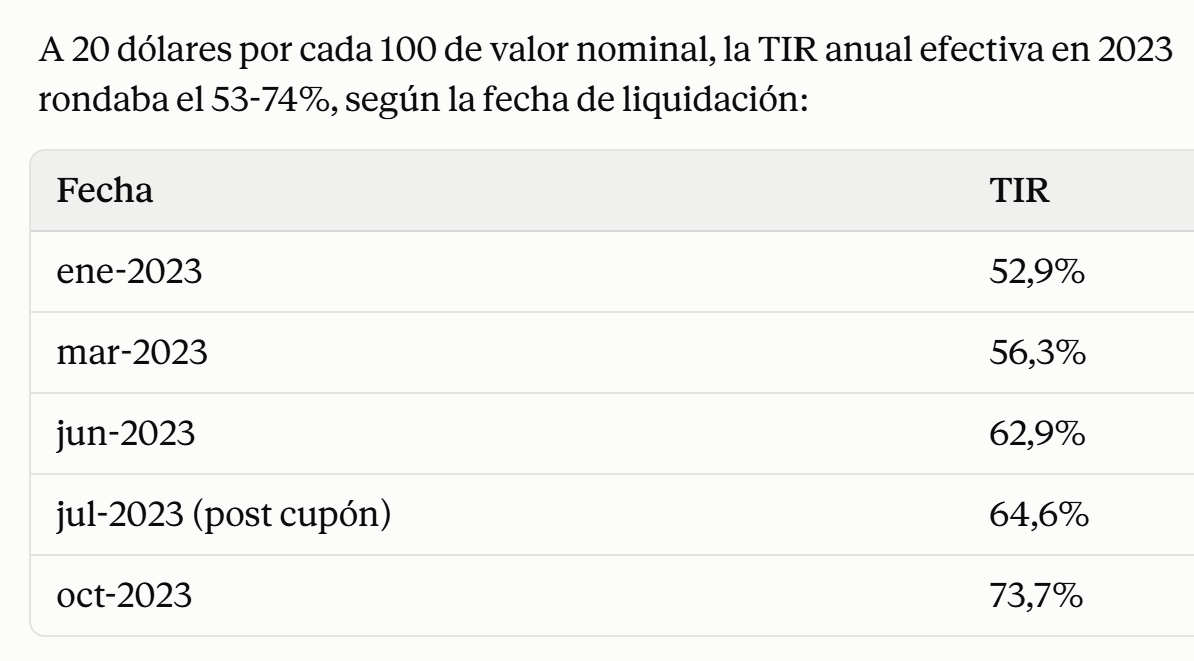
Massa se endeudó a una tasa de 50%/70% en USD para intentar ganar una elección atrasando el tipo de cambio, con brecha 3x que se llevaba toda él con las SIRAs y con los novios de modelitos comprándole al BCRA al oficial y vendiendo al blue.
Eso pasó. Y Massa está libre.
Mirá las prioridades de AGN.
El Kirchnerismo saqueó al BCRA. Le enchufó bonos por usd120mil millones, para quedarse con TODAS sus reservas hasta no dejar un dólar.
Llega Milei, recompone las reservas. +30.000 millones en su gestión.
Pero la AGN en vez de hacer una denuncia del saqueo Peronista, hace un escándalo porque el BCRA, cuidando las reservas, compró un seguro.
La opereta es burda. Pero así es la casta.
Somos los que recibimos un país en el 2023 con record de reservas negativas (entre otras situaciones gravísimas)…y usted dice que en ese momento deberíamos haber aumentado nuestras tenencias de oro…con billetes de El Estanciero seguramente.
> woman takes charge after murdering male leader
> "rationing water is mean, have all the water you want"
> strong implication that they all very likely died of thirst soon after
What did George Miller mean by this? 🤔