When do people in the UK have their first child, and are they married, cohabiting, or single at that time?
Do these patterns vary by parents’ social class and birth cohort?
Read the open-access article in @DemographicRes. https://t.co/YJBMdp3BS4
@mardesimoni Starei cauto sul "fewer couples" (non c'è evidenza sufficiente) e su "less commitment" (c'è dibattito). Anche ragioni "culturali" possono incidere. Avere figli sta sempre più diventando un segno di benessere raggiunto e un "bene di lusso" (in senso economico).
@Shambay_@Fedenwski Ci lamentiamo (giustamente) della rai che occulta e marginalizza contenuti non graditi a chi a turno ha il potere. Però avremmo voluto la censura della Rai in questa situazione.
@Shambay_@Fedenwski Dietro un vetro (trasparente, per definizione)? Nell'epoca in cui ogni giocatore in campo si copre la bocca per mantenere la riservatezza? E tutte le altre persone intorno (assistenti certo, ma anche addetti ai lavori e anche giornalisti)?
Using the Norwegian MoBa cohort, we find no clear evidence that mid-pregnancy PFAS concentrations are associated with a recent miscarriage among women who have not experienced any pregnancy. Open access article on Environmental Research
https://t.co/yULS66nO0W
@capuanogio In più il fatto che alcuni fenomeni siano nati nei primi sei mesi dell'anno non smentisce l'argomento di Comolli. Casi sporadici non smentiscono trend generali. E poi, si potrebbe dire anche l'opposto: solo i fenomeni possono rompere trend stabili.
@capuanogio Ci sono colleghi che trovano risultati in linea con quello che dice Comolli. In generale, il mese di nascita ha impatto su tanti outcomes. È un risultato noto in letteratura. Non è teoria. https://t.co/Vg4r6a7cDp
“Sleeping With the Enemy: Partners' Heterogamy…”: @aledinal & @brunoarpinoEU examined data on nearly 30K British couples & found that couples holding divergent political party and Brexit preferences were at increased risk of union dissolution. @MPIDRnews https://t.co/VJG87TPa8y
Relationships are often built on shared values and beliefs, but what happens when political preferences create a divide?
@brunoarpinoEU and I investigated how political (mis)match affects union dissolution in @ReadDemography
https://t.co/9QFp2qGkVG
In short, political harmony (or mismatch) is a piece of the puzzle when we try to understand why some couples stay together and others break up.
We thank CRITEVENTS (@NORFACE_network), @Centre_LIVES, DisCont & BIOSFER (@ERC_Research) and @MPIDRnews for their great support.
Love across the ballot box? It's complicated!💔A 30-yr UK study shows that couples with opposing political views are 38% more likely to break up - w/ Brexit disagreements being especially divisive!😬https://t.co/V95vRiHycm @MPIDRnews@aledinal@brunoarpinoEU@ReadDemography
💡[SPOTLIGHT]💡
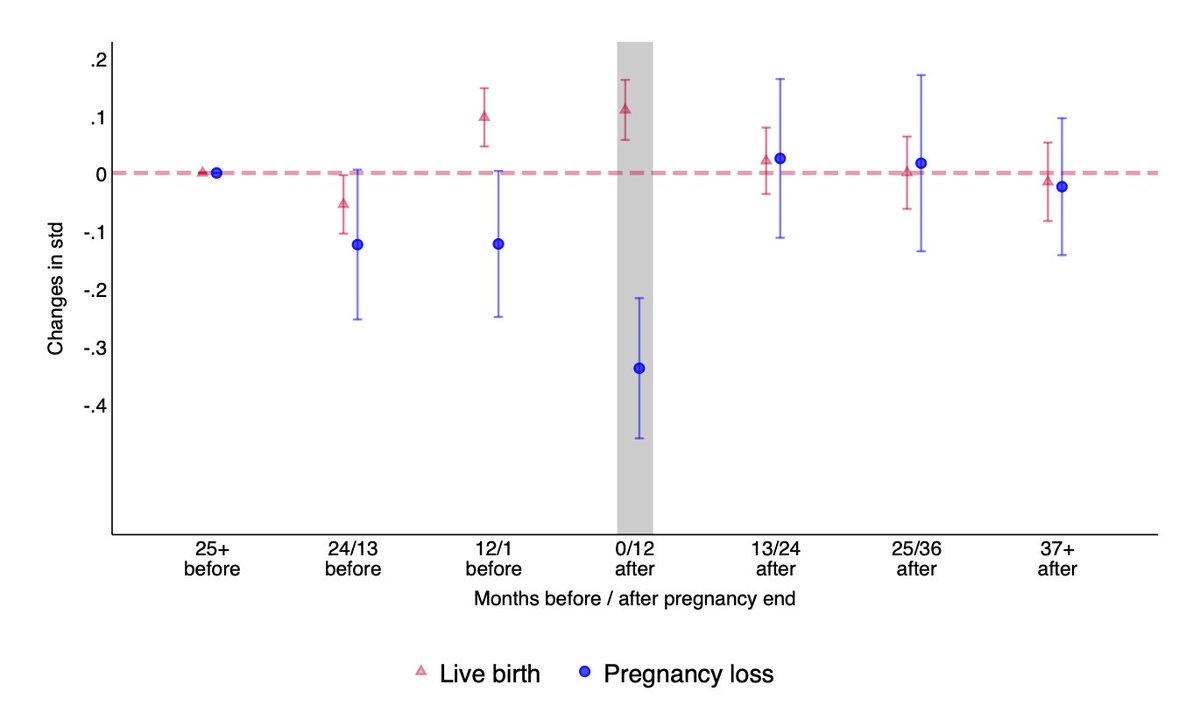
Study examines how pregnancy outcomes affect women’s health over time. Alessandro Di Nallo @MPIDRnews compares the physical health of women who experienced pregnancy losses to those with live births.
https://t.co/x8GBOLQ0hH
Both studies use data from @usociety and were funded by the Understanding Society Fellowship and the ERC Synergy Grant BIOSFER. Special thanks to @selinkoksal@alice_goisis and @HeiniVaisanen for their great comments. And huge thanks to @MPIDRnews for the incredible support.
In the last couple of years, I’ve explored how involuntary pregnancy loss and live birth impact mental and physical health. Two recent articles - published in Population Development Review and European Journal of Public Health - shed light on these topics.
In EJPH, I show that pregnancy loss significantly worsens women's perceived physical health, at least as persistently and deeply as live births, even in the long term. https://t.co/6Q9fRutx6C





![MPIDRnews's tweet photo. 💡[SPOTLIGHT]💡
Study examines how pregnancy outcomes affect women’s health over time. Alessandro Di Nallo @MPIDRnews compares the physical health of women who experienced pregnancy losses to those with live births.
https://t.co/x8GBOLQ0hH https://t.co/6y1YTI157b](https://pbs.twimg.com/media/GpNHVhtWwAAM7ef.jpg)