Muna son duk wanda yake zaune a Najeriya da Afirka zai iya sayen hannun jari na matatar Dangote ba da kudi mai yawa ba, don kowa ya samu alheri – Aliko Dangote Attajirin Afirka
Ya faɗi haka yayin da matatar man sa ta sa hannu kan tsarin sayar da hannun jari duk guda 10 a N 5,250
Assalamu Alaikum.
I’ll be quoting One Hadith everyday from the book “Umdatul Ahkam” it has 430 Hadiths, and In Sha Allah I’ll quote all for 430 days straight.
This is all you need to know about the book;👇
Imagine retiring from the military at just 40 years old, starting a business with just one leased ship, and building a multi-billion dollar empire. General Theophilus Yakubu (TY) Danjuma didn't just command the Nigerian Army he became one of Africa’s most powerful corporate titans. ⭐️⭐️⭐️
In 1979, he retired as Chief of Army Staff. Instead of resting, he launched the Nigeria America Line (NAL) with a single leased vessel. That single move grew into the NAL-Comet Group, which became one of the largest indigenous shipping and terminal companies in West Africa.
His biggest financial move came in 1995 when he founded South Atlantic Petroleum (SAPETRO). He secured an offshore oil block (OPL 246), which turned out to contain the massive Akpo and Egina deepwater fields. Selling part of his stake brought in over $1 Billion, cementing his status as a global billionaire.
Beyond business, he built one of the largest private charities in Africa. In 2009, he launched the TY Danjuma Foundation with a $100 Million endowment. From top military commander to oil giant and major philanthropist, TY Danjuma is a masterclass in wealth and legacy. 🇳🇬
This bird swallows rocks for a surprising reason: they help grind its food and aid digestion!🐦🪨
SubhanAllah, another amazing sign of Allah’s wisdom in His creation. 🤍
This is a clear reason why Nigerians must question unrealistic and unsustainable policies, our Governors have developed the habit of spending free Abuja money on what they feel they wanymt to do to score cheap political goals, this is a scam and people need to ask WHY!
Prof. Hadiza Nuhu, an associate professor of pharmacy at Ahmadu Bello University, has developed Herb 25, an anti-malaria herbal drug registered by NAFDAC.
The drug, developed after 12 years of research, is described as an enhanced ethnomedical preparation from herbs traditionally used in Nigeria to treat malaria.
Herb 25 is formulated for chloroquine-resistant malaria and is dispensed in tea bags for easy preparation with hot water. University officials said it is the first anti-malaria drug of its kind to be produced by a Nigerian university.
Nuhu, a senior lecturer in the Department of Pharmacognosy and Drug Development, holds a Ph.D. from ABU. She is also a member of the Nigerian Society of Pharmacognosy and research director of the Association of Commonwealth Traditional Medicine Practitioners, West Africa.
@abbkar_ai And the airline will join the league of failed airlines and die a natural death, emotion should never have a place in a serious venture eapecially aviation, do you think if successful government run airlines like Ibom @ibomairlines are run this way would have survived upto today?
Northern Nigeria is sitting on a gold mine but we keep digging it with bare hands and selling the raw stones instead of building the machines that turn it into real wealth.
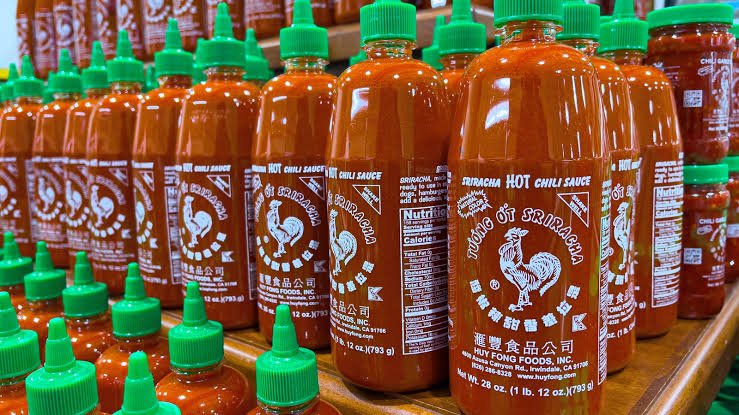
In 1979, a Vietnamese man called David Tran fled Vietnam after the war. He arrived in America as a refugee. He was not carrying a Silicon Valley idea. He was not carrying oil blocks. He was not carrying government allocation. He was carrying taste, memory, hunger, and a sauce people like him already understood.
Chilli sauce was not new. Asians already had it. Thailand already had Sriracha-style sauces. Immigrant communities already cooked with pepper, garlic, vinegar, heat, and memory.
But David Tran did something very important.
He did not merely sell chilli sauce.
He bottled it. Branded it. Standardised it. Distributed it. Protected the taste. Built a factory around it. Put a rooster on the bottle. Gave it that green cap. Made it visible. Made it trustworthy. Made it repeatable.
Then America helped carry it.
Restaurants used it. Shops stocked it. Chefs played with it. Food writers talked about it. Immigrants bought it first, then everyone else followed. Suddenly, something that could have remained “ethnic food” became a mainstream condiment.
And today, that decision has turned into serious economic power.
Huy Fong Foods, the company behind Sriracha, generates hundreds of millions of dollars in annual revenue. At its peak, it was estimated to be worth well over $1 billion, all built from a simple chilli sauce that was properly packaged, standardised, and scaled.
That is how culture becomes an economy.
It is not luck.
The same thing has happened in many places.
Mexico turned tacos, tortillas, guacamole, salsa, chilli, beans, and grilled meat into a global food language. You can enter cities that have never seen a Mexican village and still find Mexican restaurants, taco trucks, packaged salsa, avocado dips, tortilla chips, seasoning mixes, frozen burritos, and entire supermarket shelves built around Mexican taste.
Japan turned sushi from a local food culture into a global premium experience.
Italy did it with pizza and pasta.
America did it with burgers and fried chicken.
Turkey did it with kebab.
The Middle East did it with shawarma.
India did it with curry, spices, biryani, chai, naan, and packaged masala.
The lesson is simple.
The world does not reward people merely because they have culture. The world rewards people who build systems around culture.
Then you come to Northern Nigeria.
We have Zobo.
A drink with colour, memory, taste, local demand, heat, spice, ginger, cloves, pineapple, sugar, hibiscus, and history. A drink that already sits inside our social life. Weddings. Naming ceremonies. Ramadan. Markets. Schools. Roadsides. Homes. Small shops. Plastic bottles. Coolers. Freezers.
Everybody knows it.
Everybody understands it.
Almost everybody has tasted it.
Yet our imagination has kept it small.
We still treat Zobo like a survival business for women trying to make ₦200 per bottle in traffic. The woman selling it is not the failure. She is proof that demand already exists. She has done her part. She has shown us that people will buy it cold, cheap, fast, and repeatedly.
The failure is above her.
Where are the food scientists standardising the recipe without killing the taste, the bottling plants giving it shelf life, the investors building a real beverage company around hibiscus, the designers making Zobo look like something that belongs in supermarkets, airports, hotels, cafés, restaurants, campuses, gyms, and export cartons,the cooperatives linking hibiscus farmers to processors, the labs checking sugar levels, acidity, preservatives, hygiene, and packaging safety, the brands making Zobo concentrate, Zobo syrup, Zobo tea bags, sparkling Zobo, sugar-free Zobo, Ramadan packs, wedding packs, school packs, diaspora packs, mocktail bases, powdered mixes, and premium glass-bottle editions?
Where is the cold-chain, the distribution, the export desk, the national shelf, the African shelf?
Where is the person who looks at Zobo and sees not “small hustle” but farms, factories, branding, logistics, jobs, tax, exports, and cultural power?
That is the Zobo economy.
It is not just about a drink. It is about the way we leave value lying on the table because we are too used to seeing our own things in poor form.
A foreign company can take hibiscus, package it as a wellness drink, call it botanical, organic, antioxidant-rich, caffeine-free, natural, premium, and sell it to middle-class consumers at a price we would never dare to charge.
But when it is our own Zobo, we reduce it to “that thing women sell in used bottles.”
This is how value escapes us.
First, we underprice the product.
Then we underbuild the system.
Then we under-respect the people producing it.
Then someone else enters with packaging, standards, capital, and language.
Suddenly, the same thing we ignored becomes premium.
This is not only Zobo.
Kunun aya is there.
A grain-based drink with tiger nut, ginger, spices, and deep cultural familiarity. It could become bottled breakfast nutrition, school drink, Ramadan drink, hotel drink, dairy-free health beverage, powdered mix, chilled supermarket product, or export item for African stores abroad. But mostly, it remains in nylon, bowls, buckets, and roadside bottles.
Fura da nono is there.
It should not be trapped only in calabashes and local markets. Properly handled, it can become a serious dairy and grain product: packaged yoghurt-style drink, fortified meal replacement, chilled café product, northern breakfast brand, protein-rich school feeding item, and diaspora nostalgia product. But where are the hygiene systems, milk collection centres, pasteurisation units, cold rooms, branded kiosks, and distribution vans?
Gum arabic (Bagaruwa) is there.
This one is almost insulting. Gum arabic is used in food, drinks, pharmaceuticals, printing, cosmetics, confectionery, and industrial applications. It is the kind of product that should make dryland communities part of a serious global supply chain. But how much of the value do the communities actually own? Where are the processing plants, quality labs, traceability systems, export brands, and farmer-protection structures?
Livestock is there.
Cattle, sheep, goats, hides, milk, meat, bones, horns, manure, transport, markets, veterinary services, feed, cold rooms, abattoirs, leather, dairy, sausage, yoghurt, cheese, fertiliser. Livestock is not supposed to be just animals moving across roads and causing conflict. It is supposed to be an industry with ranches, feedlots, animal health records, milk collection, meat processing, leather factories, logistics, insurance, and export discipline.
the same logic applies to dates, sesame, shea, leather, tomatoes, and groundnuts.
This is the pattern.
We have the products, the memory, the demand, the land.
We have women already working.
We have young people looking for jobs.
And we have culture that can travel.
But we do not build the institutions that turn these things into owned prosperity.
A people cannot keep praying for development while treating every potential industry as petty trading.
The woman selling Zobo in traffic is not small.
The system around her is small.
She has already proved the market. She has already done the customer discovery. She has already shown product-market fit in the hardest conditions possible: heat, traffic, no advertising, no branding, no cold-chain, no investor, no supermarket shelf.
That is what hidden potential means.
But the real question is: who is building the machine?
Because culture without machinery becomes nostalgia.
And Zobo without industry remains ₦200 in traffic.
David Tran did not invent chilli.
He built a system around it.
That is the lesson.
Our tragedy is not that we lack our own Sriracha.
Our tragedy is that Zobo has been staring at us for years, cold inside a plastic bottle, waiting for somebody to take it seriously.
@Abdulfagge@oil_shaeikh@officialABAT Please give credit to Late Fmr President Buhari, and
to Fmr Min Fashola for Infranstructure tax credit scheme, this project funded by NNPCL under the initiative was conceived during the last administration and attained appreciable level, Kaduna western bye pass inclusive.
@KADRA_kdsg Governor Uba Sani @ubasanius has fulfilled his part towards restoring the glory of North premier institution @abuzaria4all, he deserves our accolade, we hope and pray that other governors will fulfill their pledge of upgrading and expanding the university road infrastructure.