Main lesson:
In crypto, the market direction is often less important than correctly selecting the specific coins that will show the strongest rebound. Asset selection in such situations decides everything
I guess the coins I like the most going into the new cycle are these:
1. $HYPE (perps, L1)
2. $TAO (AI, L1)
3. $NEAR (AI, L1, privacy)
4. $LIT (perps, the best bet on perps after HYPE)
5. $PUMP (memecoins, speculation)
6. $ZEC (L1, privacy)
7. $MON (new L1)
8. $MEGA (new L2)
New coins good, old coins bad. HYPE, LIT, PUMP, MON, MEGA has never been in a bull. Well, you could argue HYPE launched at the tail of the bull, but not a full cycle. TAO and NEAR are clear tokens in the AI narrative. ZEC is the "VC-privacy coin".
But tokens are not stocks, they have no value. Yes, and no. I think this is one of the hardest "dilemmas" of the new cycle. Betting on tokens in 2023 felt like a no-brainer. We all had hopes that our coins would make a comeback at some point. Now, in 2026, with an infinite number of tokens, it's harder than ever to pick something. There is a huge difference between a good product and a good token, and since most tokens are governance tokens, do we really need them? Maybe not, but it remains the main vehicle for speculation.
What about BTC, SOL, ETH? BTC should always be a part of a core portfolio, maybe SOL and ETH also, but I think the ones above will outperform compared to them.
Anyway, my gut feeling says that there will be something else that takes the spotlight, and that "the new thing" will outperform all of the 8 I listed. These are my thoughts today. Next week or next month I could already have changed my mind, so NFA and do your own research.
Tried something cool today that I think many aren’t aware of: Confidential Swaps, which just went live on @near_intents.
It lets you basically swap any asset, and what you swapped, what you received, and where it went are all untraceable.
You deposit into your Confidential Account, and from that moment, you are inside a sealed environment.
Here’s exactly what I did (see screenshots below):
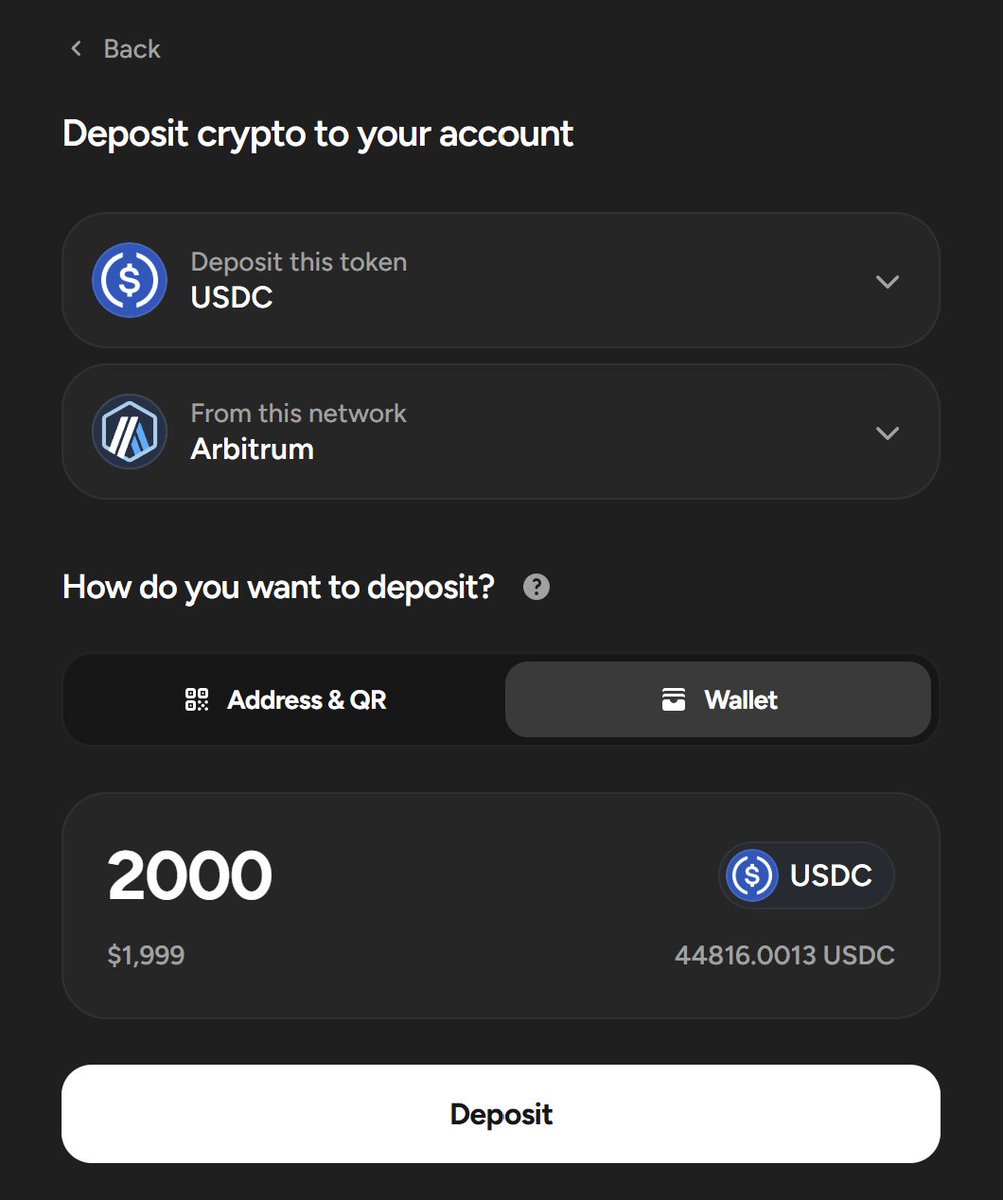
1. Deposited 2k USDC on ARB.
2. Moved 2k USDC from my main account to my confidential account.
3. Swapped 2k USDC into ETH.
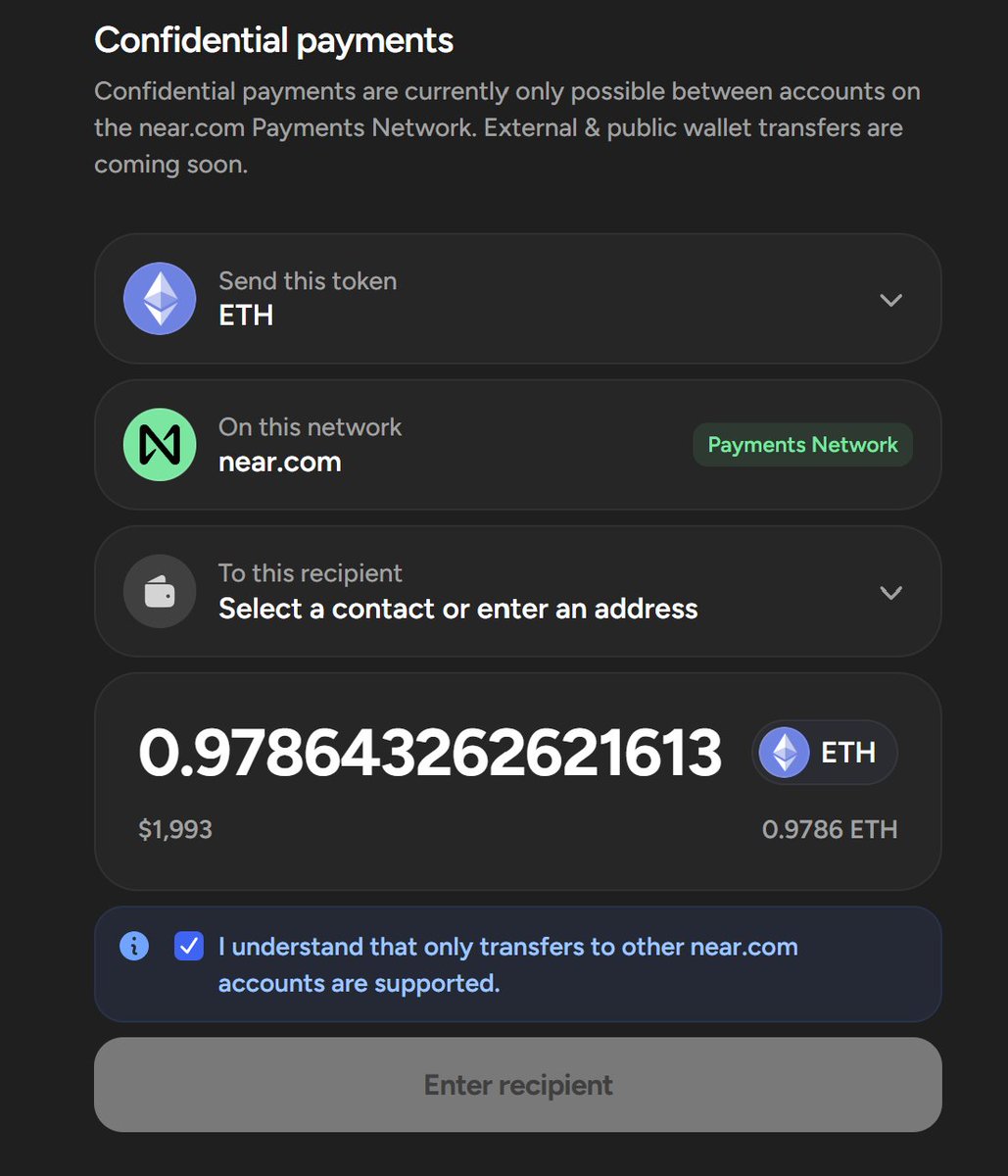
4. Sent that ETH to another confidential NEAR address I control.
5. Moved USDC from confidential to main account
6. Withdraw to wallet
Ok, some notes. How you use it matters. If you do as I did: deposit 2,000 USDC, swap to to 0,97 ETH, but instead withdraw instantly to the same address, an on-chain degen could still connect the pattern.
The input and output remain visible on the edges, while what happens inside stays confidential. Real confidentiality comes from how you handle the flow.
For example, keep assets in your account longer, withdraw to different addresses (what I did), and avoid mirroring the same amounts in and out.
Like, if you put in 2000 USDC, it would be quite easy to see if you withdraw the exact same amount.
If you think about it, this is what happens when you use a CEX today, but NEAR found a way to do the same onchain.
Every swap you have ever done before this sits on a block explorer forever. Anyone can see the inputs, the outputs, and the route. near(dot)com Confidential Accounts break that connection completely.
Inside the confidential shard, there is no public RPC, nothing to query. The ledger still verifies itself, but the path between input and output disappears.
Worth checking out if you want to stay onchain, and want less dependence on CEXes on near(dot)com.
As always, I think the best trades are the 1s that are the most under the radar and not known. Everyone's got the same 5 coins on their watchlist (hype/pump/monad/ZEC). Need to find the weird ones instead
My full conversation with @ChrisCamillo
1:20 How I discovered Chris Camillo
0:33 World's first narrative trader
8:05 Why you need to call your trades
10:13 Making 70% a year for 20 years
14:03 The Michelle Obama dress trade
17:00 Trading Damn Daniel
21:34 What hedge funds get Wrong
33:15 IRL trade research
49:01 Trading the iPhone launch
56:36 The female edge in trading
1:02:19 Trading the Swatch AP
1:16:38 Chris's worst trade
1:26:20 Crypto traders can crush the stock market
1:37:33 Not selling Amazon
The State of Solana
TL;DR
$SOL down 33% QoQ to $83.
On-chain activity hit new highs: 112.6M daily non-vote transactions, up 50% QoQ.
Solana dApp revenue remained high at $342M despite the bear market.
PumpFun, Axiom, Phantom and Jupiter generated the most revenue.
RWAs grew 43%.
DeFi TVL down 22% mostly due to SOL price action.
Stablecoin market cap new ATH at $15B.
Payments and institutional adoption expanded, with activity involving firms such as Visa, Stripe, Worldpay, Western Union, PayPal, Mastercard, and others.
AI agents starting to appear, x402 adoption expanded.
Alpenglow is the major upcoming upgrade, aiming to reduce transaction finality from around 12.8 seconds to roughly 150 milliseconds.
bitcoin:native hasn't changed - it's still the same top asset. There have been many good small developments and high-level adoption, but
we only notice what confirms our current mood and ignore everything else.
-In euphoria: you see only good news and gloss over the bad.
-In panic: you see only bad news and ignore the good.
We just had a big rally, a pullback was inevitable. Now a positive sequence of events will begin, which will trigger euphoria. Euphoria leads to optimism, and optimism fuels growing greed
Why I HATE community coins (watch in 2x speed)
- Response to @_logjam about $TripleT (0:13)
- Bad community coins (2:54)
- Catalysts within community coins (4:57)
- It's not 2024 anymore (7:51)
- Pros of catalyst-driven trading (8:54)
- Summary (10:12)
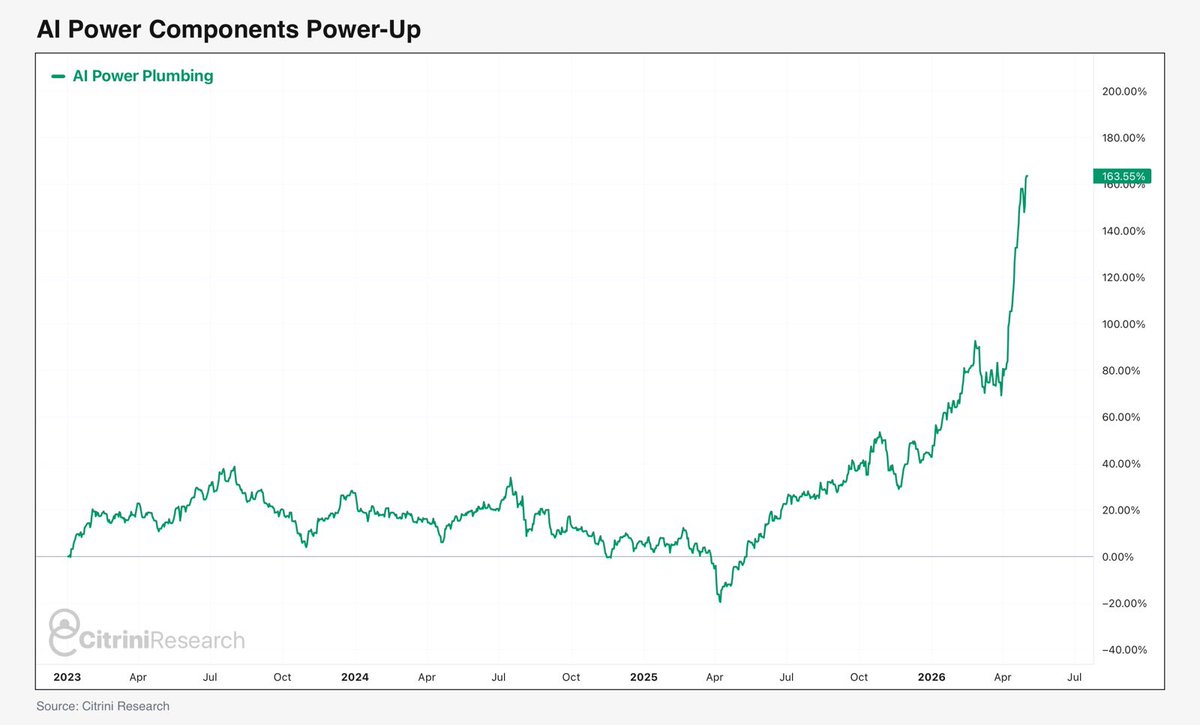
The best performing thematic basket in our universe since the recent market lows is our “AI Power Plumbing” basket - comprised of analog semis names making capacitors, PSUs, inductors, magnetics, MLCCs and discrete power semis.
We were a bit early to this - at the end of 2024 , we flagged the whole analog stack between the grid and the GPU as boring, deeply cyclical, and an asymmetric corner of the AI buildout the market kept ignoring because of a dual China/Auto-cycle overhang. It took a little longer than we anticipated, but the analog cycle finally turned and content per server keeps climbing.
Names like TXN, MCHP, STM, ON, AOSL, VSH, DIOD, ADI, Infineon, MPWR, VICR, Murata Manufacturing, TDK, ALGM, WOLF, Nippon Chemicon, Sumida etc…a lot of quality names that still have a long way to go to match the re-rating of names in memory, optics and compute.
Thesis: This century will be about turning fate into choice.
Death - Biotech
Low intelligence - Neurotech
Physical appearance - Gene editing
Cancer - CRISPR
Disability - Bionics
Infertility - IVF
Food insecurity - Lab-grown produce
Investing in ‘controllable choices’ for previously ‘uncontrollable fates’ will yield trillions in value.
$UNC not just another https://t.co/egtJkqKe6C garbage token, but a story with a real onchain legend (anti-bundler trap + generous airdrop = iconic onchain episode), a strong narrative ('cool uncle'), and a Bybit Alpha listing
UNC LIFE - EPISODE 01
i decided i’m startin a full UNC episode series to celebrate one of the hardest memes of this whole period. funniest part is $unc got no page, no chat, no nothin, but somehow it made me fall back in love with bagworkin again. big respect to @fibonacki for the masterclass
Memecoins aren't 'dead' because of hold times and bundles. The main problem is everyone hunts micro-caps, and then there's nobody left to buy at 5–10–50M and beyond. The entire bonding curve mechanics are now fully mapped and exploited by the trencher community:
-They enter very early at 3%, 4%, 5%, 10% of supply on the bonding curve (for 2–10 SOL you can grab several percent at once);
-They buy in small sizes. Risk is small (you lose a couple thousand dollars max), potential is enormous;
-The moment decent profit appears (x50–x100), 99% of them dump hard;
Example: Imagine a coin at 100k MC. Someone bought 1% for $1k. Coin reaches 10M MC — that 1% is now worth ~$100k (up 100x). For the price to keep rising, all those early buyers need to be absorbed by new buyers at higher levels. By the math, to neutralize dumps from just these early holders during a run to 10M, you need approximately 100,000 net new buys already at the 10M MC level. But:
-Fresh money has barely entered memecoins for a long time now;
-All traders are fixated on entering on the curve;
-So at 5–10–50M MC there simply aren't enough new buyers coming in to push the price higher.
The result:
-Lots of fast pumps on the bonding curve;
-Then a mass dump from early holders;
-And a ceiling — the coin stalls or drops instead of breaking to the next level.
The bonding curve mechanics and all its weak points and optimal entry zones are well known, so the old model of big run-ups is broken. Until a new launch mechanism appears or fresh money flows in — breaking major ceilings will happen extremely rarely.
What could actually work: a completely new launch format that creates a narrative attractive to people outside crypto. The problem with pumpfun right now is that the token comes first and the story is invented after. The order needs to be flipped
One week of research - results
What I did
Built a memecoin monitoring system on Solana where market makers are active. Birdeye API collects B/S ratio, holders, volume, TVL, Top10 holders every 3 hours. LP tracker (Rust) monitors LP events in real time. 9 days of data, 5,279 snapshots, 171 tokens.
What I was looking for
A pattern to buy before the pump.
B/S > 1.0 consistently - catches ALREADY pumping tokens, too late;
B/S trend up from selling - 50/50, doesn't work;
Holders stabilization (floor) - protects from dump, but doesn't predict moon;
Quiet before storm - protects from dump, but doesn't predict moon;
Volume compression - = baseline, no edge;
TVL growth - insufficient data, unreliable;
Top10 accumulation - more moons BUT also more deaths;
Falling + volume up - panic sell, not a moon;
Falling + volume down - slightly better than baseline, not significant;
Holder surge - pump & dump, 32% dump rate;
Top10 dropping - 24% dump rate;
Main conclusion
Memecoins pump from narratives, tweets, raids, KOLs information that doesn't exist in onchain data. Onchain shows the result of people's actions, not the cause
What actually works
The system gives me a filter + context, not a buy signal- it narrows the search field from thousands of tokens down to 30-50 where MM is actually active. Without it I'd be searching through hundreds.
Step 1: LP tracker - MM is active in this token;
Step 2: Twitter/KOL - why could this token pump?;
Step 3: Decision - buy or not.
More than six months ago I started tracking large liquidity additions and removals on Meteora DLMM and Orca Whirlpool. During that time I managed to catch several runners — and had my share of misses too.
Throughout all these months I analyzed which metrics point to potential runners and which signal it's time to exit a position. Gradually, based on accumulated data, I was able to calibrate the threshold values for WSOL/SOL amounts added to liquidity, learned to distinguish real user wallets from market maker wallets, and started tracking them in a SQLite database.
One of the key observations: market makers work with 50–75 tokens daily, and the list gradually rotates — old tokens drop off, new ones appear. This allows me to always be in tokens where there's an active market maker and stable liquidity. The presence of a MM most likely means either a paid service arranged by the dev, or the market maker self-selecting tokens to earn fees, betting on future volume and price movement.
Right now, every two hours across all ~70 tokens I record the following metrics into SQLite:
- whether the top-10 holders are accumulating or selling;
- trading volume dynamics (volume rising while price stays flat is a clear sign of accumulation);
- holder count (growing or shrinking);
- TVL stability and liquidity movement across the top-5 pools.
From now on I'll be posting daily snapshots for each token:
Price: $0.213378 → $0.223129 (+4.6%) ↑
B/S: 0.59 → 0.72 ↑
Volume: $104K → $115K (+10%) ↑
Holders: 11,005 → 11,006 (+1) ↑
TVL: $630K → $644K (+2%) ↑
Top10: 53.3% → 53.3% (-0.0%) →
I am currently focused on developing algorithms for blockchain monitoring. Tracking liquidity is more effective than tracking price. Price reflects what has already happened. Liquidity indicates what may happen next. When liquidity quietly increases, it often signals an impending significant market move.
When someone adds liquidity to a token’s liquidity pool, it means they are providing capital to support future trading. This is typically done by smart money or insiders. Frequent or substantial additions to the liquidity pool (LP) signal confidence—they are preparing to attract more buyers later.
Started running onchain analysis on Volume, B/S ratio, Holders + Top-10, but only where there's active market maker activity. I can feel how much more informed I am about what's happening in the market right now.
In the screenshot almost all tokens show negative net SOL - this is just MM business: ADD liquidity → collect fees → REMOVE with profit
Net will always be negative = that's their earnings