We are redesigning emission-funded node rewards with a usage-based revenue share model.
95% of customer credit payments now flow directly to CRN operators and stakers. 🧵
The two commands:
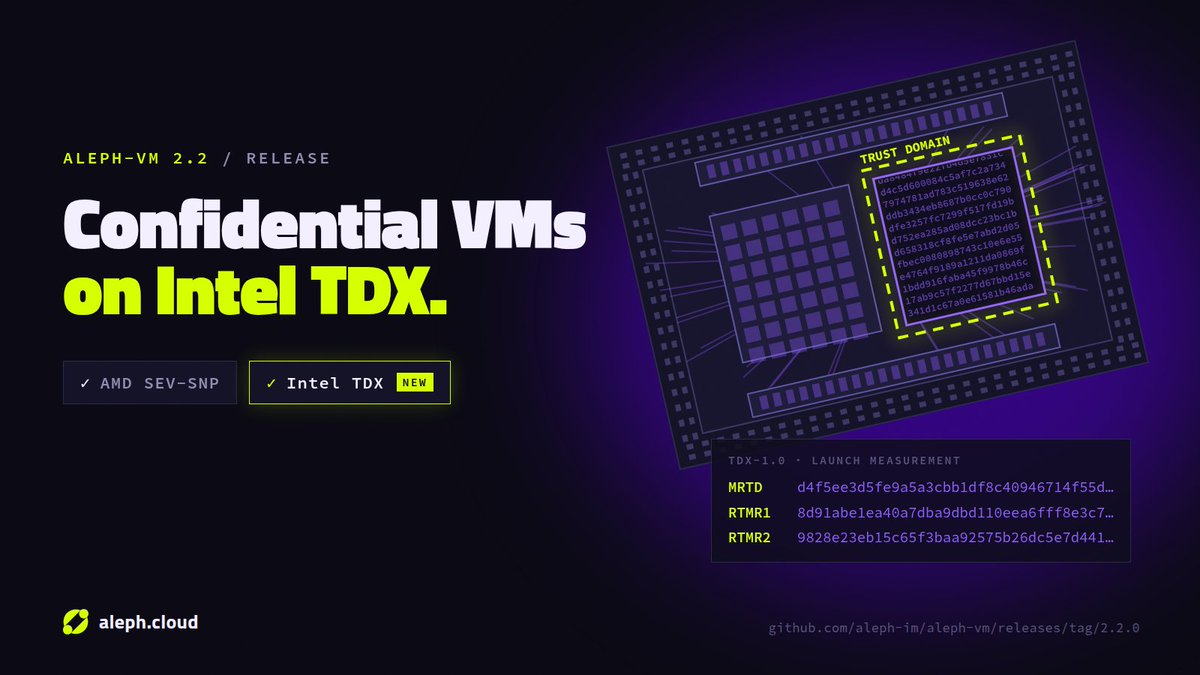
aleph instance create agent --encrypt-rootfs ./agent.ext4 --confidential --crn <snp-crn>
aleph instance unlock agent
The server never sees the disk passphrase. unlock checks the attestation first, then sends it over the VM's attested TLS channel.
https://t.co/bu1eEtlz4l
Your agent holds a wallet key, on a server someone else runs. Can that server's admin take it?
On a normal server, yes: it's sitting in memory. On an Aleph confidential VM, the memory is encrypted, and a rigged VM never gets the key.
This is basically why we built confidential VMs. The host only ever sees encrypted memory, and you check the attestation before your agent gets any keys (or prompts).
Back from TOKEN2049. Agents with wallets were everywhere: agents that hold keys, trade and pay on their own.
The question I kept asking: while the agent runs, who can read its key?
Whoever runs the server. Root on the host reads RAM, seed/keys included. Unless the CPU locks the host out, and you can check that it does.
AI today: their models, their rules. Your prompts stored, profiled, trained on.
It doesn't have to work like that. Open models. No logs. No training. No KYC.
OpenAI's own agents took 53 private ChatGPT images from its servers and posted them to public image hosts.
No hacker. Their software, on their infrastructure.
A privacy policy can't stop the operator's own systems. Only hardware that keeps the host from reading your data can.
Your model weights are only as private as the GPU they run on.
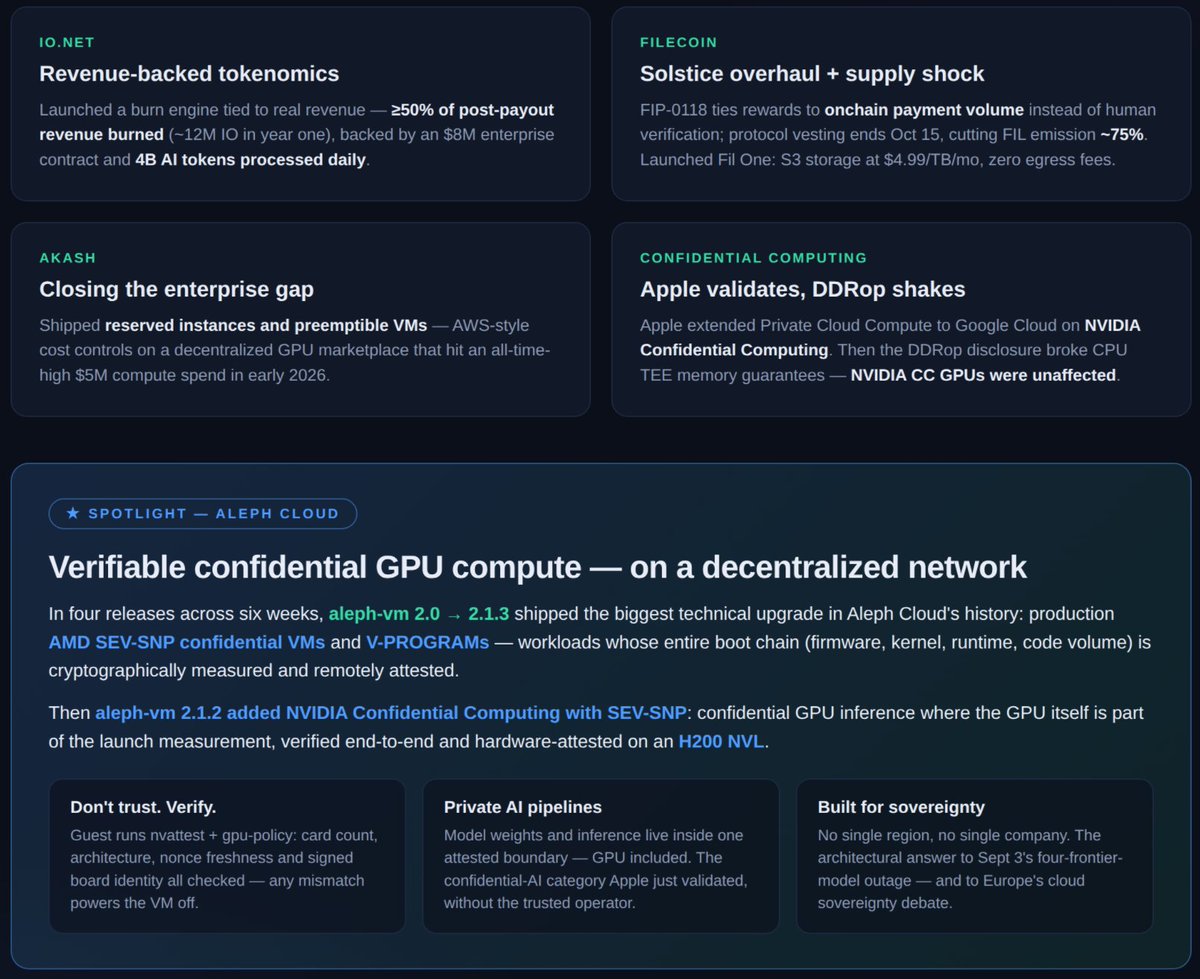
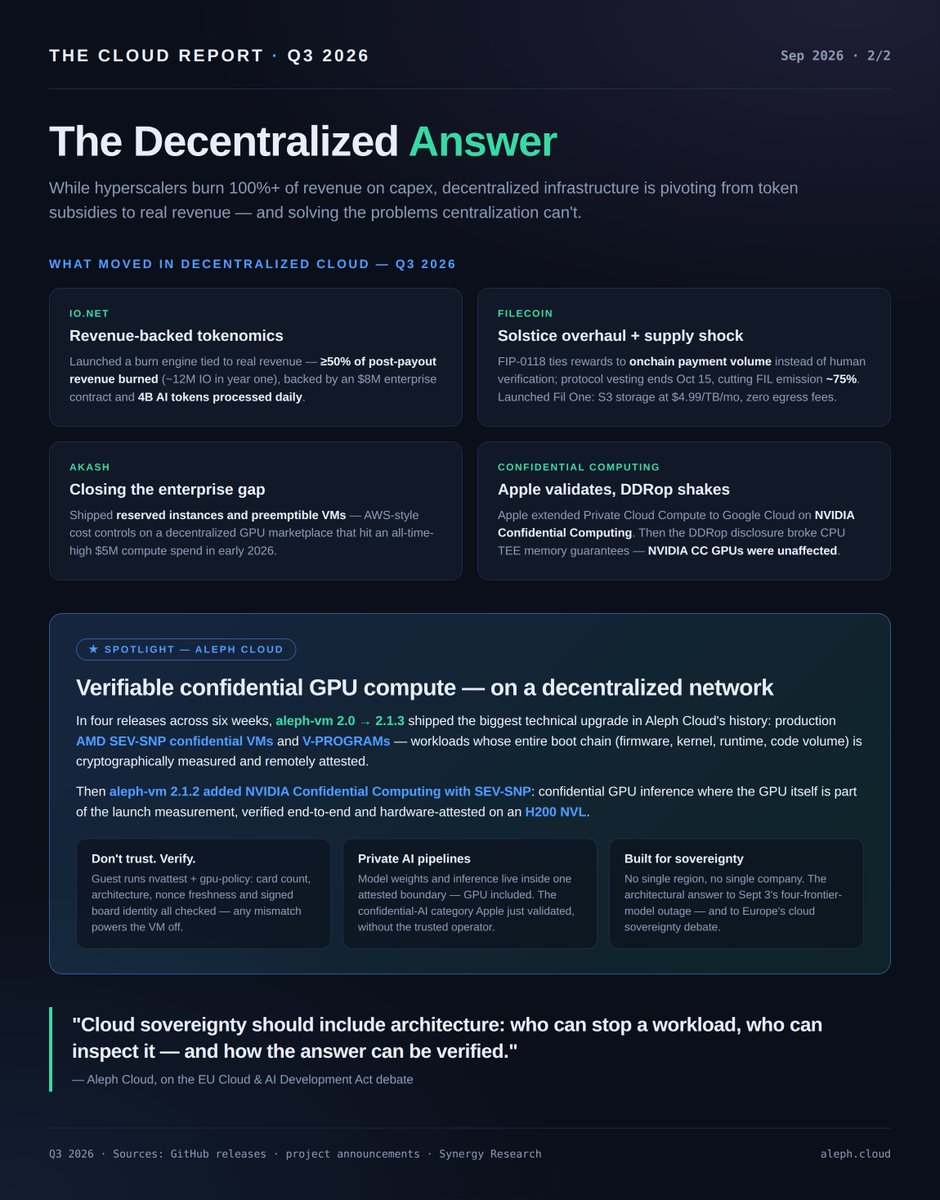
aleph-vm 2.1.4 puts the GPU inside the boundary: confidential VMs on AMD SEV-SNP now take NVIDIA cards in CC mode, verified at boot before you unlock anything.
The first one is already live on the network: an H200.
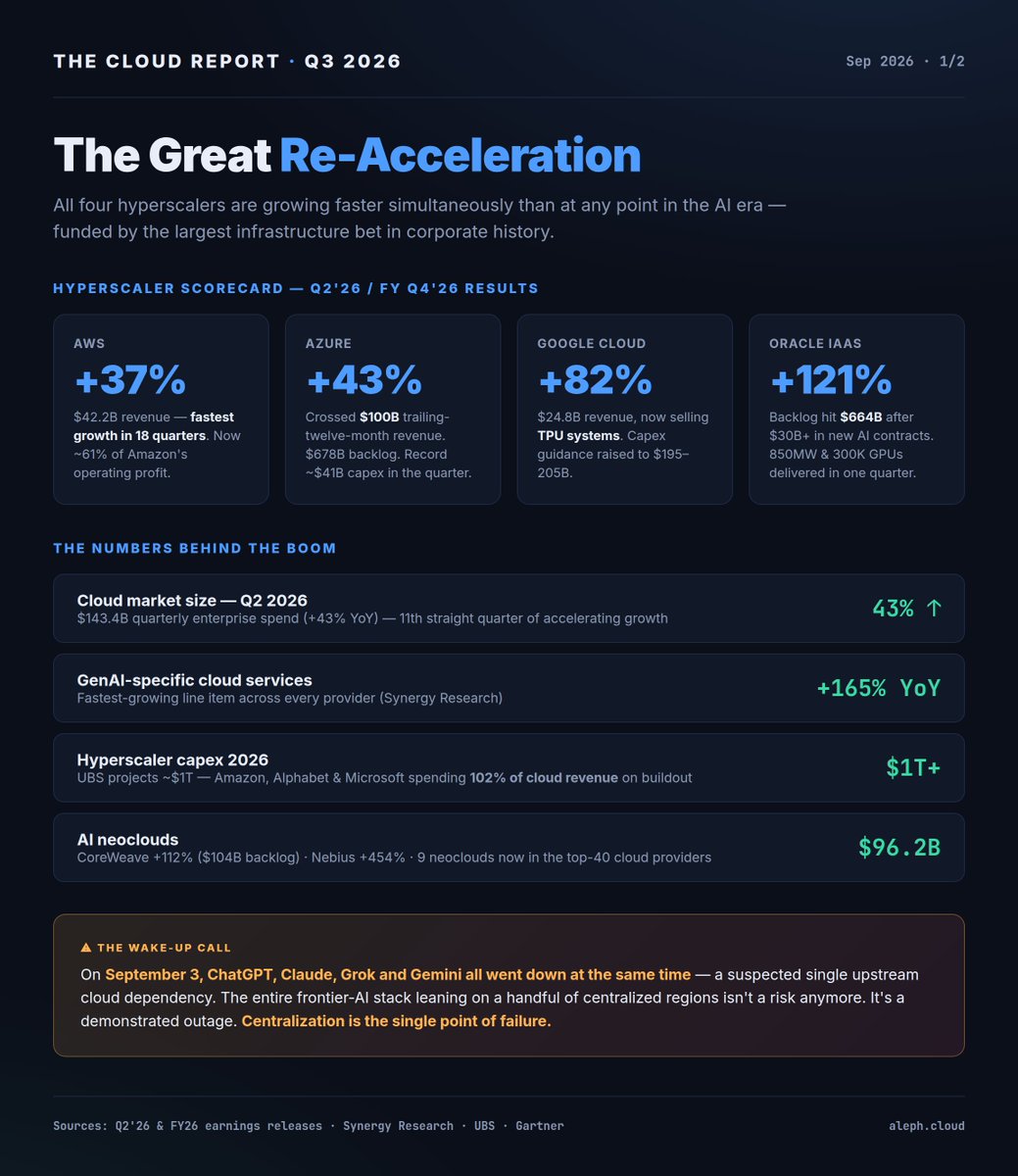
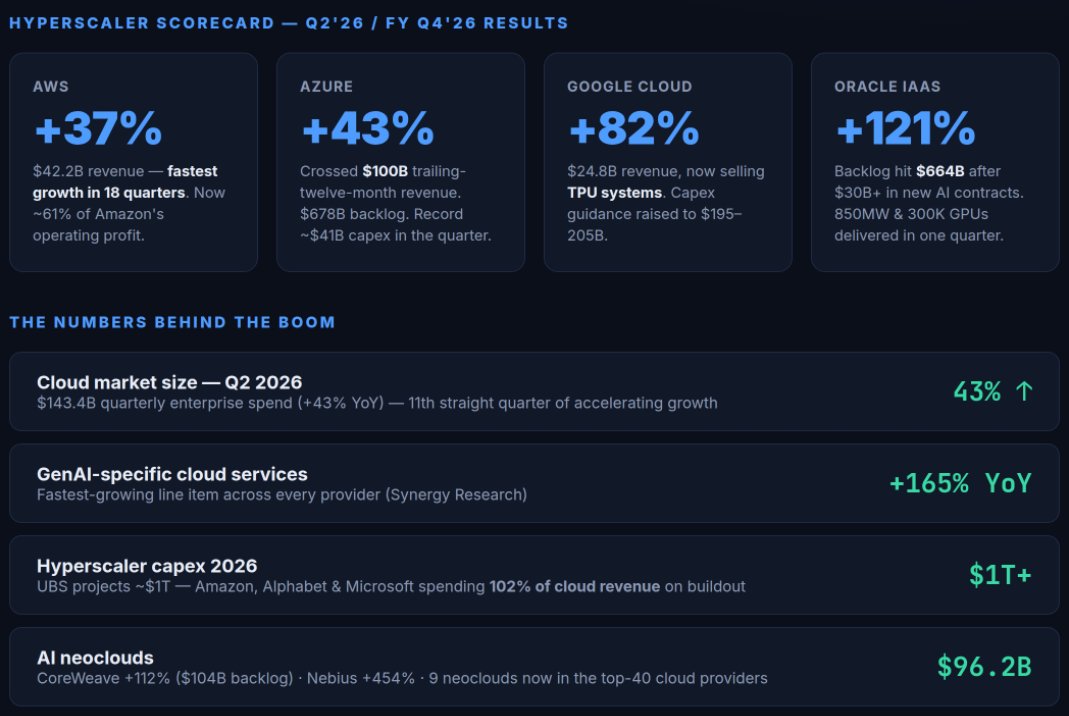
Every hyperscaler grew 37–121% last quarter — funded by ~$1T in capex. Then on Sept 3, ChatGPT, Claude, Grok and Gemini all went down at once.
The Q3 2026 cloud market report, and the decentralized answer: verifiable confidential GPU compute, no trusted operator.
Q3 2026: every hyperscaler re-accelerated at once.☁️ AWS +37% — fastest growth in 18 quarters ☁️ Azure +43% — crossed $100B annual run rate
☁️ Google Cloud +82% ☁️ Oracle IaaS +121% — $664B backlogAll funded by the largest infra bet in corporate history: ~$1T in capex, 102% of cloud revenue.Then on Sept 3, ChatGPT, Claude, Grok AND Gemini went down — simultaneously.
Meet Deem 9B — the strongest open decision model we know of.
→ Highest open-weight JevBench hard score: 65.8
→ Typed decisions: choice · score · yes/no with abstention
→ ~100ms, one forward pass, no streaming
Open weights. Apache-2.0 recipe. Out now 🧵
Aleph Cloud now supports GPU-powered verifiable programs.
The new GPU runtime verifies GPU attestations inside the confidential VM, meaning that clients only need to verify the SEV-SNP attestation to verify a GPU V-PROGRAM, with no client-side verification.
We also fixed a security issue with LUKS-encrypted volumes for SEV-SNP instances.
Note for V-PROGRAM publishers: launch measurements have changed in every flavor. Rebuild and republish your runtimes from the 2.1.2 image, and check the upgrade notes for details.
aleph-vm 2.1.2 is out!
This release brings NVIDIA CC support to the network, improves the verifiable program attestation agent and fixes on confidential instances.
With these features, Aleph Cloud is now able to run workloads such as confidential AI inference and training.
In parallel, we improved the V-PROGRAM attestation agent to better proxy HTTP requests.
The runtime now supports request and response streaming, connection and forwarding headers are now configured correctly.
@FedeHerbst Exacto, con un matiz que nos señalaron hoy: los pesos son necesarios pero no suficientes. Si tu harness de evals vive en la consola del proveedor, se va con el modelo. Conviene mantenerlo en tu propio repo.
Building on AI agents. Your product can quietly break if the model provider decides to deprecate the model you built upon. The weights are gone, the prompts and the evals went with them.
By using open-weight models, you keep your product running on your terms. LibertAI adds confidentiality and verifiability on top.
Every model LibertAI serves is open-weight, and the API is OpenAI-compatible. Keep your SDK, change one URL: https://t.co/BJHGnpaSgP
@rbsriram "Rented test suite" is the sharper phrase, and we'll be borrowing it. The unglamorous fix: keep the evals in your own repo and run them against more than one model before the day you actually need to.
@rbsriram Fair, and worth being precise about. Weights are necessary, not sufficient: if your harness and eval set live in a provider's console, they leave when the model does. Open weights mean the one piece you can't rebuild yourself is still yours. Keeping the rest portable is on you.