🧠Exploring the human brain at mesoscale with cutting-edge ultra-high field fMRI and new advanced quantitative analysis! 🌟
A glimpse into functional cortical columns in V5: https://t.co/oszwswkn3v
@layerfMRI@ofgulban@BenitezAmaia@JudPet@rainergoebel
New LayNii v2.10.0 is out!
https://t.co/2rExyxjxfF
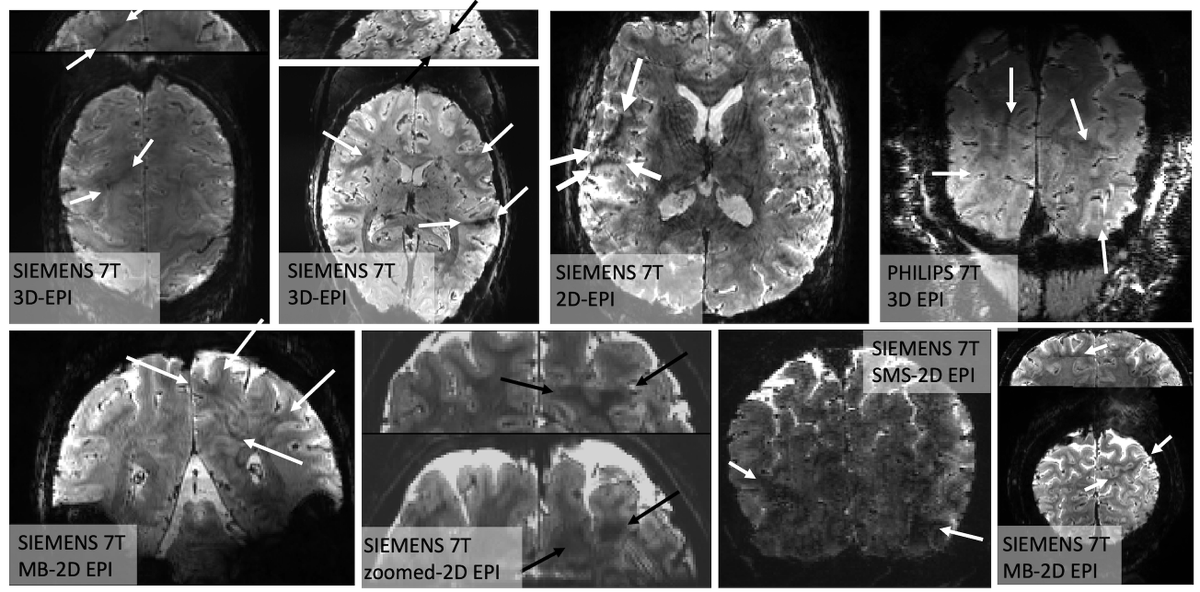
🚀 LN2_FRISGO: This program mitigates the Fuzzy Ripple artifacts in dual polarity 3D-EPI fMRI data.
💾 Big data ready: Now handling >5GB NIFTIs to support the mesoscopic shift toward high-res, whole-brain images.
@layerfMRI
A new MRI protocol can scan the human #brain and its venous network in under 7 minutes, marking it as a potential tool for diagnosing cerebrovascular diseases and monitoring neurodegeneration. @ofgulban https://t.co/Ok30agpYxq
Happy to share that our new preprint is now available!
Digging into our previous dataset, we found a feedforward signature in FFA during passive face image presentations, suggesting face information is structured prior to FFA.
Please find more details in the manuscript 😁
I’m proud to share that on July 3rd, I defended my PhD thesis: "Distinct and complementary: insights on bistable perception in humans using ultra-high field MRI across multiple spatial scales."
The defense stream is here: https://t.co/S31kQCmZD0
Excited for what’s next!🧠🧲🥳
You feel something is physically moving during a bistable illusion. While your brain can trick your eyes 👀, it cannot trick our scanner🧲
Our 7T fMRI results show a distinct feedback modulation between V1 & hMT+ in this illusion👇
@ofgulban@layerfMRI@JudPet@rainergoebel
New layer-fMRI paper combining high-resolution VASO with an advanced 3D spiral readout.
By @MonrealMadrigal, @HighOnField et al.,
https://t.co/2ww3qK3IaS
You feel something is physically moving during a bistable illusion. While your brain can trick your eyes 👀, it cannot trick our scanner🧲
Our 7T fMRI results show a distinct feedback modulation between V1 & hMT+ in this illusion👇
@ofgulban@layerfMRI@JudPet@rainergoebel
New layer-fMRI manuscript focusing on Fuzzy Ripple artifacts. Arguably the biggest challenge in layer-fMRI acquisition.
Every layer-fMRI dataset has them, they limit resolution and TR, and we shows how to mitigate them.
https://t.co/VMO2Zfu8hc
#Layer_fMRI_Artifact_of_the_Week
New paper in Imaging Neuroscience by Sebastian Dresbach, Rainer Goebel, et al:
Characterisation of laminar and vascular spatiotemporal dynamics of CBV and BOLD signals using VASO and ME-GRE at 7T in humans
https://t.co/g8HghrmUDR
For an ERC-funded project I am looking for enthusiastic academics interested in investigating mental imagery using laminar fMRI, AI and BCIs. For details see:
https://t.co/b5VVrk8EWg
https://t.co/Wisq08qRHD
🧠Come check out our layer-fMRI poster #2554 at @OHBM today and tomorrow!🧲
*Feedback and feedforward laminar modulation of
human motion perception: a 7 T fMRI study*
@ofgulban@layerfMRI@JudPet@rainergoebel#OHBM24
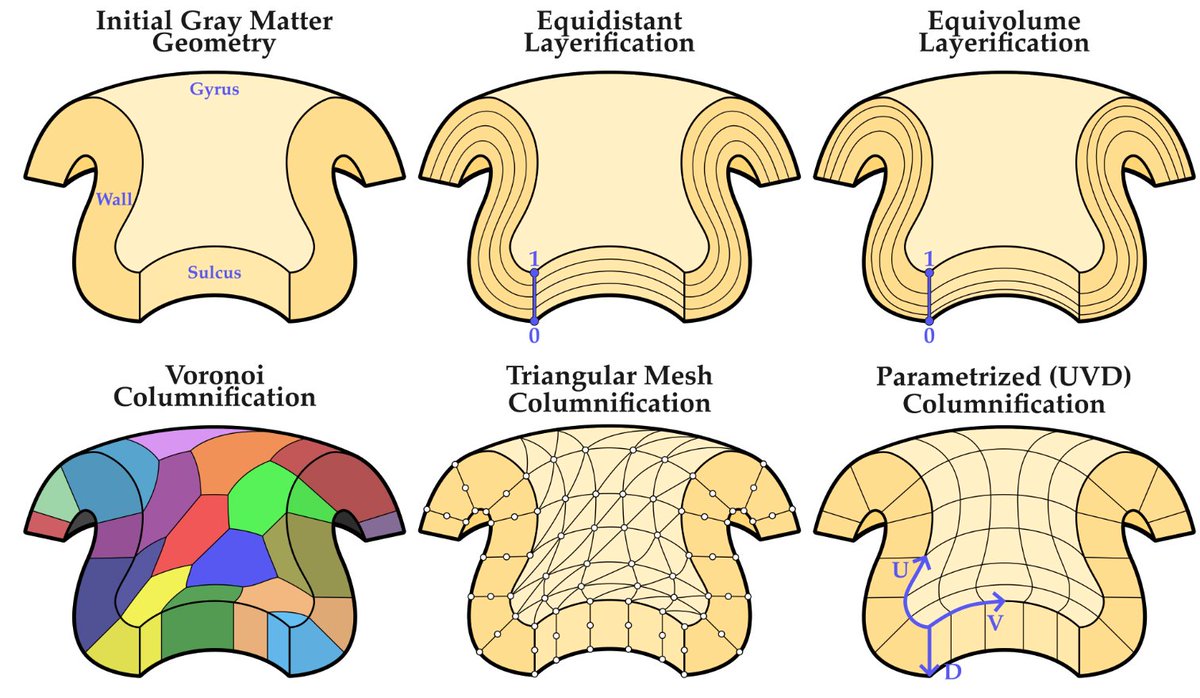
There is a new blog post (book chapter) that provides an overview methods for computing geometric layers and columns. AKA: Layerficiation and Columnarization.
It includes: Historical aspects, the layer-fMRI field now, and the future.
By @ofgulban
https://t.co/MPQT2lBjuS
Today 25 years ago, the first fMRI study got published that imposed layers on human MR images.
By @Northernthrux
https://t.co/onmaInsf1y
It took another 8 years until the first layer profiles (plot of fMRI signal across layers).
(Looking at layer-fMRI history with @ofgulban )
New Nature Methods paper describing the Next Generation 7T scanner (aka Feinbergatron). A scanner that is specifically designed for layer-fMRI and provides exquisite resolution.
By Feinberg et al. https://t.co/KOiByo2shp