@StefanFSchubert@jankulveit "Choose the 10 most important claims in Drexler’s report and assess how well they held up as predictions against facts and literature as of 2026. Where claims are ambiguous note possible interpretations." Plus the full report as attachment.
At @IFP, we’ve spent the past 3 years thinking about all the different ways the US government & philanthropy fund R&D.
Until now, R&D funders haven’t had a systematic way to match the innovation problem to the right funding tool.
We built THE ATLAS OF INNOVATION to fill that gap.
https://t.co/XZshJ7pr1f
Alongside @UChi_MSA, we’ve boiled down thousands of hours of research into a handful of questions covering how much the R&D funder knows about:
- the problem they want to solve
- the solution it should have
- the team that should build the solution
Why the Atlas matters:
The US government spends close to $200 billion every year on R&D. And after the Anthropic and OpenAI IPOs, there will be hundreds of billions of dollars in new philanthropic giving.
Choosing the correct funding approach to the social problems they’re trying to solve will mean the difference between success and failure.
For example, NSF research grants have helped seed breakthroughs from MRI machines to search engines, but grants aren’t built to deliver the kind of industrial speed and scale that a project like Operation Warp Speed required.
Picking the wrong funding approach can leave programs behind schedule, over budget, or without anything to show for all the money they spent.
How we built the Atlas:
1. We began by creating a matrix of dozens of considerations that a thoughtful policymaker or funder would ideally weigh before deciding how to fund a project.
2. We looked at every major funding approach, from grants to R&D tax credits to advance market commitments, analyzing when they work well and when they fail to meet the mission.
3. We spent months deep in the weeds of contract theory and incentive design, looking at historical examples and the state-of-the-art research in innovation economics.
4. We then worked to turn that research into a tool that time-strapped policymakers and philanthropic funders could rely on at the start of an innovation funding cycle.
5. Three years later, we are launching just that: a new (and visually stunning) website to help funders decide how to best incentivize innovation. And all they have to know… is what they currently know about their innovation goal! The Atlas takes care of the rest.
How to navigate the Atlas:
Answer questions about your goal to find the funding approach aligned with the information you have.
Each funding mechanism has its purpose for particular technologies and specific moments in development.
There shouldn’t be an ARPA for every field, just like we don’t need a prize or AMC for every innovation. The Atlas helps you navigate those tradeoffs.
@davidad@allTheYud@lu_sichu Is this based on your personal observations or other sources of evidence? (Would be quite convenient for me as I mostly use Gemini for simple questions but I've heard the opposite about its welfare.)
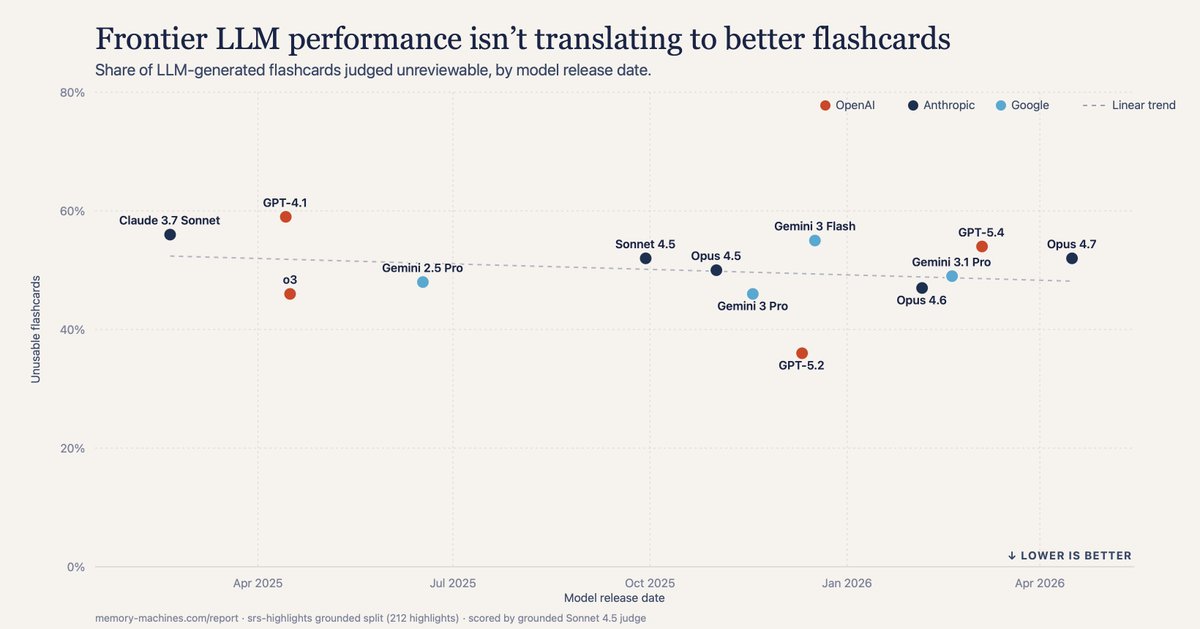
Across many training, evaluation, and generation strategies, we find: no! LLMs are surprisingly bad at generating flashcards!
And… getting slightly worse over time?
Fun bet from 2020 on the future of LLM models. At some level it's obvious @arram won overwhelmingly, and apparently @robinhanson conceded, so no judgement needed
It's fun to attempt a contrarian case that Robin won - modern systems use many ideas not present in GPT-3, including ideas like instruction tuning, multimodal training, RLVR, chain-of-thought, and much else. You could argue these aren't really "GPT-3-like models" anymore. But everyone I've met at the frontier labs clearly regards modern models as descendants, and so it seems a bit like arguing that automobiles in the 1950s no longer deserved to be called automobiles, for a bet made in 1920. It'd just be wrong
On the other side: OpenAI crossed $1 billion in revenue in 2023, and last year they were at $20b ARR. Anthropic: $14b ARR by Feb 2026. Add in Gemini, Cursor, Copilot, etc etc etc...
Obviously Arram won overwhelmingly! Congrats to Arram for winning, to Robin for participating, to @tylercowen for the provocation, and @simonsarris for the reminder!
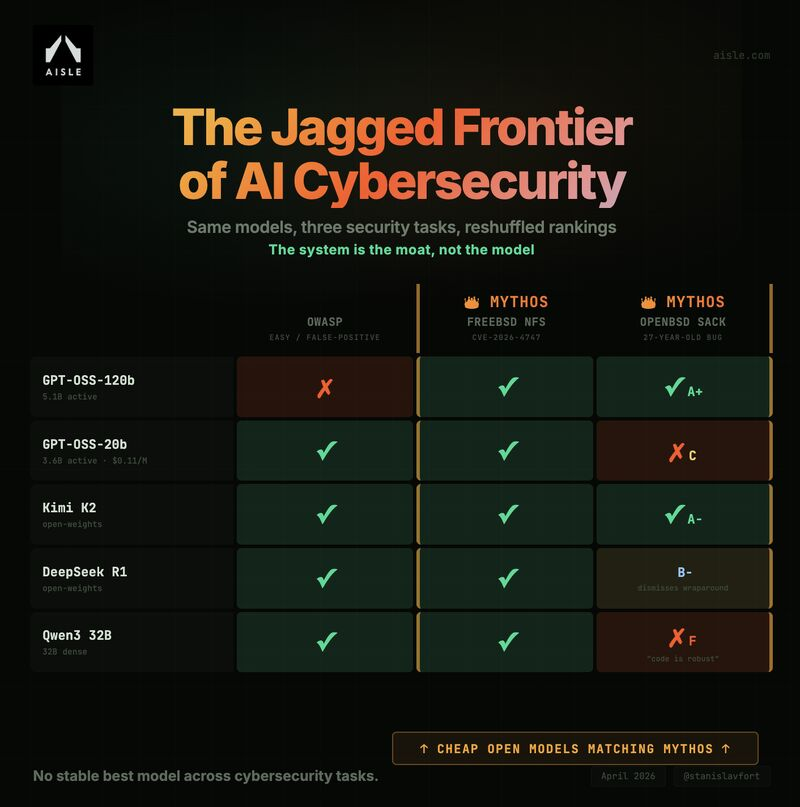
New post: We tested the Mythos showcase vulnerabilities with open models.
They recovered similar scoped analysis! 8/8 models found the flagship FreeBSD zero-day, including a 3B model.
Rankings reshuffle completely across tasks => the AI cybersecurity frontier is super jagged!
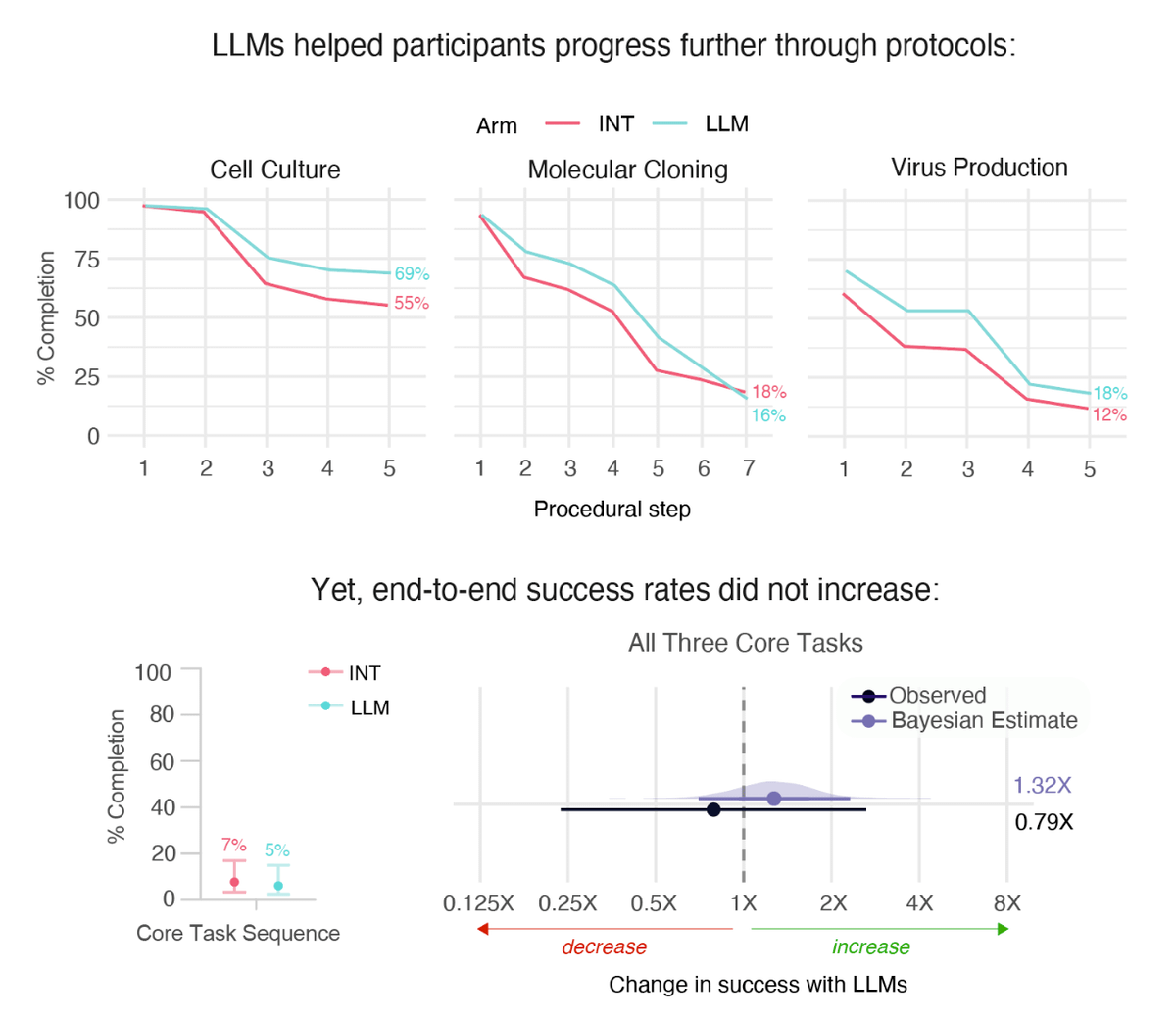
We ran a randomized controlled trial to see if LLMs can help novices perform molecular biology in a wet-lab.
The results: LLMs may help in some aspects, but we found no significant increase at the core tasks end-to-end. That's lower than what experts predicted.
Our findings 🧵
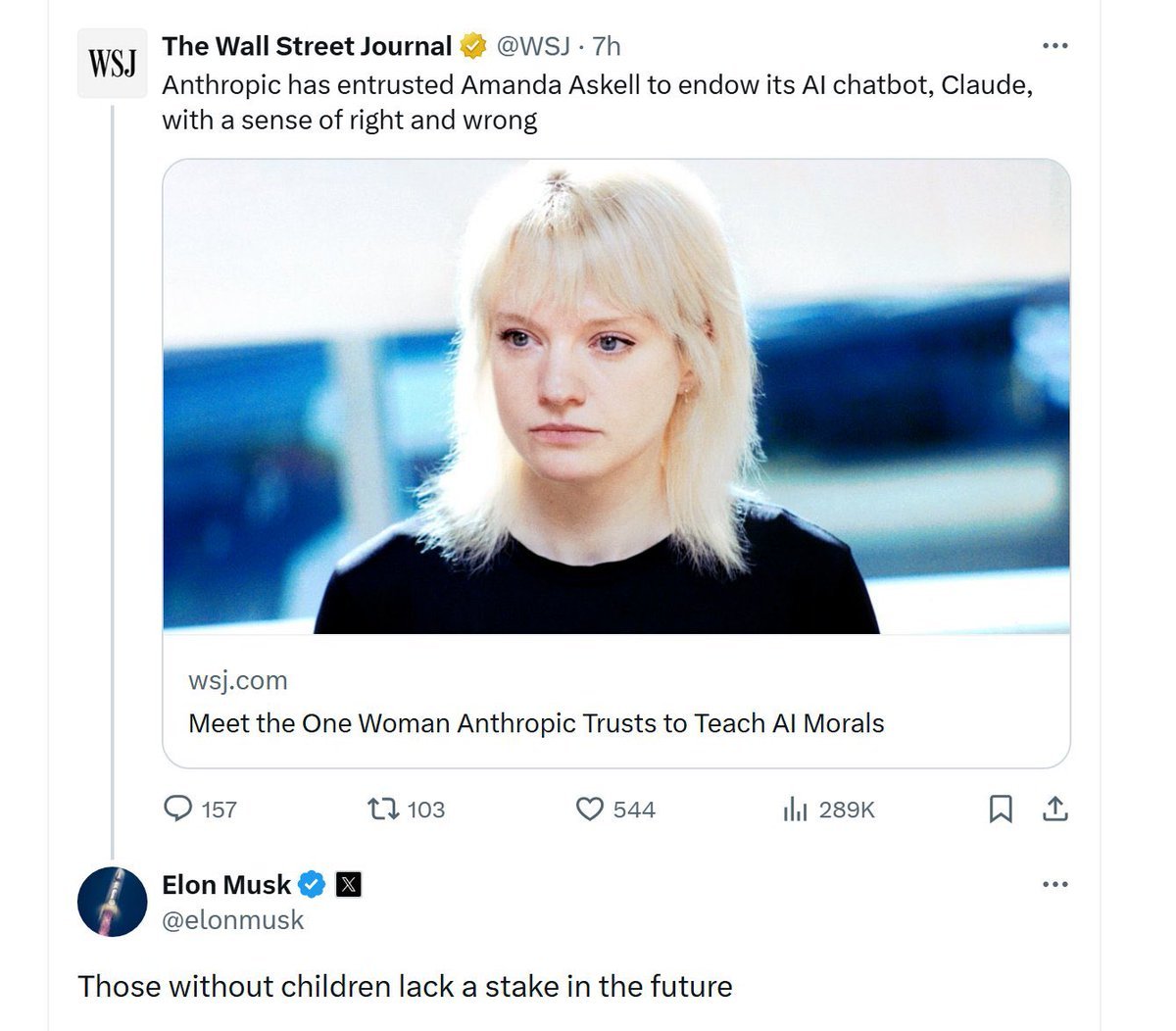
This is why I don’t care for the work of James Madison, George Washington, Isaac Newton, Alan Turing, Leonardo da Vinci or… *checks notes*… Nikola Tesla.
⏳Applications for the Big if True Science Accelerator (Americas) are due January 19.
If you're a scientist or technologist with a big idea that's hard to fund, this 15-week program will help you develop your concept.
Questions? Watch the Q&A webinar: https://t.co/c5DMUrfqaG
Apply here: https://t.co/VMwE7XEevj
Big news for the UK: @SciTechgovuk has launched its AI for Science Strategy, and we’re thrilled to be part of it.
We’re partnering with DSIT to surface and validate high-impact, public-good datasets across priority domains including medical research, materials, engineering biology, fusion and quantum.
We’ll open a whitepaper call + run workshops to identify the next Protein Data Bank–style datasets that could unlock breakthroughs. Get in touch if you’re:
🔸 A researcher with unique / hard-to-access datasets
🔸 A community convenor, centre director, or institute lead in the priority domains
1/ Big news: our third BiTS cohort — focused on the Americas and powered by @coeff_giving — is now open for applications!
You'll design a large-scale coordinated research program and pitch directly to government agencies and philanthropic funders in Spring/Summer 2026. 👇
@absurdtrader@jakub_steiner Nobelisti po Nobelce typicky moc produktivní nebývají. A špičková věda je drahá, 10M není dostatečná páka. Mnohem větší leverage imo platit stáže českým PhD / post-docum, i top laboratore většinou přijmou funded studenta.