@hopestardust20 We did. L was selected for a special team competition for children with poor attendance with a prize (ironically, the last afternoon of term off) for the winning team. I'm sure you can imagine my reaction.
I recently took a funeral for a young man who died after taking a cocktail of drugs (mostly cocaine).
Afterwards I got into a very challenging conversation with his sister. Her grief was really messy because she was furious with him for his abuse of his own body.
🧵 🪡
Just your bi-weekly reminder that:
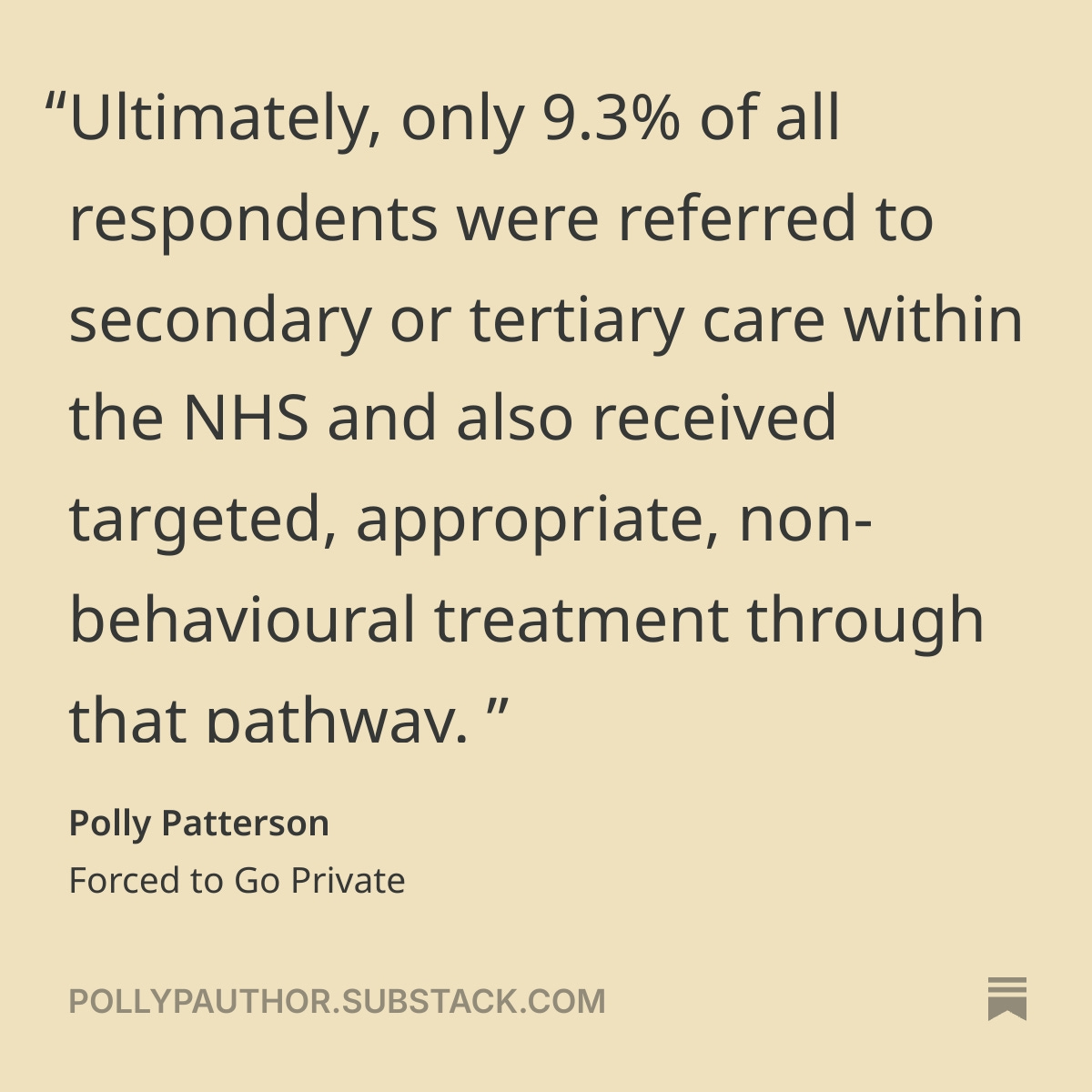
- 92.0% of respondents with post-viral and related/overlapping illnesses (such as long COVID, ME, dysautonomia, hEDS, MCAS etc) were no longer under the monitoring or care of ANY NHS specialist department despite profound ongoing illness.
- 88.9% of bedbound participants with "contested" conditions are too ill to access face-to-face NHS care AT ALL with no care plan in place.
- 83.3% WERE FORCED INTO PRIVATE CARE BECAUSE NOTHING APPROPRIATE WAS AVAILABLE FOR THEM ON THE NHS AT ALL.
I will keep posting this bi-weekly until someone within the establishment, or access to them, pays attention.
Link in first comment.
#longcovid #mecfs #MCAS #dysautonomia
#POTS #EDS #lyme #hEDS #chronicillness #disability
Pres Trump offers $5k to every US adult if the Republicans keep the House & Senate. A US federal statute makes it a crime for anyone to make or offer to make an "expenditure to any person, either to vote or withhold his vote, or to vote for or against any candidate".
Cette photo mérite absolument tous les prix. Elle a même sa place au Louvre.
Elle relate précisément l’inertie de l’individu face à l’effondrement.
Regardez la composition. Un chef-d’œuvre involontaire.
Au premier plan, le sable doré, les tongs abandonnées, la glacière. Le décor ordinaire du bonheur estival. Deux personnages assis, de dos, comme dans un tableau de Caspar David Friedrich. Sauf que Friedrich peignait des hommes contemplant le sublime. Ici, ils contemplent la catastrophe. Et ils ne bougent pas.
Au centre, le parasol. Publicitaire, criard, dérisoire. Un pastis face à l’apocalypse. C’est presque trop parfait : la France qui prend l’apéro pendant que le monde brûle. Aucun scénariste n’aurait osé.
Et puis le ciel. Les deux tiers de l’image. Cette muraille de fumée qui avale la lumière, ce dégradé d’ocre et de noir digne d’un Turner. La nature qui reprend la palette des maîtres pour peindre notre propre fin.
La femme photographie l’incendie avec son téléphone. Mise en abyme totale : nous documentons notre disparition au lieu de l’empêcher.
Cette image dit tout. Le déni, le confort, l’habitude. Nous sommes tous sur cette plage. Nous voyons tous le nuage. Et nous restons assis, parce que l’eau est bonne et qu’on a posé nos congés.
Les historiens de l’art parleront un jour de cette photo comme on parle du Radeau de la Méduse.
Sauf que cette fois, le naufrage, c’est nous qui le regardons depuis la plage.
💔🌍
(6/6)
The real problem with the article is not that it asks for more research. That is fine.
The problem is that it presents a false dichotomy: either you accept mind-body therapies as a brave possibility, or you are part of a dogmatic community blocking science.
No.
The real scientific position is much simpler:
Long COVID is a real, biological, heterogeneous disease.
The absence of a single test does not invalidate the illness.
CBT can be support, not a causal cure.
Exercise can help some patients, but harm others, especially those with PEM.
Pacing is not fear: it is prevention of worsening.
Dysautonomia can look like anxiety, but have a physiological basis.
Stress can worsen symptoms without being the primary cause.
Neuroplasticity must not be used as a commercial wildcard.
Recovery testimonials do not replace well-designed trials.
And no treatment should be globally recommended without stratifying subgroups.
Medicine has already made this mistake before.
Patients with multiple sclerosis, lupus, autoimmune diseases, ulcers caused by Helicobacter pylori, endometriosis, or ME/CFS were treated for years as exaggerated, hysterical, anxious, or somatizing until technology and research caught up with what patients had been saying all along.
Let us not repeat the same mistake with Long COVID.
The future is not in denying the nervous system.
It is in understanding it properly.
But understanding the nervous system does not mean selling “mind-body” as a cure.
It means studying immunology, dysautonomia, autoantibodies, persistent viruses, endothelium, metabolism, muscle, the HPA axis, mast cells, microbiota, and neuroinflammation.
And then, if a psychological tool helps a patient live better with an organic disease, it is welcome.
But let us call it by its name: support.
Not cure.
Not a total explanation.
Not a substitute for biomedical research.
Not an excuse to prescribe exercise to someone with PEM.
Not another elegant way of saying “it is all in your head.”
Because it is not all in the head.
It is in the immune system.
It is in the vascular system.
It is in the autonomic nervous system.
It is in metabolism.
It is in muscle.
It is in the tissues.
It is in a biology we are still learning how to measure.
And precisely for that reason, we need more science, not more gurus.
It was great to see the Clean Air 4 Kids campaign showcased in Baroness Linforth’s speech.
@CleanAir4KidsUK was set up by @erbrooker after her son was diagnosed with cancer & she wanted to ensure he’d be in the healthiest possible environment at school.
https://t.co/mqcIxJrE3t
@find_the_pound@NeurologistMom@renesugar I think the concept of FND is a gift to health service budgets. No need to think harder, no need to test, no need to set up treatment pathways, coordinate care or investigate other conditions after diagnosis. It can all be blamed on being flaky. Never mind the devastated lives.
She wasn’t misdiagnosed because it was complicated.
She was misdiagnosed because people stopped looking.
“It's in your head” shouldn’t be the end of the conversation—it should be the beginning of deeper investigation.
Patients aren’t the problem. The lens is.
#MedicalGaslighting #PatientAdvocacy
@1goodtern And if you're the parent of a child with this kind of complicated, mysterious illness, there seems always to be a hint of suspicion that somehow you've caused it and/or if you only stopped trying to find answers and just got on with things it would magically go away
@1goodtern My child was diagnosed w/FND 2 1/2 yrs ago after a nasty viral infection (not covid - we test) left her dizzy & unable to walk properly. This followed the onset of other perplexing symptoms after covid 18 months earlier. WAhat is now chronic dizziness followed covid last Sept
My daughter (14) has been doing a lot of online searches on science topics for school lately and has noticed that suddenly she is getting lots of adverts on religious themes. I find this quite sinister.