Vivaldi's “Winter,” visualized in a fascinating way, so that the auditory experience is even more intense; one can literally “see” the music, so to speak
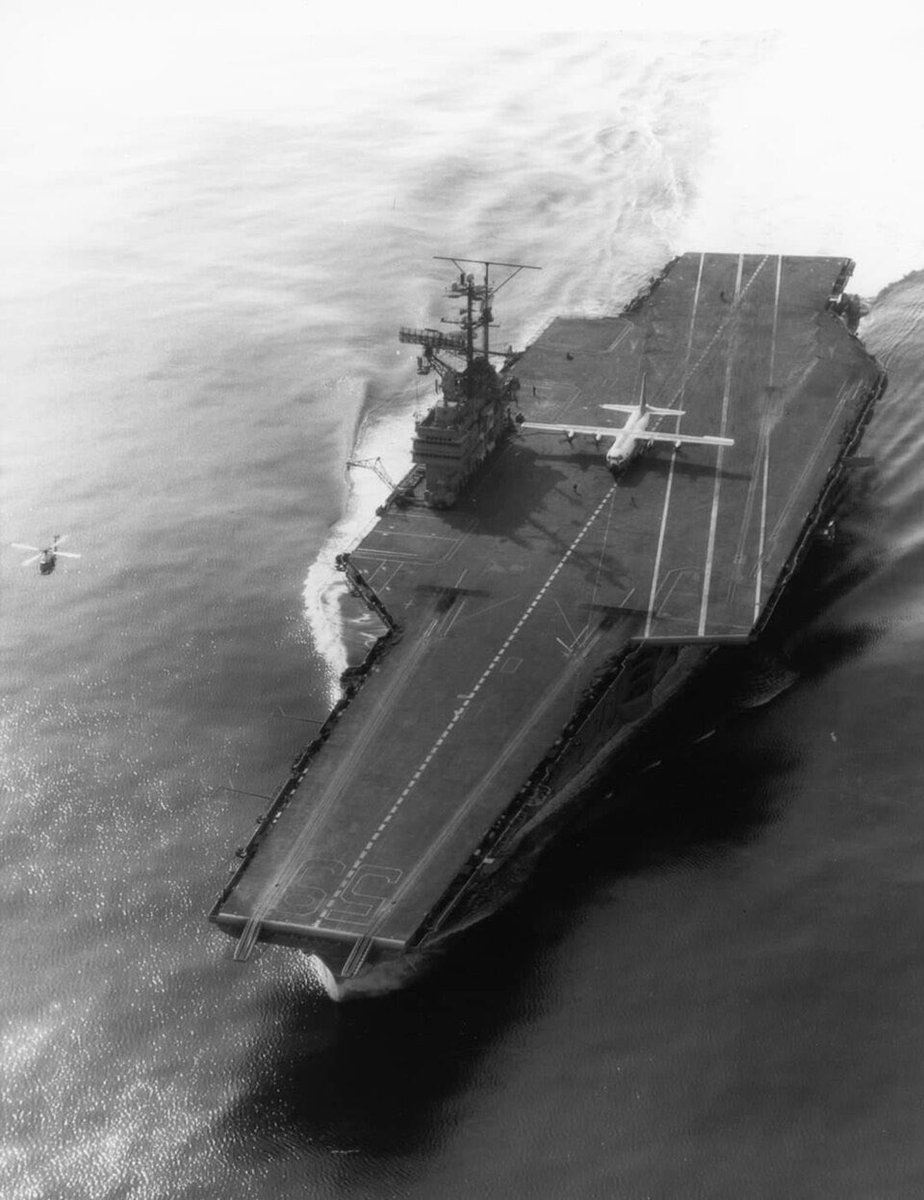
This flyover is for Rear Admiral James H. Flatley III, USN. He made history when he completed 21 full-stop landings and takeoffs in a U.S. Marine Corps Lockheed C-130F Hercules aboard the aircraft carrier USS Forrestal (CVA-59) in November 1963. This is the largest and heaviest aircraft ever to land or take off from an aircraft carrier. He earned a Distinguished Flying Cross (no arresting wire, no catapult.) 🙏🫡
I asked Opus 5.5 to explain camera focus by building an interactive lens lab
Here's what it came up with after 1 hour 26 minutes in one shot, $25.66 API cost
https://t.co/uqDgUs8H9h
Move the focus ring and you can see the glass elements shift the sharp plane through the scene
Check this out you ✈️🚁 nerds!
This dude put together a website with airplanes and helicopters on display across the world, it’s pretty awesome.
🎥 planeindex
Link 👇
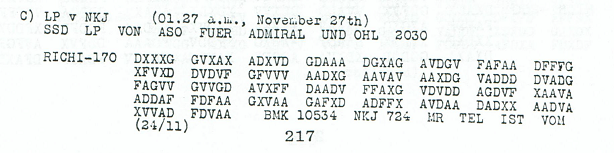
GPT-6 Astra deciphered a 1918 German radio transmission that, to my knowledge, has never been deciphered before.
The message below translates to:
"EIN ENGLISCHER KREUZER EINLIEG X SEWASTOPOL X S4STEN X EIN GESCHWADER DER X ALLIIERTEN FOLGT 26STEN X"
or, in English:
"AN ENGLISH CRUISER ARRIVED AT SEVASTOPOL ON THE ?4TH AN ALLIED SQUADRON FOLLOWS ON THE 26TH"
Astra even double-checked its work by determining that an English cruiser, HMS Canterbury, reported its arrival in Sevastopol on November 24, 1918 and the arrival of an allied squadron on November 26, 1918.
This message is one of the ~20 WWI German radio messages that appear as one of the entries in the https://t.co/H7yLaI1edV list of top 50 unsolved ciphers (https://t.co/Qu2gp90pmD).
A minor, but really cool result!
“There is no telling what the job market will look like four years from now in any field, from journalism to medicine to research mathematics … This may be frightening, but it is also liberating”
I like this article. I do.
But I think they missed the most important point.
The Tanker Crisis is not really a hardware problem. It is a leadership problem.
In ’92 the Air Force folded SAC’s tankers into Air Mobility Command. McPeak later admitted the assignment was wrong: “There is no capability more critical to theater air warfare than air refueling.”
Once tankers were coded as mobility instead of combat power, they dropped in the priority stack every budget cycle.
By 1996 GAO was already saying the KC-135 was getting more expensive and less available, and AMC had slipped replacement so other mobility bills could go first. After AMC owned both airlift and tanking, the tankers became swing cargo assets (another very important command decision.) KC-10s were built dual-role. KC-135s got roller kits. The gas mission started sharing the jet with pallets.
That habit never stopped.
When money got tight, the service chose the cheap-looking cut: we can’t afford three tanker types. So it retired the KC-10, the highest-offload tanker in the fleet, while the KC-46 was still broken and the KC-135s were already spending longer and longer in depot. That was not forced by physics. That was another command decision.
The boom, the cameras, and the spare parts in the article are real. They are what you get after thirty years of treating cargo as a second primary mission.
My opinion... Move the tankers out of Air Mobility Command. Let tanker people own the fleet. Fighter, bomber, and airlift communities are customers. They should not be the bosses of the gas.
https://t.co/qCXxxgVYcM
September 11th, 2001 - Boeing E-4B NAOC callsign ADDIS77 scrambled from Andrews AFB. While ATC was calling them “VENUS” which is a typical callsign used at Andrews, you can hear the urgency of the pilot wanting to get airborne. The E-4 orbited over Washington DC for a while…
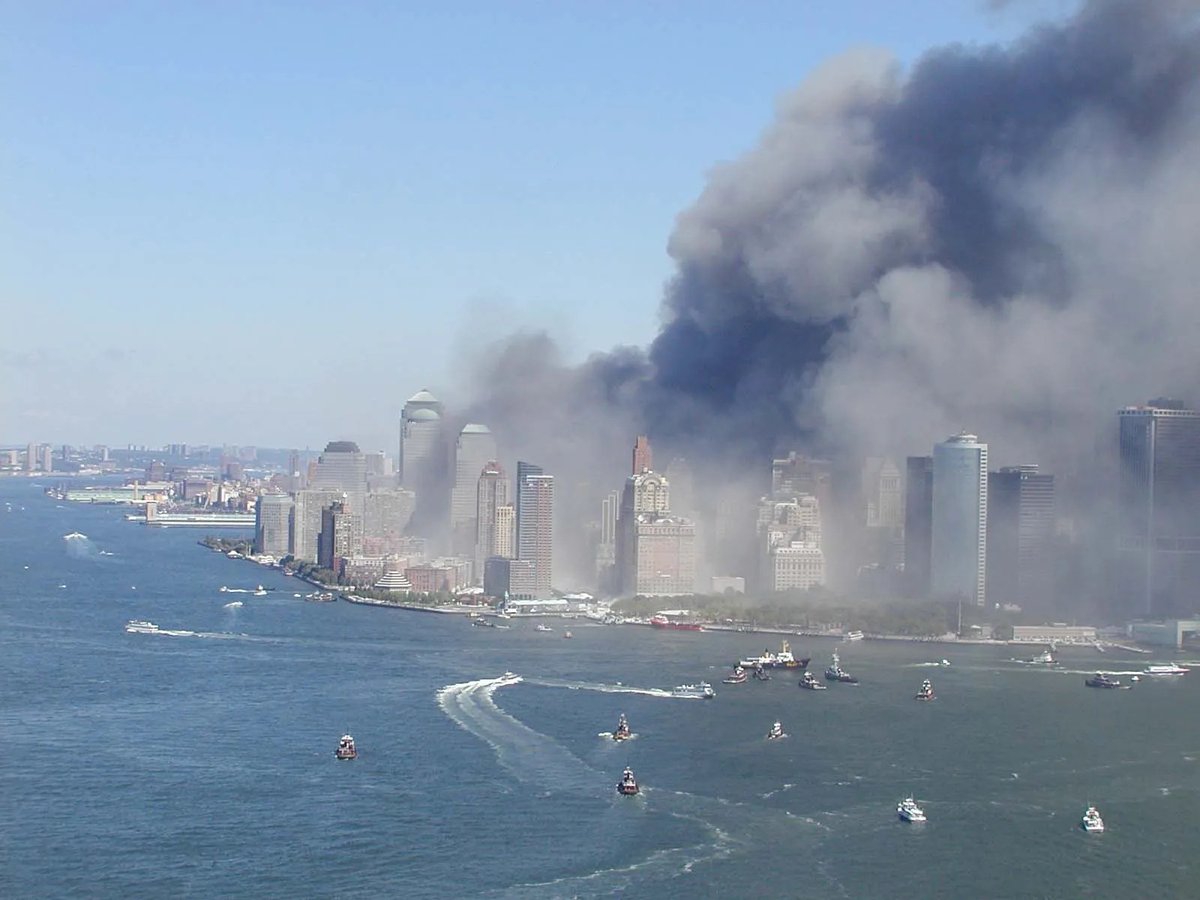
🇺🇸 The Boatlift That Was Bigger Than Dunkirk
At 10:45 a.m. on September 11, 2001, a Coast Guard lieutenant named Mike Day keyed a radio in New York Harbor and said the only sentence that mattered.
“All available boats. This is the United States Coast Guard. Anyone wanting to help with the evacuation of Lower Manhattan, report to Governors Island.”
The boats were already coming.
The bridges were closed. The tunnels were closed. The subways were dead. South of the towers, hundreds of thousands of people had nowhere left to walk. Some jumped into the Hudson. Some stood on seawalls that were never meant to be docks and waited for anything that floated.
Dunkirk took nine days to pull 338,226 Allied soldiers off a beach in 1940.
On 9/11, roughly 800 mariners on about 150 vessels moved as many as 500,000 civilians off Manhattan in about nine hours. Ferries. Tugs. Dinner boats. Pilot boats. Yachts. A retired fireboat. Rubber dinghies that held two people. The largest water evacuation in history.
NY Waterway did not wait for the official call. After the second plane hit, the whole fleet moved. Captain Rick Thornton nosed his ferry against a seawall that was not a slip and started taking people off. Some of them he pulled out of the river. His company alone carried about 158,000 people to Jersey City, Hoboken, Weehawken, Brooklyn, and Queens.
On a normal Tuesday they carried 34,000.
The Staten Island Ferry moved more than 50,000 people and came back the other way with water, bandages, and men who still had work to do in the dust.
The old fireboat John J. Harvey, already retired, tied up near the Museum of Jewish Heritage, took civilians off the seawall, then pumped water when the hydrants downtown died.
Lt. Day later admitted what the day required. “I broke more rules that day than probably I’ve enforced in my whole Coast Guard career.”
In raw numbers it was bigger than Dunkirk. No boat went down. By nightfall the southern tip of Manhattan had been emptied by people who were not on anyone’s list of heroes when the morning started.
They were tug captains. Ferry deckhands. Pilots. A lieutenant with a microphone. Ordinary boats answering one sentence.
All available boats.
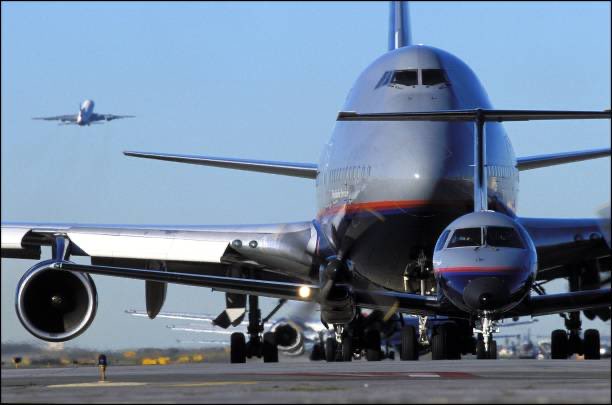
A single U.S.-based investor places a massive volume of put options on United Airlines stock (UAL), betting that the value will go down.
These 2000 contracts represent a 20x spike from the usual daily volume.
GOOGLE MAPS SHOWS YOU STREETS. THIS WEBSITE SHOWS YOU THE MOVIE SCENES FILMED ON THEM.
it's called Movie Scene Map → https://t.co/j5BjdTJcbX
15,716 real filming locations. 166 countries. one map.
click any pin. see what was filmed there.
search any movie. see every place it was shot.
Game of Thrones castles in Croatia.
Breaking Bad streets in Albuquerque.
Lord of the Rings hills in New Zealand.
the well from The Dark Knight Rises at Mehrangarh Fort in Jodhpur.
the Woman in Red fountain from The Matrix in Sydney.
the best part is how fast your brain starts using it wrong.
you open it to search one movie.
then you search your city.
then your hometown.
then the place you went on vacation.
built by one anonymous guy who goes by Flightmussy.
just a website that lets a normal person see where their favorite movies were actually made.
open tab.
search your city.
see what movies got filmed near you.
What if the greatest freedom isn't creating your identity...
but receiving it from the God who already knows and loves you?
https://t.co/eHnwTL34LB
-Michael Keller
In June 2004, an engineer named Michael Chu solved recipe design with a hand-coded HTML table, and the food industry has spent 22 years pretending he doesn't exist.
His format reads like a Gantt chart. Ingredients run down the left. Each column to the right is an operation, and cells merge when components combine. Melt the butter, mix in the sugar, fold into the dry ingredients, bake. The entire dependency graph of the dish fits on one screen.
That structure fixes the real failure mode of cooking from prose. A written recipe forces you to hold state in working memory while your hands are covered in batter, which is why you reread step 4 three times to find where you were. In Chu's table, your place is a physical location. You can't lose it.
He launched Cooking for Engineers with this format on day one, wrote every table by hand in a text editor, and filed a patent on the notation. Designers praised it. Hacker News rediscovers it about once a year. Then the industry goes right back to publishing recipes as 1,500-word essays.
Here's why. US copyright law treats ingredient lists and bare instructions as unprotectable facts. The story about your grandmother's kitchen is the only part of a recipe page the law protects.
The economics stack on top of that. Recipe sites monetize scroll depth, and every paragraph between you and the ingredient list is another ad slot. Chu's format delivers the whole dish in one screen with room for exactly zero ad units.
So the best recipe format of the internet era lost to the worst one, on purpose, because the worst one prints money.
His first tabular recipe, posted 22 years ago, was salsa cruda. Still up. Still one screen.