the future of biotech: a whitepill
Right now, we are feeding innovations to giant corporations who have the funds and ability to take them through to trials, manufacture them, and make them “theirs”. There’s no founder mode - all manager mode. This is because they have the work-hours, money, scale, and sometimes, connections, to make this happen.
In the future, we will be able to take an innovation and put it all the way through to market - as a startup. There will be fair competition, and it won’t happen alone.
-from CROs, we will go to robotic CROs - with code to control your experiment. Democratising and personalising your protocol will help add variety. Automation will add speed.
-we will move into recursive and intelligent drug discovery, and utilise automated and AI-driven precision manufacturing organizations for highly targeted chemicals.
-from CDMOs, we will go to fast programmable co-bot robots, lithography and 3D printing. Automation here will help bolster economies of scale without the added steps.
-for clinical trials, we will clean up our inefficient trial system, enrol in partnerships, and conduct smart experiment design, hopefully with the help of clinical trial facilitation-focused CROs
-we will have real startup cities for biotech, inspired by startups that decided to lead the revolution.
-we will have serious, real measurement techniques, compute, data, and algorithms to constantly iterate on our process.
-we will have the backing of a friendlier FDA, and the biotech stock markets will boom.
-instead of relying purely on big pharma, we will shake hands with big tech, which now has the ability to help us accelerate our efforts in all directions.
-real competition will kick in, allowing drugs to be priced more variably, patients to have a greater voice and choice, and the stock market to reflect the real, extreme importance of biotech.
A few more letters... and we can finally write amino acid sequence with protein structure encoded by amino acid sequence? 🧬🤔😀
@chrisfrank662@DominikSchiwie0 Lara Fuss @hendrik_dietz
https://t.co/DbYAujJRgS
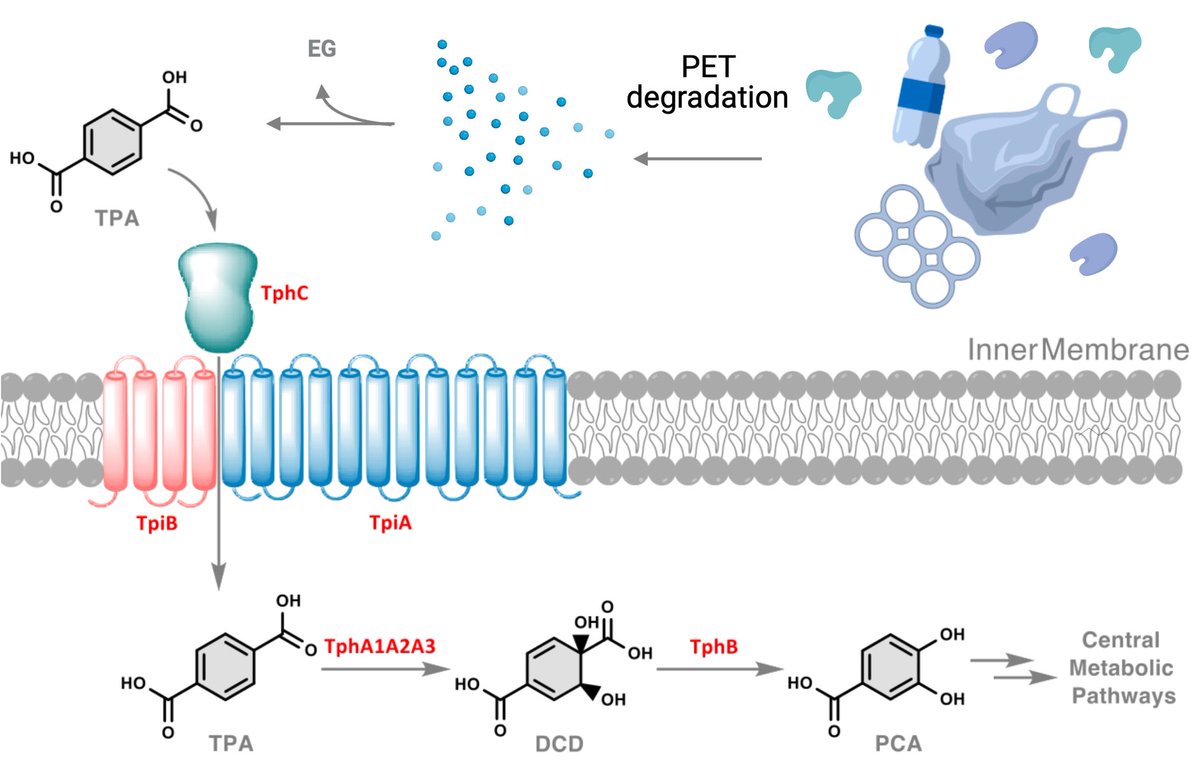
Congratulations to all involved- Characterisation of TphC, a bacterial transporter responsible for the cellular uptake of the PET plastic breakdown product TPA https://t.co/hNUk4bDbTH
@BiotechDixon@UoMMIB @SustainableUoM @UoM_MERI#pollution#plastic
Our new paper on biosensors and dynamic pathway regulation of cell factories is out in @iScience_CP ! Congratulations @Yadira32909360 @alejovigno @J_PicoMarco
Really excited to see @culturebiosci applying #ComputerAidedBiology This kind of tech will be essential to address tough challenges around scale-up in bio-manufacturing. Also a great resource for SynBio start ups #IoT#automation#synbio
New paper out in @NatureComms with a brilliant list of co-authors! We propose the notion of #CellularSupremacy to focus attention on domains in which #biocomputing may offer superior performance over traditional computers. https://t.co/U5R8n4oa5Y
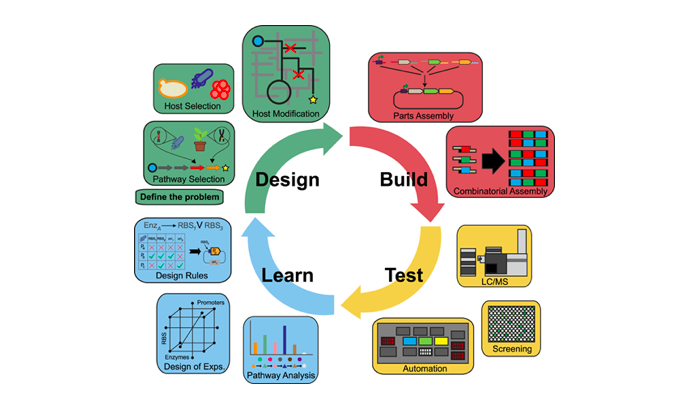
Prof Freemont, Co-Director @SynbiCITE, discusses data-driven design & the opportunities it presents for #biotech companies in a recent paper published in The Emerging Topics in Life Sciences https://t.co/2orGSDYF0r #synbio#data#engbio
Great new modular, orthogonal regulation tools from the Wilson lab.
This field is moving so fast that we published a review 2 days ago and it's already outdated.
https://t.co/5FDSrj3fw5
Really excited to see a review I wrote with @BiotechDixon on the current state of the art tools for gene regulation in bacteria published for all to read. https://t.co/hURpqmGrI5