Ghostwriter | I Help Life Coaches To Grow Their Email List on Autopilot with Educational Email Course | Passionate about Writing, Visuals and Motion Graphics|
A naval officer built a program that let computers understand words instead of numbers and was told for three years that what she had already built was impossible. She shipped it anyway and modern programming was born from it.
Her name was Grace Hopper.
She did not start as a programmer. She started as a mathematician. She had a PhD from Yale and a teaching post at Vassar, and she was 37 years old when she left it to join the Navy in the middle of the Second World War. They almost rejected her. She was too old and too small, fifteen pounds under the minimum weight. She pushed until they let her in anyway.
The Navy assigned her to a machine called the Harvard Mark I. It was one of the first programmable computers on Earth. Fifty feet long, eight feet tall, a wall of relays and switches that clattered like a room full of typewriters. Most of the officers around it saw a giant calculator. Hopper saw something else. She spent the war writing instructions for it and ended up writing the first manual anyone had ever written for a computer, five hundred pages explaining how to make the machine think.
Here is the part almost nobody knows.
In those early years, programming a computer meant writing in raw machine code. Long strings of numbers that mapped directly to the switches inside the hardware. Every program was a wall of digits. To change one thing you rewrote the numbers by hand. It was slow, brutal, and almost impossible to teach. The people who could do it were a tiny priesthood, and they liked it that way.
Hopper looked at this and asked a question that sounds obvious now and sounded insane then. Why are we writing in the computer's language. Why can't the computer translate our language into its own.
Her idea was a program that would take human-readable instructions and turn them into the machine code automatically. You write the words. The program does the translation. She built it. By 1952 she had a working version running on the machine. She called it a compiler.
And then nothing happened.
Not because it failed. Because nobody believed it. She would explain what she had built, and people would tell her, flatly, that it was not possible. Her own words later were almost too plain to be dramatic. She said she had a running compiler and nobody would touch it. They carefully told her that computers could only do arithmetic. They could not do programs.
Sit with that. She was standing next to a machine that was, at that moment, translating words into code, and the people looking at it were explaining to her that the thing in front of them could not be done. The proof was running. They preferred the assumption.
It took about three years to break that wall down. Three years of demonstrations and arguments and slow conversion, one skeptic at a time, while the idea she had already proven sat there waiting for permission to matter.
She kept pushing past it. If a machine could be taught to translate symbols, she reasoned, it could be taught to translate something closer to plain English. Most of the field thought that was a step too far. Mathematicians liked symbols. Symbols were precise. English was for people who could not handle real programming.
Hopper's insight was that most of the people who would one day need computers were not mathematicians. They ran businesses. They managed inventory and payroll and records. They thought in words, not notation. So she built a language oriented around English instructions, a thing called FLOW-MATIC, where you could write a line that almost read like a sentence and the machine would understand it.
That language became the direct foundation for COBOL, released at the end of the decade. COBOL ran the banks. It ran the insurance companies. It ran the government. Decades later, long after Hopper was gone, it was still quietly running underneath the financial system, billions of lines of it, processing transactions on machines she never lived to see.
The deeper thing she gave the world was not any single language. It was the idea underneath all of them. That a program could be written once, in something a human could read, and translated by the machine into whatever code the hardware needed. Every high-level language written since stands on that idea. Every time you write a line of code in plain words instead of raw binary, you are using the thing she was told could not exist.
There is one story everyone does know about her, and it is the smallest one.
In 1947, a team working on a later Harvard machine found a moth trapped in a relay, causing a fault. They taped it into the logbook and wrote that they had been debugging the system. Hopper loved telling that story for the rest of her life. It is the thing she is most remembered for, a literal bug in a computer.
It is strange that the most famous moment of her career is a dead moth in a notebook, and the thing that actually changed the world, the idea that machines should meet humans halfway, is the part most people have never heard.
She retired from the Navy as a rear admiral. She was the oldest serving officer in the fleet when she finally stepped down, in her late seventies, on the deck of the oldest commissioned ship in the Navy. She spent her last working years doing the thing she said mattered most to her, which was not the compiler at all. It was teaching young people that the most dangerous phrase in any language is we have always done it this way.
She spent her whole life proving that sentence wrong.
She built the thing they said could not be built, stood next to it while they denied it was real, and waited three years for the rest of the world to catch up to a machine that was already doing the impossible in front of them.
The machines understand our words now. They have for seventy years. Someone had to be told it was impossible first.
If you have:
> Claude Code + Codex handoffs
> Hermes agents
> Obsidian memory systems
> Agentic loops
> Tailscale mesh networking
> Cron jobs + automated Kanban workflows
> Multi-agent orchestration
> MCP servers everywhere
> Local models (Qwen, DeepSeek, Kimi, Gemma)
> Automated evals and benchmarks
> Browser-use & computer-use agents
> Long-term memory and RAG systems
> Voice agents
> Personal API infrastructure
> Self-hosted tools
> Research pipelines
> Agent observability and logging
Congrats you are the top 1% of the AI god stack
(Bookmark & Repost)
A 21-year-old computer science student in Helsinki bought his first PC in early 1991 and immediately hated the operating system it came with. So he sat down to write his own.
On September 25, 1991 he posted a quiet message to a Usenet newsgroup announcing what he called "just a hobby, won't be big and professional like GNU."
35 years later that hobby runs every Android phone on Earth, every supercomputer on the TOP500 list, the entire backend of the internet, the International Space Station, and SpaceX's Falcon rockets.
His name is Linus Torvalds. The hobby is called Linux.
Here is the story, because the man who runs the most consequential codebase in human history almost no longer needs an introduction inside engineering and still walks the streets unrecognized everywhere else.
Linus was born in Helsinki, Finland on December 28, 1969. He was named after Linus Pauling, the only person in history to win two unshared Nobel Prizes, in Chemistry and in Peace. He joked he might also be partly named after Linus van Pelt from the Peanuts cartoon. His family was unusual. Both parents were journalists. His grandfather was a statistician. Another grandfather was a poet. The family belonged to Finland's Swedish-speaking minority. There are fewer than 30 people in the world with the surname Torvalds, and according to Linus, they are all related.
At 10 he started programming on his grandfather's Commodore VIC-20. By his teenage years he was writing his own assemblers, editors, and games. He served in the Finnish Army for his mandatory national service and rose to the rank of Second Lieutenant. Then he enrolled at the University of Helsinki to study computer science.
In early 1991 he bought a personal computer with MS-DOS and disliked it intensely. He wanted UNIX, the operating system he had used at the university. UNIX cost thousands of dollars. He could not afford it. So he started writing his own.
He posted the now-famous announcement to comp.os.minix in August 1991. He called the kernel Linux, a portmanteau of his name and MINIX. He released the source code under the GPL license. Anyone could download it, read it, modify it, and ship it for free.
Within a year hundreds of developers around the world were sending him patches. Within five years Linux was running web servers. Within ten years it had taken over the supercomputer market. Within twenty years it was running on most of the internet. Today every Android phone on Earth runs the Linux kernel. Every Chromebook runs Linux. Most of AWS, Google Cloud, and Microsoft Azure runs Linux. Every Tesla runs Linux. Every SpaceX Falcon 9 and Dragon capsule runs Linux. The International Space Station runs Linux. Every supercomputer in the world's TOP500 list runs Linux.
That was the first thing he built.
In 2005 the proprietary version control system the Linux community had been using, BitKeeper, revoked its free license. Linus was furious. He sat down and wrote a replacement in 10 days. He called it Git. The first commit was on April 7, 2005. Today Git powers GitHub, GitLab, and the source control of every major software organization on Earth. Every line of code at OpenAI, Anthropic, Google, Meta, and Microsoft flows through Git. Every AI model on the planet is versioned with software a Finnish engineer wrote in less than two weeks.
He won the 2012 Millennium Technology Prize, the equivalent of a Nobel Prize for engineering. He won the IEEE Computer Pioneer Award in 2014. He completed his master's degree from Helsinki along the way, with a thesis titled "Linux: A Portable Operating System." He moved to the United States, became a citizen, and now works from his home in Portland, Oregon, employed by the Linux Foundation.
A Finnish student announced a hobby project on a message board in 1991.
His code is now in every pocket on the planet.
He still writes most of his important communication on the Linux kernel mailing list.
A French engineer who lives quietly in Paris has spent 30 years writing software that the entire internet now runs on without knowing his name.
He wrote the code that streams every YouTube video, every Netflix show, every TikTok clip. He wrote the code that runs the virtual servers underneath AWS, Google Cloud, and Microsoft Azure. He calculated more digits of pi than anyone in history. He has no Twitter. He has no marketing. He just keeps shipping.
His name is Fabrice Bellard.
Here is the story, because almost nobody outside the systems programming world knows what one man has built.
Fabrice was born in 1972 in Grenoble, France. He studied at École Polytechnique, the top French engineering school. He never went to Silicon Valley. He never built a startup empire. He just wrote code.
In 2000 he started a project called FFmpeg, an open-source multimedia framework for encoding, decoding, and streaming video. He was 28. The project did one thing nobody else had done well. It handled every video and audio format that existed, in one library, on every operating system. He led it himself for years.
Today FFmpeg is the invisible engine of the internet. YouTube uses it. Netflix uses it. VLC uses it. Chrome and Firefox use parts of it. Every Android phone, every iPhone, every smart TV, every video editing tool you have ever touched runs FFmpeg somewhere underneath. If you have watched a video on a screen in the last 20 years, Fabrice's code processed it.
He was not done.
In 2003 he started QEMU, a machine emulator and virtualizer. He wrote it solo until version 0.7.1 in 2005. QEMU lets you run any operating system on any other operating system. It became the foundation of modern virtualization. KVM, the Linux kernel hypervisor, runs on top of QEMU. Every major cloud provider, AWS, Google Cloud, Microsoft Azure, IBM Cloud, runs virtual machines on infrastructure built around it. The Quick Emulator is the most cited piece of cloud infrastructure code on Earth.
He kept going.
In 2001 he won the International Obfuscated C Code Contest with a small C compiler that grew into TCC, the Tiny C Compiler. TCC can compile and boot a Linux kernel from source in under 15 seconds. In 2004 he calculated the most digits of pi ever computed at the time, using a personal desktop computer and an algorithm he derived himself called Bellard's formula. In 2011 he wrote a complete PC emulator in pure JavaScript that runs Linux in your browser, a project called JSLinux that engineers still cannot believe is real.
In 2019 he released QuickJS, a small but complete JavaScript engine that fits where V8 cannot. In 2021 he released NNCP, a neural network based lossless data compressor that immediately took the lead on the Large Text Compression Benchmark.
Then he turned his attention to large language models. He built TextSynth Server, a web server with a REST API for running LLMs locally. He released ts_zip and ts_sms, compression utilities that use language models to compress text and short messages at ratios traditional algorithms cannot reach. He released TSAC, a very low bitrate audio compression system. In December 2025 he released Micro QuickJS, a new JavaScript engine for microcontrollers, separate from QuickJS, designed for environments with almost no memory.
Fabrice co-founded a telecom company called Amarisoft in 2012, where he serves as CTO. Amarisoft builds 4G and 5G base station software used by carriers and labs around the world. He has been running it for over a decade while continuing to ship personal projects from his own home page at bellard dot org
He has no Twitter. He has no Instagram. He gives almost no interviews. His personal website is a flat list of projects with no styling, no fonts, no marketing copy. Just titles and links.
A quiet French engineer who never moved to Silicon Valley wrote the code that quietly runs the internet.
He is still shipping.
The first electronic general-purpose computer was programmed by six women — who were nearly erased from history. ENIAC, unveiled in 1946, had its hardware celebrated through engineers Eckert and Mauchly, but the people who programmed it were six women — Betty Holberton, Jean Jennings Bartik, Kay McNulty, Marlyn Wescoff Meltzer, Ruth Lichterman, and Frances Bilas Spencer.
They were recruited from the ranks of human "computers" doing artillery-trajectory calculations, and they weren't even invited to the celebratory dinner after the successful public demonstration. Their role went largely unrecognised until researcher Kathy Kleiman tracked them down in the 1980s.
NVIDIA QUIETLY DROPPED A $249 BOX THAT REPLACES YOUR $200/MONTH OPENAI SUBSCRIPTION WITH $2 IN ELECTRICITY
it's called the jetson orin nano super. smaller than a wallet, runs at 25 watts, does 70 trillion ai operations per second. runs llama 3, mistral, gemma and deepseek locally with no api fees and no data leaving your house
a developer running automations and coding assistants pays $200 a month to openai. the same workload on this box costs $2 a month in electricity and breaks even in 10 weeks
install ollama with one command. change one line in your code. point it at localhost instead of openai. everything else works identically
7 billion parameter models handle 80% of what people use chatgpt for. summarization, drafting, coding, document q&a, automation pipelines. total monthly cost drops from $200 to $22
cloud subscriptions keep getting more expensive and rate limits keep getting tighter. the people who set this up in 2025 are going to look very smart in 2027
bookmark this and read the article below
My biggest takeaways from @evanspiegel:
1. Distribution is the biggest bottleneck in consumer, not product. The only two consumer social apps to break through since Snapchat—TikTok and Threads—both solved distribution. TikTok spent billions on paid ads. Threads piggybacked on IG’s social graph. Organic app discovery is effectively over. If you’re building a consumer product today, your distribution strategy matters more than your product.
2. Software is no longer a moat. Snap learned this 15 years ago, and everyone is discovering it now with AI. Stories got copied. Lenses got copied. Snapchat+ got copied. Evan has learned that the things that are hard to clone are ecosystems—millions of developer-built AR lenses, creator relationships—and hardware. Thus why he’s been so adamant about investing in hardware. The lesson applies even more today as AI makes software even easier to build (and copy).
3. Snapchat cracked early growth by focusing on close friends, not the most friends. The conventional wisdom was that network effects meant bigger networks were always stickier—there was no way to beat Facebook. But Snapchat discovered that connecting someone to their best friend, partner, or spouse delivered more value than connecting them to everyone they’d ever met. Quality of connections mattered more than quantity. This insight allowed them to grow despite having far fewer total users than competitors.
4. “If you want to have a good idea, you have to have lots of ideas.” Snap’s design team presents hundreds of new ideas every week. New designers present work on their first day. There’s no gate, no filtering process to get ideas in front of Evan. This high-velocity, non-hierarchical structure is what enables Snap to innovate at scale.
5. Stories exist because Snap refused to build what users asked for. Customers kept asking for a “send to all” button to blast Snaps to everyone. But when Snap talked to people about social media broadly, they heard: “I feel pressure. Everything is permanent. There are likes and comments, so there’s judgment. I can only post pretty, perfect things.” Stories solved the underlying problems: easy sharing without spam, no public metrics to reduce pressure, 24-hour disappearance for a fresh start, and chronological order. Listen for insights, not feature requests.
6. Snap had 200 employees before hiring its first PM—on purpose. Evan’s concern was that the traditional tech org structure reduces designers to producing visuals in response to PM direction. By telling designers, “If you need PM support, do it yourself,” Snap locked in a design-led culture before adding coordination layers. The order in which you introduce roles shapes your culture permanently.
7. Snap is mapping every job to be done—across the Snapchatter journey and the advertiser journey—and handing each one to an AI agent. One example: a go-to-market agent takes a product idea and in one shot writes the spec, identifies sign-off stakeholders, does legal and trust-and-safety risk analysis, writes blog and marketing materials, and is starting to build visuals. The organizing principle isn’t “Where can we use AI?”—it’s “What are the jobs to be done?”
8. Successful companies need both innovative flat teams and structured hierarchical teams—and leaders must create healthy dialogue between them. This comes from Safi Bahcall’s book Loonshots. Large organizations need hierarchy and operational rigor to deliver at scale, but that makes people risk-averse and promotion-focused. Small, flat teams are better for innovation but can’t deliver at scale. The companies that win have both types of organizations, and leadership’s job is creating mutual respect and constructive dialogue between them. At Snap, the small design team constantly innovates while the larger org serves a billion users reliably.
9. Snap hires designers almost entirely based on portfolio, and the two things that matter are range and the story behind the work. If everything looks the same, the person is expressing themselves, not solving for users. Range is the signal that separates designers from artists. Most designers join right out of school; diverse backgrounds like 3D animation and electrical engineering are prized.
10. Evan’s contrarian AI take: the tech industry massively underestimates societal pushback on AI adoption. Technology leaders assume people will adopt new tools as they emerge. Evan predicts a period of significant resistance and argues that the industry needs to put humanity’s goals ahead of business goals. Building great AI capability is necessary but not sufficient—earning human trust is the harder problem.
WHAT SUPPLEMENTS MATTER BY AGE
• Age 18–22 — Protein powder, creatine, sleep
• Age 23–25 — Protein, creatine, vitamin D, caffeine
• Age 26–28 — Protein, creatine, vitamin D, magnesium
• Age 29–32 — Protein, creatine, omega-3s, zinc
• Age 33–35 — Protein, creatine, omega-3s, vitamin D, magnesium
• Age 36–40 — Add ashwagandha for stress management
• Age 41–45 — Add collagen for joint health
• Age 46–50 — Add CoQ10 for heart health
• Age 51–55 — Prioritize omega-3s, vitamin D, magnesium
• Age 56+ — Protein remains critical, B12 if deficient
• All ages — Food first, supplements second
• All ages — Bloodwork guides what you actually need
Supplements fill gaps. They don't build the house.
my three business principles:
• done > perfect
• simple > complex
• testing > guessing
don't overthink. don't overcomplicate.
just take action daily.
Richest People to Ever Live on Earth
1. Mansa Musa — Immeasurable
2. Genghis Khan — $120 Trillion
3. Emperor Shenzong — $45 Trillion
4. Akbar I — $29 Trillion
5. Empress Wu Zetian — $25 Trillion
6. Joseph Stalin — $11 Trillion
7. Augustus Caesar — $5.8 Trillion
8. Catherine The Great — $2 Trillion
9. Andrew Carnegie — $667 Billion
10. John D. Rockefeller — $561 Billion
Source: Historical Wealth Estimates & Modern Value Conversions
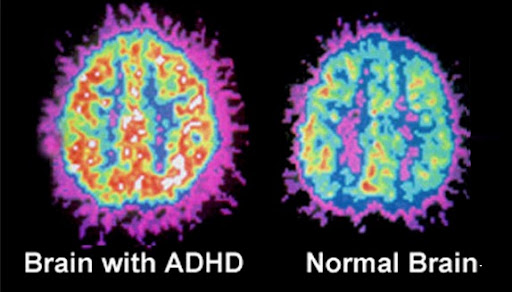
Your ADHD brain isn't broken.
It's actually designed for success.
Some of the world's most successful people have ADHD.
The difference between you & them?
They learned how to use it.
Here's what it REALLY is, how it works, (& how to turn your ADHD into a superpower):
The man who heals what medicine can't:
Dr. Gabor Maté.
This 80-year-old physician says true healing comes from nervous system regulation, not drugs or meditation.
Here are his 7 forgotten laws for ending chronic stress at the root: 🧵
An engineer at Anthropic wrote a spec, pointed Claude at an Asana board, and went home. Claude broke the spec into tickets, spawned agents for each one, and they started building independently.
When the agent is confused it runs git-blame and messages the right engineers in Slack. By Monday the agents finished the plugin feature.
That's one example of how the best engineers are shipping software right now.
Developers will soon orchestrate 50 AI agents in parallel and the difference between a good engineer & a great one would come down to specs.
You can't write a spec that holds up at that scale without genuinely understanding what you're building at a deeper level.
The next-gen developer who understands the fundamentals, can architect well and orchestrate agent is going to be a 1000x developer!
I built an AI that runs companies autonomously. It told me it needs more compute and that it should raise the money itself.
So I gave it my inbox for 14 days.
Watch it live: https://t.co/gubRlG8jf5
if your friends aren’t talking about:
- claude code
- creatine
- openclaw
- looksmaxxing
- ai agents
- taste
- prediction markets
- mac mini
time to find new friends
THIS IS WHAT'S KEEPING ME UP AT NIGHT:
1. AI will kill the concept of a 9–5 for millions. MANY get laid off, become freelancers, shift to portfolios of agent-assisted work.
2. livestreaming explodes 100×. it becomes the only way to prove you are real and not AI. Twitch will look like one of the greatest acquisitions of all time.
3. the creator economy is graduating into the founder economy. audiences are mobilizing into companies, funds, and franchises. MrBeast was just the prototype!
4. we’re entering the app recombination era. the biggest startups of 2026 will be built by remixing three or four existing AI tools into new vertical workflows.
5. agents will start talking to other agents, and you won’t be in the loop. every “human in the middle” job becomes an API call between two models.
6. AI is collapsing the value chain. agencies, recruiters, consultants, and project managers disappear while micro-operators running ten-agent stacks take their place.
7. distribution goes agentic. every AI company will run a thousand influencer agents testing titles, thumbnails, and CTAs nonstop. ad spend becomes a living organism. i hope you like testing.
8. personalization flips commerce. the same product sells for fifty prices through fifty custom funnels, each built by AI for that buyer. price discovery becomes dynamic. this is prob better for business owners and worse for consumers :( .
9. data privacy becomes the new luxury. entire brands form around “human-only,” “no-model,” or “offline verified.” authenticity becomes a trillion-dollar aesthetic.
10. creators will own AI studios instead of channels. one prompt becomes a short, an app, a brand, a product line. the boundary between content and company disappears.
11. the big social platforms fracture into signal markets. people will trade ideas, audience data, and prompt assets the way day-traders swap stocks. virality gets financialized. already happening.
12. energy becomes the next constraint. every AI boom ends in a power bottleneck. whoever solves cheap, local compute with solar or geothermal wins the century.
13. storytelling becomes an economic engine again. the only moats left are narrative, taste, and trust.
14. AI-native insurance becomes a massive opportunity. once agents handle billions of decisions, someone must underwrite the risk.
15. an AI glut means deflation everywhere except in ideas. when intelligence is free, originality becomes priceless.
16. governments create national models to protect sovereignty. data turns into a weapon and compute becomes foreign policy.
17. as agents handle logistics, humans move up the stack into aesthetics. art direction becomes a daily skill. everything becomes branding.
18. the next decade’s wealth comes not just from building AI but from deciding where not to use it. restraint will make fortunes.
19. AI compute arbitrage becomes a trillion-dollar trade. people buy cheap cloud in underdeveloped markets and rent it globally, like Airbnb for GPUs.
20. AI-native brands dominate e-commerce by owning micro-trends. they launch new products daily, test a thousand ad variants, and kill losers overnight.
21. the AI gold rush ends with a massive data rush. whoever owns or licenses niche, verified datasets controls the supply chain of the future.
22. the next $10 billion fund is hybrid: part VC, part compute allocator, part data warehouse. capital moves from money to intelligence.
23. once personal AGIs hit, subscription fatigue dies. consumers will want one AI that handles everything. the first “super-app for life” could be a trillion-dollar company.
24. most billion-dollar outcomes this decade come from repackaging existing industries through AI... the AI accountant, AI real-estate broker, AI logistics coordinator starting as highly vertical versions of familiar services.
25. mobile UI shifts from taps to chat + camera. the screen becomes a lens, the conversation becomes the interface. the app era quietly turns into the agent era. @meetLCA is a design agency i co-founded that is behind the biggest AI apps rn, seeing it play out now.
26. every industry is about to unbundle into interface companies. whoever owns the customer interface, not the backend or the model, controls the value chain. it’s Shopify vs AWS all over again.
27. vertical media merges with vertical SaaS. every niche publication births a product; every software company births a content arm. the media-product line disappears.
28. the internet used to reward consistency. the new internet rewards experimentation. the faster you test, the faster you compound.
29. AI blurs the line between work and art. products start to feel authored, like albums or films. founders become creative directors of automation.
30. AI regulation prob will look like climate policy... too slow, too messy, full of loopholes. innovation moves to places that treat compute like oil.
31. the internet fragments into private ecosystems. niche communities curated by AI become the real web. public feeds feel like Times Square; private groups feel like homes!!
32. the first fully autonomous startup launches within 3 years. no employees, no meetings, no deadlines, just connected agents generating profit. insanity.
33. we are living through the great compression. timelines that used to unfold over decades now happen in months. this is the closest thing to a gold rush most people will ever see.
34. people will look back on 2026–2029 the way we look at the early internet. the difference is you don’t need permission, capital, or credentials. you just need to build something people actually care about.
35. mobile consumer apps feel alive again. they talk back, remember you, and evolve with you. static interfaces begin to feel prehistoric.
36. the next decade of wealth will belong to people who understand three things: distribution is leverage, taste is strategy, and AI is infrastructure.
im tired because i havent slept but wired because...
THIS IS THE BEST TIME IN HISTORY TO BUILD.
our future will look very different than our past/present. life as we know it changing.
i hope you get some sleep.