🫶【Mechanism Study of the Tesla Optimus Hand Patent】🫶
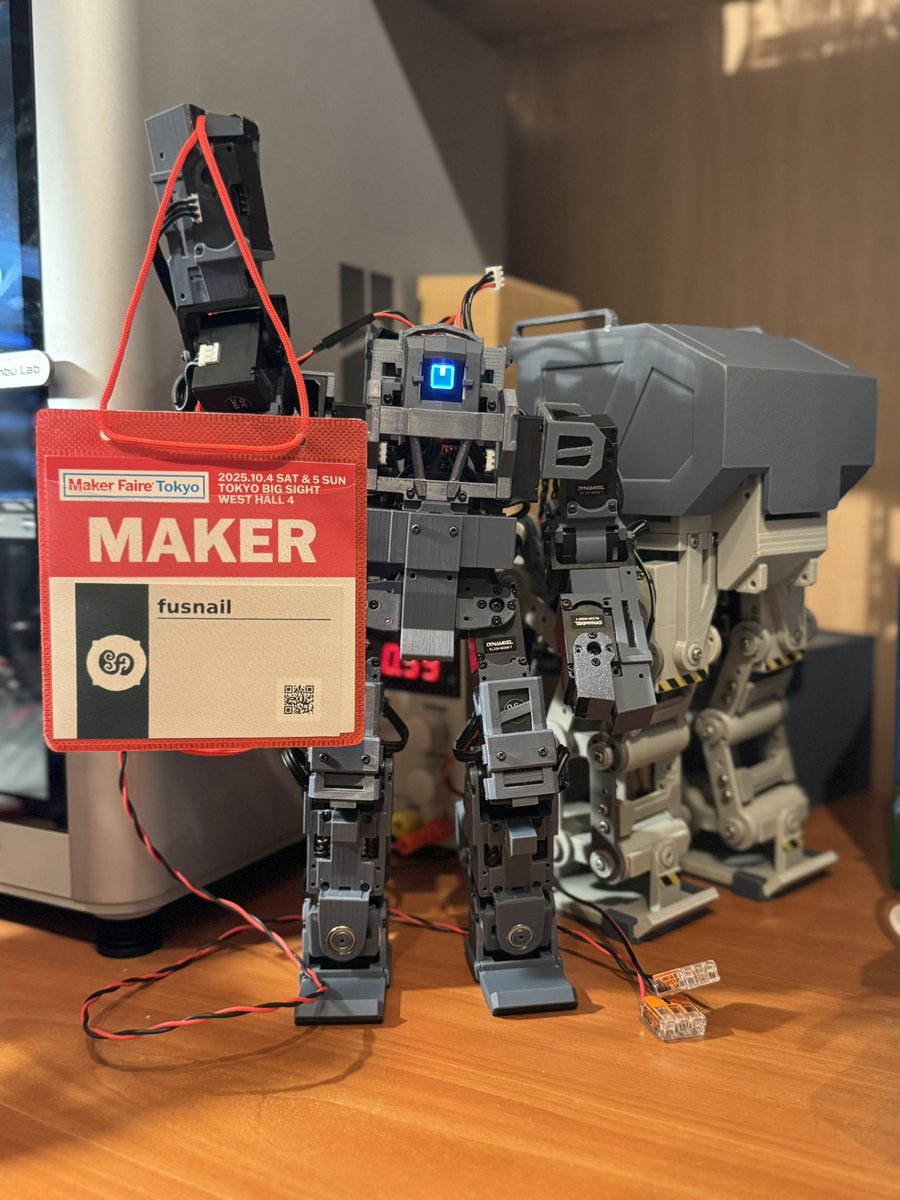
I built a quick functional mock-up yesterday based on the newly published Tesla Optimus hand patent filings.
It looks rough because I wanted to validate the mechanism as quickly as possible, but it is fully functional.
What impressed me most is that the interesting part is not just the unusual joint geometry itself. My reading is that the real elegance of this design is in reducing active cable count by using an elastic return / bias element instead of another extensor-side cable, while routing the distal control cable through the proximal joints carefully enough that distal motion remains controllable with reduced unwanted coupling.
The rolling-contact style joint also works surprisingly well in practice.
What I respect most about these filings is that they do not read like “look at this clever mechanism.” They read like a serious attempt to solve the real problems of a tendon-driven humanoid hand: cable count, routing through multiple joints, manufacturability, and assembly. There is a very strong sense here that the design was pushed not only toward motion, but toward production.
<Notes>
This mock-up is simplified for functional reproduction.
My prototype uses a single-resin flexure, not the multilayer composite flexible member described in the patent filings, so the extension-side hysteresis is probably not representative of the intended behavior.
I also did not fully reproduce the cable-support / control-channel geometry shown in the filings, so some residual inter-joint crosstalk remains in this mock-up.
<Referenced patent publications>
WO2026/080687 A1
WO2026/080690 A1
WO2026/080691 A1
WO2026/080693 A1
WO2026/080701 A1
Unitree Introducing | Unitree H2 Destiny Awakening!🥳
Welcome to this world — standing 180cm tall and weighing 70kg. The H2 bionic humanoid - born to serve everyone safely and friendly.