New York is a cautionary tale.
You can invest millions in “science of reading,” but if the wrong people are leading it, you risk recreating the same failed systems under a new name.
Leadership isn’t optional. It’s everything.
https://t.co/lPcCMcIGpd
When I got my masters at a large state university I tutored for the football team. They assigned me a player who needed “a little more help”... I asked him to write a paragraph about himself. Not a single correct & complete sentence. He read at the 3rd grade level. The worst part was that he was such a gentleman. All he wanted was to do work hard & be successful. But he failed out & went home, his dream crushed. he never knew “what he’d done wrong”. But the reason was in fact that he was such a lovely kid. And one of the best football players in the history of his HS. And no one wanted to crush his dream by failing him because he couldn’t read or write. All that time they told themselves they were being kind & doing him a favor. This was when I discovered the immense risk of perverse incentives.
💎 100 of the Best Gemini Gems for Schools https://t.co/nHwL125nFH
🧭 Curriculum
💡 Instructional Materials
🙋 Engagement
🔑 Support
💯 Assessment & Data
📖 Literacy
🧪 Math & Science
🧒 Student Tools
💼 Professional Tasks
#edtech@GoogleForEdu@GeminiApp
I remember a teacher telling me: “When you’re surrounded by superstars… it makes you want to be better than you are.” That’s the power of collaboration -- the power of positive peer pressure. The best teachers don’t just inspire their students; they inspire their colleagues.
How to teach a brilliant writing lesson
1️⃣ The components of an effective writing lesson
https://t.co/TOmLMnkImX
2️⃣ Getting your writing instruction right
https://t.co/DflURlYU1C
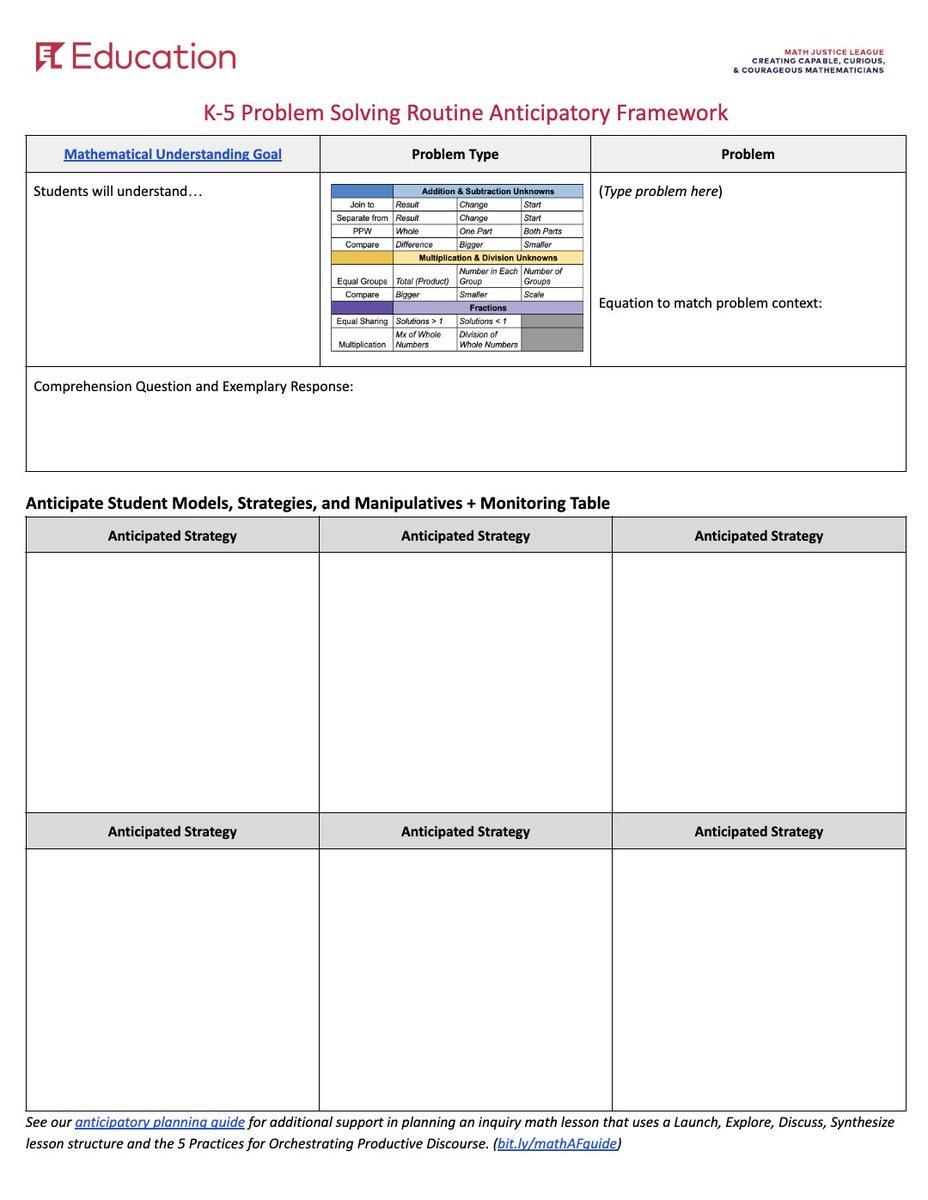
If you're supporting math teachers – but never saw yourself as a "math person" – this one is for you.
(Via leader Megan Edinger & @ELeducation)
https://t.co/uMld88FB2N
Here’s a lesson routine for simplifying the explicit teaching of new content I’ve found success with. It may work for you too. It may not. I think it will. Let me know what you think.
1️⃣Introduce guiding questions for lesson reading (3-4 per lesson)
2️⃣FASE read one “chunk” of reading at a time
3️⃣Explain concept using concrete examples and analogies (e.g., The Caribbean is vulnerable because it is sitting in the geographic “bullseye” for hurricanes to hit.)
4️⃣Hightlight/annotate key information in the text for each guiding question
5️⃣Turn and talk sharing/comparing highlights/answer to guiding question
6️⃣Cold call answers/“can you add/build on what ____ just said” for guiding question
7️⃣Choral response to guiding question when applicable (e.g., What are hurricanes categories based on? Sustained wind speed! What else? Potential damage!)
8️⃣Create a flashcard for Leitner spaced practice system using guiding question and highlighted information.
9️⃣Repeat for each remaining guiding question/chunk.
🔟 Practice flashcards for part of Do Now at the start of lesson the next day and at increasing intervals based on individual student retention (e.g., 3 days, 1 week, 2 weeks)
I’ve finally launched my Substack with a piece that reflects a concern I’m no longer willing to soften.
Building Sinking Classrooms takes a hard look at Building Thinking Classrooms and the widening gap between instructional popularity and instructional evidence. I believe this trend poses a serious risk to mathematics instruction if left unexamined.
The article draws references the work of three educators I deeply admire: @rastokke, @MrZachG, and @greg_ashman. Their thinking has profoundly shaped my own on BTC.
Thoughtful, serious feedback is welcome.
https://t.co/nBhDZweelW
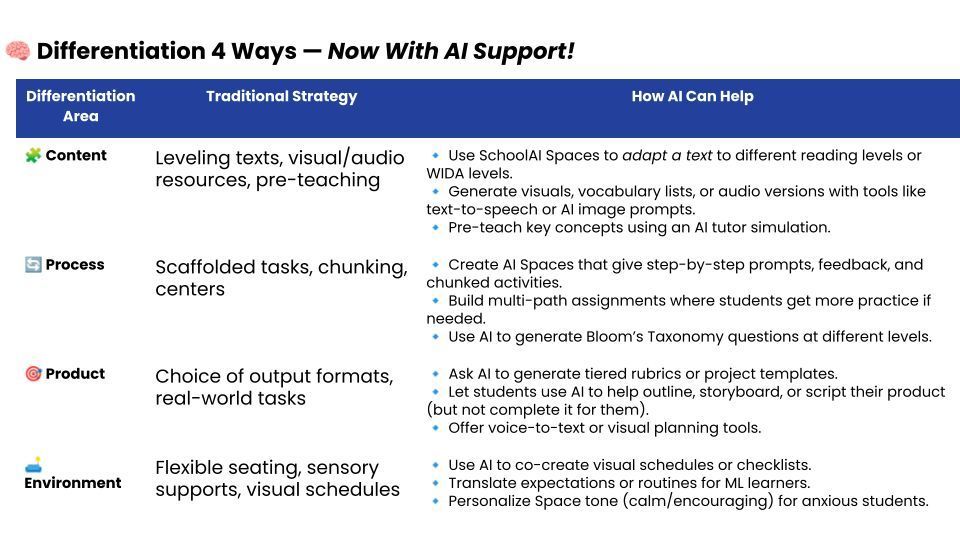
Differentiation doesn’t have to mean four times the prep.
From adapting reading levels ➝ scaffolding processes ➝ offering flexible products ➝ supporting learning environments — AI can help teachers personalize without burning out.
https://t.co/tFbE0rxfYj
🧠 Effective teaching depends on understanding how learning happens.
Daniel Willingham’s Simple Model of the Mind provides a practical lens for designing instruction grounded in key insights from cognitive science.
It helps teachers move beyond poor proxies for learning and make more deliberate decisions about what students attend to, think about, and remember.
The full What, Why, and How—plus a free planning resource—are available in this week’s ⚗️DistillED.
https://t.co/QGXjKEPjWe
I always wanted to improve my science vocabulary instruction but most of my instructional strategies focused on Tier 3 words such as mitochondria and photosynthesis. It did not focus on Tier 2 words that actually explain the why and how behind these terms.🧵⬇️
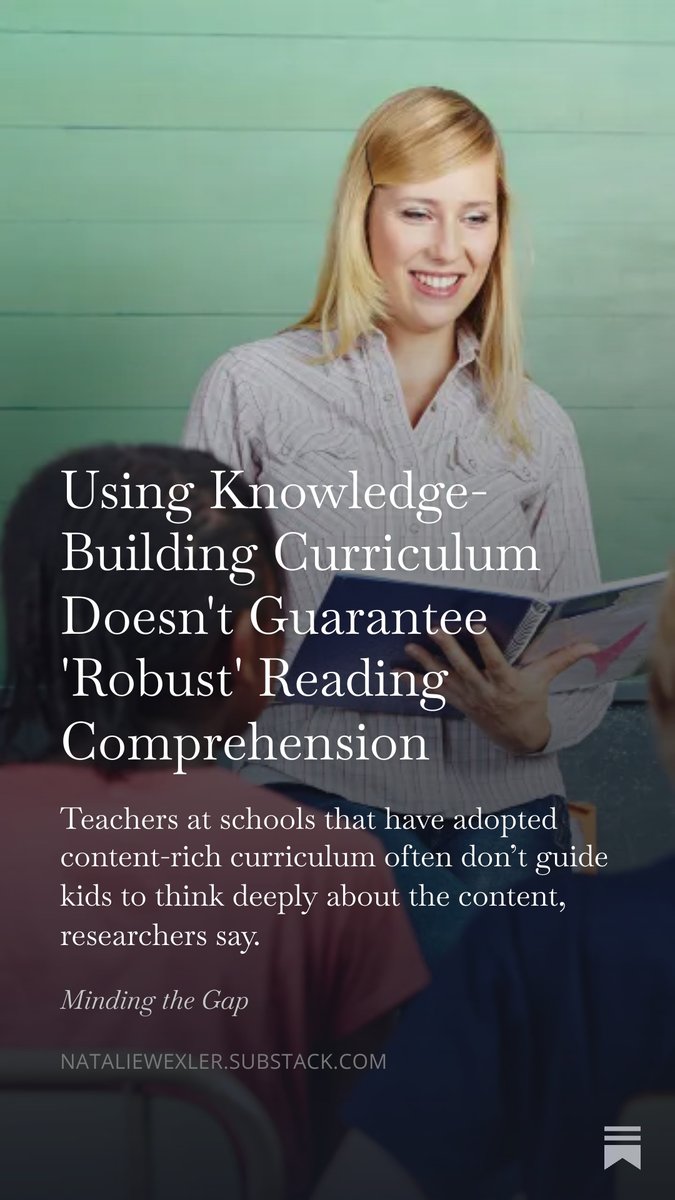
Why are so many teachers who use content-rich curriculum still engaging in "surface-level" reading comprehension instruction, as a new study finds?
The pressure to "teach" skills-focused ELA standards has a lot to do with it.
More in my new post:
https://t.co/6rJKfY7ohe
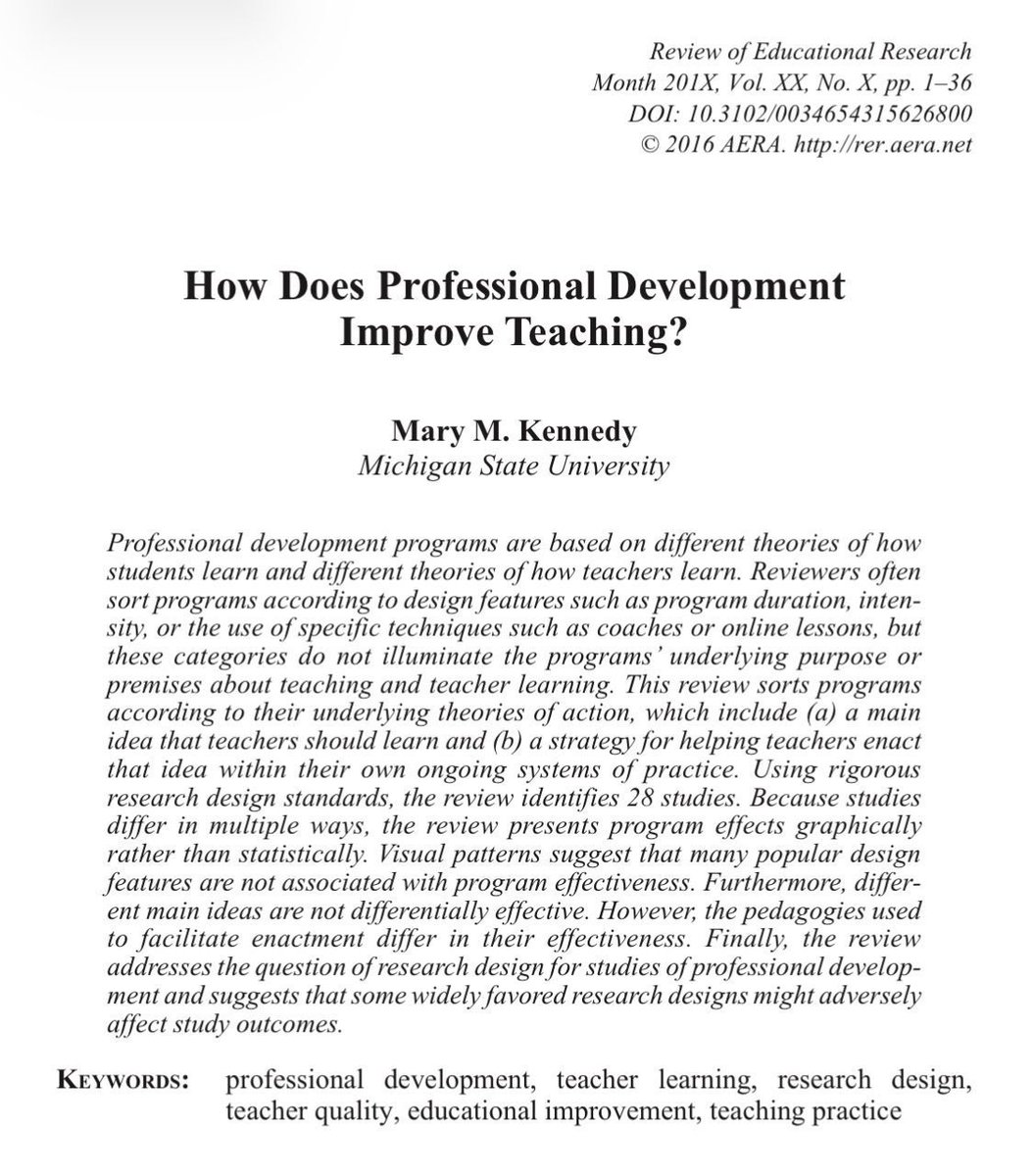
Mary M. Kennedy reviewed 28 studies on teacher professional development to find out what actually works. She discovered that the best programs help teachers think strategically or discover insights on their own, rather than just giving them step-by-step instructions to follow. Programs where teachers had to participate often didn't work at all, even when they were expensive and time-consuming.
Intellectual engagement means teachers actively think through new ideas instead of just being told what to do. In successful programs, teachers discussed research together, watched videos of teaching, and figured out solutions as a group. They talked about why certain approaches work and when to use them. This is very different from having a coach watch you teach and tell you what you did wrong.
The least effective programs treated teachers like robots who just needed better programming. They gave detailed scripts and checklists for teachers to follow exactly. Kennedy found these often failed, especially when teachers were forced to participate. Teachers are professionals who need to understand the "why" behind new methods and decide for themselves how to use them with their specific students. When they get to think, discuss, and problem-solve together, they actually improve their teaching.
https://t.co/Et1KiHqEAS
@ZacBrayLex You’re not just getting a great coach and person, his wife is an amazing teacher and person! Our loss is your gain! I wish The Grady’s the best!
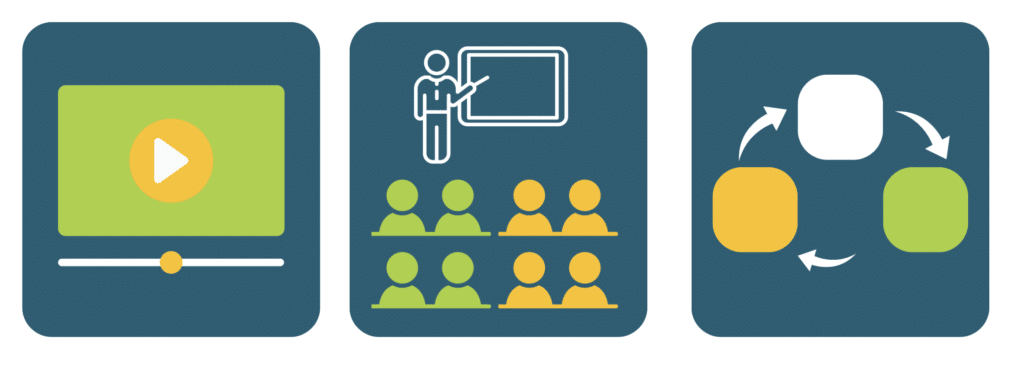
🙋🏼♀️ What's the relationship between Multi-Tiered Systems of Support (MTSS), Universal Design for Learning (UDL), & blended learning in improving Tier 1 instruction?
Watch, then explore more about Tier 1 instruction on my blog: https://t.co/0fx7iox7du
#edchat#k12#mtss#udl
Children will rise to the expectations we set.
Just as explicit instruction should not be negotiable when teaching novice learners, there should be a non-negotiable expectation that all students display behaviors that support learning. When we don't, it is a clear sign that we don't believe that all kids can learn.
We need to abandon the bigotry of low expectations.