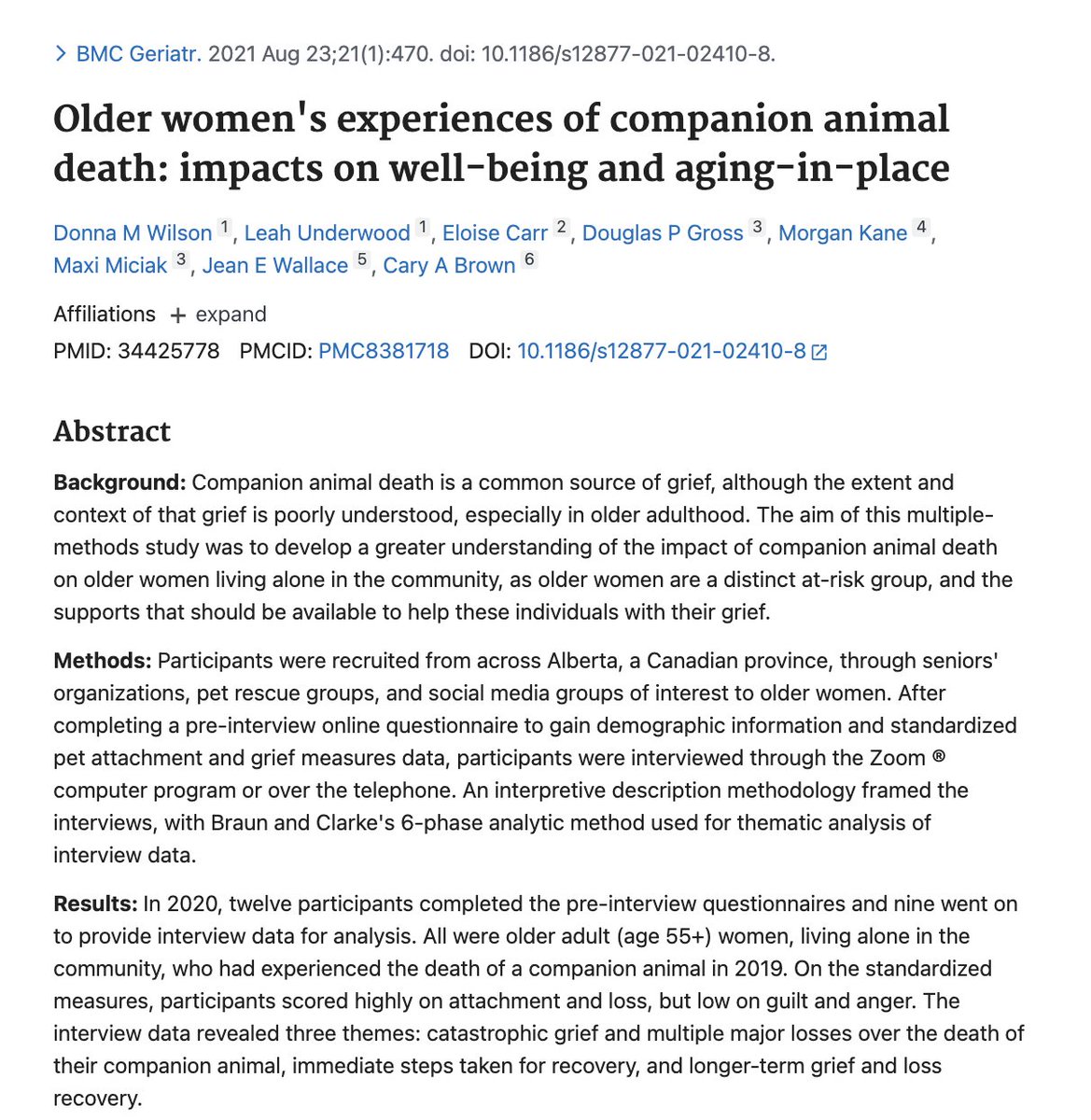
Losing a pet produces grief that is clinically comparable to losing a human family member, and a 2021 study in BMC Geriatrics found that older women who lost a companion animal experienced impacts on their physical health, daily routines, and sense of purpose that lasted for months.
The study explored the lived experience of pet bereavement in older women and found themes of profound loneliness, loss of daily structure, and a sense that a piece of their identity had died with the animal. The women described losing not just a companion but a reason to get up in the morning, a reason to walk, and a reason to talk.
The grief is often dismissed. "It was just a dog" is a sentence that pet owners hear from people who have never had the relationship, and the dismissal compounds the pain. Disenfranchised grief, the term psychologists use for grief that society does not validate, makes the mourner feel they have no right to their own pain, which delays recovery and deepens isolation.
The bond between a person and a pet is not a lesser version of a human bond. Brain imaging studies show that the same regions activated by looking at a photograph of a child are activated by looking at a photograph of a beloved dog. The attachment system does not check species. It checks connection.
If you know someone who just lost a pet and you are wondering whether to send flowers or a card, send it. The research says the grief is real, the loss is structural, and the person is mourning something the rest of the world keeps telling them is small. https://t.co/HR0l1R2Zov
How can @RoyalMail send a message to tell me there's been a delivery attempt at 6.20pm when I'm sat in my garden by the door. Now it's 'awaiting my collection'. I've paid for next day delivery - aka today! Get your act together! #royalmail