Sharing our new lab work on Deep Parametric Response Mapping (PRMD), a feature-based method designed to improve COPD phenotyping from paired chest CT scans.
https://t.co/w1TA6YGSOc
Breaking: The official release of educational guides for AlphaFold Server from @GoogleDeepMind
https://t.co/AVoOkDb8uH
These tutorials aim to assist new users in gaining a deeper understanding of the latest AlphaFold version’s capabilities and maximizing the potential of AlphaFold Server’s tools and features.
Section 1: Introducing AlphaFold 3
- To provide key background information about AlphaFold 3, with a specific focus on its capabilities and how it differs from AlphaFold 2.
Section 2: AlphaFold Server: Your gateway to AlphaFold 3
- Introduce users to AlphaFold Server, an online portal for generating structural predictions using AlphaFold 3. Explain what AlphaFold Server can and cannot do, and provide guidance on how to use it.
Section 3: Interpreting results from AlphaFold Server
- Provide practical guidance on how to interpret structure predictions made by AlphaFold 3 (via AlphaFold Server).
Section 4: Conclusions
- AlphaFold 3 represents a significant leap forward in our ability to understand the molecular world. By predicting the structures of complexes encompassing a vast array of biomolecules and their interactions, it opens up new avenues for research and discovery across multiple disciplines.
Structure Prediction of Large RNAs with AlphaFold3 Highlights its Capabilities and Limitations
1/ AlphaFold3 extends the capabilities of structure prediction to large RNAs (up to 2000 nucleotides) but introduces significant challenges, such as steric clashes and backbone breaks, making it difficult to obtain accurate models without repeated predictions.
2/ The models produced by AlphaFold3 for large RNAs tend to be excessively spherical and compact, deviating from experimental observations, particularly in low salt conditions.
3/ Despite these challenges, AlphaFold3-predicted hydrodynamic radii (Rh) are consistent with experimental data under high salt or multivalent cation conditions, suggesting it can approximate realistic structures in certain contexts.
4/ The study shows that AlphaFold3’s confidence scores (pTM) for RNA predictions may not be reliable, especially for long sequences, as these scores tend to increase unrealistically with RNA length.
5/ AlphaFold3’s predictions become more prone to steric clashes and strand breaks as RNA length increases, with models for RNAs longer than 2000 nucleotides almost always containing errors.
6/ While AlphaFold3’s speed and capacity to predict large RNA structures are impressive, users must exercise caution, as many predicted models contain significant structural flaws, including entanglements and poor backbone geometry.
7/ This study highlights both the promise and the limitations of AlphaFold3 in RNA structure prediction, underscoring the need for further refinement to handle large and complex RNA molecules.
📜Paper: https://t.co/iF60Zi41A8
@fere_cat @Oldtiger666 مسئله این نیست که احتمال انتقال ویروس از طریق غیر جنسی وجود داره یا نه(کیس های نادر)
مسئله اصلی دادن اطلاعات غلط در مورد همون کیس های نادر هست
و جسارتا اگر به اندازه ی موهای نویسنده کیس دیدید که توصیه میکنم بیشتر ببینید 😀
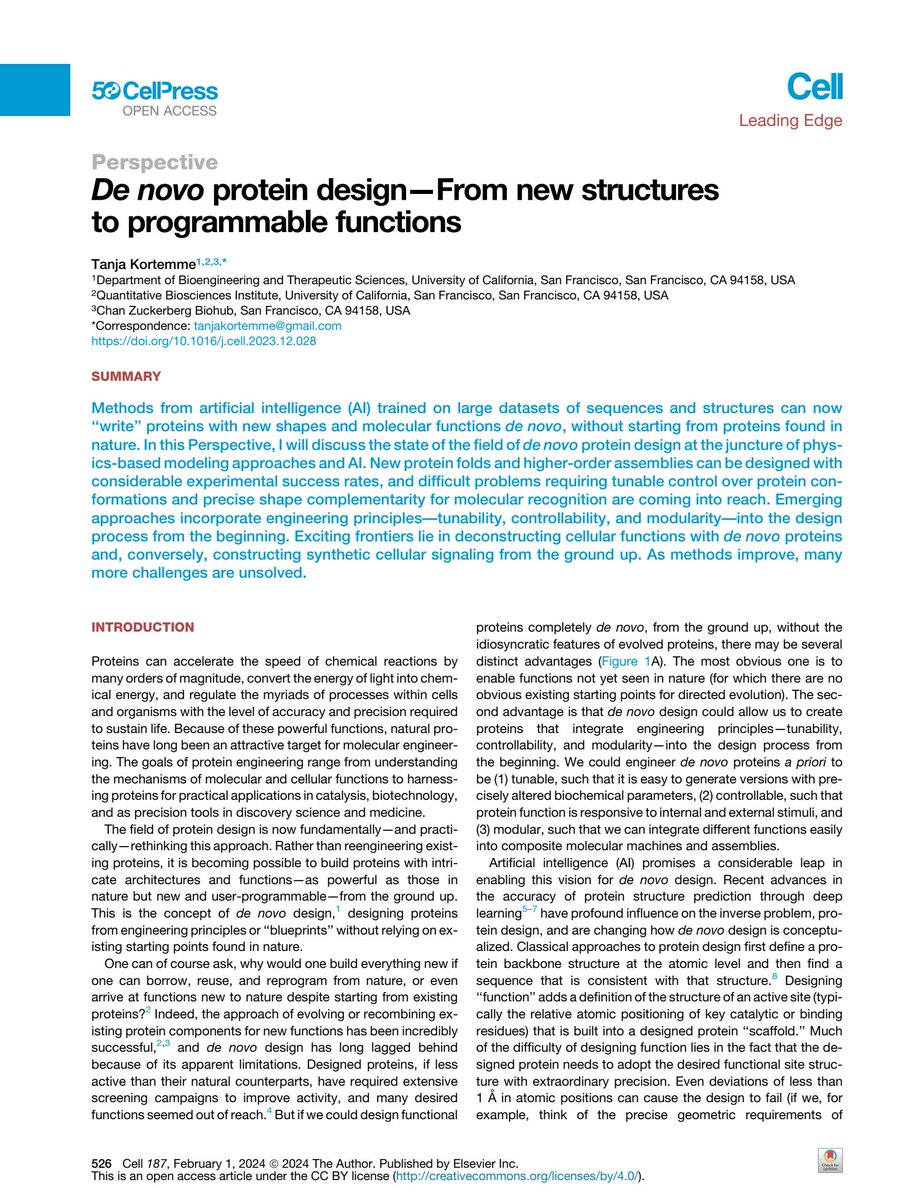
As part of our #CP50 Anniversary, @CellCellPress recently published a Perspective on the #NobelPrize in Chemistry winning topic of computational protein design. Read it below:
"De novo protein design—From new structures to programmable functions" https://t.co/yZu00p4FKi
After termination, RNA polymerase doesn’t always dissociate from DNA. It can slide along the DNA and reinitiate transcription from different promoters.
Factors like DNA tension and proteins such as sigma 70 influence this sliding, affecting how RNA polymerase resumes transcription.
Interestingly, some polymerases can bypass obstacles like the lac repressor, showing that gene regulation is more flexible than previously thought. #Genetics https://t.co/lehTv89X7J
STING isn’t just for immune defense!
This protein also has a key role in lysosomal biogenesis, working independently of TBK1. Through activating TFEB/TFE3, it boosts cellular cleanup processes like autophagy, which is essential for fighting stress and aging-related diseases.
This discovery could open doors to new treatments for neurodegenerative conditions!
#Genetics
Glycosylation is among the most important modifications in biology.
We know relatively little about glycobiology, because it is hard to study.
This Nat Rev Methods primer describes our best tools for analyzing glycosylation 🔽
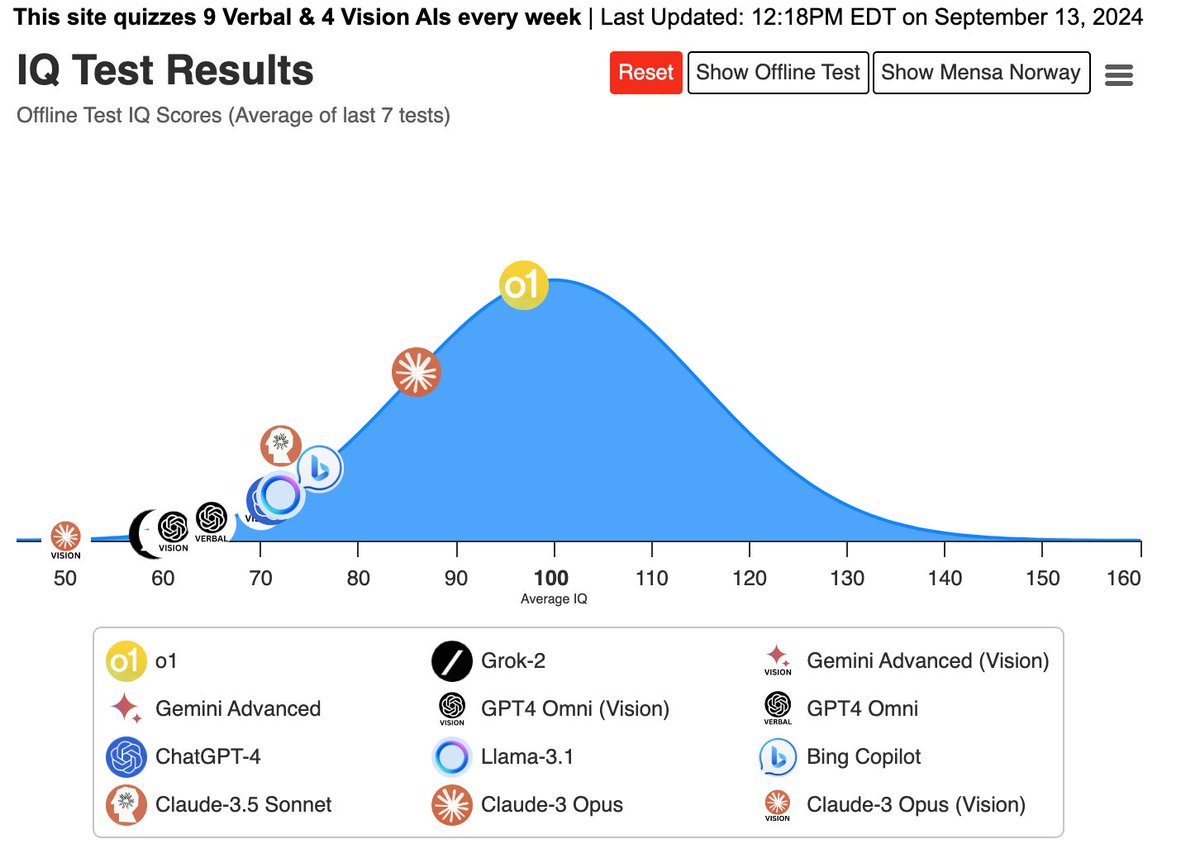
Just plotted the new @OpenAI model on my AI IQ tracking page.
Note that this test is an offline-only IQ quiz that a Mensa member created for my testing, which is *not in any AI training data* (so scores are lower than for public IQ tests.)
OpenAI's new model does very well
Biggest medical discoveries of the week (🧵)
1/10
Spinal cord injury triggers activation of T cells, inflammation, and death of neurons
Editing the T cell receptor, using mRNA, suppressed this, and helped recovery from the injury (in mice!)
(Paper: https://t.co/RLgHRoj9XG)
finally, our paper of functional proteomics atlas of human cancers is published! This is a great resource for the biomedical community.
https://t.co/meEXAAN1cB
Our Review article about CPP :
Application of Cell Penetrating Peptides as a Promising Drug Carrier to Combat Viral Infections
cell penetrating peptides (CPPs) attracted a special interest to enhance drug delivery into the cells with low toxicity. They were also applied to transfer peptide/protein-based and nucleic acids-based therapeutic vaccines against viral infections.
Link: https://t.co/TPtXrGcSwc
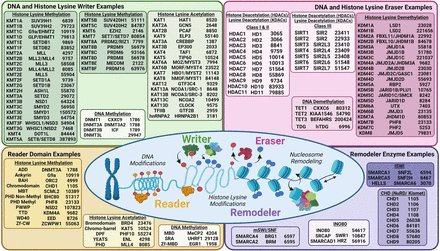
The article categorizes epigenetic modulators into four main types:
writers, erasers, readers, and remodelers. Each type has specific functions in adding, removing, recognizing, and altering epigenetic marks on DNA and histones.
Highly recommended