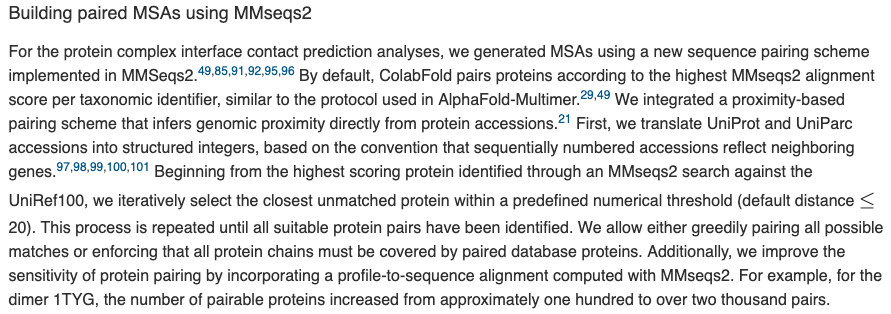
Some studies earlier this year found that MSA pairing quality has no impact on structure prediction of co-evolving hetero-oligomeric complexes. I'm curious if co-folding models trained with the MSA pairing approach by @yoakiyama would do better https://t.co/s70I7SemEY
Excited to report the first de novo enzyme catalyzing two of the most energetically demanding reactions in biology—phosphomonoester and phosphodiester hydrolysis—with catalytic efficiencies comparable to natural enzymes! 🚀
desB was designed zero-shot with dEVA. No structure prediction, no pre-defined motif, no reaction-intermediates. 🧵
@StanfordBiosci@bioe_stanford@SLAClab@EPFL@hes_so@simonduerr
We are hiring a PhD student 🎓 Work with me and Matthias Rüdt in our department on an exciting industry collaboration with Lonza combining high-throughput experiments and molecular modelling using AlphaFold and MolecularDynamics
📍 Sion, Valais, Switzerland
Today we're dropping the "beta" tag from Adaptyv, launching our new website and announcing our $8M seed round.
When we started Adaptyv a few years ago, our core belief was: AI models for biology are only as good as the experimental data they're trained on and the hypotheses they can test in the real world.
Now, after a year of working with many great partners, we’ve scaled our infrastructure to the point that we're now open to anyone who wants to use our platform!
Overall, this year, over 30 companies started using Adaptyv to validate their protein designs - from some of the biggest pharmas to frontier AI labs to many, many techbio startups. We've run hundreds of experiments, tested well over 10,000 proteins this year and are generating the data that validates the best AI models currently in development.
Chai Discovery just released their new model Chai-2, validated on Adaptyv!
Chai-2 enables generation of de novo proteins and epitope-specific antibodies using a multimodal generative architecture that integrates all-atom structure prediction and generative modeling.
Chai tested many of their new protein designs using our high-throughput wet lab at Adaptyv to get high quality data to improve their AI models in as little as two weeks per round.
In earlier work, we already analyzed how AllMetal3D given a structural input and no information about metal stoichiometry fares against co-folding methods given metal stoichiometry but no structure: https://t.co/tJnVSmJmrz
Excited to share our new AllMetal3D model building on Metal3D. AllMetal3D predicts the location, identity and geometry of the major biologically relevant metal ions https://t.co/miPMphfhC9
We compared to a few other tools that perform either metal identity prediction or location prediction and found that is very important to include negative classes during training and also cluster metal ions by biological similarity.
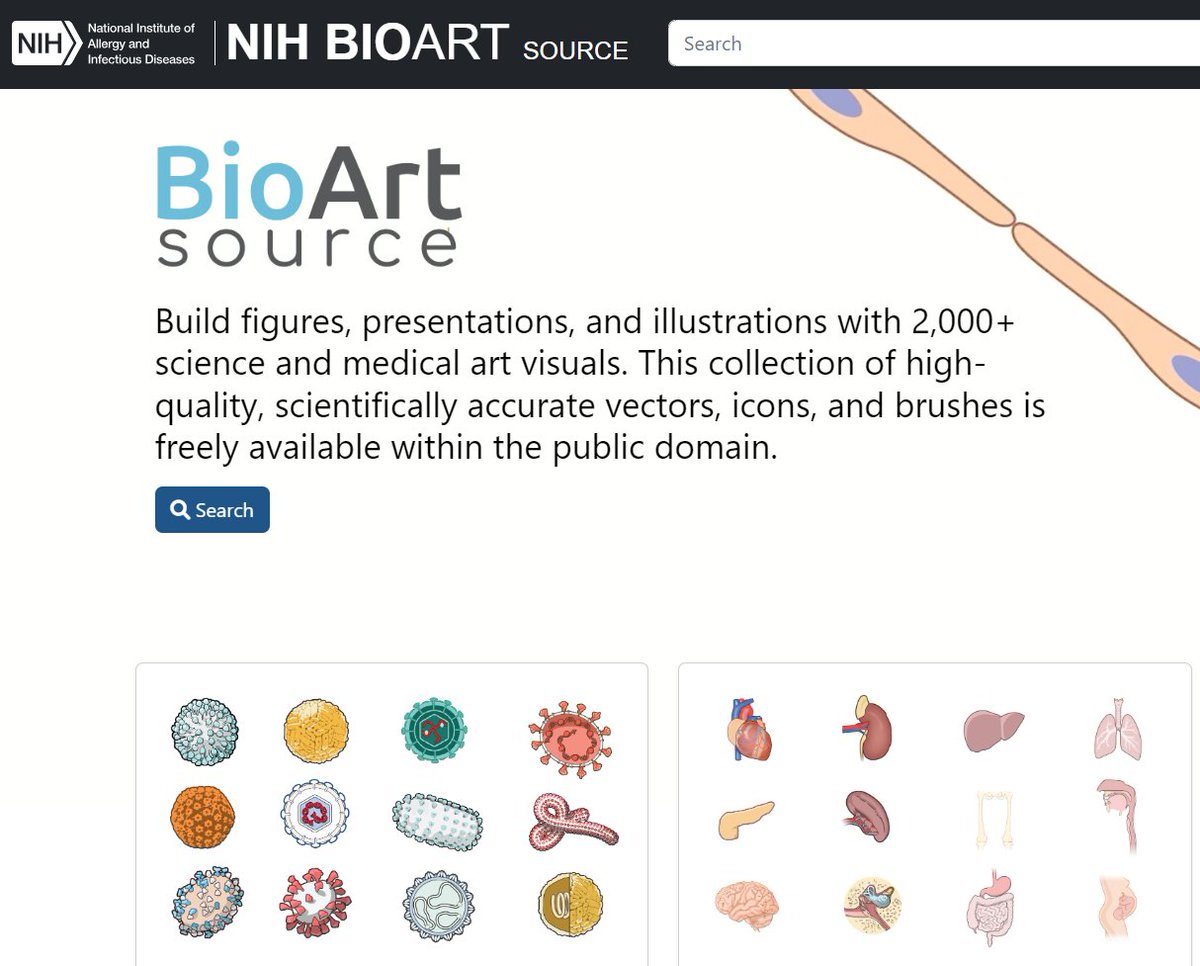
@anjbth @NIAIDNews No. The icons come with the very permissive CC0 license . You can basically do what you want ( even without providing credit). It is however appreciated to credit NIAID
@a19grey@david_koes Smiles is 2D, you need to generate a conformer (e.g using rdkit) to get 3d coordinates which you can then visualize using molecule3d
First beta release of a native Molecule viewer for Gradio built on 3dmol.js: Gradio Molecule3D
Simply install it using pip install gradio_molecule3d 1/3
Thank you to everyone who came to MLSB this year!!
We are collecting feedback in a short 2 minute survey (and more data means maybe next year we'll train a new model... or just get a bigger room 😄)
https://t.co/J2eN8q4w6f
@THE_inteins @MPDL For sure! Also you could buy 5000 images at a cost of 124 $ each for this money and use them anywhere you want instead of only being able to edit them in their webapp.
Unbelievable how expensive BioRender is. @MPDL is paying 673 413 USD for a two year license for a software that isn't even compatible with open access publishing (even if BioRender claims otherwise). https://t.co/eKQDEisVZJ
Anyone working at MPG willing to share the license conditions ? I'd be curious if they have special terms. For the last contract they didn't. The info should be on this page: https://t.co/CGZXKBpTWY
Now available: open source UI with @Gradio for Boltz-1 by @GabriCorso@jeremyWohlwend
Check it out on HuggingFace spaces. h/t @huggingface for community L4 GPU: https://t.co/yvnZCKUQiU
Thrilled to announce Boltz-1, the first open-source and commercially available model to achieve AlphaFold3-level accuracy on biomolecular structure prediction! An exciting collaboration with @jeremyWohlwend, @pas_saro and an amazing team at MIT and Genesis Therapeutics. A thread!