Well then! Since when has @jamboasbl taken it upon himself to play a role in decisions concerning Rwanda? Who exactly do you represent? Honestly, the audacity.
First, let’s set the record straight : the European Union’s support is not directed at the "Rwandan army" as you claim. It primarily benefits Mozambicans, as part of efforts to restore stability and security.
Rwandans deployed in Mozambique are not there to gain anything for themselves.
They are engaged in contributing to peace, protecting civilians, and helping restore decent living conditions in areas devastated by violence.
And contrary to what you suggest, Rwanda "gains" nothing from this situation. On the contrary, there is a real human cost: soldiers’ lives are lost.
But ultimately, a simple question arises: what have you actually accomplished in the political sphere to claim such credibility? Who mandates you to speak on behalf of anyone?
Do you really think the @EU_Commission is unaware of your background? Your posturing and ambiguities fool no one. A real group of genocide deniers...
I’m afraid your voice does not carry far enough to challenge such a structured and essential cooperation.
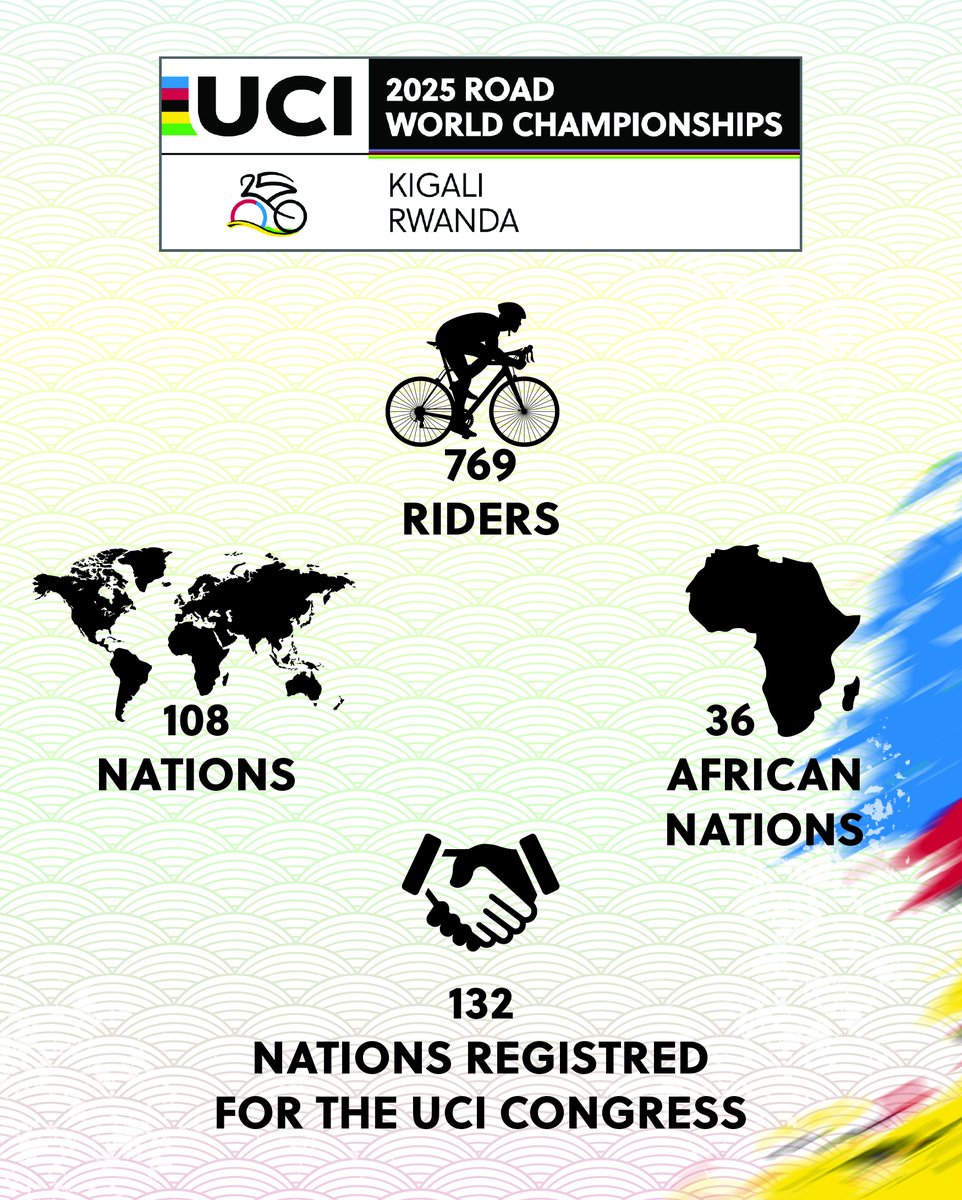
Unprecedented participation figures at the 2025 UCI Road World Championships in Kigali.
Thanks to all riders, Continental and National Federations for making this edition a major success. 👏
#Kigali2025
🚨HEADS UP!🚨
Minister @onduhungirehe will be live on @FRANCE24's Journal de l'Afrique @JTAfrique at 9:45 PM (Kigali time).
===
Le Ministre @onduhungirehe sera en direct dans le Journal de l'Afrique @JTAfrique de @FRANCE24 à 21h45 (Heure de Kigali).
🔗: https://t.co/CyfDeaeFSf
Le PSG renouvelle son contrat avec Visit Rwanda. Alors qu’une pétition demandant la fin de ce partenariat commercial avait recueilli plus de 75 000 signatures, le Paris Saint-Germain a officialisé ce mercredi le renouvellement de son partenariat avec l’organisation Visit Rwanda jusqu’en 2028 qui rapporte environ 15 millions d’euros par an selon Le Parisien.
En marge de cette signature, le directeur général du PSG Victoriano Melero a déclaré que le club est «heureux de poursuivre ce partenariat avec Visit Rwanda. Ensemble, nous contribuons à faire découvrir la richesse culturelle et la beauté du Rwanda, tout en montrant que le football peut inspirer et rapprocher les communautés du monde entier. »
Visit Rwanda and Paris Saint-Germain have extended their partnership through 2028. Jean-Guy Afrika, CEO of the Rwanda Development Board, said, “This partnership has contributed significantly to positioning Rwanda as a leading destination for tourism and investment.” PSG CEO Victoriano Melero added, “This partnership goes far beyond visibility, it’s about values, real opportunities, and long-term impact.”
#Rwanda_#Belgique _#FDLR :
Une opinion de Marc Bossuyt, professeur émérite de droit international à l'Université d'Anvers, président émérite de la Cour constitutionnelle de Belgique
“Cependant, l'histoire que la Belgique partage avec le Rwanda devrait nous inciter à faire preuve d'une grande retenue dans nos critiques envers ce pays. La plupart des Belges ne sont pas au courant de cette histoire. Dans notre histoire, ce n'est qu'une note de bas de page. Dans l'histoire du Rwanda, elle occupe plusieurs chapitres.
Sans avoir à revenir à Léopold II, il y a les mentions ethniques sur les cartes d'identité rwandaises, la passivité belge lors des massacres de 1959, l'intervention en 1960 du colonel BEM Guy Logiest dans les structures politiques du Rwanda, notre attitude complaisante à l'égard de la politique discriminatoire des présidents Grégoire Kayibanda et Juvénal Habyarimana et notre lobbying auprès des membres du Conseil de sécurité de l'ONU pour que tous les bérets bleus soient retirés du Rwanda pendant le génocide contre les Tutsis en 1994.
Le Rwanda se rappelle encore que, pendant 100 jours, environ 1 million de Rwandais ont été tués avec des machettes. La Commission Rwanda de 1997 et les excuses du Premier ministre Guy Verhofstadt en 2000 ont apporté un contrepoids. Le manque de compréhension à propos de la situation des Rwandais au Congo a aujourd'hui effacé cela. https://t.co/f3fPyIiKN5
#Rwanda _ #Belgique _ #FDLR#RDC#AFC/M23 : Une opinion de Marc Bossuyt, professeur émérite de droit international à l'Université d'Anvers, président émérite de la Cour constitutionnelle de Belgique.
On pouvait s'attendre à ce que la Belgique en tant qu'ancienne puissance coloniale joue un rôle de médiation en cas de conflit entre ses anciens territoires d'outre-mer. C'est d'autant plus vrai que la cause du conflit remonte à la fin du XIXe siècle, lorsque, sous l'impulsion du Roi des Belges Léopold II, les Rwandais ont été répartis entre ces deux pays.
Aujourd'hui, la Belgique ne joue pas un rôle de médiation dans ce conflit. Elle s'en est exclue. Elle s'est rangée sans équivoque du côté du Congo dans ce conflit régional. Elle a même fait pression sur l'Union européenne pour qu'elle adopte des sanctions unilatérales contre le Rwanda.
En revanche, il n'est pas question de sanctions contre le Congo. Il y aurait cependant des raisons suffisantes pour cela : l'inconduite de l'armée congolaise au Kivu, le discours de la haine contre les Tutsis, les menaces contre le Rwanda, la coopération avec les génocidaires hutus du FDLR, le recours à un millier de mercenaires venus d'Europe orientale, le non-respect des engagements pris avec les Tutsis congolais le 23 mars 2009, le refus de négocier avec le M23, etc. https://t.co/f3fPyIiKN5
Rwanda gets backing from world cycling chief Road World Championships, David Lappartient, head of the International Cycling Union (UCI), would go ahead in Rwanda in September, dismissing criticism from human rights groups who accuse Kigali of using sports to burnish its image while backing rebels fighting in neighbouring Congo. By Julien Pretot
Hosting the event, which typically draws the world's top cyclists and has never previously been held in Africa, would be a public relations success for Rwanda at a time when it is facing diplomatic pushback over its actions in Congo.
Lappartient, head of the International Cycling Union (UCI) and a candidate to lead the International Olympic Committee in Thursday's election, told Reuters he had recently discussed Congo with Rwandan President Paul Kagame in Kigali.
"Here we have a situation which, without going into detail, is aimed at preventing a general return to a genocidal climate on Rwanda's borders," he said, echoing Rwanda's disputed position on what its forces are doing in Congo.
Rwanda accuses Congo of harbouring a Hutu militia intent on persecuting Tutsis, the ethnic group targeted in the 1994 genocide in Rwanda, and says it must defend itself against that existential threat.
Lappartient said he and Kagame agreed that sport was not a sanctioning tool. "As of today, we don't have any elements that mean we shouldn't go to Rwanda. And we haven't been working on plan Bs, so we're not working on plan Bs today. We're working on plan A, which is Rwanda," he said.
Je regrette la rupture des relations diplomatiques entre le Rwanda et la Belgique, tout en comprenant pleinement la position rwandaise.
ENGLISH BELOW
Le ministre belge des Affaires étrangères, Maxime Prévot, qualifie sur X cette décision de "disproportionnée". Pourtant, depuis plusieurs semaines, persuadé d’être au centre du jeu diplomatique, il mène au nom du gouvernement belge une campagne agressive pour influencer la position de l’Union européenne et des organisations internationales dans un sens ouvertement hostile au Rwanda. Jamais la Belgique n’avait adopté une posture aussi offensive sur aucun dossier depuis 1994.
Comme je l’ai expliqué dans La Libre (24/02/25) https://t.co/e38GQepVL7 la Belgique aurait dû se tenir à l’écart des conflits régionaux et maintenir une stricte neutralité.
Hélas, comme je le redoutais, le gouvernement belge a réveillé au Rwanda des blessures historiques qui s’étaient apaisées depuis les excuses officielles du Premier ministre Guy Verhofstadt en 2000. Faut-il rappeler :
- Que les Belges n’ont pas seulement introduit la mention ethnique sur les cartes d’identité : ils ont créé ces catégories racialisées, instrumentalisant des divisions artificielles et instaurant une politique de discrimination systématique qui a empoisonné les relations entre Rwandais durant des décennies ;
- Que le revirement brutal de la politique belge en 1959 a provoqué une première "purification ethnique" des Tutsis, causant des milliers de morts et l’exode de dizaines de milliers d’entre eux vers les pays voisins — une mémoire toujours vive, car de nombreux Rwandais adultes aujourd’hui ont personnellement vécu cet exil et la dure réalité des camps de réfugiés ;
- Qu’en 1994, la Belgique disposait de signes avant-coureurs du génocide des Tutsis et n’a rien fait pour l’empêcher, ni même pour alerter sur son imminence ;
- Que le gouvernement belge de l’époque a mené une campagne acharnée pour obtenir le retrait total de la MINUAR, supprimant ainsi le dernier rempart contre les génocidaires ;
- Que certains partis belges ont maintenu des liens avec le gouvernement génocidaire, y compris après le génocide, et ont continué à entretenir une lecture biaisée et révisionniste des événements.
Que le gouvernement actuel ignore ou feigne d’ignorer ces faits est non seulement incompréhensible, mais profondément irresponsable.
De plus, le Parlement belge a voté à l’unanimité une résolution d’une agressivité inouïe à l’égard du Rwanda, appelant à suspendre tous les accords économiques et l’aide, et affirmant que le Rwanda représente une "menace pour la stabilité régionale". Ce texte reflète une méconnaissance criante de la situation sur le terrain — au Kivu, où j’étais encore il y a trois jours — et dans toute la région. Il contient également des affirmations factuellement erronées et inutilement hostiles.
Le gouvernement et le Parlement belges pensent-ils pouvoir insulter, menacer et contraindre sans provoquer de réponse ?
J’espère sincèrement que cette crise diplomatique n’altérera pas les liens d’amitié profonds qui unissent de nombreux Belges et Rwandais, dont beaucoup sont également citoyens belges.
Alain DESTEXHE
Sénateur honoraire belge
Initiateur et secrétaire de la Commission d'enquête du sénat belge sur le Rwanda (1997)
--------------------------------------------------------
ENGLISH
I regret the breakdown of diplomatic relations between Rwanda and Belgium, while fully understanding the Rwandan position.
Belgian Foreign Minister Maxime Prévot called this decision "disproportionate". Yet, for several weeks, convinced that he is at the center of the diplomatic game, he has been leading an aggressive campaign on behalf of the Belgian government to influence the position of the European Union and international organizations in a direction that is openly hostile to Rwanda. Never before had Belgium adopted such an offensive stance on any issue since 1994.
As I explained in La Libre (24/02/25), Belgium should have stayed out of regional conflicts and maintained strict neutrality.
Alas, as I feared, the Belgian government has reopened historical wounds in Rwanda that had partially healed since Prime Minister Guy Verhofstadt's official apology in 2000. Should we remind them:
- That the Belgians not only introduced ethnic classification on identity cards but actually created these racialized categories, instrumentalizing artificial divisions and establishing a system of systematic discrimination that poisoned relations between Rwandans for decades;
- That Belgium’s abrupt policy shift in 1959 triggered the first "ethnic cleansing" of the Tutsis, causing thousands of deaths and forcing tens of thousands into exile in neighboring countries—a still vivid memory, as many adult Rwandans today personally experienced this exile and the harsh reality of refugee camps;
- That in 1994, Belgium had early warning signs of the Tutsi genocide and did nothing to prevent it, nor even to alert the international community to its imminence;
- That the Belgian government of the time campaigned fiercely for the complete withdrawal of UNAMIR, thereby removing the last barrier against the génocidaires;
- That certain Belgian political parties maintained ties with the genocidal government, even after the genocide, and continued to promote a biased and revisionist interpretation of events.
That the current government ignores or pretends to ignore these facts is not only incomprehensible but profoundly irresponsible.
Furthermore, the Belgian Parliament unanimously passed on 23 February a resolution of unprecedented hostility toward Rwanda, calling for the suspension of all economic agreements and aid, and asserting that Rwanda represents a "threat to regional stability." This text reflects a glaring lack of understanding of the situation on the ground — in Kivu, where I was just three days ago — and throughout the region. It also contains factually incorrect and unnecessarily hostile claims.
Does the Belgian government and Parliament believe they can insult, threaten, and pressure without provoking a response?
I sincerely hope that this diplomatic crisis will not damage the deep bonds of friendship that unite many Belgians and Rwandans, including those who are also Belgian citizens.
Alain DESTEXHE
Honorary Belgian Senator
Initiator and Secretary of the Belgian Senate Inquiry Commission on Rwanda (1997)
@prevotmaxime@DavidClarinval@FranckenTheo@GLBouchez@UrugwiroVillage@onduhungirehe@YolandeMakolo@BelgiumMFA@MonarchieBe@Bart_DeWever@MR_officiel@vooruit_nu@de_NVA
Pourquoi la Belgique devrait soutenir le Rwanda pour résoudre le conflit en RDC
À bord d’un avion de retour des Pays Bas, le destin me plaça aux côtés d’un homme que je respecte profondément. Engagé, informé, il connaît les rouages de la politique internationale. Nous avons parlé du conflit en République Démocratique du Congo, de ses enjeux et des rôles que différents acteurs internationaux y jouent. Lorsqu’il m’expliqua la position de la Belgique au sein de l’Union européenne et son influence dans la définition des politiques concernant l’Afrique centrale, j’ai réalisé à quel point la diplomatie d’influence est essentielle.
L’intégralité de l’article: ⤵️
✍︎@liraduku
https://t.co/Wgo1TkGrOi
🚨🇷🇼EXCLUSIVE INTERVIEW: PRESIDENT KAGAME — WHO REALLY CONTROLS CONGO’S BILLIONS?
You keep seeing the news about massacres and rape, as well as alleged genocides and even cannibalism in Congo.
But did you know Africa’s second biggest country is also the richest in mineral reserves?
The Democratic Republic of the Congo sits on trillions in copper, cobalt, gold and diamonds, yet remains one of the poorest nations on Earth.
Why?
President Kagame breaks his silence on the power struggles keeping Congo in chaos, the Western-backed warlords looting its wealth, and why Rwanda is blamed—despite ranking "100th" in Congo’s resource grab.
From genocide, foreign interference, and corruption to @PaulKagame’s brutal take on President Felix ("I wish he wasn't president of that good country"), this no-holds-barred interview offers an interesting perspective into the real players behind Africa’s deadliest and most complex war.
Next week we will publish the second part of our interview where the President discusses the Rwandan genocide, with over a million deaths in 100 days, how he ended it, eventually becoming President.
02:41 – Kagame on rebuilding Rwanda from total devastation: "This was almost an impossible task."
05:45 – Refugees or prisoners? How genocidal forces fled with their captives.
08:55 – "Foreign aid is a trap." Kagame on how "help" keeps Africa permanently weak.
11:19 – "Aid is politically weaponized." It’s never just generosity—it’s control.
12:49 – How Rwanda went from 90% aid-dependent to self-sufficient.
13:50 – "Whoever gives you aid controls your life." The truth about Africa’s dependency crisis.
18:59 – Rwanda’s demand: "Audit us to ensure the aid wasn't stolen."
21:07 – Kagame on USAID’s failure: "They fed us instead of freeing us." Could @elonmusk’s DOGE step in?
24:26 – The Textile War: How the US forced African nations to abandon their industries.
29:06 – Rwanda was kicked out of the African Growth Opportunity Act—for refusing to submit.
30:06 – "We don't want to be dependent forever." Kagame’s definition of true dignity.
31:36 – How Rwanda banned begging and built 70% employment through education.
34:33 – Why is Africa’s ‘tomorrow’ always coming but never here? Kagame blames bad leadership, not bad people.
35:23 – "Congo should never have to beg." With some of the world’s richest mineral deposits, why is DRC still poor?
37:32 – M23 rebellion: Kagame says Congo is expelling its own citizens.
44:33 – Who really profits from Congo’s chaos? "Rwanda takes all the blame, but the real players are hidden."
46:32 – "We still have genocidal forces on our border." Why Rwanda will never trust Congo’s leadership.
48:32 – Kagame on President Felix: "He has a genocidal ideology."
49:21 – $40 billion wasted. Why has the UN ‘peacekeeping’ mission failed for 24 years?
55:02 – Kagame on Rwanda’s role in Congo: "They want a soundbite, not the truth."
57:43 – Can Congo’s war actually be solved? Kagame lays out the 3-step path to peace.
1:00:45 – A Trump-style deal for Africa? "Peace in exchange for mining rights." Would Kagame support it?
@RwandaMFA@onduhungirehe et @bettyMuzalendo Chère madame le mot "mensonge" n'est pas rwandais!Par contre , nous savons que la vérité vous blesse, vous fait mal qd on énumère les défaillances, la mauvaise gouvernance, la corruption, le détournement de fonds publics des g.vernements congolais successifs!
𝗖𝗢𝗡𝗚𝗢𝗟𝗘𝗦𝗘 𝗧𝗥𝗜𝗕𝗔𝗟𝗜𝗦𝗠 𝗔𝗡𝗗 𝗫𝗘𝗡𝗢𝗣𝗛𝗢𝗕𝗜𝗔 𝗛𝗔𝗦 𝗖𝗔𝗨𝗦𝗘𝗗 𝗧𝗛𝗘 𝗗𝗘𝗔𝗧𝗛𝗦 𝗢𝗙 𝗠𝗜𝗟𝗟𝗜𝗢𝗡𝗦 𝗜𝗡 𝗖𝗢𝗡𝗚𝗢.
The Kinyarwandan people are left with no option but to defend themselves from this hatred and persecution. We need to stop the hatred, unite to end these wars and SADC countries must stop enabling this Congolese xenophobia by taking sides and sending our soldiers to fight fellow Africans. Let’s encourage the Congolese to sit and talk with their citizens to end hostilities. #UniteOrDieAfrica #DividedWeAreConquered.
@LydiaMutyebele@CNangaa Peux-tu publier une photo de Lydia à la ceni en 2018 comme ça le trésor public belge sera content de se pencher sur ces revenus-là et encore une preuve la corruption habituelle et fraude qui font partie de l'adn du PS