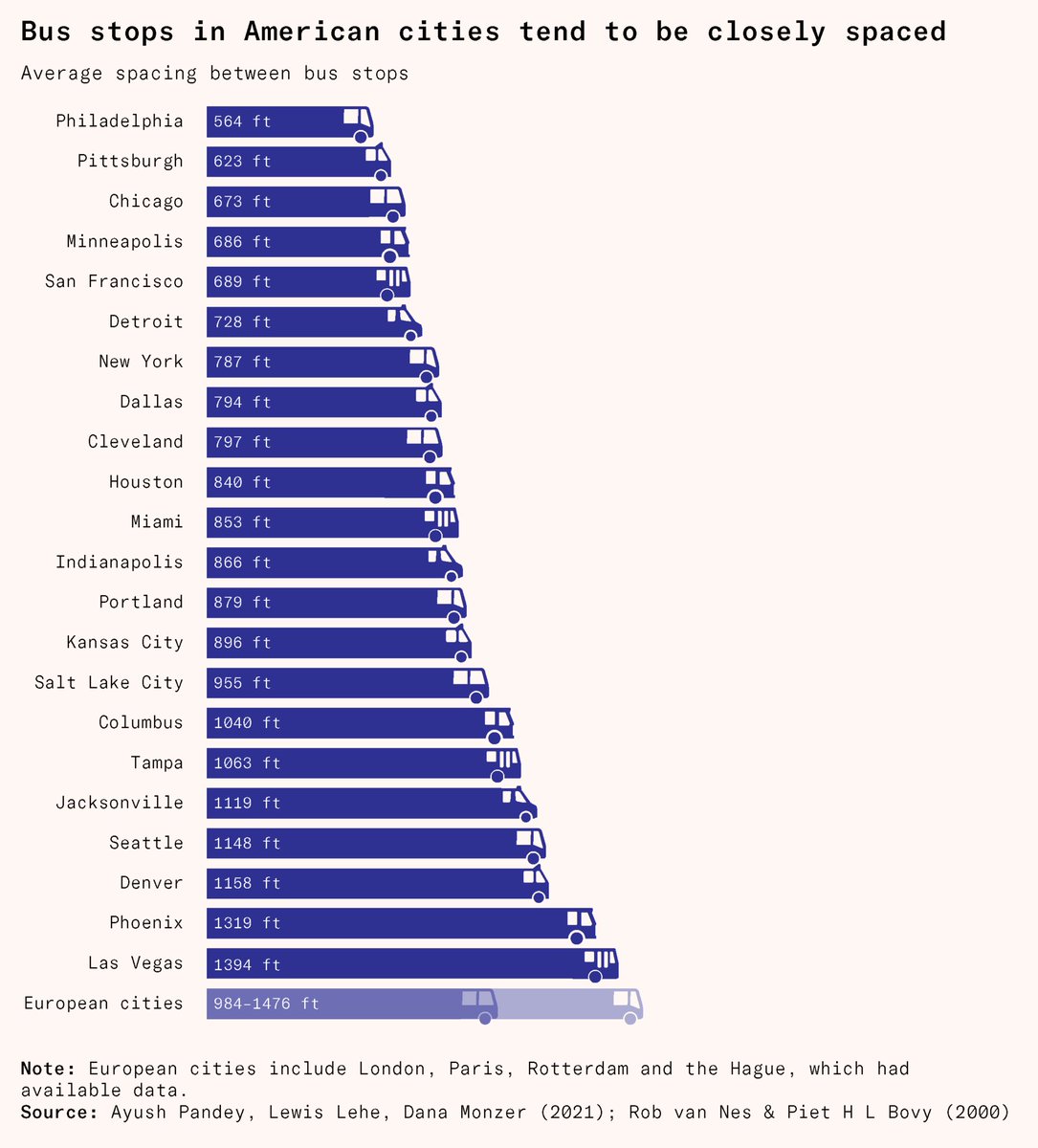
America has too many bus stops. Removing excess bus stops speeds up bus services, makes them more reliable, and reduces transit costs, all of which boosts ridership.
For example: San Francisco has an average of eight stops per mile, whereas European cities tend to have only four stops per mile. Moving to a European model only adds 1–3 mins of extra walking to get to a stop.
Portland saw a six percent increase in bus speeds from a project which increased average stop spacing by just 90 feet. SF boosted ridership by 14% by removing some stops. Other cities have used limited stop services to boost ridership by 25–33%!
New at Works in Progress, @nithin_vejendla on a rare example of a transit reform that is at once fast, cheap, and effective.
https://t.co/JH8A47xdqo
goofus, looking at pittsburgh bus routes: how can this system be at all efficient, the stop spacing is tiny
gallant: every unused flag stop on a route has zero dwell time. this is maximal efficiency
probably my strongest opinion is that kicking in american football (especially extra points, but also field goals) is a counterproductive vestige of ancestor sports that actively undermines the fundamental dynamics of the game
been in europe less than a day and already firmly of the opinion that the worst thing about this place is the cookie stuff not being a browser-level preference