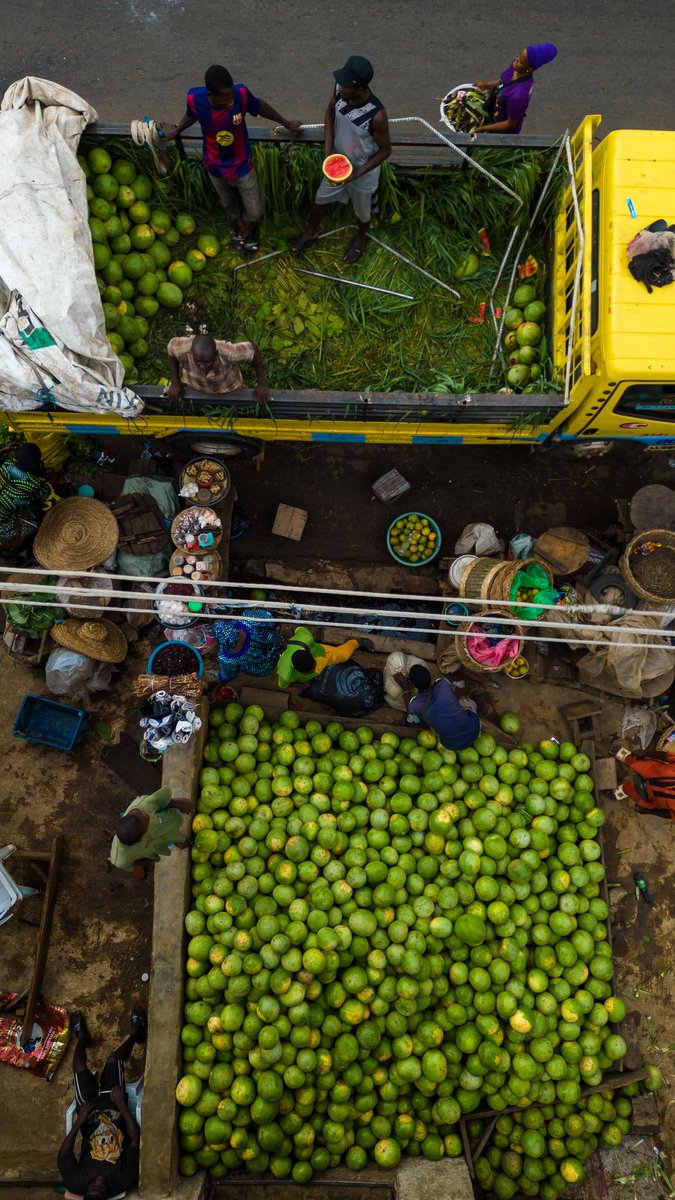
Picture Superiority Effect is the tendency for people to remember images better than words
When the same information is presented in text and visual form, we are more likely to recall the visual version
images are processed more deeply and rapidly by the brain hence the truck
When insecurity issues occur, the moment you choose Islamophobia, critical reason alludes you. You begin to sound illogical and spew rubbish with your takes. It is what we know and we see day by day.
How can ruthless criminals who never pray solat, who consume hard drugs and nacotics every moment, who sexually assault/ rape women whilst posting their videos on social media, kidnap for ransom and murder innocent people day by day be tagged "Muslims" who can clamour for "Shariah law" in a state?
Do these men suddenly become Muslims simply because they shout "Allahu Akbar" while committing their atrocities?. Only the ignorant, hypocrite and the malicious equate such monsters and criminals with Islam. Islam no be anybody mate, abeg. 🙏
Those who truly understand Shariah law know it demands the harshest punishment for such their crimes: execution, crucifixion, or mutilation while they still breathe. That is the ruling for bandits, terrorists, and those who spread corruption on earth. Islam is unapologetic about capital punishment for whoever kills, and mutilation of hands and legs of whoever kidnaps another citizen for whichever reason.
But whenever the Shariah is mentioned to some of una, you get defensive. You have met several Muslims in yoruba land, which of them attempted to lynch you before? You will not read the aspect of the Qur'an where Allah equates the killing of an innocent soul as killing the whole of humanity in the Quran because it does not fit your narrative. Rather, you often cherry-pick isolated verses/ hadiths, amputate their context, ignore the surrounding passages on self-defense and justice, and twist them to serve your agenda. Continue oo!!!!
You label every Muslim a terrorist because of a handful of criminals who barely practice the faith or do not practice it at all but shout "Allahu Akbar" whilst committing crimes that attract death penalty under the Shariah law?. Are you logical at all with that? Is that not fallacy of hasty generalization and grandstanding, which can never have a place in logical reasoning whatsoever.
Meanwhile, thousands of practicing Muslims live beside you peacefully. They have never harmed you or your family. They have shared neighborhoods, markets, and lives with you for 30 to 40 years without conflict. Some of them are your loyal customers/ clients who promote your businesses daily. Some of them even made you who you are today by exposing you to opportunities. They simply live their lives and let you live yours. Yet your Islamophobic lens reduces them all to threats.
If we blamed every religion for the crimes committed by those who merely claim it, no faith would be spared especially in a country like ours. Let us not even begin that comparison. We know several crimes people commit using religion as a "camouflage."
I pity some Nigerian politicians who exploit every tragedy for political gain, regardless of the human suffering that follows: I swear to God, your days are numbered. You, your children, and your grandchildren will reap the bitter harvest you have sown. The cries of innocent victims and their loved ones will never let you have peace.
If not in a country which is insane, what do you mean by "repentant terrorists".? Instead of you killing terrorists immediately, you rehabilitate and reintegrate them into the country?. Ahhh!! It can never end well for you or your lineage.
We should all collectively condemn their atrocities and support the government to fight these people and get the victims rescued. All these Islamophobic contents won't help matters. It will rather create discord and make these criminals operate freely the more.
If you like, translate the Quran however you wish. Turn it upside down. Twist it to fit your bias. Misinterpret Shariah words to your advantage. Those destined to be Muslim will remain Muslim.
Nigeria is too big for any religion to become a state "religion". We are a secular state and shall continue to be.
Rahma cares ✍️
I think the issue is that people often reduce Islam to a religion in the modern sense of the word—a set of rituals, beliefs and acts of worship. If that were all Islam was, then perhaps one could say, “I am Yoruba first and Muslim too.” But Islam is much bigger than that.
Being Yoruba tells me my ethnicity. It tells me the language of my ancestors, aspects of my culture, certain customs, histories and social experiences—and all of these are recognized and valued by Islam. But being Yoruba does not tell me why I exist. It does not tell me where I came from before birth or where I am going after death. It does not tell me what the purpose of suffering is. It does not give me a final moral standard by which good and evil are measured. It does not settle questions of worship, law, justice, family, economics, governance, sexuality, death, accountability or the meaning of life itself. Guess what does—Islam, the comprehensive manual to living.
I'll go on and say that Islam is not merely an identity among identities. It is a worldview. It is the lens through which every other identity is understood. That is why a Muslim can proudly be Yoruba, but he cannot place Yoruba above Islam. The reason is not that Yoruba culture is evil or haram. Rather, culture itself has limits. Culture can preserve language, customs and communal bonds, but Islam, by the wisdom of Allah with it, gives those things direction and judges them.
When a cultural practice is good, Islam affirms it. When it is harmful, Islam corrects it. When it is noble, Islam elevates it. When it conflicts with Islamic dictates, Islam replaces it. And in that case, the question will not be whether being Yoruba prevents someone from being a true Muslim. Of course it doesn't. The real question is which identity serves as the foundation for every other identity.
For a Muslim, Islam is the foundation because it answers questions that ethnicity, nationality and culture were never designed to answer. I am Yoruba by ethnicity. I am Muslim by aqeedah (creed and belief), worldview, purpose, allegiance and ultimate identity. One describes where I come from, and the other describes who I am.
Another morning to remind y’all that it is not Islam the terrorists are practicing. Kidnapping, suicide bombing, stealing, killing, raping, collecting ransom and all other similar vices are strictly forbidden in Islam. Terrorism is not Islam!!!
A Muslim views morality and humanity through the lens of faith.
Often, when a Muslim acts with kindness, honesty, justice, compassion or selflessness, people say, "That's just humanity; it has nothing to do with religion." But the Muslim sees it differently. He says: My faith inspired this. My faith commands this. My faith sustains this.
Yes, morality is morality. Justice remains justice. Compassion remains compassion. Honesty remains honesty. But people arrive at and remain committed to these values through different sources of inspiration and different worldviews.
For the Muslim, morality is not separate from faith; it is one of its greatest manifestations. A Muslim does not tell the truth merely because society approves of truthfulness. He tells the truth because Allah loves truthfulness and because he will be accountable for his words before his Creator.
Likewise, he strives to be just, merciful and trustworthy because these are not merely social virtues; they are acts of worship.
This is why the Prophet Muḥammad (ṣallāLlāhu 'alayhi wa sallam) repeatedly linked faith with character. He taught that the most complete believers are those with the best character, and he said: "Nothing is heavier on the Scale on the Day of Resurrection than good character."
In another narration, he said: "The believers with the most complete faith are those with the best character."
Thus, from an Islamic perspective, morality is not an alternative to faith. It is one of the clearest proofs of faith.
A person's character is a reflection of his īmān. The more truthful, just, compassionate, trustworthy and humble he becomes, the stronger his faith becomes. And the more he abandons these qualities, the weaker his faith becomes.
That is why a Muslim believes that whoever surpasses him in character has, in many respects, surpassed him in faith.
For us, morality is not merely humanity.
It is humanity guided by faith.
It is character inspired by revelation.
It is goodness pursued for the sake of Allah.
There’s no single verse in the Qur’an that commands Muslims to kill innocent people.
Terrorists don’t represent Islam. Their actions represent their own evil choices.
Innocent lives matter, regardless of religion or tribe.
I understand why many people are concerned when they hear “Sharia law,” especially when the examples that often come to mind are places like Afghanistan or Iran. However, I think it’s important to separate the actions of governments and individuals from the actual teachings of Islam.
Many of the restrictions people point to, such as preventing women from pursuing education or careers, are not principles that Islam introduced.
Islam did not forbid women from seeking knowledge or having a career. Seeking knowledge is encouraged for both men and women in Islam. One of the greatest examples is Aisha (RA), the wife of the Prophet Muhammad (SAW), who was a renowned scholar and a source of knowledge for countless Muslims after the Prophet’s passing. That fact alone should challenge the claim that Islam seeks to keep women uneducated or uninvolved in society.
Likewise, when people point to the failures of some Northern states and conclude that Sharia itself is the problem, they ignore the reality that selective justice and corruption are failures of human beings, not proof that the principles themselves are flawed. A system cannot be fairly judged by people who refuse to apply it consistently.
By that same logic, no ideology, religion, or legal system would survive scrutiny because every one of them has been abused somewhere by those in power.
It is perfectly reasonable to disagree with the implementation of Sharia or to have concerns about it. What is not reasonable is to reduce an entire legal and moral framework to the actions of extremists or governments that many Muslims themselves criticize.
At the very least, we should be discussing what Sharia actually teaches, not what its loudest and most controversial examples have done.
If it is true that the terrorists responsible for the attacks in Oyo are demanding Sharīʿah, then their demand exposes either a profound ignorance of Islamic law or adherence to an ideology that nothing to do with the Sharīʿah recognized by mainstream Muslim scholarship.
The irony is striking: the very Sharīʿah they claim to seek is uncompromising in its condemnation of terrorism, banditry, kidnapping, mass murder and the spreading of fear among innocent people. Islamic law classifies such acts among the gravest crimes against society and prescribes severe punishments for those who wage war against the public and spread corruption in the land.
A person cannot legitimately claim to be fighting for Sharīʿah while simultaneously violating some of its most fundamental objectives: the protection of life, security, property and human dignity.
If these reports are accurate, then one of two conclusions follows: either these terrorists do not understand the Sharīʿah they claim to demand, or they are advocating a different ideology altogether while merely using the language of Islam as a cover for their criminal enterprise.
The Sharīʿah of Islam does not protect terrorists. It protects society from terrorists.
Islam is totally against Terrorism. They do not represent Islam, and they should be killed, or crucified, or have their hands and feet cut off on opposite sides or be exiled from the land.
Shaykh Qamaruddīn Yūnus Akorede
Kindly retweet so others can benefit
Dear Muslim,
Truth is bitter they say,
But you have to accept it,
And the truth today is that...
You're a Muslim first,
Before any other thing.
Your Islam comes first before every other thing.
Again, before every other thing.
The ḥadīth, "I have been commanded to fight the people until they testify that there is no deity worthy of worship except Allah..." (Ṣaḥīḥ al-Bukhārī), is one of the most misunderstood texts in Islam. Read in isolation, it appears troubling and even contradictory to other clear teachings of the Qur'ān. However, no text should be understood outside its historical and textual context.
The Prophet (ṣallāLlāhu 'alayhi wa sallam) was not speaking in a vacuum. For thirteen years in Makkah, Muslims were persecuted, tortured, expelled from their homes and denied the freedom to practise their faith. Even after migrating to Madinah, the Makkan pagan leadership continued to wage war against them. The ḥadīth therefore emerged within a context of armed conflict and state formation, not as a universal command to force every human being to become Muslim.
The Arabic word used in the narration means "to fight" in the context of armed confrontation, not "to kill everyone" indiscriminately. Furthermore, if the ḥadīth were a command to compel all non-Muslims to embrace Islam, it would directly contradict numerous Qur'ānic verses such as:
«"There is no compulsion in religion." (Qur'ān 2:256)»
«"Will you then compel people until they become believers?" (Qur'ān 10:99)»
«"To you your religion and to me mine." (Qur'ān 109:6)»
The Prophet's own conduct also disproves the extremist interpretation. He entered treaties with non-Muslims, maintained diplomatic relations with them, accepted the protection of Christian Abyssinia for Muslim refugees, received non-Muslim delegations and allowed Jewish and Christian communities to continue practising their faith under Muslim rule.
Classical scholars therefore understood the ḥadīth within the context of dealing with hostile forces that were actively fighting Islam and preventing its free practice, not as a licence for forced conversion. The mention of prayer and zakāh in the ḥadīth further indicates that it is discussing entry into and obligations within the Muslim community, not the treatment of all non-Muslims.
The mistake made by both critics of Islam and extremist Muslims is often the same: reading one text in isolation while ignoring the Qur'ān, the broader Sunnah and the historical reality of the Prophet's life.
When all the evidence is brought together, the meaning becomes clear: the ḥadīth concerns a specific context of conflict and political order, not a universal command to force people into Islam. The Prophet (ṣallāLlāhu 'alayhi wa sallam) invited people to Islam through preaching, dialogue, treaties, example and persuasion, not compulsion.
I remember we were talking about terminating pregnancy some days ago. Now, let’s ask ourselves: is Down Syndrome a legitimate reason to terminate a pregnancy?
For us to understand the position of Islam, we first need to understand that deformity is not just one blanket category. The Islamic law looks at abnormalities differently based on how severe they are and how they impact life.
The first category covers defects that are minor or correctable, such as a cleft lip, an extra finger, or a clubfoot. These are things modern medicine can easily fix or manage, and they do not threaten the child's life.
The second category covers conditions that are completely incompatible with life. This means gross abnormalities, e.g: a fetus missing a major part of the brain or skull, where doctors know the child has zero chance of survival after birth or will face immediate, excruciating medical agony.
Then we have the category of general genetic conditions, which is exactly where Down syndrome sits.
With Down syndrome, there is a physical or intellectual disability, however, the individual can still live, breathe, experience joy, and survive with the right care and family support. It is a lifelong challenge, but it is not a terminal deformity that makes life impossible.
Now that we know where Down Syndrome falls, what does the rule says:
First of all, as far as terminating pregnancy is concern in Islam, the timing is everything. And the major boundary is 120 days from conception. This is the point where the soul is blown into the fetus.
Before 120 days, major juristic councils, such as the Islamic Fiqh Council of the Muslim World League, do permit a concession for termination under strict medical duress.
If a panel of trustworthy, expert doctors confirms that a fetus falls into that severe category of being incompatible with life, or faces extreme, continuous medical agony, a concession is granted.
Because of the anticipated severe hardship on families, many contemporary scholars allow Down syndrome to fall under this early window, but ONLY if it is proven by specialized experts before the 120-day deadline.
But once you cross the 120-day mark, the door closes completely. The fetus is now a full human soul with an absolute right to life.
After that threshold, terminating a pregnancy for Down syndrome, or ANY deformity, is strictly haram. It is viewed as a direct transgression against a living soul. The only exception that overrides the law after 120 days is if keeping the pregnancy will literally kill the mother.
As for the minor or correctable deformities, it is strictly haram to abort them at ANY stage, even before 120 days. You cannot terminate a life over something that can be managed.
Islam does not allow abortion based on the secular idea of my body-my choice, financial fear, or lifestyle disruption. Islam understands the boundary so we do not turn a medical mercy into an excuse for convenience or eugenics.
Allah knows best.
BREAKING: Badagry LG introduces new security measures.
• Okada operations restricted to 5:00am–10:00pm
• Reflective jackets now mandatory for riders
• Restrictions placed on wheelie/stunt riding activities
• Night parties banned beyond 7:00pm
The move is aimed at enhancing security and maintaining public order across the council area.🚶🏿♂️
Putting the "Islam First or Yorùbá First" Question in Perspective
The question of whether a Yorùbá Muslim should be "Muslim first" or "Yorùbá first" is, in many respects, a very recent enquiry. It is not a question that historically occupied the minds of Yorùbá Muslims for centuries.
Islam has been present among the Yorùbá for a very long time. Some historians trace its presence in parts of Yorùbá land to many centuries ago, with others suggesting a history approaching a millennium. Throughout this long period, Yorùbá Muslims generally did not perceive a contradiction between their Islamic faith and their Yorùbá identity.
The reason is simple: Islam, as practised by the overwhelming majority of Yorùbá Muslims, did not seek to erase their language, ethnicity or cultural identity. Rather, Islam provided a religious framework through which they worshipped Allah while remaining fully Yorùbá in language, social organisation and many aspects of culture that did not conflict with Islamic teachings.
Indeed, one of the reasons Islam spread successfully across West Africa was its ability to coexist with local cultures while reforming practices that contradicted its core beliefs. Early converts did not cease to be Yorùbá, Hausa, Kanuri, Mandinka or Wolof because they embraced Islam. They remained who they were ethnically while adopting a new religious worldview.
This explains why Yorùbá Muslims traditionally carried both indigenous and Islamic names without feeling compelled to abandon one for the other. They spoke Yorùbá, celebrated Yorùbá history, participated in Yorùbá society and contributed immensely to Yorùbá civilisation while remaining committed Muslims. There was no perceived contest between the two identities because they occupied different spheres.
The question of comparison and competition between Islam and Yorùbá identity gained prominence only in more recent times, particularly with the rise of strands of Yorùbá nationalist and secessionist thought that seek to define Yorùbá identity in explicitly religious or spiritual terms.
For some proponents of these movements, the project extends beyond political self-determination into the revival of indigenous religious and spiritual systems as defining features of a future Yorùbá nation. In that context, Islam is sometimes viewed as a challenge because Muslims are religiously committed to rejecting forms of worship and spirituality that conflict with Islamic monotheism.
This disagreement is therefore not primarily about ethnicity. It is about theology.
A Yorùbá Muslim does not reject being Yorùbá because he is Muslim. He rejects religious beliefs and practices that Islam regards as incompatible with the worship of Allah alone. The same applies to Christians who reject aspects of traditional religion because of their own religious convictions.
Unfortunately, this theological disagreement is sometimes reframed as a conflict between Islam and Yorùbá identity itself. Such a framing is historically inaccurate and socially dangerous.
Islam is not foreign to Yorùbá land.
Muslims are not strangers in Yorùbá society.
Yorùbá Muslims are not obstacles to Yorùbá development.
They are indigenous sons and daughters of the soil whose ancestors have contributed to the growth of Yorùbá civilisation for centuries.
The real issue is not whether one can be both Muslim and Yorùbá. History has already answered that question in the affirmative.
The real issue is whether Yorùbá identity should be defined in a way that excludes millions of Yorùbá Muslims and Christians because they do not subscribe to a particular spiritual vision of Yorùbá nationalism.
- Idris Ajani Oni.
@Oni_Okun A yoruba first base on identity and a Muslim first base on faith .
There is no problem with that except when people start questioning one against the other .
I have always argued this. Our security that has no proper framework leaves couple of places vulnerable.
Even within Ibadan. The closest police post to some areas could be 1 to 2 hours away.
We need to be more intentional about every bit and layer of the systems.
I have always argued this. Our security that has no proper framework leaves couple of places vulnerable.
Even within Ibadan. The closest police post to some areas could be 1 to 2 hours away.
We need to be more intentional about every bit and layer of the systems.
The police post in the Orire LG was 2 hours away from the site of the abduction. How can the police respond promptly in a situation like this? This is why community and Local police is essential.
Does that Local Govt look like a LG that has earned N16bn in 3 years? Unfortunately the governor was part of the people who rejected LG autonomy in his state.
N1.5bn from the N16bn earn in 3 years is enough to purchase 3 armoured personnel carriers, 5 hilux vans and drones. The money the LG has earned in 3 years, what has it been used for? Can the LG chairman give an account? Hon. Olateju Michael Alabi can you give an account?
The ICPC should start looking into the affairs of the LG Chairmen.