🏆 UEGCL RECOGNISED FOR GLOBAL STRATEGIC EXCELLENCE AT THE 2026 IASP AFRICA REGIONAL CONFERENCE.
UEGCL was recognised at the 2026 International Association for Strategy Professionals Africa Regional Conference in Kampala for earning an Honourable Mention in the prestigious IASP Goodman Award for Excellence in Strategy, previously awarded in Winnipeg, Canada.
Among eight global recipients, UEGCL was one of only three African institutions recognised, alongside NSSF.
The recognition highlights UEGCL’s strategic transformation through its Financial Resilience Plan, digitalisation initiatives and strong performance management frameworks.
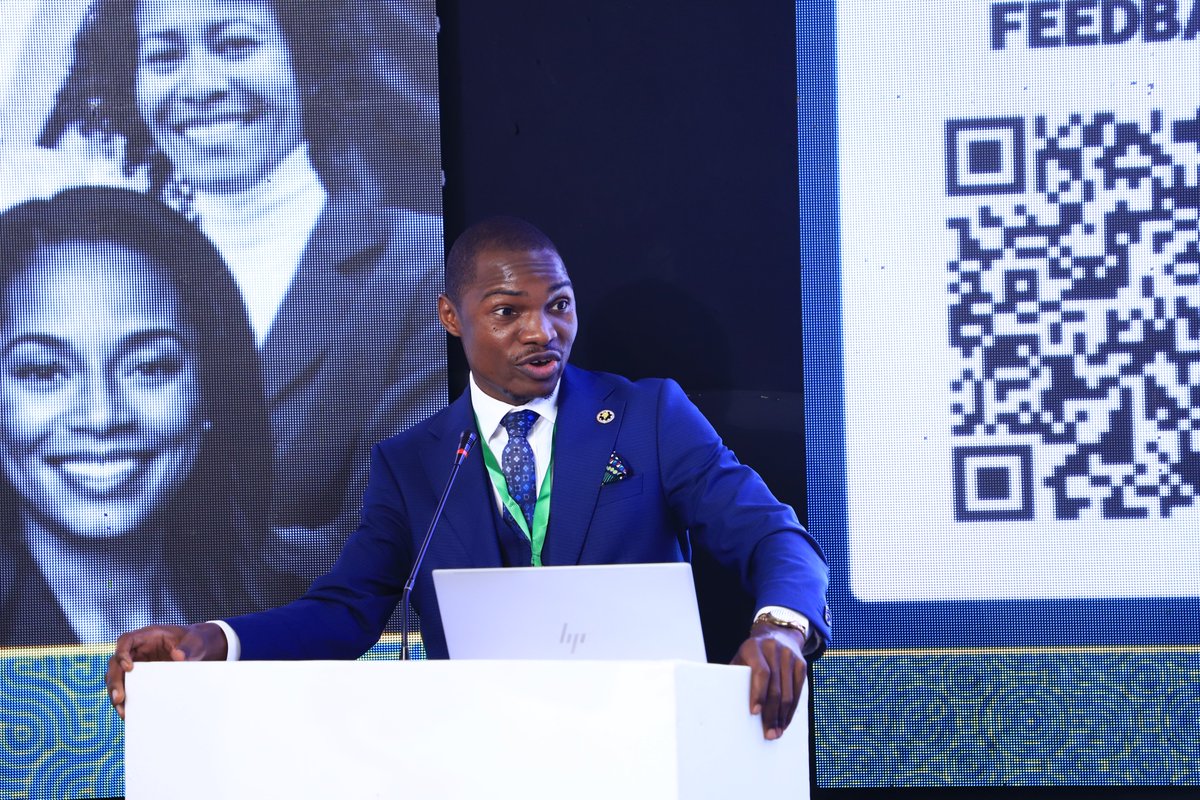
At the conference, Chief Strategy and Business Development Officer David Isingoma shared UEGCL’s strategic journey, while Chief Human Resource Officer Joyce Nakalema highlighted the importance of building Africa’s talent pipeline.
This achievement reinforces UEGCL’s commitment to institutional excellence, energy stability and sustainable transformation.
Generating for Generations.
#GeneratingForGenerations #StrategicExcellence #IASP2026
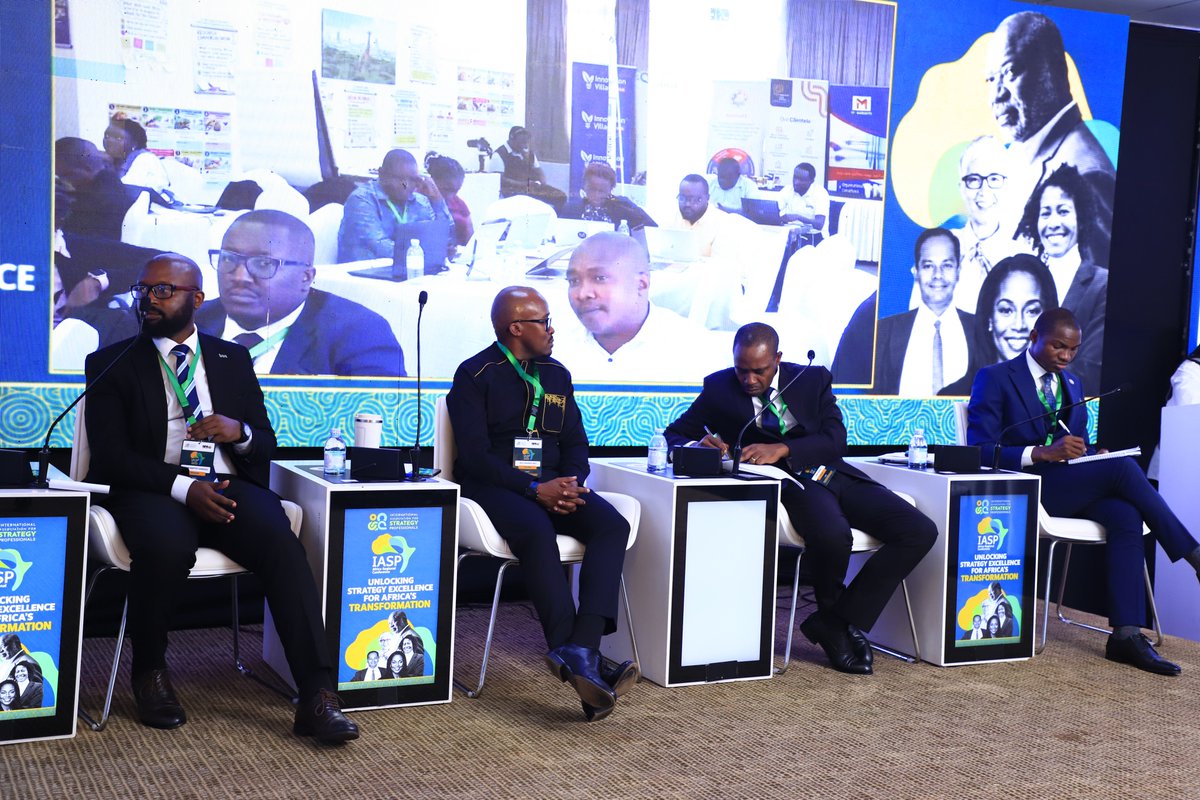
Mr. Allan Kayongo, Senior Planner for Strategic Planning moderating a Panel session on the topic "Accelerated and Inclusive Growth as a strategic Imperative". Among the panelists is Mr. Kwizera Godie, our Senior Planner - Strategic Planning,
#IASPAFRICA2026
#PlanningForDevelopments
The International Association for Strategy Professionals (IASP), in partnership with the National Planning Authority (NPA), is hosting a two-day IASP Africa Regional Conference under the theme “Unlocking Strategy Excellence for Africa’s Transformation.”
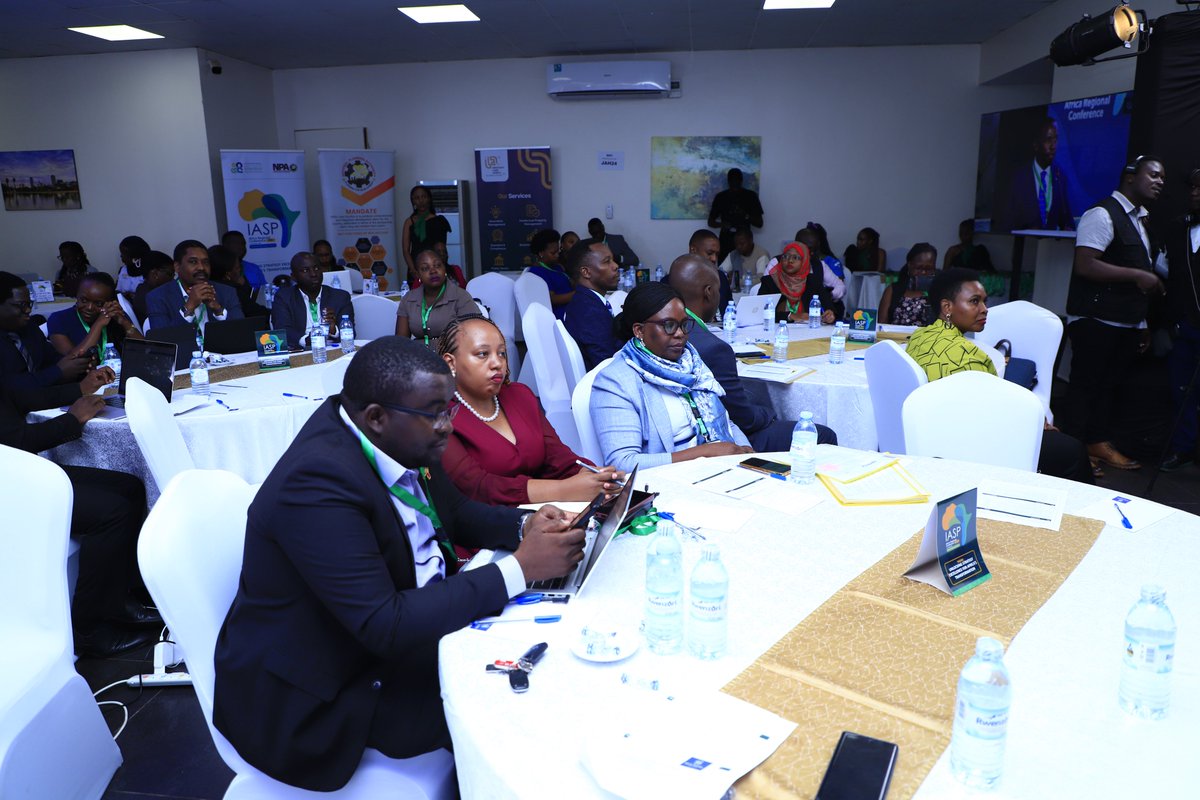
The conference brings together strategy professionals, policymakers, business leaders, academics, and development practitioners from across Africa and beyond to share insights, strengthen collaboration, and advance excellence in strategy formulation and execution. It focuses on practical approaches to accelerating inclusive growth, improving institutional performance, and building the capabilities needed to deliver Africa’s long-term transformation.
The conference is being held at Skyz Hotel, Kampala. Opening remarks were delivered by our Senior Manager, Economic Planning, Dr. Asumani Guloba, on behalf of the Executive Director, Dr. @JosephMuvawala .
@mofpedU@IASP_Uganda@newvisionwire@TheVillageUG@imbankug@PSF_Uganda
#PlanningForDevelopment
Today, I had the honour of delivering the Keynote address at the APEX Platform High-Level Dialogue on a critical theme of “Re-engineering Uganda's Development Financing Architecture for Socio-Economic Transformation”. This Dialogue was organised by APEX Platform under the Office of the President. It was officiated by the Head of Service @LNakyobe and the Hon. Minister for Presidency, @millybabalanda
A development financing architecture articulates the arrangement of institutions, markets, instruments, policies and rules through which a country mobilises resources, channels them into investment, allocates risks and holds participants accountable for results. This architecture operates across four distinct institutional layers, including primary capital providers, intermediary institutions, capital allocators, and regulators. The key element is connecting all these components to national development priorities so as to deliver development results.
An effective and efficient development financing architecture is characterised by several tenets. These include:
1.Clarity and alignment to the development priorities it must serve and the investments required to deliver them. For Uganda, our Strategic Direction is clear, including the Uganda Vision 2040, the Ten-Fold Growth Strategy and NDP IV.
https://t.co/hVSEGdwJ5b must mobilise a broad and dependable resource base. Development finance must be contributed to by different instruments, including; domestic revenue, household and enterprise savings, pension contributions, insurance funds and external capital, among others.
3.Deliver financing on terms that allow our development priorities to become viable investments.
4.Allocate resources to investments that are properly selected, prepared and sequenced to deliver national development priorities.
5.Establish how public and private finance will work together to deliver these investments.
I acknowledged the strong foundations we have built as a country, including peace, security, macroeconomic stability and resilience. These provide the necessary environment to protect investments and sustain economic activity.
I then examined Uganda's current development financing architecture. Particularly, I assessed how well it matches our development needs and whether its institutions & instruments are appropriate. The performance of our development finance system depends largely on the efficiency of its intermediation mechanisms.
https://t.co/MJGHEQVTDo administration provides non-debt resources for public capital expenditure;
2.Commercial banks intermediate short-term deposits into commercial credit;
3.Pension schemes and life insurance funds convert long-term contractual savings into durable productive assets;
https://t.co/ktjXWu9mM2 markets provide secondary liquidity & risk-pricing for equity and debt securities; and
5.Development finance institutions absorb early-stage risks that private markets cannot manage efficiently.
Achieving our Ten-Fold Growth targets requires a financing framework capable of delivering capital at sufficient scale and duration while preserving macroeconomic stability.
The good news is that Uganda already has the principal resource channels and institutions needed to finance development, giving us an established foundation for the Ten-Fold Growth ambition. These include: domestic revenues; external funds; household and enterprise savings mobilised through banks, pension schemes, insurers and collective investment schemes; various forms of foreign investment. There is also an elaborate regulatory & institutional framework that includes institutions like: the MoFPED, financial intermediaries, Capital Markets Authority (CMA), Bank of Uganda, Uganda Retirement Benefits Regulatory Authority (URBRA), and Insurance Regulatory Authority (IRA), among others. It also includes a number of Development Finance Institutions like UDB, UDC and MSC.
@mofpedU@henrymusasizi1@AmosLugoloobi@rggoobi@NPA_UG@mukisawinnien@allankayongo1@ayebare_deborah
The Minister of State for Planning,@AmosLugoloobi has said Uganda is deliberately transforming its health model to focus on preventive care approaches rather than the curative care.
Lugoloobi made the remarks at African Union Extraordinary Summit on ending Aids by 2030 and addressing preventable maternal deaths, communicable and non-communicable diseases endemic to the Continent and strengthening health systems by 2030.
The summit is taking place in Accra, Ghana.
The theme of the Summit on Health is “Advancing Justice, Equity and Universal Health Coverage: Ending AIDS, TB, improving maternal health, addressing endemic non- communicable and neglected tropical diseases and conditions in Africa.”
Lugoloobi said Uganda is also changing its model to domestic health financing in contrast to donor-based funding to attain health sovereignty.
He said Government is also planning for an integrated service delivery approach to deliver a coordinated package of services around the person rather than a program.
The Minister also highlighted use of private-public-partnerships (PPP) in service delivery and digitization of the health sector as part of the digital health system agenda and use of data for health decisions.