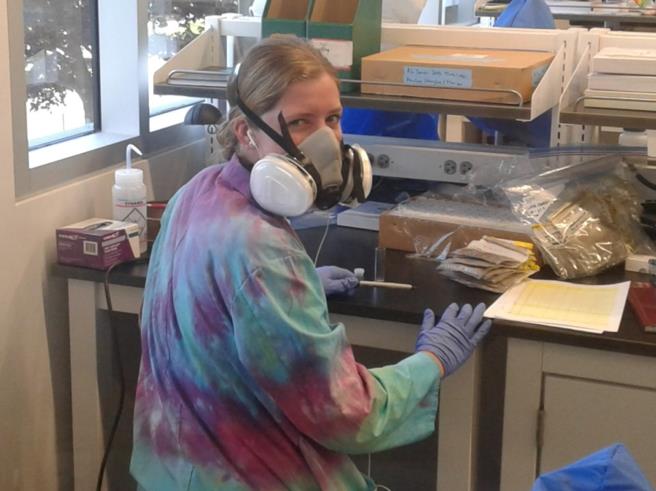
Today is International Day of Women in Science!
For 40 years, we have been recognizing the achievements of #WomenInScience through our awards program in northern studies (natural and social sciences).🙌 Celebrate @WomenScienceDay
We're incredibly proud to share that second year SSAS student Allison Clark has been named the winner of the 2021-2022 Gunther Abrahamson Research and Management Award from the Association of Canadian Universities for Northern Studies (ACUNS).
Congratulations, Allison! 🎉
This summer, the Environmental Change and Aquatic Biomonitoring (ECAB) Lab field team, composed of undergrad researchers and graduate students, is investigating dissolved oxygen in lakes across NB, some of which experience blue-green algal blooms: https://t.co/ZdskTuDcoQ
Today on #throwbackthursday we're looking back on this Earth Day presentation by Dr. Robyn Bourgeois as part of the Stewardship Speaker Series. Read about the presentation, and watch a recording of the event here: https://t.co/UOLPjL8Hsj
It's time for another SSAS Student Spotlight! This week, we're highlighting Allison Clark, who virtually joined the SSAS program from Nova Scotia this year! Read more about Allison's first-year journey here: https://t.co/Djahg1Vp6D
To learn more about the research I did at Mount Allison, follow the link in this post!
I am very grateful to have been a part of such a meaningful project while working in the Environmental Change and Aquatic Biomonitoring lab under the supervision of @drtightline
New findings of a multi-university team — led by researchers at @MountAllison and @smuhalifax — show the long-lasting impacts to lake health from historical #goldmining in #NovaScotia, despite mine operations closing nearly a century ago: https://t.co/JJ5IUoCKMi
From Sean Sweeney's recent article on the Paris Agreement:
"... the emissions reductions that are expected as a result of economic impacts of Covid-19 in 2020 would, in terms of percentages, need to occur every year from 2021 until 2050 to meet the 1.5 degrees Celsius target."
Attached is a link to an interactive flood map for Lunenburg, NS. The map accounts for sea level rise based on climate change projections and allows you to simulate flooding impacts during high/low tides and varying storm surges. #ClimateChangeAdaptation
https://t.co/BswXloNPkR
2020 was the hottest year ever recorded - NASA.
The last 6 years have all been the hottest on record.
We’re in a climate emergency and the changes needed are still nowhere in sight. The only ones who can change that are us.
Spread awareness. Be the change.
https://t.co/AxSQcsiZ4h