Around 80% of machine learning tasks involve tabular data or time series analysis not just LLMs or Generative AI.
This means the focus is on:
↳ Data preprocessing and cleaning
↳ Crafting meaningful features
↳ Using classical ML algorithms
(1/3)
Reinforcement Learning for LLMs just got a blueprint — and it starts with a first-order approximation.
Reinforcement learning is powering the next generation of reasoning-capable LLMs… but anyone who has trained RL on large models knows one truth:
👉 Stability is the real bottleneck.
Collapse, oscillation, reward hacking, and training–inference mismatch have become recurring nightmares.
The Qwen team’s new paper, “Stabilizing Reinforcement Learning with LLMs: Formulation and Practices,” delivers one of the cleanest explanations yet of why LLM RL breaks and more importantly, how to fix it at scale.
Here’s the big idea:
💡 The Token-Level Objective Isn’t Wrong, It’s an Approximation
The paper proposes a first-order approximation showing that token-level objectives like REINFORCE can optimize sequence-level rewards… but only when two gaps remain small:
- Training–Inference Discrepancy
The numerical mismatch between the training engine (Megatron/FSDP) and inference engine (vLLM/SGLang).
This mismatch alone is enough to destabilize RL, especially in FP8 inference settings.
- Policy Staleness
When rollouts and updates are out of sync (off-policy updates, batching, async rollout, etc.), the approximation breaks.
When either gap grows too large → gradients explode, KL spikes, and RL collapses.
🧠 Why MoE Models Are Especially Fragile
- For Mixture-of-Experts models, expert routing magnifies both problems:
- Training & inference may activate different experts
- Parameter updates shift routing, worsening policy staleness
This explains why RL on MoE models is notoriously unstable compared to dense models.
🔧 The Fix: Importance Sampling + Clipping + Routing Replay
The team shows, across hundreds of thousands of GPU hours, that three techniques consistently stabilize RL:
✔ Importance Sampling (IS) correction
✔ Clipping to restrain aggressive updates
✔ Routing Replay (R2/R3) for MoE to freeze experts during updates
Their findings:
On-policy RL?
Simple IS-corrected REINFORCE is surprisingly the most stable.
Off-policy RL?
Routing Replay becomes essential —
R2 works better at small off-policiness,
R3 wins at large off-policiness.
Initializations matter less than stability.
Once RL is stable, different cold-starts converge to nearly identical final performance.
If you’re building reasoning models, MoE models, or scaling RL pipelines, this is the paper you should read this week.
#ReinforcementLearning #LLMTraining #LargeLanguageModels #AIResearch #RLHF #MoE #DeepLearning #MachineLearning #Qwen #AIStability #AIGovernance #ModelOptimization #AIEngineering
What Makes #RNNs Different?
So, Recurrent Neural Network (RNNs) are commonly used to solve Natural Language Processing (NLP) problems. In RNNs, each neuron is activated at every time step as input sequences, such as words are processed.
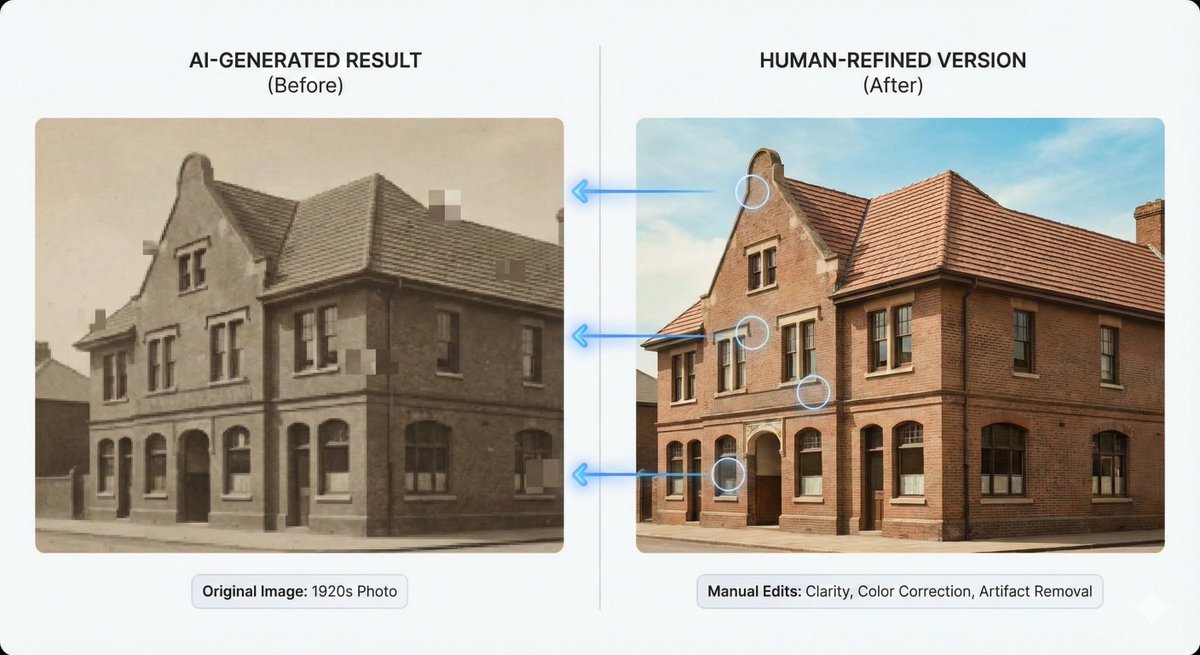
AI accuracy jumped from 45% to 71% with one simple change.
It wasn't more data. It wasn't a bigger model.
It was humans teaching machines WHEN and HOW to think.
Here's why pure automation is dead (and what's replacing it): https://t.co/VG798rXYoZ
#HumanintheLoop#Ai
Modern AI models have 100M+ parameters.
They need MASSIVE labeled datasets to train.
But here's the problem:
Data growth < Model complexity growth
Result? A brutal bottleneck killing AI projects.
Human-in-the-Loop is the answer everyone's talking about.
#AI#DataScience
You've been using an AI agent every day without realizing it.
GPTs isn't just an LLM — it's something far more powerful.
By 2026, agents will dominate tech.
Read Full breakdown: https://t.co/RmAu1JVp5l
#AIAgents#TechTrends2026#AgenticAI#FutureOfWork
Shallow vs Deep AI Agents: Understanding the architectural differences
Shallow agents = Quick, single-step responses
Deep agents = Multi-step reasoning & planning
I broke down the architectural patterns, trade-offs, and when to use each in my article -
https://t.co/gJObfBuqBF
One image = 1,000+ tokens.
One sentence = 10-20 tokens.
This is why AI image analysis costs more and why it hallucinates more often than you think.
Here's what really happens when AI "looks" at your photos
https://t.co/bQjsRXZGny
#ArtificialIntelligence#ComputerVision#VLM
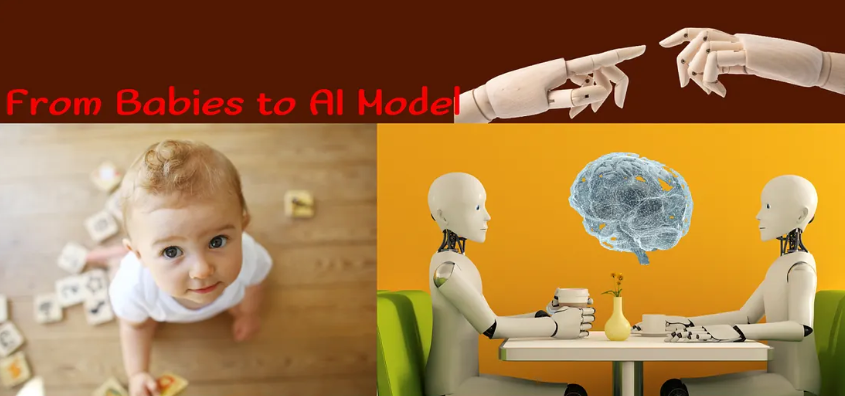
Every AI model starts like a newborn mind blank, random, full of potential.
With enough data and feedback, both start making sense of the world.
I wrote about this fascinating overlap between human cognition and deep learning
https://t.co/z0G6NR8QtG
Human Learning, AI Philosophy
Excited to share my latest article on K-Nearest Neighbors (K-NN) for classification & regression. Learn the core concepts and mathematical intuition behind this popular ML algorithm! 📊👨💻https://t.co/kNisABRCdY
#MachineLearning#Knn#DataScientist#data#AI#DataScience
🚀🤖✨Dive into the world of Artificial Intelligence, Machine Learning, Deep Learning, and Data Science. 🧠💻 Let's explore the cutting-edge technologies shaping our future. Join the journey of innovation, knowledge, and possibilities. 🌐
#ai#ml#technology#DataScience