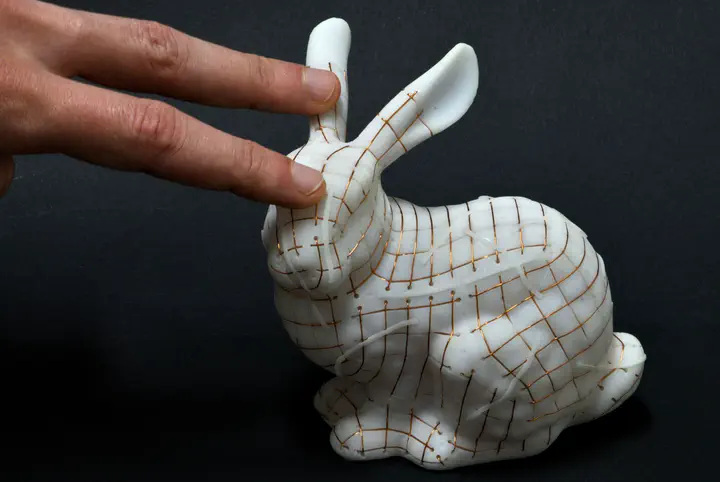
Really proud of sharing our last Siggraph "Capacitive Touch Sensing on General 3D Surfaces" that makes possible, for the first time, to have capacitive multi-touch sensors for complex 3D surfaces, ensuring high-resolution, robust multi-touch detection. https://t.co/X1ePck3Ej5
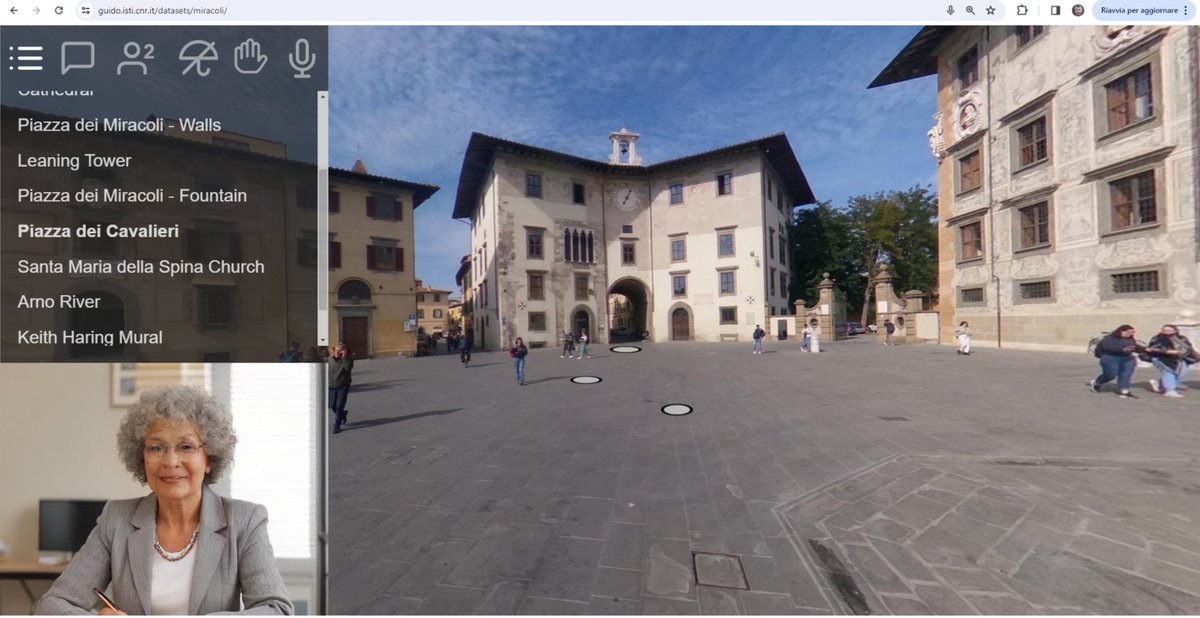
We are organizing a virtual city tour of Pisa to validate a new system for virtual tours. The tour will last about 30 minutes and will take you on a discovery of the amenities of Pisa. Join us for free on 𝗔𝘂𝗴𝘂𝘀𝘁 𝟱 𝗮𝘁 𝟲 𝗣𝗠 𝗖𝗘𝗦𝗧 (GMT+2). https://t.co/nyZWgNmsRB
We are organizing a virtual city tour of Pisa to validate our new system for virtual tours. The tour will last about 30 minutes and will take you on a discovery of the amenities of Pisa.
Join us on 𝗔𝘂𝗴𝘂𝘀𝘁 𝟱 𝗮𝘁 𝟲 𝗣𝗠 𝗖𝗘𝗦𝗧 (GMT+2).
https://t.co/TmRmldFW4I
I am happy to share our latest TOG paper from our lab to be presented at Siggraph: "Self-supervised HDR Imaging: What Can Be Learned from a Single 8-bit Video?"
https://t.co/yukaRExOGk
This work confirms our hypothesis that SDR videos can be HDR expanded *without* an external dataset and produce high-quality results that are competitive with fully supervised methods.
https://t.co/wHdoEvWdrn
Really proud of sharing our last Siggraph "Capacitive Touch Sensing on General 3D Surfaces" that makes possible, for the first time, to have capacitive multi-touch sensors for complex 3D surfaces, ensuring high-resolution, robust multi-touch detection. https://t.co/X1ePck3Ej5
The approach allow to reach great multi touch precision (~1mm) over the surface using just off-the-shelf electronic components and 3D printed supports.
(1/3) We are talking more and more about the vibrant colours of ancient art, moving beyond the classic image of white marble from Greek and Roman times. How can digital technologies help us document and virtually repropose these colours?
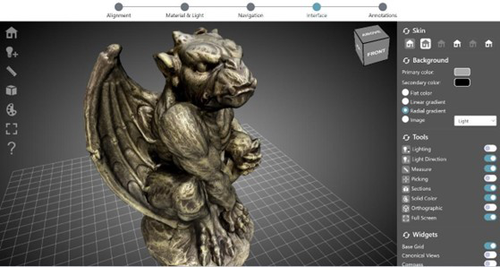
Just a reminder that if you would like to have a fully open-source solution for publishing high-resolution 3D cultural heritage data, 3DHop, and the ARIADNEplus Visual Media Service are available for everyone. Never ever use proprietary solutions for your open data...
1/3 New recommendation: Potenziani, M., Ponchio, F., Callieri, M., and Cignoni, P. (2024). ARIADNEplus Visual Media Service 3D configurator: toward full guided publication of high-resolution 3D data. https://t.co/agiE2YL7sX #Archaeology@ALoopingIcon @IstiCnr
Periodic memento that if you receive a review request that is pertinent to your field, it should be considered quite rude declining without suggesting someone close to you as an alternative...
What's going on with LLVM's libc++ project? I noticed yesterday that the header file containing std::vector<> expands to 2 to 2.4 megabytes of pre-processed header code! (of which >99% is overhead) This ...
I get asked a lot: why stay in academia, all the excitement in AI is happening in industry with massive compute. And I am seeing some profs leaving academia, but also seeing lots of researchers in industry looking to go back to academia, especially those who don’t work on LLMs.
I have spent some time and actively working with industry, and it has been a great experience, but for me the answer is simple:
1. Students: Nothing can replace working with really smart & amazing students.
2. Academic freedom: In general, industry will one way or another dictate what you should work on. Today it is LLMs, tomorrow it is something else. The good old days of "here is a cool idea, let me investigate and publish" are pretty much over. But as an academic, I can work on whatever I want: I can start working on "black holes" tomorrow if I choose to.
3. And my favourite one: No reorgs -- big tech really loves reorgs that happen every few months.
Finally, as an academic, I can always take some time off, work in industry or start-up, and come back if I want to. Going into industry is usually a one-way street: It is far easier to go to industry from academia and much harder the other way around.
The call for the Eurographics Annual Award for Best PhD Thesis 2024 in Computer Graphics is open!
Please nominate outstanding candidates by the deadline on Jan 14, 2024. https://t.co/AL7QaxHSDE…
CALL FOR PAPERS: The "Smart Tools and Applications in Graphics" is an annual international conference organized by the Italian Chapter of the Eurographics association.
This edition will be held in Matera (Italy) on November 16-17.
https://t.co/MwZe1vFJNP
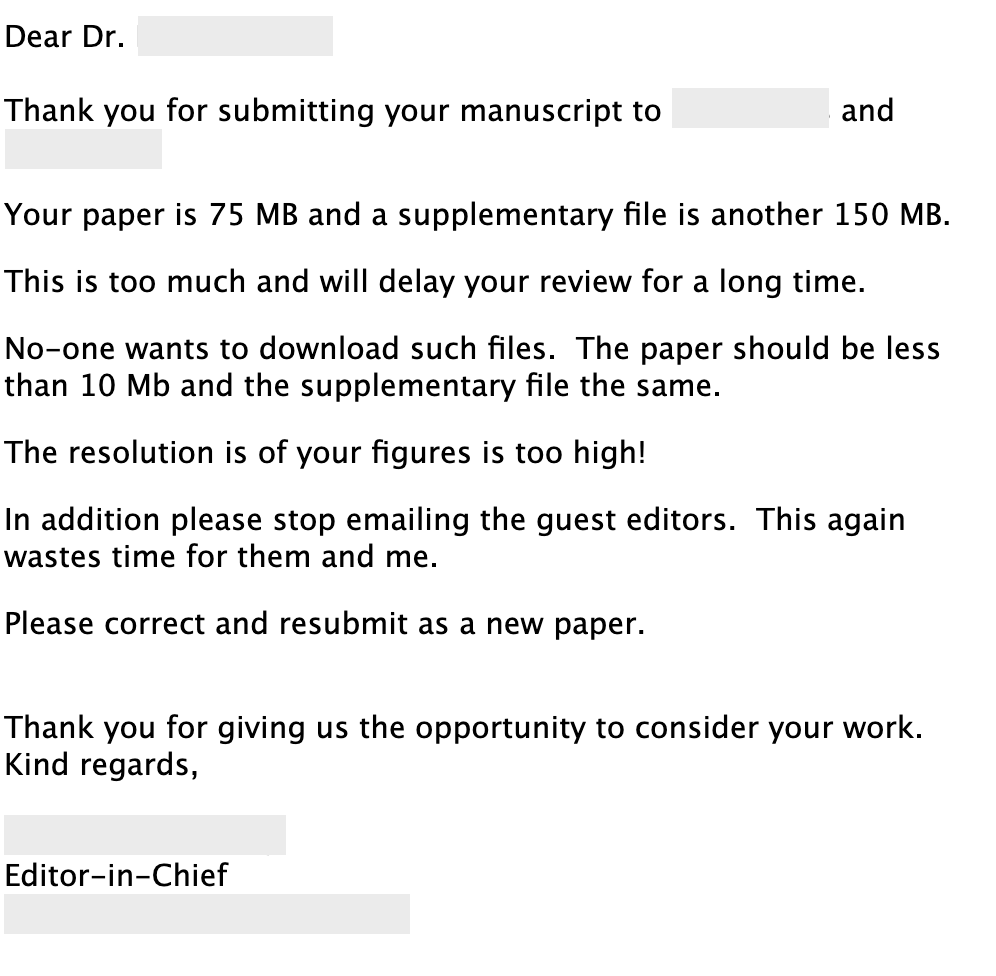
Having served as an Associate Editor for various journals multiple times, I am aware that there are several reasons why timely reviews cannot be obtained, so I am usually quite tolerant with slow reviews.
Today I got this. Seriously. From a renowned journal. 🤦