I think what people don’t really appreciate is that the entire AI industry is basically a $5T Shitco.
And I don’t mean that in a derogatory way. It’s an incredible, world-changing technology that is still in its infancy, and there is very little predictability around its growth, trajectory, or ultimate financial outcomes. Even if you’re confident it changes the world, that leaves a lot of uncertainty around who makes the money, how much, and when.
It’s fine when an actual $2B shitco jumps around from $1B to $10B on changing expectations, because it’s small relative to the market and the economy in general.
It’s a much bigger problem when a $5T industry is jumping around for the same legitimate, fundamental reforecasting of expectations.
Usually, when industries are this large, they’ve spent years developing and expanding, they’re further along the S-curve, and we have a better understanding of their economics. The combination of how powerful AI is, plus the hyper-aggressive nature of capital markets and the competitive nature of hyperscalers (compete or die), has thrust this technology into a very uncomfortable situation: it has the financial footprint of a mature industry while still carrying venture-like uncertainty.
And at that scale, changing expectations feed directly into spending, construction, hiring, and financing decisions across the economy.
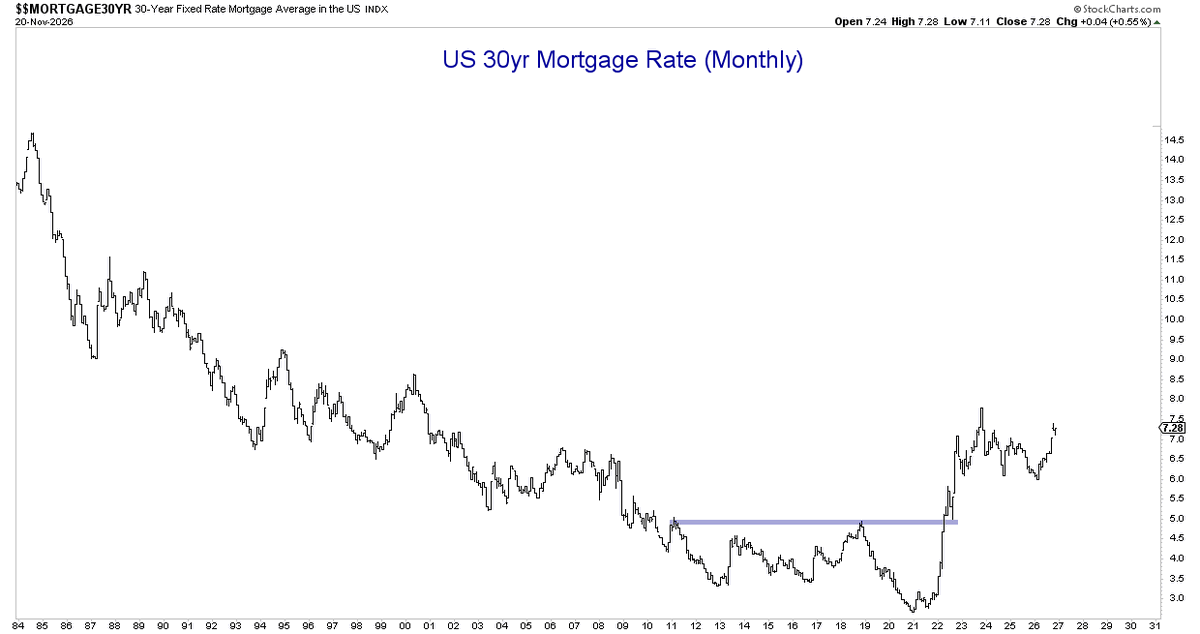
I’m not saying that’s good or bad, but I’d say it’s not terribly surprising. And the one thing I do have a moderate amount of confidence in is that credit getting wider doesn’t mean AI is going to fail. Lenders can legitimately demand more compensation for the uncertainty around how this all gets built, financed, and monetized, even while the technology continues to succeed and even prosper.
Debt repricing higher is just showing markets working properly. The risk is higher, the price is higher, capex needs lower LTV's, and pays higher yields. That means compute costs more to build, and the prices of compute go up to compensate for those costs, and labs/hyperscale's pay the higher price or less compute gets built.
PS: China not only has low regulatory/political barriers to build, but also its own industrial base. Chinese manufacturers have the best lead times on power equipment and the lowest costs.
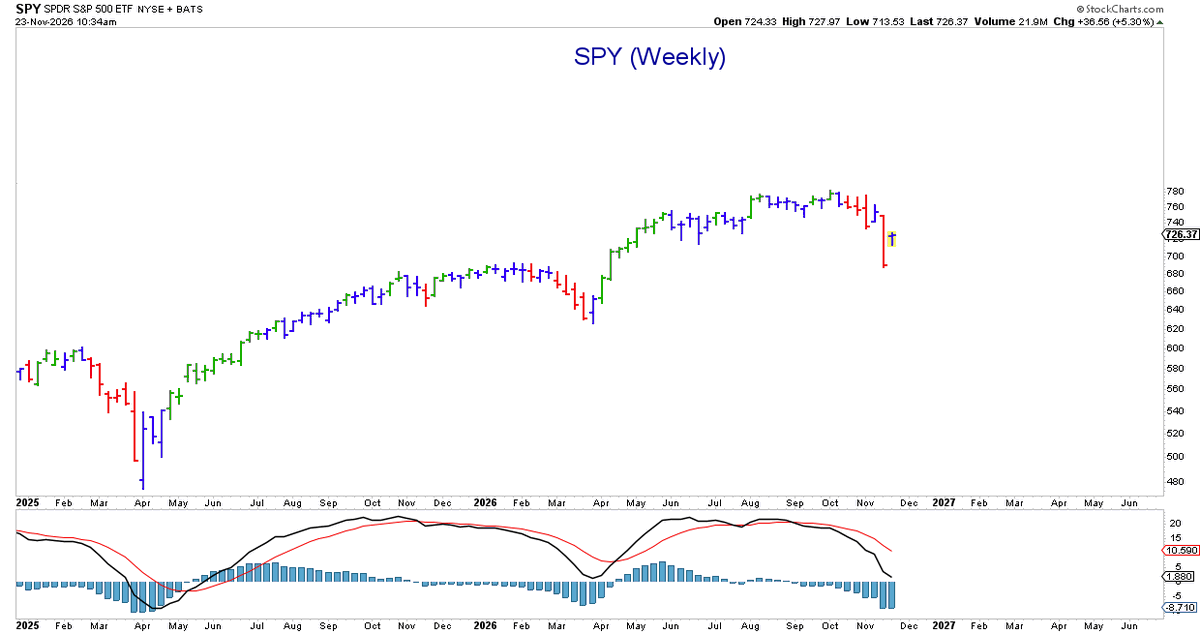
~70% of $SPY is tied to the hyperscaler revenue forecasts in the quoted tweet, which carry a LOT of uncertainty. For example:
1). 70% of AI revenue of the hyperscalers comes from Anthropic and OpenAI, which have poor moats. Furthermore, China models have a tenth of the input costs and are only 3-6 months behind frontier models.
2). Political opposition = Slower data center growth = CAPEX spending lower short-term BUT data center revenues are pushed out = short term CF's not as ugly but medium term CF's uglier. Meanwhile, China build out moving full steam...which ties back into point #1.
Great thoughts here from Steve Eisman (who was uber bullish power/AI since 2021, and of course, foresaw the GFC): https://t.co/TMkkkDB8p4
The above risks remain even with Jensen being reinstated. And if an Nvidia investigation finds any illegal accounting or export activity, it won't be pretty.
This would've been a great time for data centers to be built in Canada, Mexico, Europe, India... But Trump nuked foreign trade.
The risk/reward here is poor for $QQQ $SMH. But it could be a bit better for base metals (over the medium/long term) since metals are agnostic to who wins.
$ANTT and $ANTZ are live.
Tradr ETFs' 2x daily long and 2x daily short Anthropic $ANT ETFs started trading yesterday.
These are short-term tools, not long-term holds. Know how the daily reset works first.
Guys remember that leverage involves significant risk. Read more at https://t.co/1UuIGOrHR0