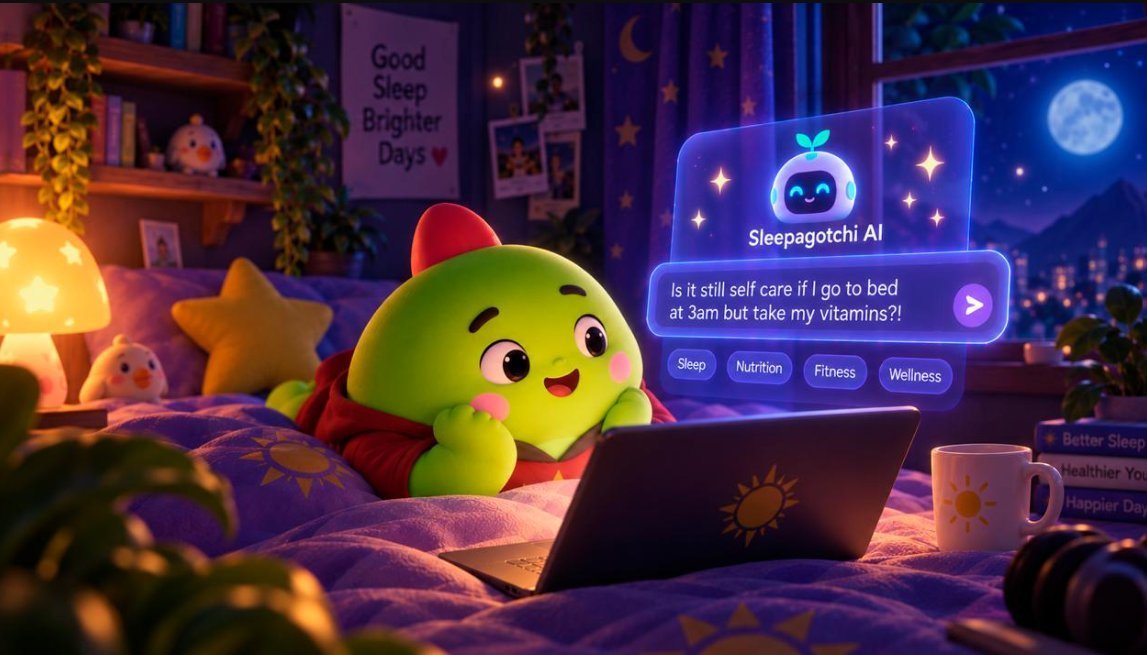
Most sleep-to-earn apps died the second the emissions dried up.
Sleepagotchi didn't. 2M Telegram users, 78% opening the app within 10 minutes of waking, $100k+ in a three-week beta. That's a morning habit, not a farm.
They also stopped selling the monetize your biometrics story. Data gets anonymized, processed, then dropped. No identity parked on their servers. Sleep is the signal now. The agents sit on top of it, basic coaching stays free, and the heavier calls are supposed to sit behind $SLEEP / CHI.
Whether that token prices actual intelligence or just wraps a habit people already have is the only part I still don't buy on paper.
If you ran Lite for more than a couple weeks, did the streak survive after it stopped being new?
@sleepagotchi
Vangrid is building data infrastructure for Physical AI, using distributed devices to capture real-world spatial information.
It's working with NVIDIA to pair that compute power with real-world environmental data. And because the mapping approach is community-driven,
@vangrid_io is positioned as a significant contributor to how intelligent machines come to understand their surroundings.
Faster isn't always better for UX.
@sleepagotchi is moving Gotchi from just knowing stuff to taking action and handling commerce.
That definitely cuts out a lot of friction.
But some friction is actually a good thing.
When I browse, compare, hesitate, and change my mind
I'm not just wasting time.
I’m figuring out what I actually want.
An agent that jumps right from I know you to I handled it can silently turn yesterday's habits into tomorrow's defaults.
So consumer AI needs to distinguish between two different jobs: executing a preference that's already clear, and helping someone form one that isn't yet.
The smartest commerce agent won't always be the one that finishes fastest.
Sometimes it should just leave some room for curiosity.