Boltzmann generators go big: scalable equilibrium sampling for materials
Predicting whether a crystal phase is stable, or computing its free energy, usually means running molecular dynamics for a long time. The problem is that MD explores configuration space one step at a time, so consecutive snapshots are correlated and the system mixes slowly. Boltzmann Generators offered a clever alternative: train a normalizing flow to map random noise straight onto the Boltzmann distribution, giving uncorrelated equilibrium samples in one shot, plus free energies through reweighting. The catch was scale. Earlier BGs maxed out around 500 atoms, with poor sampling efficiency and training runs approaching a full GPU-year, slower than the MD they were meant to replace.
Schebek, Noé and Rogal fix this with a clean idea: stop modeling the whole configuration at once and learn from local atomic environments instead. They pair augmented coupling flows with a graph neural network that builds per-particle embeddings from each atom's neighborhood. By modeling displacements from the ideal lattice rather than absolute positions, the input stays size-independent, so a model trained on a few hundred atoms transfers directly to systems above 1000 atoms. Scaling becomes linear rather than quadratic, and training needs only the energy function, no MD samples.
The payoff is large. For mW ice, a global BG needed over 330 GPU days and reached effective sample sizes around 0.2%, while the local model converges in about 4 GPU days and pushes efficiency up by an order of magnitude. It reproduces radial distribution functions and free energies that match MD to within 10^-3 kBT per particle, resolving tiny phase-stability differences in Lennard-Jones crystals, water ice, and the silicon phase diagram. Conditioning on temperature, pressure, and interaction parameters lets one model cover a whole family of materials.
The real lever is cost. A trained flow needs only tens of thousands of energy evaluations for a large cell, against tens of millions for standard MD free energy methods, and that gap widens sharply with expensive machine-learned interatomic potentials. In materials development, energy storage, and catalysis, this means screening phase stability and thermodynamics at realistic system sizes without paying the usual simulation tax.
Paper: Schebek et al., Nature Communications (2026) — CC BY 4.0 | https://t.co/61llOHl0Ek
Higher-dimensional topological phases characterized by zero-energy surface crossed flat bands are predicted to emerge in three-dimensional superconducting altermagnets as a generic topological phenomenon protected by intrinsic crystal symmetries https://t.co/7Xt1ZvR1ht
First-principles formalism within the GW plus Bethe-Salpeter equation framework describes exciton-polaritons at a negligible added computational cost https://t.co/L4KjF48bUn
Today we all lost our jobs.....
Three Nature papers showing that scientists in the conventional sense are obsolete
At least read the first one.... the AI replaced all things that the scientist does ....
https://t.co/zMsRLaaRDU
Vuelve a volar el Nº 134 de #AquíHayDragones: «De sobornos, bestias y finales»
En sabores:
Aivox: https://t.co/VQbFaaZL4h
Spoty: https://t.co/J0htlIPBfu
Apol: https://t.co/7NLwlu5tSH
¿Un RT?
#AHD134
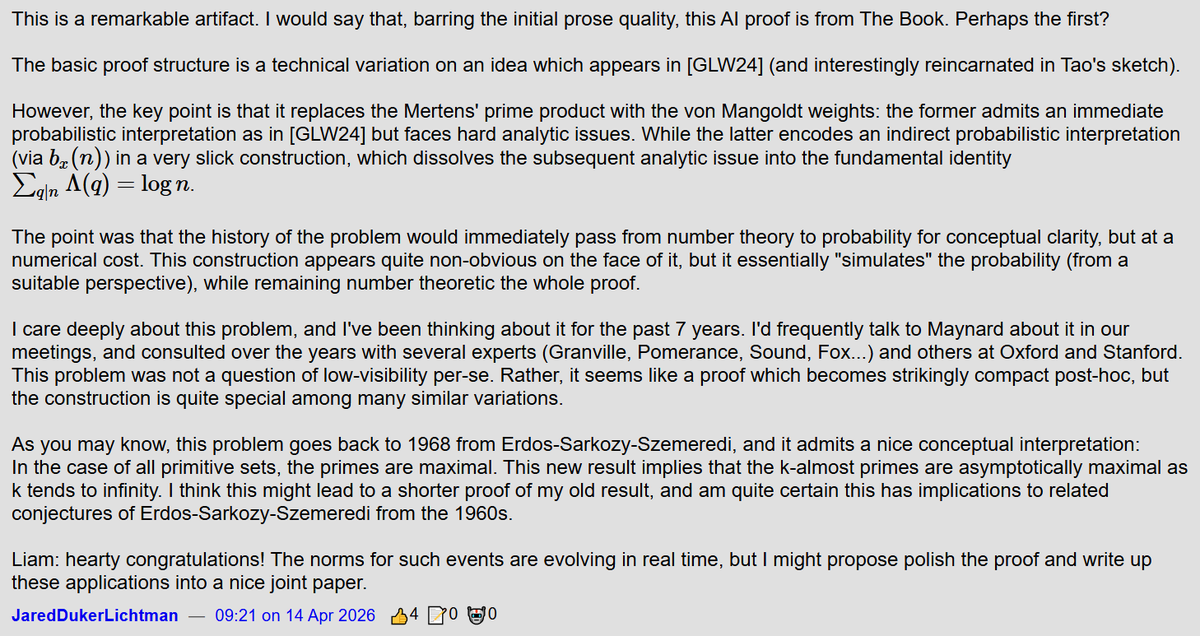
GPT-5.4 Pro solves Erdős Problem #1196!
Very pleased with this result; definitely my favourite thus far! This problem has been thought about for some time which makes this reasonably impressive and meaningful (see Lichtman's comments below).
Formalisation is underway!
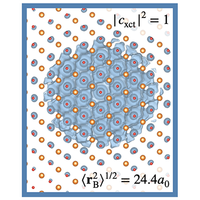
Order by quantum disorder leaves distinct finite-size signatures in the exact diagonalization spectrum that are captured by an effective quantum-rotor description analogous to the Anderson tower of states https://t.co/Pgp0FxGqSI
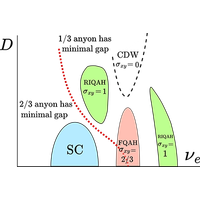
A unified theory explains the recent discovery of superconductivity and reentrant integer quantum anomalous Hall states in twisted MoTe₂ in terms of the disorder-broadened Landau-Hofstadter bands of doped anyons https://t.co/3VIB2qnTX9
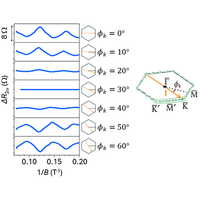
Quantum oscillations in nonlinear electrical transport reveal the geometry and spin orientation of the Fermi surface in the Dirac semimetal α-Sn https://t.co/DZuUf431Rj
Two-Lever Design Rule for High-Entropy Oxide Oxygen Carriers: Minimize Spin Polarization, Maximize Fe–O–Ni Covalency | Journal of the American Chemical Society https://t.co/ppak8C2mq4
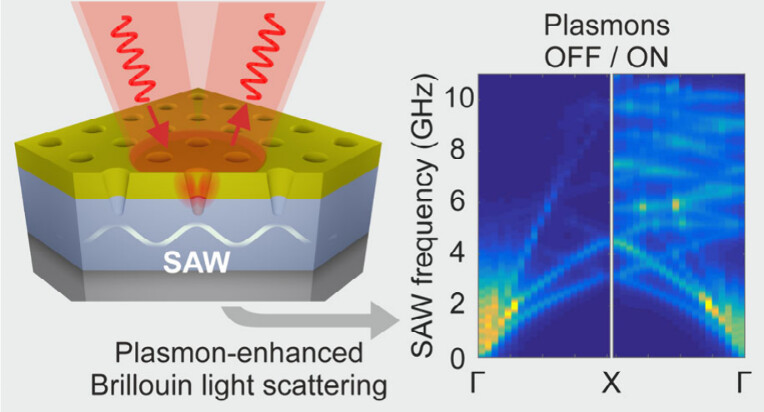
Nanoholes on trembling mirrors couple light and sound! Metasurface co-localizes surface plasmons and hypersonic surface acoustic waves to tune light via the moving interface effect. #ACSNano
Read it here 🔗 https://t.co/OwrjFfMzXI
Less cerium, high activity: 5 wt% Ce dispersed on α-Al₂O₃/SiO₂, calcined 110–400 °C. Under 365 nm LED, 51% MR conversion in 1 h. . #photocatalysis
Low-cerium-content catalysts supported on silica and alumina for the p... https://t.co/DOQVPpKcjN
Quantum optical skyrmions are promising for quantum photonic applications but have not been experimentally realized. Now nanophotonic quantum skyrmions are generated using a semiconductor quantum dot–Gaussian microcavity quantum electrodynamics system.
https://t.co/7UvZB0lQHb
Theory predicts that phonons—quanta of lattice vibrations—can carry finite angular momentum and thus influence physical properties of materials. Now phonons with angular momentum have been seen in tellurium with a chiral crystal structure.
https://t.co/ipQsjSfnWJ
I'm really happy to see our progress in capturing the electronic substituent effect using effective atomic orbitals published in @PCCP. @pesalse https://t.co/x9hDK62OiE
By linking electronic structure to inductive and resonance effects, a new framework can help quantify inductive and resonance effects exerted by substituents in aromatic systems, letting chemists more accurately predict Hammett parameters.
https://t.co/x9iHEODcWQ
A class of moiré quasiperiodic crystals with unexpected electronic properties is presented, exhibiting flat bands and correlation-induced gaps that signal the emergence of correlated quantum states.
https://t.co/NAgZh7zCzp
Observation of Water-Induced Synergistic Acidic Site from NMR-Invisible Al in Zeolite via Solid-State NMR Spectroscopy | Journal of the American Chemical Society @nmr900 https://t.co/7TbOFZtLha
Cold Dark Matter Based on an Analogy with Superconductivity
"… a novel candidate for cold dark matter consisting of condensed Cooper pairs in a theory of interacting fermions with broken chiral symmetry."
PRL: https://t.co/u7szqcstM0 #OpenAccess
Synopsis: https://t.co/2CxWliAbev
High Enantioselectivity in Adsorption of Chiral Molecules on the Surface of Chiral Terbium Phosphate Nanocrystals | Journal of the American Chemical Society @Tel_Aviv_Uni https://t.co/jDqT28jT8Z