This is exactly right. Source code is on the verge of becoming like assembly.
The next step is getting rid of “source code” entirely and just making an efficient binary directly with AI.
@alpertungaakkus@HepiyiSigorta Ben kaskomu @AXA_Turkiye den yaptırıyorum. Direkt haber verme şansım olmadı araya zaman girdi ama sağ olsunlar hiç yormadan, kısa sürede yardımcı oldular. Bu arada süreçte müşteri hizmetlerine ulaşmak, sorunları çözüme kavuşturmak vs yine çok kolay oldu, çok ilgililerdi.
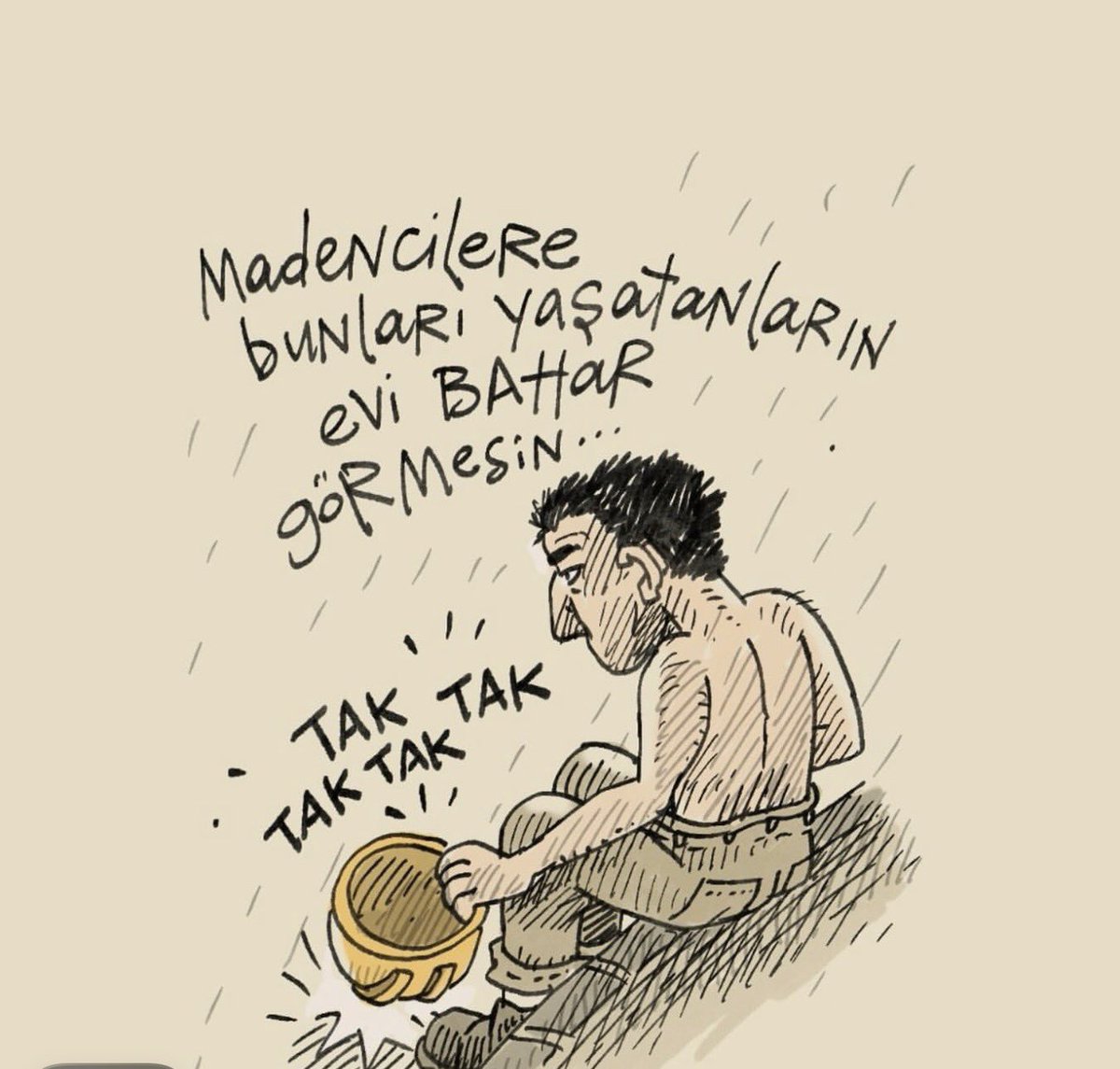
“-Yani haraç mı vereceğim.
-Haraç değil işçilerin haklarını vereceksin”
Yeşilçam’ın usta oyuncusu, Türkiye sinemasının bir ustası hayatını kaybetti. Işıklar içinde uyu usta…
#Kadirİnanır
Avrupalı zenginlerin Bosna Savaşı'nda para verip sivilleri öldürmeye gittiklerine ilişkin iddia yeniden gündemde
"Bu hizmetleri sunmak için kapsamlı bir yapı vardı. Merkezi Belçika'daydı"
@utkusen Şebnem Ferah üzerinden boykot vs ayağına yatan da gitsin tedavi olsun, baştan bir eğitilsin, toplumdan izole edilsin, oksijen israfı bu tipler.
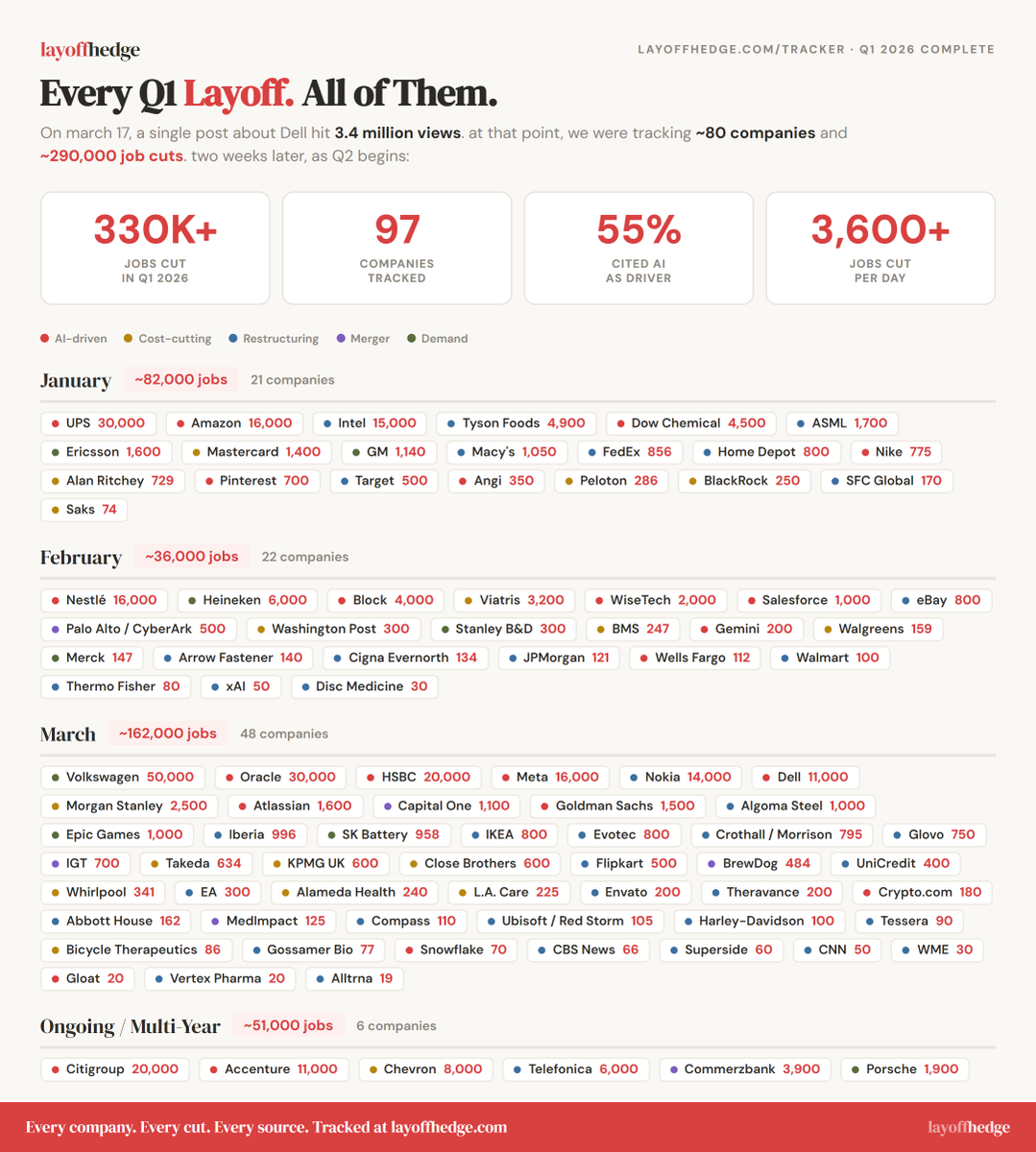
Dell’s 11K cut went viral two weeks ago.
Since then:
Oracle: 30,000
HSBC: 20,000
Meta: 16,000
Nokia: 14,000
We’re already tracking 100+ more companies expected to cut in the next 3 months.
Here’s the full Q1 2026 recap. Buckle up for Q2.
Software isn’t merely technical work anymore. It’s creative.
Introducing Replit Agent 4. The first AI built for creative collaboration between humans and agents.
Design on an infinite canvas, work with your team, run parallel agents, and ship working apps, sites, slides & more.
<MAAŞ ANKETİ 2026 />
2018'den itibaren düzenli olarak maaş anketi hazırlıyorum. Yılda 1 kez paylaştığım bu anketin, 2026 versiyonu yayında!
* Daha fazla kişiye ulaşabilmemiz için paylaşıp destek olabilirsiniz.
Ankete katılım linkini bir sonraki tweet'te bulabilirsiniz.
The world, Europe, and Spain have faced this critical moment before. In 2003, a few irresponsible leaders dragged us into an illegal war in the Middle East that brought nothing but insecurity and pain.
Our response then must be our response now:
NO to violations of international law.
NO to the illusion that we can solve the world’s problems with bombs.
NO to repeating the mistakes of the past.
NO TO WAR.
https://t.co/KpRjBfwY4B
On Iran and Anthropic:
Robert Mugabe, Zimbabwe’s dictatorial president since 1987, won the big prize in the country’s lottery in 2000. Why did he go out of his way to concoct such a charade? A surface-level answer: Because he could. Once you destroy institutions constraining your power and behavior, you can act in largely unrestricted fashion, whether it is for personal enrichment, personal aggrandizement, or simply projecting even greater power.
But there is a deeper, more problematic answer as well: What better way to further decimate institutional checks on your power than showing how much of a farce the existing system of rules is.
It is not just a coincidence that such behavior can do damage to norms, institutions and security and stability of the country. It is part of the design.
Mugabe’s lottery win echoes in two fateful decisions by the Trump administration, which will have long-lasting and troubling implications, are just. Trump and his allies are pursuing these actions because they can and because these actions are consistent with their agenda of upending all rules and constraints on their future behavior.
The first problematic action is the US-Israeli attack on Iran and the killing of the country’s supreme leader Ayatollah Khamenei. Leave aside the loss of life and the immediate chaos, it should be obvious that such a move will trigger a long period of instability in the Middle East.
There should be no doubt that the Iranian regime was repressive, murderous and bad news for its own people’s economic and social well-being. The supreme leader, leading Iranian elites and the country’s feared Revolutionary Guard had blood in their hands and the repression had intensified lately.
But none of this justifies the United States and Israel initiating a war in the Middle East, without support from international allies or from the public in the United States (still considered a democracy where people’s views should in principle matter). But even worse, this act violates the sovereignty of another nation and risks plunging the entire region into carnage.
And however awful Ayatollah Khamenei’s track record may be, he’s no Nicolas Maduro (who had only a few diehard supporters even in the Venezuelan military). By virtue of his religious role, Khamenei enjoyed respect and authority among the Shiites and even the broader Muslim mission community, and his killing risks turning him into a martyr, which is the last thing that Iran or the region needs.
The second is the Department of Defense (it is still painful to call it the Department of War even if recent actions confirm that this change of name wasn’t just for optics) designating the AI company Anthropic a supply-chain risk. The official designation is typically used for companies from foreign adversaries, such as China’s Huawei. It bars federal contractors using the Anthropic’s models and heralds major restrictions on what the company can do in the future. The Secretary of Defense Pete Hegseth announced “Effective immediately, no contractor, supplier, or partner that does business with the United States military may conduct any commercial activity with Anthropic.”
The reason? Because Anthropic wanted safeguards against its models being used for mass surveillance of Americans and autonomous weapon systems. Neither of these two provisions would have put meaningful restrictions on the DoD in practice. Mass surveillance is illegal under US law and autonomous weapon systems are a not near-term possibility.
Yet, it is the showdown that matters, just like Mugabe’s lottery winning.
This action will also have major consequences, perhaps more far-reaching than the attack on Iran. Regardless of what one might think of current AI capabilities, there is little doubt that who controls AI will have momentous implications for democracy, business, communication and privacy. This designation can be interpreted by many in the industry that it will be the US government, not the private sector, that controls AI.
Even more far-reaching are the broader implications of this action: this administration, and perhaps future administrations, can now bring hugely disproportionate penalties on any contractor they disagree with. Security of private property rights, which has been a mainstay of American state-business relations for centuries, is now looking much shakier. It also sends exactly the wrong signal to the world that Pentagon is intent on mass surveillance and the development of autonomous weapon systems (why else bother about these two ineffective provisions in the contract?).
The absurdity of both actions is what harkens back to Mugabe’s lottery win. Trump came to power promising no foreign adventures, and now has spearheaded a potentially riskier one than the Iraq war, with even flimsier justification. There would have been no bite to the provisions that Anthropic wanted in the contract, since current AI systems are nowhere near reliable to be used in autonomous weapon systems and the US government has plenty of other tools that can be (and sometimes are) used for mass surveillance.
The shock value and the norm breaking are part of the intent. Mugabe’s lessons continue.