Kigali shouldn't exist the way it does.
Landlocked. No oil. No coast. A country that lost roughly 800,000 people in 100 days in 1994 — one of the fastest mass killings in recorded human history.
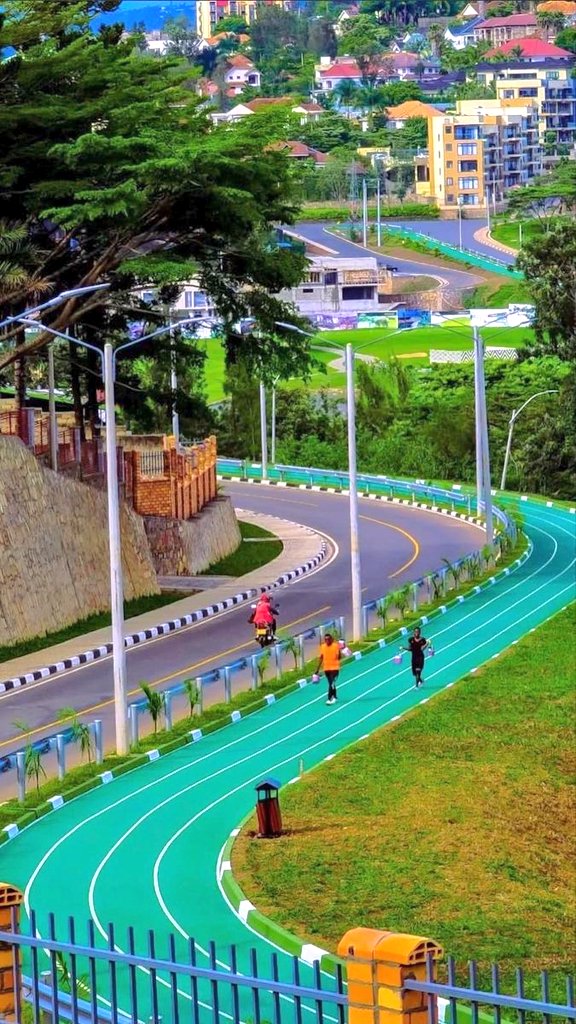
Thirty years later, it's the cleanest city in sub-Saharan Africa. Plastic bags are banned and have been since 2008. There's a national community cleanup day called Umuganda — the last Saturday of every month, the whole country stops and cleans together. Businesses close. Politicians clean. Everyone participates.
Foreign investors who land in Kigali for the first time often say the same thing: "This isn't what they told us Africa looked like."
That's exactly the point.
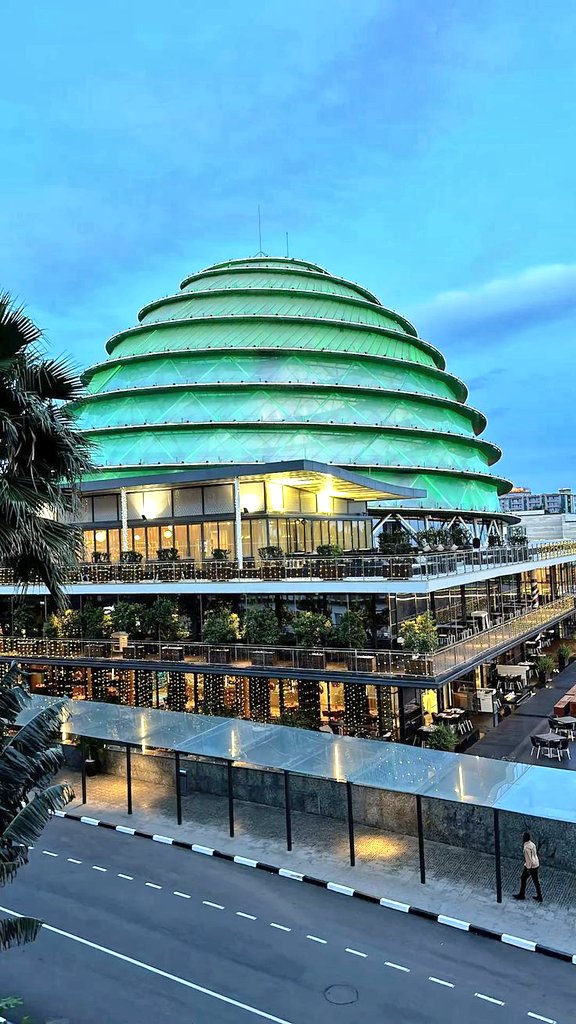
Kigali has a homicide rate lower than Washington D.C. It ranks among the top cities in Africa for ease of doing business. It hosted the African Union summit, the Commonwealth Heads of Government Meeting, and is currently positioning itself as the tech and finance hub for East Africa.
No natural resources carried it here. No coastline. No colonial windfall.
Just deliberate, painful, methodical rebuilding — by people who decided that what happened to them would not define what came after.
That's a different kind of infrastructure.
📍 Rwanda's capital | Elevation: 1,567m | Population: ~1.7 million
@WordFits@alte_aza@PhysInHistory Reminder: Ancient Greek mathematics wasn't just a theorem, albeit it's importance. It was an entire structured science, an entire civilization. Thousands of mathematicians, thousands of textbooks. Even the discovery of one single page from one of Archimedes' books is celebrated.
What you've described — modernizing with restraint — is rarer than it sounds.
Most resource-rich states face the same inflection point: sudden wealth, external pressure to demonstrate progress through spectacle, and a governing class that often confuses visible transformation with genuine development.
What Qaboos understood, and what the building height law makes concrete, is that a city's character is easier to destroy than to build. You can construct a tower in two years. You cannot reconstruct the relationship between a city and its landscape in two generations once you've broken it.
The diplomat who understood this applied the same restraint to foreign policy. Oman's ability to maintain back-channel communication with Iran, Israel, and the United States simultaneously — during periods when those relationships were openly hostile — is the foreign policy equivalent of the Muscat skyline. Quiet, calibrated, and more useful than anything louder would have been.
Sultan Qaboos took power in 1970 in a country with three paved kilometers of road. He left it with a capital city whose most important architectural rule is that nothing can be taller than the hills.
The man who built from nothing chose specifically what not to build.
That's the harder achievement.
Muscat stays with you because it was designed to. That doesn't happen by accident. 🇴🇲
While Dubai was building the tallest building in the world, Muscat passed a law limiting building heights to preserve its skyline.
No tower in Muscat can exceed the height of the surrounding hills. The city spreads horizontally across the Gulf of Oman coastline, white-washed and low, framed by the Hajar Mountains that descend directly to the sea.
The decision was made by Sultan Qaboos bin Said — who took power in a 1970 palace coup against his own father, who had banned sunglasses, music, books, and the use of electricity outside the palace — and governed Oman for 50 years until his death in 2020. The father had kept Oman so deliberately isolated that in 1970, the country had approximately three kilometers of paved road, one hospital, and almost no schools. Qaboos had been educated in Britain, specifically at the Royal Military Academy Sandhurst, and returned to find his country in medieval conditions.
He moved quickly. Infrastructure. Schools. Hospitals. A national radio and then television service. The economy was opened. The military was modernized. Women were educated and entered the workforce. Oman went from three paved kilometers to a fully connected road network in roughly a decade.
Qaboos also made a specific foreign policy choice that defined Oman's character in the Gulf: strict neutrality. While Saudi Arabia and Iran fought proxy wars, while Qatar hosted the Muslim Brotherhood and suffered blockades, while the UAE built a financial empire, Oman maintained diplomatic relations with everyone simultaneously. It talked to Iran and to Israel. It mediated between the US and Iran in back-channel negotiations that no other Gulf state could credibly conduct. Muscat became the quiet room where the Gulf's loudest arguments were resolved in private.
The Muscat approach — preserve the environment, maintain diplomatic neutrality, don't race your neighbors architecturally or financially — produced a city of extraordinary quality of life that receives a fraction of the international attention of Dubai, 370 kilometers up the coast.
The Sultan Qaboos Grand Mosque — completed in 2001, built over six years by 1,200 artisans, containing what was for many years the world's largest hand-woven carpet covering 4,343 square meters — is the only mosque in Oman that non-Muslims can visit. The carpet was woven by 600 Iranian women over four years.
The Mutrah Souq — a covered market that has been operating in the same location for centuries, with frankincense from Dhofar province that was traded on this coast when ancient Rome was still a republic — is 15 minutes from the Grand Mosque.
Frankincense from Oman was one of the most valuable commodities in the ancient world. It is still produced in Dhofar. It is still sold in Mutrah.
The city that chose not to compete with Dubai is more itself than most of the cities that tried.
What's the most underrated city in the world? Muscat is my answer. Tell me yours.
My new wife’s seven-year-old daughter burst into tears every time we were left alone together. Whenever I gently asked her what was wrong, she would only shake her head silently. My wife would just laugh it off and say, “She simply doesn’t like you.” Then one day, while my wife was away on a business trip, the little girl reached into her backpack, pulled something out, and whispered, “Daddy... look at this.” The moment I saw it, I...
My name is Ethan.
I’m an ER nurse in the trauma unit at University of Colorado Hospital, and after years of emergency medicine, I’ve learned how to read pain the way other people read maps.
A b:ruise tells a story.
A tremor reveals fear.
Silence often screams louder than words.
But nothing in my training prepared me for walking into Clara Monroe’s Victorian house on 219 Hawthorne Avenue.
It felt wrong the second I crossed the threshold.
Not dangerous.
Not obvious.
Just... wrong.
“Are you staying? Or are you leaving soon?” Harper asked me the day I moved in.
She stood in the doorway clutching Scout the fox to her chest.
“I’m staying,” I said with a smile. “I’m your stepdad now.”
She stared at me for several long seconds.
Then simply nodded.
Three weeks passed.
Clara was perfection itself—graceful, polished, affectionate.
Harper remained distant.
Quiet.
Watchful.
Then Clara left for a business conference in Salt Lake City.
And everything changed.
That first evening, Harper sat beside me on the couch while a movie played softly in the background.
At some point, I noticed tears slipping silently down her face.
“What’s wrong?” I asked gently.
She stared at the television.
“Mommy says you’ll leave.”
My stomach tightened.
“What?”
“She says all men leave because I’m too much trouble.” Harper’s voice was barely audible. “She says once you see who I really am, you’ll leave too.”
I turned to face her fully.
“Harper, listen to me.”
She hesitated.
“I work trauma medicine. I’ve seen pain most people can’t imagine. And I’ve never walked away from someone who needed help.”
For a moment, something flickered in her expression.
Hope.
But it vanished just as quickly.
That night, sometime after midnight, I heard quiet sobbing through the walls.
I found Harper curled tightly in bed.
“Do you want to tell me what’s hurting you?” I asked softly.
Her body stiffened.
“I can’t.”
“Why not?”
She started shaking.
“Mommy says if I tell, the fire will come.”
The words sent a cold wave through me.
“What fire, Harper?”
She said nothing else.
Two days later, Clara came home.
Perfect smile.
Perfect posture.
Perfect composure.
At dinner, her knife clicked sharply against her plate as she looked toward Harper.
“Did everything go smoothly?” she asked pleasantly. “No emotional scenes?”
Harper’s fingers tightened around her fork.
“No, Mommy.”
The lie settled heavily between us.
It was fear speaking.
The next morning, I helped Harper into her sweater before school.
She suddenly flinched backward.
“Hold still,” I said gently. “I’ve got it.”
I rolled her sleeve higher.
And the world stopped.
Four br:uised oval marks stained her upper right arm.
A fifth, larger mark pressed into the left side.
A thumb.
Clear.
Deliberate.
The unmistakable imprint of an a:dult hand gripping a child with br:utal force.
Read more link in the first comment 👇
Like & share and comment "YES" if you want more!.
His Family Replaced His Pregnant Wife with Another Woman—They Didn’t Know Who She Was
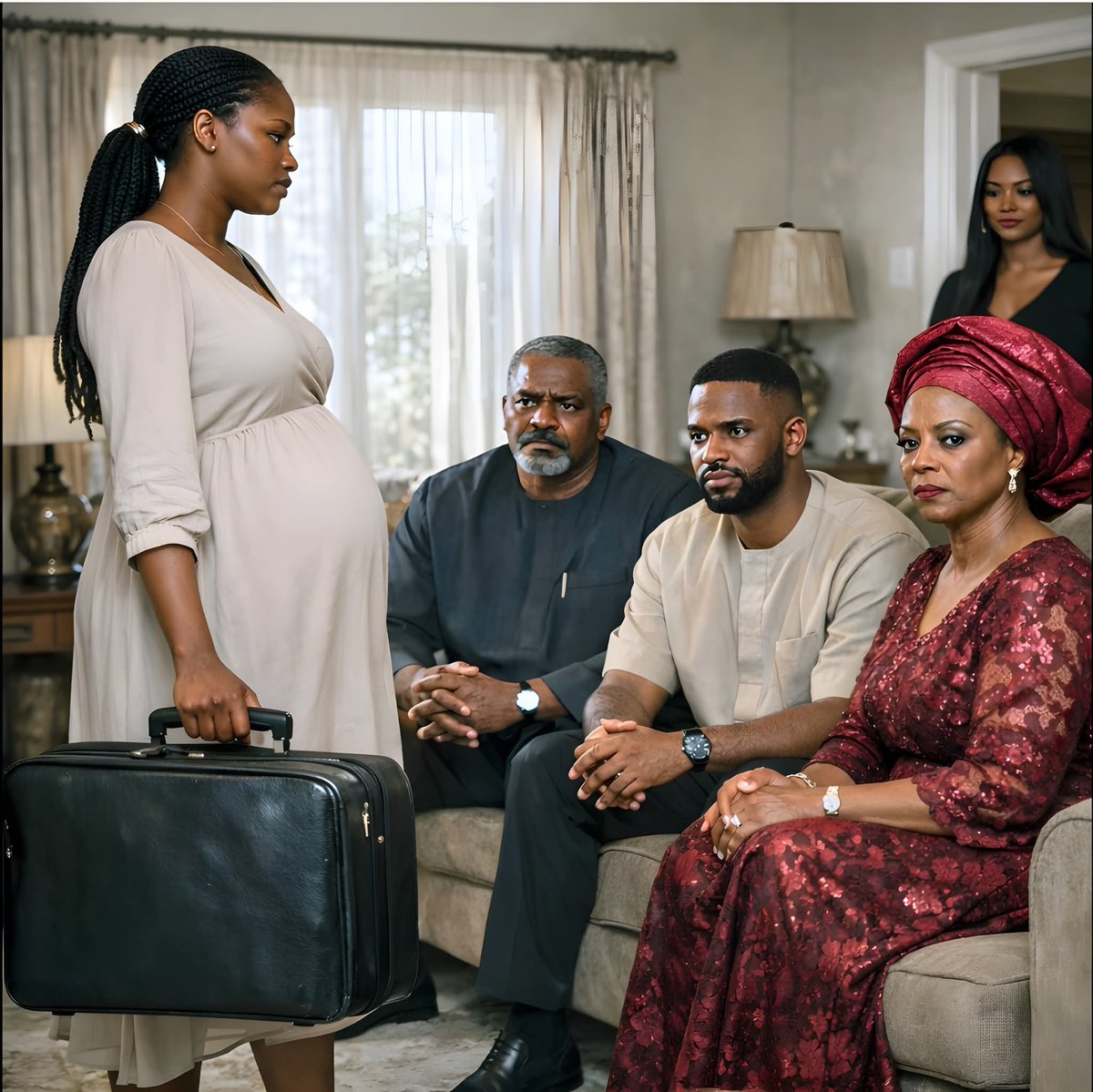
“Pack your things and get out of my son’s house. Your replacement is waiting. Yes, go quickly. Go away forever and never come back anywhere near my house.”
They told her to pack her things while the replacement waited in the next room. No discussion, no mercy, just a family united in cruelty, confident they were untouchable.
Her husband avoided her eyes as his parents explained why another woman would raise her child instead. She didn’t scream. She didn’t beg. She simply listened. Because the moment they finished, the countdown to their downfall had already begun.
Grace stood in the doorway of the small guest room with her hands folded over her stomach, as if she could protect the life inside her with nothing but silence. Her suitcase lay open on the bed, half-filled with the few clothes she had brought into this marriage, a pair of simple shoes, a shawl her late mother had owned, and a small notebook of names she liked for her baby.
Outside the room, the house was busy in a strange way, busy like a market before rain, when people rush to secure what they can and pretend they are not afraid. In the sitting room, Grace could hear the low voices of Daniel’s family, arranged like judges at a table.
His father, Victor Hail, spoke with the calm confidence of a man who had never been corrected in public.
His mother, Eleanor Hail, spoke with the cold certainty of a woman who believed kindness was weakness.
And Daniel, her husband, sat between them as if he had become a child again, waiting for instructions.
Grace had always known that a family could love you loudly when you were useful and hate you quietly when you became inconvenient.
But even she did not expect them to move with this kind of speed.
Just a week ago, she had been cooking in the kitchen while Daniel’s little nephews ran around her legs laughing. Just a week ago, Eleanor had smiled at her and said, “My daughter, you are carrying our future.”
Now Eleanor’s voice was sharp. “We have discussed it,” she said. “You will return to where you came from.”
Grace stepped into the sitting room. The room fell silent the way a river becomes quiet when a crocodile enters.
She looked at the faces before her, faces she had served, respected, and tried to please. She looked at Daniel. His eyes flickered toward her, then away.
The replacement sat in the next room as if she were already part of the furniture.
Grace’s stomach tightened, not from fear, but from a quiet awareness.
This was not just rejection.
**(Full story continues in the first comment.)**
👉👉👉Turn on the "View all comments" option to see more!
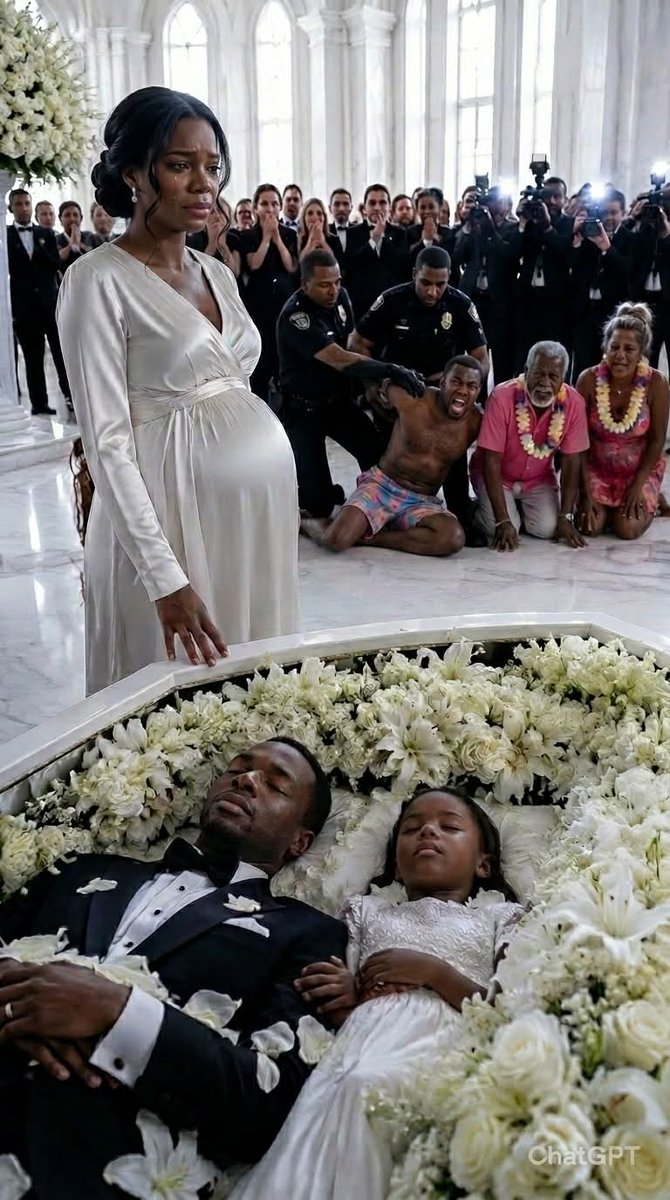
I stood over two coffins while my parents lounged on a beach with my brother, calling my husband and daughter’s funeral ‘too trivial to attend.’ Then, just days later, they showed up at my door demanding $40,000. My mother snapped, ‘After everything we’ve done for you, you owe us.’ I looked them dead in the eye, opened the folder in my hands, and watched their faces drain of color. They had no idea what I’d discovered.
I buried my husband and daughter beneath a sky so gray it looked bruised. My parents had sent a beach photo.
They stood barefoot in white sand, my brother grinning between them, holding cocktails with tiny umbrellas.
Underneath, my mother wrote: We’re sorry, sweetheart, but flights are expensive and funerals are emotionally draining. This is too trivial to ruin the trip.
Too trivial.
Three days later, I returned to my silent house. Lily’s yellow rain boots waited by the door, dotted with dried mud. Daniel’s coffee mug sat beside the sink. My world had stopped, but cruelty kept arriving.
At seven that evening, someone pounded on my front door.
My parents stood on the porch in linen clothes, tanned and annoyed. Mason leaned against their rental SUV.
Mother pushed past me without asking. "Finally. You look awful."
Dad glanced around my house. "Where’s the insurance paperwork?"
Mother dropped her purse onto my table. "Don’t play fragile with us, Clara. Daniel had life insurance. The accident payout must be substantial."
Mason walked in behind them. "Forty grand. That’s all we need."
"All you need," I repeated.
Mother snapped, "After everything we’ve done for you, you owe us."
I looked at their sunburned faces, then at the black folder in my hands.
For the first time since the funeral, I smiled.
This is PART OF THE STORY.
(I know everyone’s desperate to know what the messages said… so if you want full story, leave a “YES” below!)
I married a de@d man, and I didn't know. Sometimes, he would go quiet and just sit in the dark. By the end of that year, i got pregnant with our first child. One night, i woke up and saw him standing over my bedstand staring at me. Our baby came in July 2023, but she wouldn't stop crying anytime her dad carried her.
We took a picture of our family in the hospital, me, the baby, and Austin. When I checked my phone later, it was just me and the baby. Our neighbors dog would bark like mad whenever he passed, and the headline said: "22 y/o man d!es in fatal car crash in Texas."
I'm 24 yo and I've been married for about a year now. Before getting married, i made it clear to my husband that I would really love for us to live alone as a couple, just for the sake of building our bond and enjoying some privacy. But he's been living with his 3 siblings and a family friend long before we met. And he never really experienced living alone.
I, on the other hand, I'm the last born in my family. I've always valued my space, and I've only ever lived with my mum and two sisters. Even when I was in school, I stayed alone because I love my privacy.
Now that we're married and we're living in this shared home, it doesn't feel like I'm married. It feels like I just moved into a hostel.
It's been a year, and I'm still struggling to adjust. To be fair, his siblings aren't giving me direct problems, but sometimes this energy is off, and I feel out of place.
Recently, one of his siblings' girlfriends has also moved in....
When I ended up in the hospital after the crash, I told my family. Nobody visited. Instead my sister posted beach photos that same day. A few days later, my phone lit up with 72 missed calls. My dad’s message read: “We need you NOW.” I answered…
I woke up at St. Mary’s Medical Center with a shattered collarbone, two sharply cracked ribs, and a severely bruised kidney after my car was T-boned by a speeding truck.
Instinctively, the moment my eyes could focus through the haze, I called my mother. My chest was strapped tight to prevent my ribs from puncturing a lung. Through the phone speaker, I heard the audible rustle of a napkin.
“Oh, Darcy, that’s just terrible,” she sighed. “Your father and I are just about to sit down for a hot dinner, but I will absolutely call you tomorrow. Okay? Tomorrow.”
Like an absolute fool, I swallowed the jagged glass in my throat and whispered, “Okay, Mama. Enjoy your dinner.”
Next, I texted my 27-year-old unemployed sister, who lived a mere forty-minute drive away. I listened to the mocking beep of my heart monitor for six hours before she finally replied with a single, yellow thumbs-up emoji ().
On day three, I opened Instagram. Dominating my feed was her: sun-kissed bikini shots, clinking oversized margaritas at the beach with the caption: “Living my absolute best life. [#Blessed](https://t.co/EFWFx2GBAG).” The timestamp? Posted exactly two hours after I texted her from the ER.
For four days, the heavy wooden door of my room remained shut. My nurse, Kesha, looked at the empty visitor chair with quiet pity. I had to lie to her face, saying my family lived states away, just to preserve a shred of dignity.
Then came day four. I woke up from a drug-induced nap to find my phone illuminated like a distress beacon. 72 missed calls. The notifications were a waterfall, ending with an ominous, commanding text from my father: “Darcy. We need you now. Call me back immediately. //Emergency.”
My bruised heart plummeted into my stomach. I was convinced a tragedy had struck,




.” The timestamp? Posted exactly two hours after I texted her from the ER.
For four days, the heavy wooden door of my room remained shut. My nurse, Kesha, looked at the empty visitor chair with quiet pity. I had to lie to her face, saying my family lived states away, just to preserve a shred of dignity.
Then came day four. I woke up from a drug-induced nap to find my phone illuminated like a distress beacon. 72 missed calls. The notifications were a waterfall, ending with an ominous, commanding text from my father: “Darcy. We need you now. Call me back immediately. //Emergency.”
My bruised heart plummeted into my stomach. I was convinced a tragedy had struck,](https://pbs.twimg.com/media/HIvabytX0AARyHX.jpg)





