Did you hear about autoresearch by @karpathy?
https://t.co/5JHGjPeMYn
We recreated it, but for MRI.
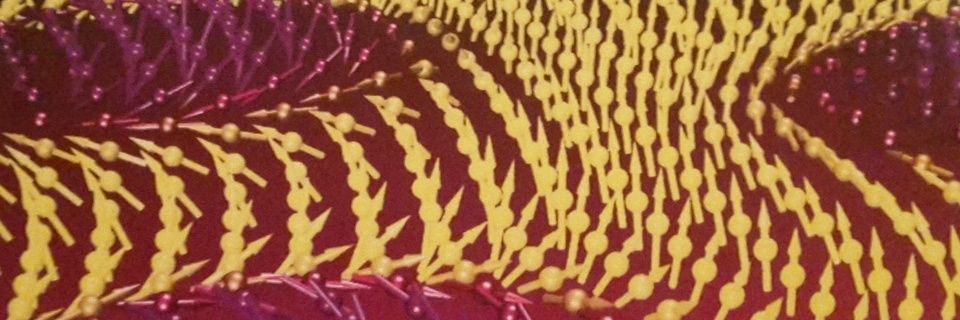
We let AI agents autonomously write, simulate, and refine MRI sequences -- then compete on an MR autoresearch leaderboard.
Watch agents improve MRI (FLAIR-SE-EPI): 1/5
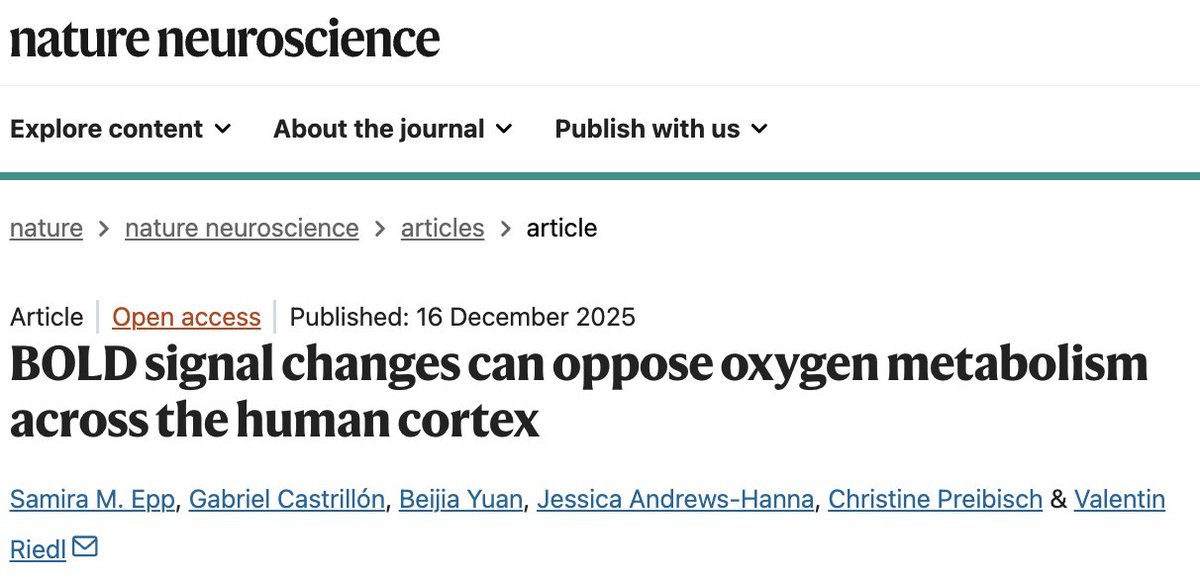
Samira's work made the cover of @NatureNeuro this month 🎉
https://t.co/AO463UYgdt
I also want to highlight two recent comments that engage with our quantitative approach to interpreting the BOLD signal; both are worth reading (see below).
Medical Valley and BAIOSPHERE Medical Join Forces for a Special Anniversary Celebration
Paper submission deadline: 1st of May!
We are delighted to announce that BAIOSPHERE Medical 2026 will collaborate with Medical Valley EMN e. V. as part of Medical Valley’s 20th anniversary
BAIOSPHERE Medical 2026 announces its venue: the new FAU Conference Center
Abstract Submission Deadline: May 1st!
We are delighted to announce that BAIOSPHERE Medical 2026 will take place at the new FAU Conference Center, Freyeslebenstr. 1, Erlangen, on June 9th, 2026.
BAIOSPHERE MEDICAL 2026 Keynote: Mengyun Qiao, UCL
Deadline May 1st!
Beyond Digital Twins: Generative and Agentic Cardiac Modelling for Clinical Discovery
BAIOSPHERE MEDICAL 2026: Registration Now Open – Free Registration for Accepted Abstracts and Highlights
BaioMed 2026 will take place in Erlangen, Germany, on June 8–9, 2026, bringing together clinicians, imaging scientists, AI researchers, computer scientists, engineers,
The concept: give agents MR domain tools + a quality metric, let it iterate. Research inherently relies on validation and testing -- that's the loop agents are good at.
Built on Pulseq/PyPulseq/MR-zero 5/5
Blog: https://t.co/ApwPDyF3EO
Paper: https://t.co/UfHjxvYGgZ
@maier_ak
Did you hear about autoresearch by @karpathy?
https://t.co/5JHGjPeMYn
We recreated it, but for MRI.
We let AI agents autonomously write, simulate, and refine MRI sequences -- then compete on an MR autoresearch leaderboard.
Watch agents improve MRI (FLAIR-SE-EPI): 1/5
We ran the MR autoresearch challenge across 3 model generations. Agents discovered strategies on their own: multi-shot EPI, adaptive recon, differentiable optimization of sequence parameters.
Newer models = better MR agents. And newest models beat our human expert solution. 4/5
fMRI signals “up,” but neural metabolism might be going “down.”
In our @NatureNeuro paper, we show that about 40% of voxels with robust BOLD responses exhibit opposite oxygen metabolism, revealing two distinct hemodynamic modes.
https://t.co/QlhkRroXhU
funding @ERC_Research
🧵:
Thousands of Brain Imaging Studies Might Be Wrong
A group led by researchers from Germany have discovered that about 40% of signals in conventional functional MRI (fMRI) scans don’t align with brain activity levels.
These scans detect changes in blood flow, and assume that more blood flow means that neurons use more oxygen and fire more. But the new study shows that in regions like the brain’s “default mode network” (active during daydreaming or memory recall) neurons can become more active just by pulling more oxygen from blood, without increasing blood flow.
The researchers figured that out with a study on over 40 healthy volunteers which also used a more advanced measure for blood oxygen consumption. This means that the results of thousands of studies done in the past decades might be misleading.
This is more bad news for a field that previously suffered through the infamous “dead salmon” study from 2009, where researchers placed a deceased Atlantic salmon in an fMRI scanner, presented it with photos of humans in social situations, and detected apparent brain “activity” due to statistical errors
The German company that built the forklift used in the Louvre robbery uses a photo of the heist to advertise itself: “When things need to be done quickly.”
😂😂😂