When I was finishing undergrad, I put together a short reader in the history and philosophy of linguistics. I've now ported it to Quarto Book and added a new chapter on computational approaches (along with other updates). Feedback is welcome! 😊
https://t.co/nicFJBc4x8
I'm recruiting PhD students + postdocs for my lab, coming to @JohnsHopkins in Fall 2025!
Our brand new lab is at the intersection of cognitive science and AI, using computational + behavioral methods to understand how language works in minds and machines.
Details below! (1/4)
Friends! I am looking for PhD and Masters students to join my group for Fall 2025, Please share with students you may know who are interested in the intersection of language, CogSci, and AI! first deadline is Dec 1st, see my page for more info: https://t.co/KrzSx1aAlf
The 1st paper of my thesis out in Child Development, OA! 🎉
«Cognate beginnings to bilingual lexical acquisition»
w/Daniela Avila-Varela, @IgCastillejo & Nuria Sebastian-Galles.
@cbcUPF @UPFBarcelona@UAM_Madrid
Are you thinking of applying to PhD programs in psychology but unsure about how to start or whether it's a good fit?
Apply by Sep 29th to Stanford Psychology's 8th annual Paths to PhD info-session/workshop to have all of your questions answered!
https://t.co/tex6YrzDzC
Examining the robustness and generalizability of the shape bias: a meta-analysis - new paper by Samah Abdelrahim and me.
Lots of heterogeneity in this important phenomenon, perhaps masking true developmental and cross-linguistic trends...
https://t.co/GsrMjZ5cFV
Announcing the launch of the Open Encyclopedia of Cognitive Science: https://t.co/5OogaxRymH! OECS is a freely-available, growing collection of peer-reviewed articles introducing key topics in cogsci to a broad audience of students and scholars.
@babyLMchallenge@wkvong Huge thanks to my fantastic undergrad RA Sunny Yu, collaborators @brialong, @AnyaWMa, Tonya Murray, Rebecca Silverman, @jdyeatman, and of course my amazing advisor @mcxfrank for making this work possible. Stay tuned for code/data + future iterations of DevBench! 😉7/7
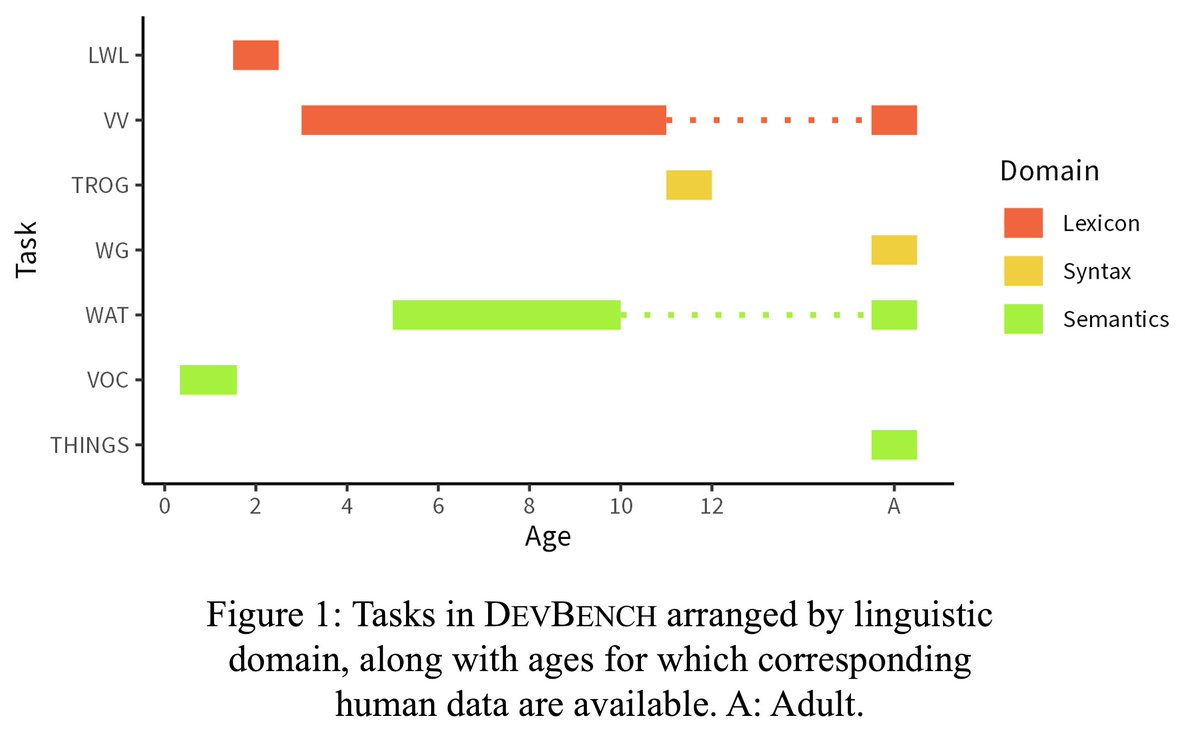
How do we measure similarities and differences between how kids and models learn language?
We introduce DevBench, a suite of multimodal developmental evaluations with corresponding human data from both children and adults. 🧵 1/
📝: https://t.co/B299kyjl1X
@babyLMchallenge@wkvong Overall, DevBench demonstrates that models vary in similarity to human responses over development, and areas of biggest divergence (e.g., trials with lexical ambiguities like “horn” or “net”) suggest entry points for further research towards the improvement of VLMs. 6/
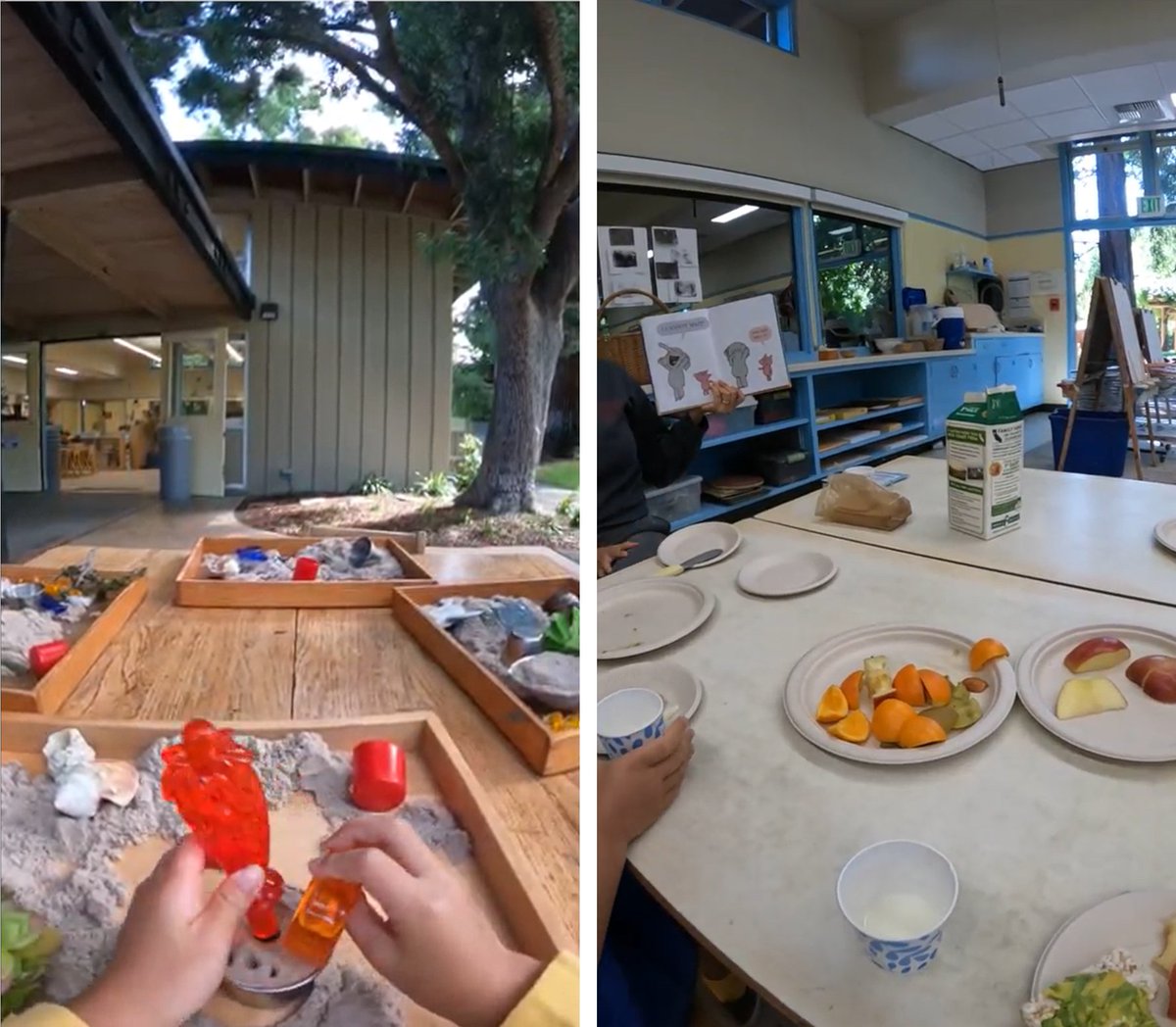
What do preschool learning experiences look like?
We examined variability in children’s language environments in a preschool classroom using a new dataset of naturalistic egocentric videos. 🧵
OSF: https://t.co/HBuohY8lfl
🔗: https://t.co/oFFBdGz2cU
@cogsci_soc#CogSci2024