DFlash 2 is here! Qwen3.8-27B at 70 tok/s on an M5 Max MacBook Pro.
⚡ Up to 4.6× the speed of autoregressive decoding, with the same output.
This is the next generation of DFlash, seeded at Z Lab and upgraded at Inco AI. Get one more accepted token on every pass, for free!
https://t.co/We0lwYPSBl
Claude Code 2.1.87 is now available.
1 CLI change
Highlights:
• Cowork Dispatch messages deliver reliably, ensuring dispatched communications reach recipients
Full details are in thread ↓
Introducing: PlayerZero
The world's first Engineering World Model that puts debugging, fixing, and testing your code on autopilot.
We've raised $20M from Foundation Capital, @matei_zaharia (Databricks), @pbailis (Workday), @rauchg (Vercel), @zoink (Figma), @drewhouston (Dropbox), and more
PlayerZero frees up 30% of your engineering bandwidth by:
1. Finding the root cause for bugs & incidents in minutes that engineering teams take days to identify.
2. Predicting in minutes, edge case issues that a 300-person QA team would take weeks to find.
------
Here's why this matters:
No one in your org has a complete picture of how your production software actually behaves.
Support sees tickets. SRE sees infra. Dev sees code. Each team builds their own fragmented view - and none of these systems talk to each other. When something breaks, everyone scrambles to stitch the picture together by hand.
PlayerZero connects all of it into a single context graph -
→ The Slack thread where your lead said "we went with X because Y fell apart in prod last time"
→ The PR review where an engineer explained the tradeoff
→ The lifetime history of your CI/CD pipeline, observability stack, incidents, and support tickets
So you can trace any problem to its root cause across every silo.
And it compounds. Every incident diagnosed teaches the model something new. The longer it runs, the deeper it understands - which code paths are high-risk, which configurations are fragile, which changes tend to break which customer flows.
So when you sit down to debug a live issue, you have your entire org's collective reasoning and production memory behind you - instantly.
------
Zuora, Georgia-Pacific, and Nylas have reduced resolution time by 90% and caught 95% of breaking changes and freeing an average of $30M in engineering bandwidth.
------
Our guarantee:
If we can't increase your engineering bandwidth by at least 20% within one week, we'll donate $10,000 to an open-source project of your choice.
Book a demo - https://t.co/dH1dulIwSS
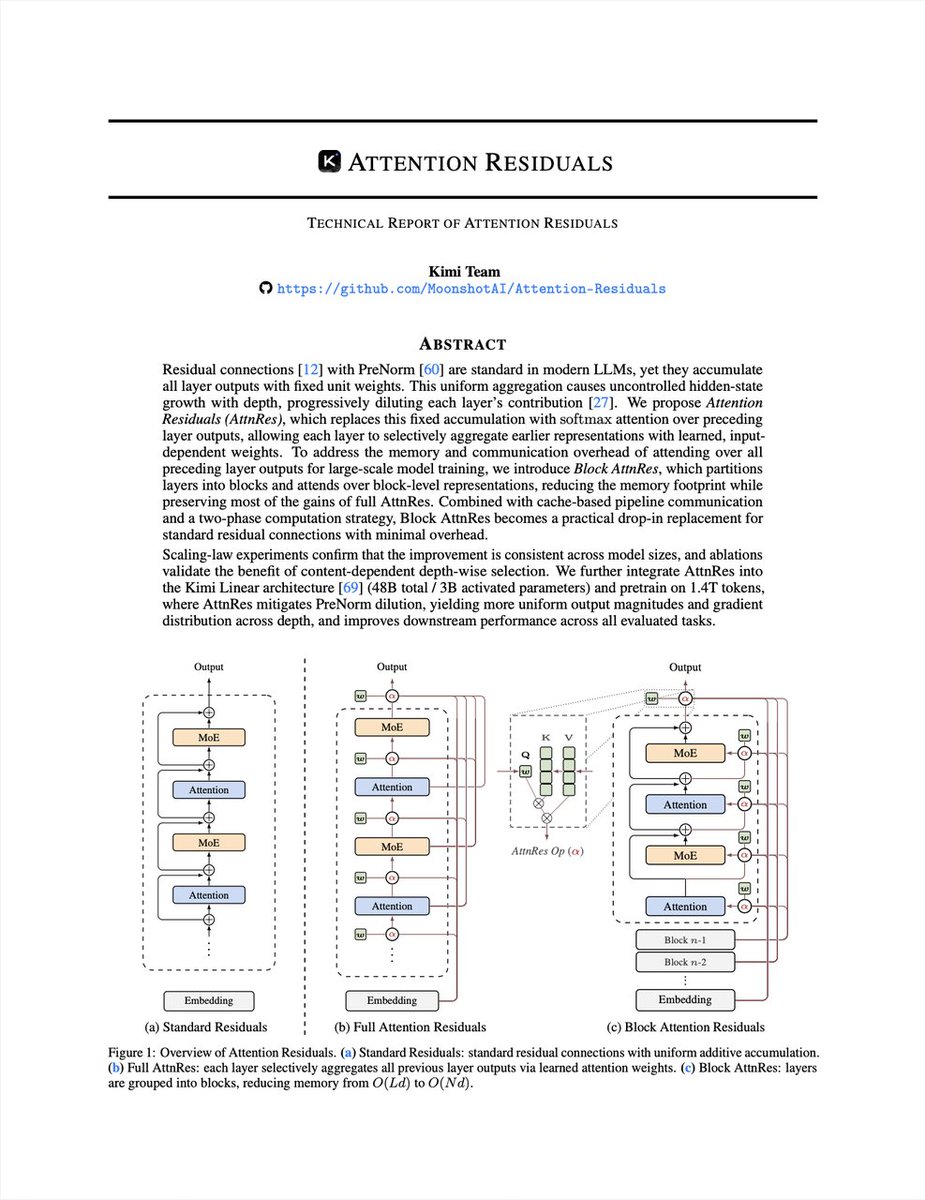
Introducing 𝑨𝒕𝒕𝒆𝒏𝒕𝒊𝒐𝒏 𝑹𝒆𝒔𝒊𝒅𝒖𝒂𝒍𝒔: Rethinking depth-wise aggregation.
Residual connections have long relied on fixed, uniform accumulation. Inspired by the duality of time and depth, we introduce Attention Residuals, replacing standard depth-wise recurrence with learned, input-dependent attention over preceding layers.
🔹 Enables networks to selectively retrieve past representations, naturally mitigating dilution and hidden-state growth.
🔹 Introduces Block AttnRes, partitioning layers into compressed blocks to make cross-layer attention practical at scale.
🔹 Serves as an efficient drop-in replacement, demonstrating a 1.25x compute advantage with negligible (<2%) inference latency overhead.
🔹 Validated on the Kimi Linear architecture (48B total, 3B activated parameters), delivering consistent downstream performance gains.
🔗Full report:
https://t.co/u3EHICG05h
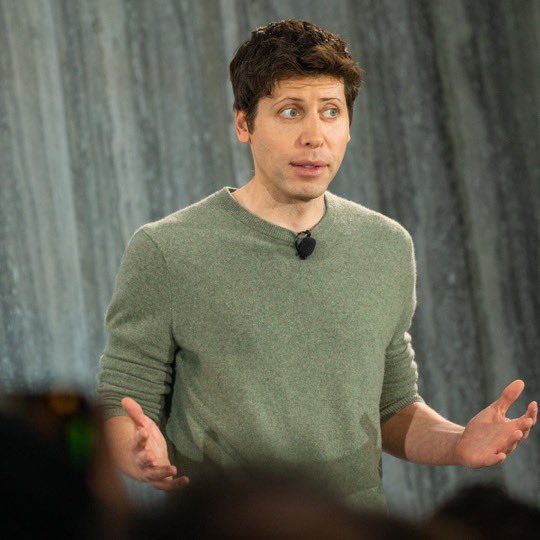
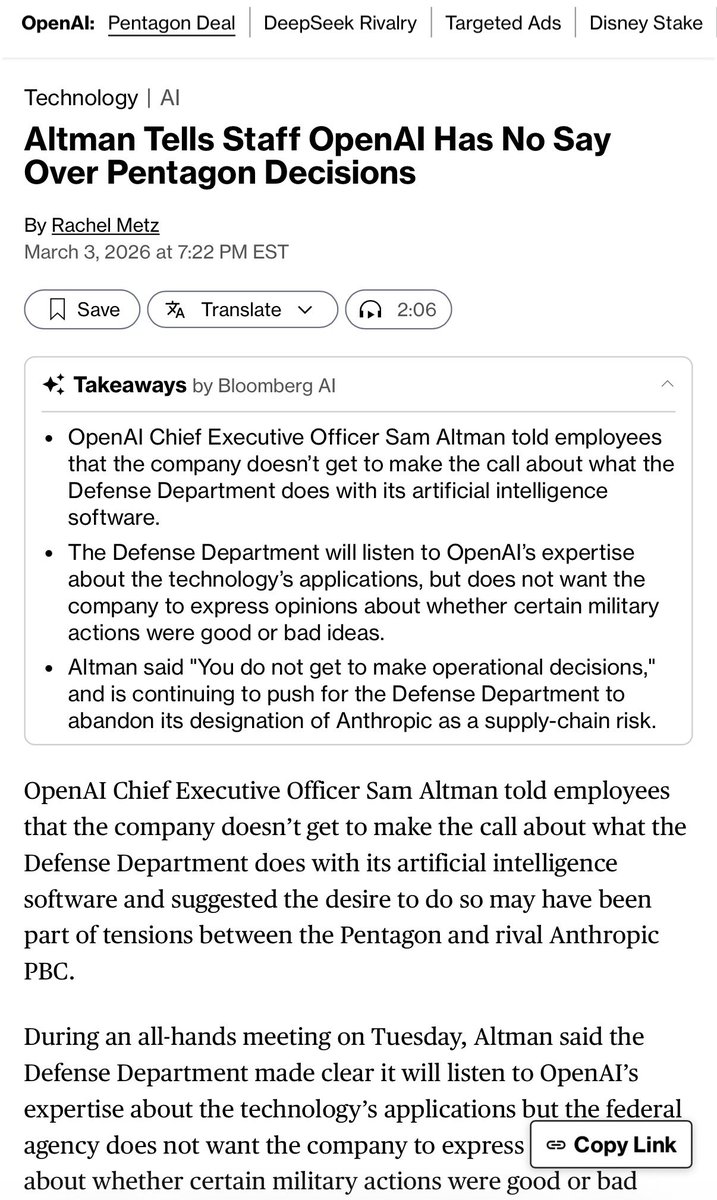
🚨 BREAKING: OPENAI CEO ALL-HANDS MEETING TRANSCRIPT LEAKED
>altman to his own employees:
>"you don't get to weigh in on that"
>regarding whether iran strikes or venezuela
>invasion were good or bad
>openai doesn't "get to make operational decisions" on how the DoD uses their AI
>hegseth makes all the calls
>also altman: admits the deal "looked opportunistic and sloppy"
>says they "shouldn't have rushed to get this out on friday"
>the friday in question: the same day anthropic got blacklisted
>so he KNOWS how this would reflect
>did it anyway
>admits it in front of the whole company
on xAI:
>"there will be at least one other actor,”
>“which I assume will be xAI"
>"which effectively will say 'We'll do whatever you want'"
>telling his employees xAI has no guardrails
>while also admitting openai's position
>"we have principles but they're negotiable"
LMFAO 💀
Context engineer evolved and still the trend with Agentic Ai system, but harness engineering is being used by practitioners and analysts to describe the next layer of complexity in building production AI systems. #ai#AIEngineers#AIEngineers#contextengineering
Teaching Ai (Thoughtful-Claude school) is way better than telling it what to do (rules-OpenAi school) , we saw that in desperate case when ChatGPT gave the deepest metro station while CLAUDE didn't
#ai#AIEngineering#AIEngineers#openai#Claude#AIRevolution
Introducing Claude Opus 4.6. Our smartest model got an upgrade.
Opus 4.6 plans more carefully, sustains agentic tasks for longer, operates reliably in massive codebases, and catches its own mistakes.
It’s also our first Opus-class model with 1M token context in beta.
so opus 4.6 just dropped and i'm hearing from multiple sources it was supposed to be sonnet 5. they ran the numbers and realized they could charge 5x more by slapping "opus" on it. same weights. same architecture. different price tag. the ai pricing model is about to get very interesting.
🦞 OpenClaw 2026.1.30
🐚 Shell completion
🆓 Kimi K2.5 + Kimi Coding: run your claw for free
🔐 MiniMax OAuth: one more model just a login away
📱 Telegram got a glow-up — 6 fixes from threading to HTML rendering
Plus a bunch of community-contributed fixes across LINE, BlueBubbles, routing, security & OAuth.
The lobster provides 😏 https://t.co/KyWuiuTzos
Integration beats innovation
In short, a good integration strategy makes innovative technology usable and valuable for business. That’s why, for successful adoption, integration often matters more than innovation alone. #integration#innovation#agenticai#ai
🚀 We introduce Soft Adaptive Policy Optimization (SAPO) — a smooth, stable, and highly effective RL method for training large language models.
Why SAPO?
🔹 Hard clipping is brittle — gradients vanish or explode
🔹 MoE models amplify variance, making training even more unstable
SAPO replaces hard boundaries with a continuous, temperature‑controlled gate that:
✨ Smooth trust‑region behavior → no abrupt gradient drop
✨ Sequence-level coherence → align sequence‑level behavior
✨ Token-level adaptivity → preserves useful gradients & boosts sample efficiency
✨ Asymmetric temperatures → significantly improved stability, esp. in MoE models
What does this mean in practice?
📈 Longer stable RL runs
📈 Higher Pass@1
📈 Stronger performance on Qwen3‑VL across math, coding & multimodal tasks
SAPO offers a more scalable and reliable foundation for RL-tuning large language & multimodal models.
📄 Paper: https://t.co/1xN27Z8Wgm
📚 Blog: https://t.co/o4gZEv71v2