Introducing: PlayerZero
The world's first Engineering World Model that puts debugging, fixing, and testing your code on autopilot.
We've raised $20M from Foundation Capital, @matei_zaharia (Databricks), @pbailis (Workday), @rauchg (Vercel), @zoink (Figma), @drewhouston (Dropbox), and more
PlayerZero frees up 30% of your engineering bandwidth by:
1. Finding the root cause for bugs & incidents in minutes that engineering teams take days to identify.
2. Predicting in minutes, edge case issues that a 300-person QA team would take weeks to find.
------
Here's why this matters:
No one in your org has a complete picture of how your production software actually behaves.
Support sees tickets. SRE sees infra. Dev sees code. Each team builds their own fragmented view - and none of these systems talk to each other. When something breaks, everyone scrambles to stitch the picture together by hand.
PlayerZero connects all of it into a single context graph -
→ The Slack thread where your lead said "we went with X because Y fell apart in prod last time"
→ The PR review where an engineer explained the tradeoff
→ The lifetime history of your CI/CD pipeline, observability stack, incidents, and support tickets
So you can trace any problem to its root cause across every silo.
And it compounds. Every incident diagnosed teaches the model something new. The longer it runs, the deeper it understands - which code paths are high-risk, which configurations are fragile, which changes tend to break which customer flows.
So when you sit down to debug a live issue, you have your entire org's collective reasoning and production memory behind you - instantly.
------
Zuora, Georgia-Pacific, and Nylas have reduced resolution time by 90% and caught 95% of breaking changes and freeing an average of $30M in engineering bandwidth.
------
Our guarantee:
If we can't increase your engineering bandwidth by at least 20% within one week, we'll donate $10,000 to an open-source project of your choice.
Book a demo - https://t.co/dH1dulIwSS
Today on The Information’s TITV:
-@pbailis, CTO at Workday, on their $1.1 billion acquisition of AI agent company Sana
-@steph_palazzolo on OpenAI and Anthropic’s new AI “co-workers”
-@tyhunnny, CEO of Try Your Best, and @davemorin on the state of consumer crypto
-@Katie_Roof and Industry Ventures CEO @HansSwildens on the IPO lifeline for venture funds
📺 Tune in at 10 am PT / 1 pm ET on https://t.co/w3Nx3Gxd5b
Today marks a defining moment for Sana:
We’ve entered into a definitive agreement to be acquired by Workday.
Sana will continue to build Sana Agents and Sana Learn—only now, at an even faster pace and greater scale. I’ll continue to lead our incredible team.
Over the past months, we’ve had the privilege of getting to know Workday’s leadership. They are brilliant, kind, and hungry to win. I’m excited to build alongside Peter Bailis, Aneel Bhusri, Carl Eschenbach, Gerrit Kazmaier, and their nearly 20,000 Workmates.
Sana has always been about two things: creating a place where people can do their life’s work, and building products that accelerate how the world accesses knowledge. This partnership lets us stay true to that vision while massively expanding our impact.
When I founded Sana in 2016, I had just read Organizing Genius and early AI breakthroughs like AlphaGo had recently been released. I set out to build an AI research lab to change how people access knowledge. Joined by a group of pragmatic dreamers, we built a team, a culture, and tools that have reimagined how over a million people learn and work.
Thank you to everyone who believed in us—our customers, investors, and most importantly, Sanians.
This is a win for Europe, for beauty, for idealism, and for caring more.
Now, a new chapter begins. The infinite game continues. Let’s go make history.
Workday is acquiring @sanalabs, an AI-native platform for the future of enterprise knowledge.
@joelhellermark and the Sana team have built a way to find answers faster, automate the boring stuff, and make content that looks beautiful.
This is a big step forward for the Workday UX you know and love, and the start of a new front door for work.
https://t.co/mTUcoevMYP
We're excited to share that Flowise has been acquired by @Workday!
Now, together with Workday, our vision to empower everyone to build powerful AI agents is stronger than ever.
🧵
@borgeaud_s@jalayrac@jacobaustin132 The slides are available publicly now. See https://t.co/85oBvo7MDH
A common refrain is, "how can we contribute to pretraining research, without tons of resources?"
Also addressed! See link.
1 - Kernel design,tooling
2 - LLM-in-the-loop search
3 - Stat frameworks
🧵 Excited to finally share a bit about what we've been up to in AI+Data at Google Data and Analytics.
First, our SQL and Python code assist for Gemini in BigQuery is now used by thousands of customers, with an acceptance rate of over 60%.
Usage grew 350% in the past 9 months.
The resulting experiences are pretty amazing:
Code assist is super powerful.
Our Conversational Analytics product is dynamic and responsive, and just got better with the addition of a code interpreter.
This unlocks Gemini on cloud data, at scale.
People are often surprised when they see how we use Campsite to build Campsite. In the spirit of “working with the garage door up” I want to share exactly how we’ve set up our spaces to keep conversations organized and easy to find.
I've also linked to a bunch of live internal conversations in the thread below to show you how posts feel as a default communication format 👀
https://t.co/cVxJYTsyvk
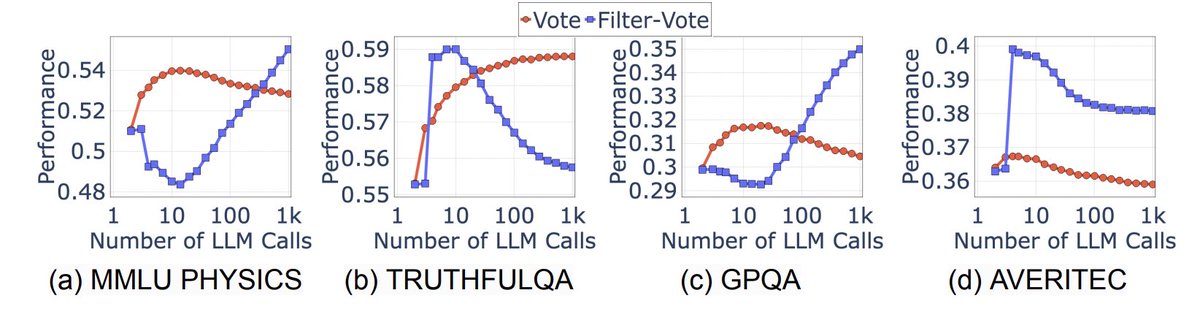
In this article, I and co-authors @BorisHanin, @ChenLingjiao, @pbailis, Ion Stoica, and @matei_zaharia explore one of the most powerful ideas we have yet discovered to inform compound AI systems design: verifiability.
In common situations where practitioners are willing to expend a higher budget to go beyond the capabilities frontier accessible to today's state-of-the-art (SOTA) monolithic models, they may be willing to invoke many model inference calls, composing them into “networks of networks” (NoNs) of sorts.
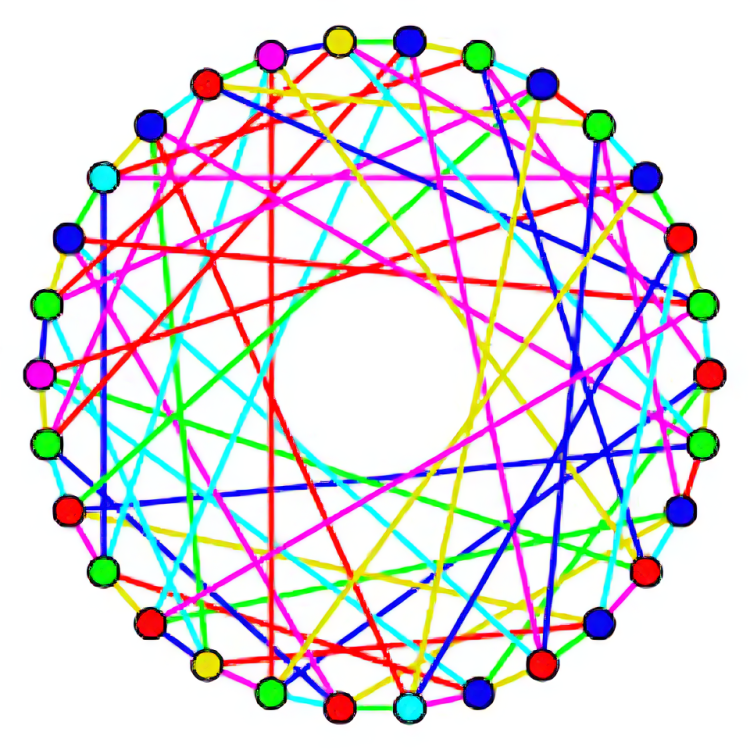
The question then becomes: what principles should guide the composition of these NoNs? Inspired by TCS and PCP notions that often verification is easier than generation (as holds for classical problems like graph coloring), we construct “best-of-K” or “judge-based” Compound AI Systems, which explicitly separate “generator” modules from “verifier” modules. We posit that these systems are particularly helpful for “reasoning-based” or “procedural-knowledge” oriented tasks, which are often more verifiable, less so for factual or declarative-knowledge settings (and we can use these systems partly to help characterize tasks, including subjects in the MMLU, along these lines). Very neatly, it turns out we can analytically characterize when these systems can confer a gain and predict the gain’s extent.
We hope people will extend these ideas to tackle some of the reasoning-oriented application frontiers that are a bit beyond the range of today’s SOTA models.
Arxiv: https://t.co/vV3A1ufShC
@ddkang@matei_zaharia@tatsu_hashimoto And congratulations to fellow Future Data alum @jialin_ding for being recognized as a runner-up for his thesis on "Instance-Optimized Database Indexes and Storage Layouts"!
Congratulations to @ddkang, recipient of this year's ACM SIGMOD Jim Gray Doctoral Dissertation Award for his thesis (co-advised with @matei_zaharia and @tatsu_hashimoto ) on "Efficient and accurate systems for querying unstructured data"! https://t.co/9aqXY7fvEm