I became an Amazon Tech VP because I made decisions that turned into money. Coding skills, a "hard skill" did not matter despite the "tech" in my title. All your hard skills will be irrelevant soon, so learn from my experience:
Hard truth: You’ll never feel ready to do the thing that matters most. Readiness is a byproduct of action, not a prerequisite for it. Start when it feels uncomfortable. You may just find you’ve been ready all along.
@BadCapitalVC this orchestration layer which is the owner right now as you rightly pointed out, who performs a lot of follow ups, and managing workers.
Why would workers take instructions from anything digital? Until disguised as a human behind texts.
I feel accountability would still lack.
How it started: "AI vibe coding tools will replace devs!"
How it's going:
"Do this:
- Provide it w a detailed spec
- Break down tasks to small ones
- Separate dev and prod envs
- Do NOT give access to the agent to prod
- Never trust the agent; verify every step it takes
- ...
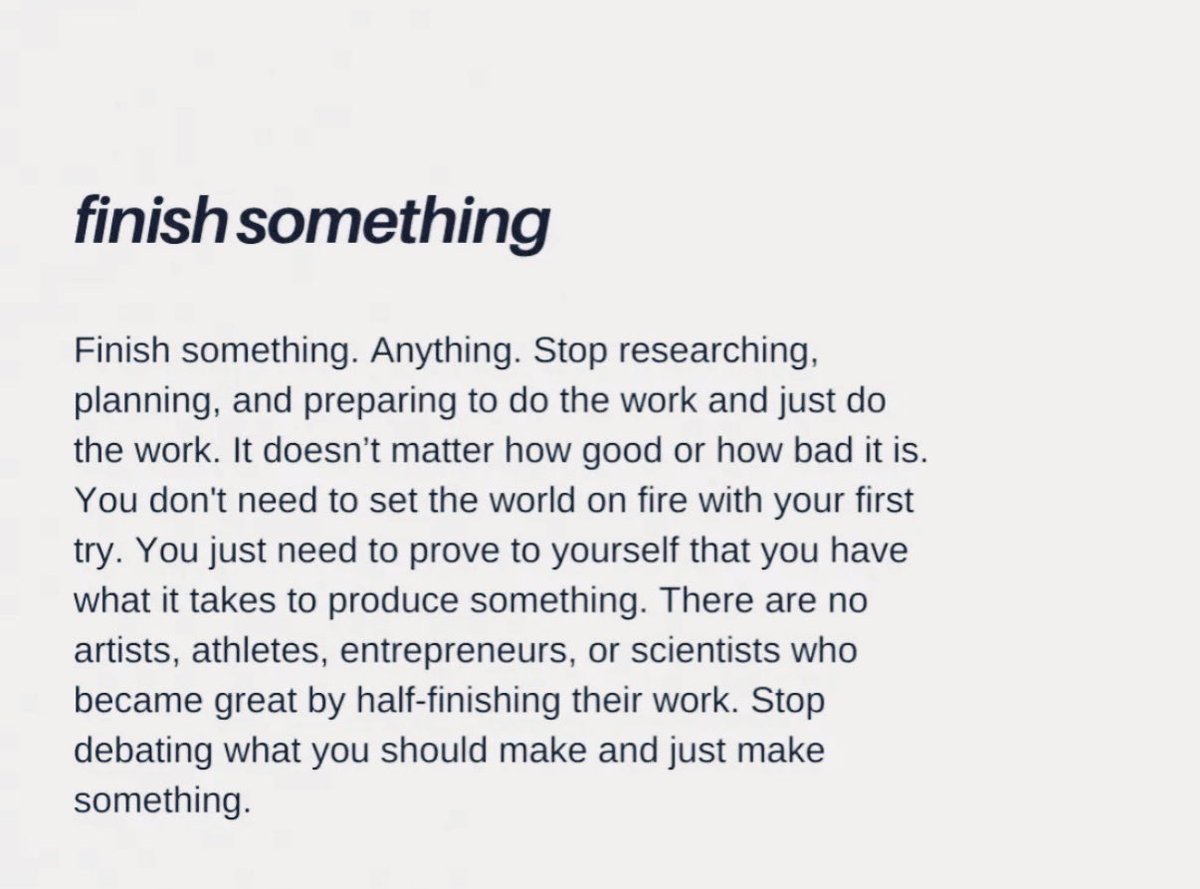
Major career cheat code: Be the person who can figure it out. You’ll be handed tasks you have no idea how to complete. There's nothing more valuable than someone who can just figure it out. Do some work. Ask key questions. Get it done. If you do that, people will fight over you.
@Rahul_J_Mathur On point 🎯
engineers outsourcing their intelligence to AI for software design decisions is even worse.
The core problem solving mindset just shifts to throwing prompts at LLMs with very less understanding about the actual trade offs.
I love reading Neil's personal finance posts on @livemint, which often feature brilliant graphics.
It was a privilege to share what we're building at @tortoisepro.
Interrogating the LLMs upto ever nity gritty is my new way of learning any concept.
setting my understanding level according to which examples are tailored or analogies are made up just makes learning more foundational. This wasn't possible pre-genAI era, at a single place.
Excited to share that in just 3 months of launching with our first client, we've already shipped devices worth Rs 4.5 Crores and saved Rs 1.1 Crores for employees at our client organizations.
All our clients are publicly listed large enterprises that prioritize their employees.
If you are a Benefits Leader at an organization with 1,000+ employees seeking a zero-cost benefit for your team in the new year, please DM.
Tortoise is a no-brainer for any pro-employee organization.
Tortoise is hiring a Tech Lead to head one of the two existing pods for employee benefits infrastructure (Fintech/ UPI). Please fill in the linked form.
Salary Base - 60-70 LPA
Salary ESOPS - 20-40 L
Location - Gurgaon
WFO - 5 days a week
Joining - Preferably within 30 days or less
Experience - 5-7 years
Exceptional engineers with ownership capabilities will find this opportunity fulfilling and rewarding.
Form below.
It is interesting to see the various ways people approach the concept of "growth", especially since I have to discuss this topic as a manager, and also when mentoring people
People always want to "grow", but aren't often aware whether how to exactly do that
> "write some shitty code, then rewrite it, get to realise why it was shitty first"
On spot 💯
I remember writing some if-else code in class constructor, just to realise later that actually factory pattern shall be implemented.
**Structuring Code Neatly**
Rather than mugging up a bunch of theory about 99 types of design patterns and do a bunch of “LLD Courses” it is better to start off with tightly scoped little command line programs, play with the code, implement the same thing 2-3 times and start seeing the mess in your code and looking at ways it can be more “neatly” arranged so you don’t write the same lines multiple times and extending/changing the logic becomes “easy”.
Here’s some examples -
- parsing URLs into scheme, host, port,path,query etc (read the RFC that defines the URL standards)
- create a command line tic tac toe game, then try to write the “bot” that can play against a human
- create a command line “PC builder” - you need to provide a mobo, CPU, GPU, RAM,HDD to build, CPU & mobo socket must match, RAM & CPU speed must match etc
build them twice, or even better thrice (each time starting from scratch)
Makes you understand how rewrites happen
Gives you perspective when building again that you can pre-empt some issues you ran into first time
Once you’ve done this, then parallely reading up a bit of theory doesn’t hurt. Knowing the formal names of Builder pattern or using a visitor class is good. But first write some shitty code, then rewrite it, get to realise why it was shitty first, then learn all these design pattern “labels”