ERITREA: ANCIENT AND NEW
A Thursday Reflection
#Eritrea is mourning the passing of His Grace Abune Lucas, Administrator of the Office of the Patriarch, Member of the Holy Synod of the Eritrean Orthodox Tewahdo Church and Archbishop of the Southern Region, Adi-Keih. His passing is a moment of sorrow for the faithful and the wider Eritrean community.
It also draws attention to the enduring place of the Church, its spiritual institutions and their custodians in our country's history. Debre #Libanos, where he was laid to rest, is not simply a burial place. Like Debre Bizen, Debre Sima and other ancient monasteries across Eritrea, it forms part of a much older inheritance of faith, learning, memory and cultural continuity.
There is something profoundly revealing about standing before an ancient monastery in #Eritrea. Perched on a mountain, overlooking valleys and landscapes that have witnessed centuries of human history, these institutions seem almost indifferent to the passage of time. Their stone walls, manuscripts, traditions and accumulated memories speak of generations long gone, yet remain very much present.
I was fortunate enough to visit Debre Libanos some years ago. I remember the mummies discovered there and the arrangements governing access to the main building, where women were not permitted. I was content to remain with the women in the smaller church midway up the ascent, taking in the beautiful scenery and reflecting on the history surrounding us. It is an experience that has stayed with me.
Debre #Bizen, traditionally dated to the fourteenth century, became an important centre of monastic scholarship and manuscript preservation. Debre Libanos, associated with the early Christian monastic tradition of Semenawi Bahri, is linked to an older religious heritage.
Debre #Sima and other ecclesiastical institutions form part of a landscape in which religious, cultural and intellectual life developed over many centuries. Their significance lies not only in their age, but in their endurance. Through changing political authorities, successive administrations, wars and invasions, they have preserved an inheritance that cannot be confined to the chronology of any modern state.
#Eritrea's historical depth is also reflected in its archaeological landscapes, ancient settlements, languages, diverse communities, maritime connections and cultural traditions. Archaeological discoveries at Sembel, in the greater #Asmara area, reveal settled communities dating back to the first millennium BCE.
Further evidence from Adulis, the ancient Red Sea port city where recent excavations have uncovered even earlier traces of human activity, illustrates how these lands were connected to wider African, Arabian and Mediterranean worlds through centuries of trade and cultural exchange. Eritrea's history is not the story of one civilization, religion, community or period. It is a tapestry woven from diverse peoples, cultures, beliefs and experiences.
And then there is #Asmara, Eritrea's beautiful capital, where history, culture and architecture come together in a city unlike any other. Anyone who has walked its streets cannot fail to be struck by its magnificent architecture: elegant façades, imposing public buildings, broad avenues, cinemas, theatres, churches, mosques and carefully planned urban spaces. Different periods, influences and styles have come together to create an extraordinary architectural landscape.
In 2017, UNESCO inscribed Asmara on the World Heritage List as Asmara: A Modernist African City, recognizing its exceptional modernist architecture and urban planning, particularly from the Italian colonial period of the 1930s and 1940s. UNESCO's recognition did not create Asmara's heritage; it acknowledged an exceptional legacy that had endured long before its inscription.
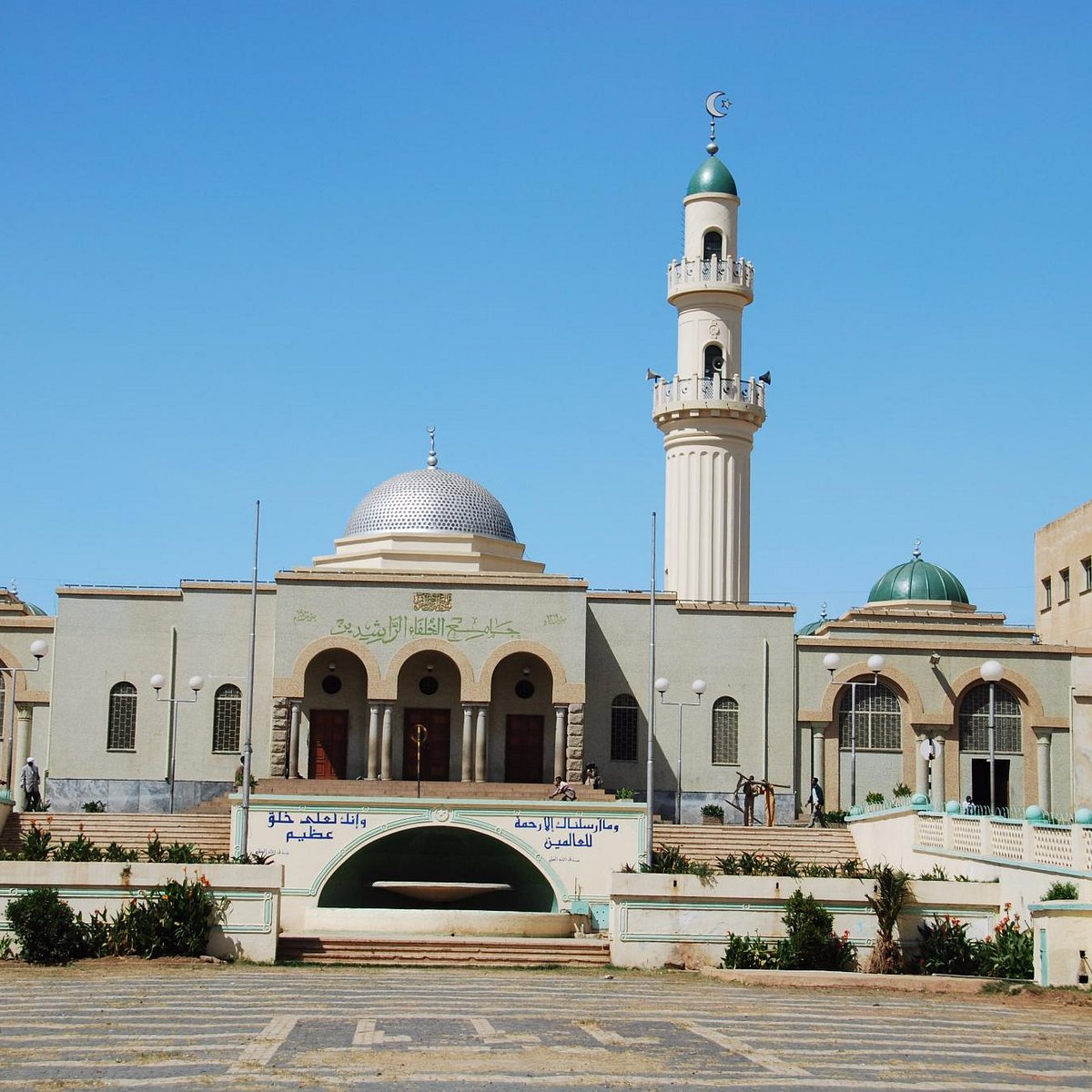
The Cathedral at the centre of Asmara, completed in 1922, is now more than a century old. Its imposing bell tower and Lombard Romanesque character have become defining features of the city's skyline. The Church of Our Lady of the Rosary, the Al Khulafa Al Rashiudin Mosque, the former Fiat Tagliero building, Cinema Impero and countless other structures contribute to Asmara's distinctive architectural identity. But there is something important to remember when admiring these buildings… the buildings predate Eritrea's independence. The people of Asmara and their history predate them.
Before modernist architecture transformed the city, there were already communities, families, neighborhoods, markets, places of worship and established social and cultural life. Asmara was not an empty landscape upon which an architectural experiment was imposed. It was an inhabited place with a history of its own.
The architecture we admire reflects a particular period in the city's development; it does not mark the beginning of Asmara or the history of its people. Colonial architecture can be preserved and appreciated for its historical and artistic value without confusing the legacy of colonial construction with the origins of the city and its inhabitants.
The same distinction applies beyond Asmara. Successive foreign powers that occupied or administered Eritrea constructed buildings, roads, fortifications, military installations, administrative centres and other infrastructure across the country. Some remain visible today and form part of Eritrea's built heritage.
They tell us about the ambitions and priorities of those who built them, but their presence does not make Eritrean history begin with their arrival, nor does it make the history of the country the history of its occupiers. An occupying power may leave its mark on the landscape; it does not thereby become the author of the land's history.
And then there is #Assab. Today, Assab is discussed in terms of strategic geography, maritime access and the economic requirements of landlocked #Ethiopia. Yet, long before it became the subject of contemporary geopolitical calculations or the site of a modern deep-water port, people lived in this region, sustained communities and livelihoods, and maintained their own social and political institutions.
#Assab was not an empty coastline awaiting European discovery. It was home to established Afar communities, including the Ankala, whose old settlement at Assab Saghir and traditional presence across the wider Dankalia coast are documented in historical sources. These communities were part of the wider Afar world, with established connections across the Red Sea and surrounding territories.
#Assab was #Eritrean under the 1952 federal arrangement. Its subsequent annexation by #Ethiopia, following the unilateral termination of the federation in November 1962, must be understood in that historical context. Annexation did not erase the identity of the region or the history of its inhabitants. Assab's strategic importance cannot be separated from its history, and its history cannot be reduced to the interests of those who may wish to use it.
#Assab's history begins with its people, not its port. Its strategic importance, infrastructure development and commercial potential do not alter its historical identity or its place within #Eritrea. A port can be constructed, a harbor modernized and infrastructure developed to transform a town's commercial importance. None of these developments creates the historical existence of the people who live there or establishes sovereignty over the surrounding territory. Building a port, a road or other infrastructure does not confer sovereignty over the land on which it stands. Construction is not a deed to sovereignty.
Eritrea is ancient and new at the same time. Ancient in its peoples, civilizations, cultures and historical roots; new as a modern sovereign state, born of a long struggle for self-determination and internationally recognized in 1993. Independence did not begin the history of the Eritrean people; it opened a new chapter in it. Eritreans did not come into existence with the end of colonial rule, the termination of the federation, liberation in 1991 or the 1993 referendum. These were milestones in the political history of the modern state, not the origins of the people who made it possible.
Long before modern statehood, our forefathers built communities, cultivated the land, worshipped, traded and crossed the seas. The modern Eritrean state emerged through a turbulent history of Italian colonialism, British administration, federation with Ethiopia, its unilateral termination and the annexation of Eritrea in 1962.
The liberation struggle was the assertion of the people's right to determine their own future. 1993 marked the emergence of #Eritrea as an internationally recognized sovereign state, not the creation of the #Eritrean people or their historical identity.
#Eritrean identity is not a recent discovery, our historical presence is not a diplomatic invention, and our sovereignty is not a concession granted by anyone else. Our monasteries, archaeological sites, historic cities and coastal communities bear witness to the depth and diversity of our historical experience. They remind us that while Eritrea is a young sovereign state, the society and people it represents have much older roots.
#Eritreans did not fight for independence to become a people. They fought for independence because they were a people, with a history, an identity and the right to determine their own future. That history continues through their independence and theirsovereign statehood…
#ThrowbackThursday #ThursdayThoughts #Thursdaywisdom
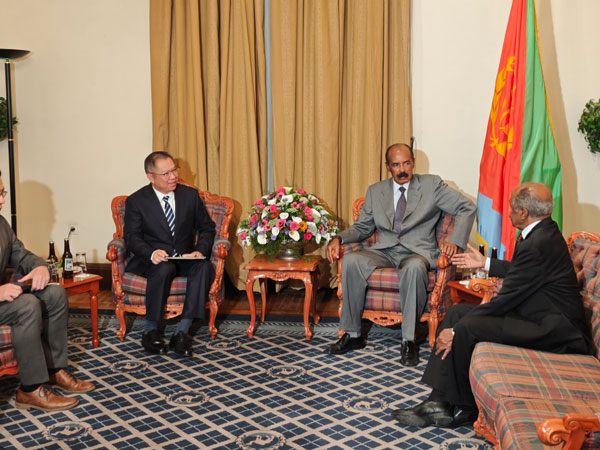
Amb. Hu Changchun, FM’s Special Envoy for the Horn of Africa, visited Eritrea on Nov 5-6 and met with President Isaias Afwerki and other senior officials. Amb Hu introduced the four principles put forward by President Xi Jinping for the constructive involvement of all parties in resolving hotspot issues in Africa, and expressed China's willingness to work with Eritrea to jointly implement the important consensus reached by the two heads of state and the outcomes of the Beijing Summit of the Forum on China-Africa Cooperation, consolidate political mutual trust, strengthen solidarity and cooperation, promote greater development of bilateral relations, and actively contribute to safeguarding regional peace and prosperity. 🇨🇳🇪🇷#HornOfAfrica #FOCAC
.@AbiyAhmedAli thinks by repeating lies about #Eritrea & its sovereignty, he can normalize his expansionist war aims & grab our sovereign sea coast & ports. Eritrea will not normalize his psychosis & won't rest until he &his ethnofascist regime are totally destroyed in #Ethiopia.
What does development progress look like in people's lives?
From food security and flood preparedness to sustainable production, @nahlav Jutta Hinkkanen & @MohamedZarkani share stories of work they’re proud of with national partners — recognised in 2026 UN Results Report Awards.
#Condolences: Funeral Services for His Reverend Abune Lucas, Administrator of the Office of the Patriarch, Member of the Holy Synod of the Orthodox Tewahdo Church, and, Archbishop of the Southern Region (Adi-Kayeh Section), held at Debre Libanos Monastery in Ham yesterday.
The Funeral Services were preceded by extended prayers at Asmara's St. Mary Church in the early morning hours on Wednesday.
Book of Condolences also signed by senior Government and PFDJ Officials as well as members of the Diplomatic Corps.
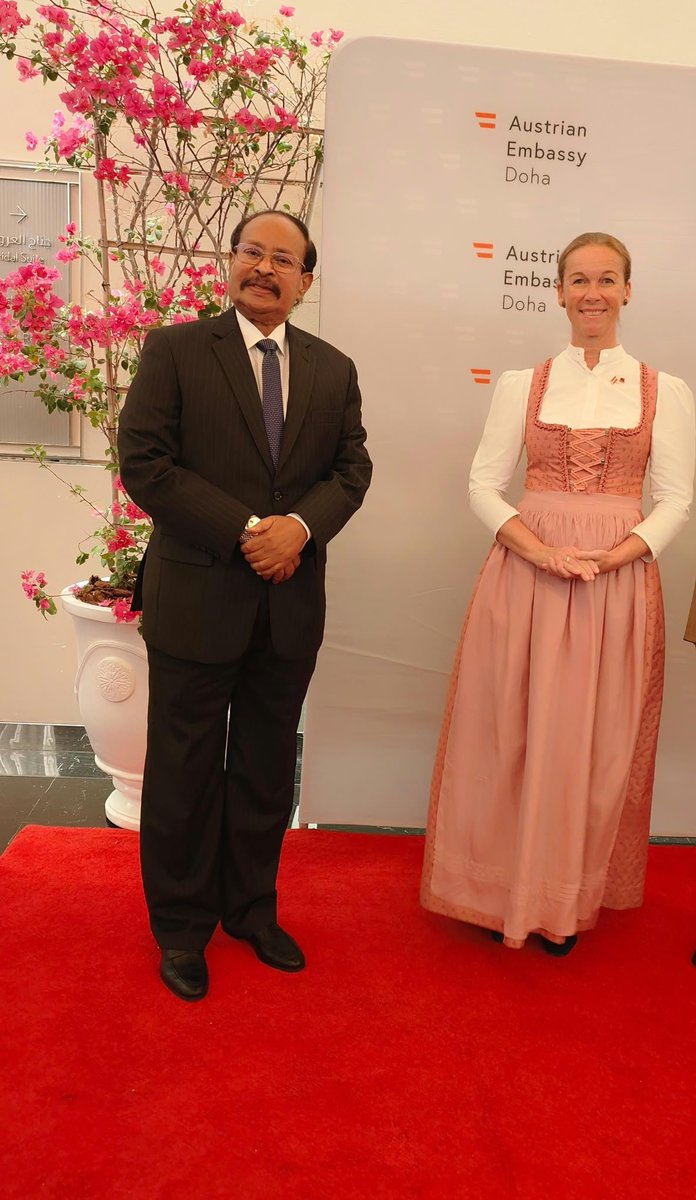
شارك سعادة السفير علي إبراهيم أحمد، سفير دولة إريتريا لدى دولة قطر وعميد السلك الدبلوماسي، في احتفال سفارة النمسا لدى قطر بعيدها الوطني، بدعوة من سعادة السفيرة إريكا بيرنهارد، وبحضور عدد من المسؤولين وأعضاء السلك الدبلوماسي، تأكيدًا على تعزيز العلاقات الودية والتعاون بين الدول.
📌 EXCLUSIVE | Strategic Russia-Africa partnership requires overcoming adversarial blocks: Eritrean president
The new action plan must go beyond minor adjustments, Isaias Afwerki told Sputnik Africa on the sidelines of the Russia-Africa Summit.
👉 He emphasized the strategic seriousness of the partnership for both African nations and Russia.
President Isaias Afwerki arrives in Moscow
President Isaias Afwerki arrived in Moscow this morning to participate in the Third Russia-Africa Summit, which will be held from 28 to 29 October.
The Summit will focus on cooperation in the areas of the economy, investment, trade, energy, food security, agriculture and security.
On the sidelines of the Summit, President Isaias will also meet with President Vladimir Putin to discuss the strengthening of bilateral ties and other matters of mutual importance.
The Presidential delegation includes Mr. Osman Saleh, Minister of Foreign Affairs.
The first Russia-Africa Summit was held in October 2019 in Sochi, while the second Summit was held in Saint Petersburg in July 2023 under the theme “For Peace, Security and Development.”
Even if #Ethiopia acquires 12 Su-35 4++ generation fighters and S-400 air-defense batteries, those weapons will neither resolve its internal conflicts nor give it a just cause for war against its neighbors.
Everyone knows that invading other countries takes more than military hardware. #Eritrean-Ethiopian history, ongoing conflicts in the Middle East, and numerous other conflicts remind us that sophisticated weapons alone cannot guarantee victory. Courage, determination, and the conviction that one is defending and fighting for a just cause remain essential.
What just cause does Abiy have for claiming #Eritrea’s and his other neighbors sovereign coastline? None. Ethiopia’s desire for access to the sea gives it no right to seize another country’s territory. Hubris cannot turn ambition into entitlement.
Nor would these weapons make a confrontation with #Egypt, #SaudiArabia, #Somalia, #Sudan, or #Eritrea any less reckless. Ethiopia’s security and prosperity depend on peaceful relations with its neighbors.
An arms package costing an estimated $4 billion would be a tragic misuse of resources while millions of Ethiopians need food. That money should feed families, rebuild communities, and give young people a future.
#Ethiopians: your neighbors are not your enemies. This is not your war. Refuse to be drawn into @AbiyAhmedAli’s reckless adventure. Choose peace, dignity, and your children’s future.
To the peace-loving people of #Oromia in particular: Abiy claims to act in your name. Make your voices heard: “Not in our name.”
@KSAmofaEN@EgyptForeignMin@AlsisiOfficial@hawelti@EmbassyEritrea@HassanSMohamud@antonioguterres@ymahmoudali@Bankole_Adeoye@vonderleyen
AFRICAN'S PRIDE AN EXAMPLARY & ONE OF THE TRULY REVOLUTIONARY LEADERS WITH UNSHAKABKE FAITH WHO STANDS TALL WITH TRUTH AND JUST STRUGGLE TO BUILD HIS NATION 🇪🇷 LIKE NO OTHER AGAINST UNLIMITED UNPRESIDENTED ODDS, BY FAR Z 1&ONLY 💯FUL*INDEPENDENT & SELF RELIANT NATION IN MANY LEVELS
📌 EXCLUSIVE | Russia "should be allowed" to contribute to changing "reality on the ground": Eritrean president
"All the attempts of containing Russia, weakening Russia, sanctioning Russia, excluding Russia are becoming an obstacle," Isaias Afwerki told Sputnik Africa.
While #Ethiopia & #Somalia face the cost of dependence- debt, donors,& foreign patrons eroding their sovereignty -#Eritrea stands apart, its stability the result of a path chosen decades ago: self-reliance, cohesion,& refusing to outsource statehood.
👇👉
https://t.co/lDx4nw8VBG
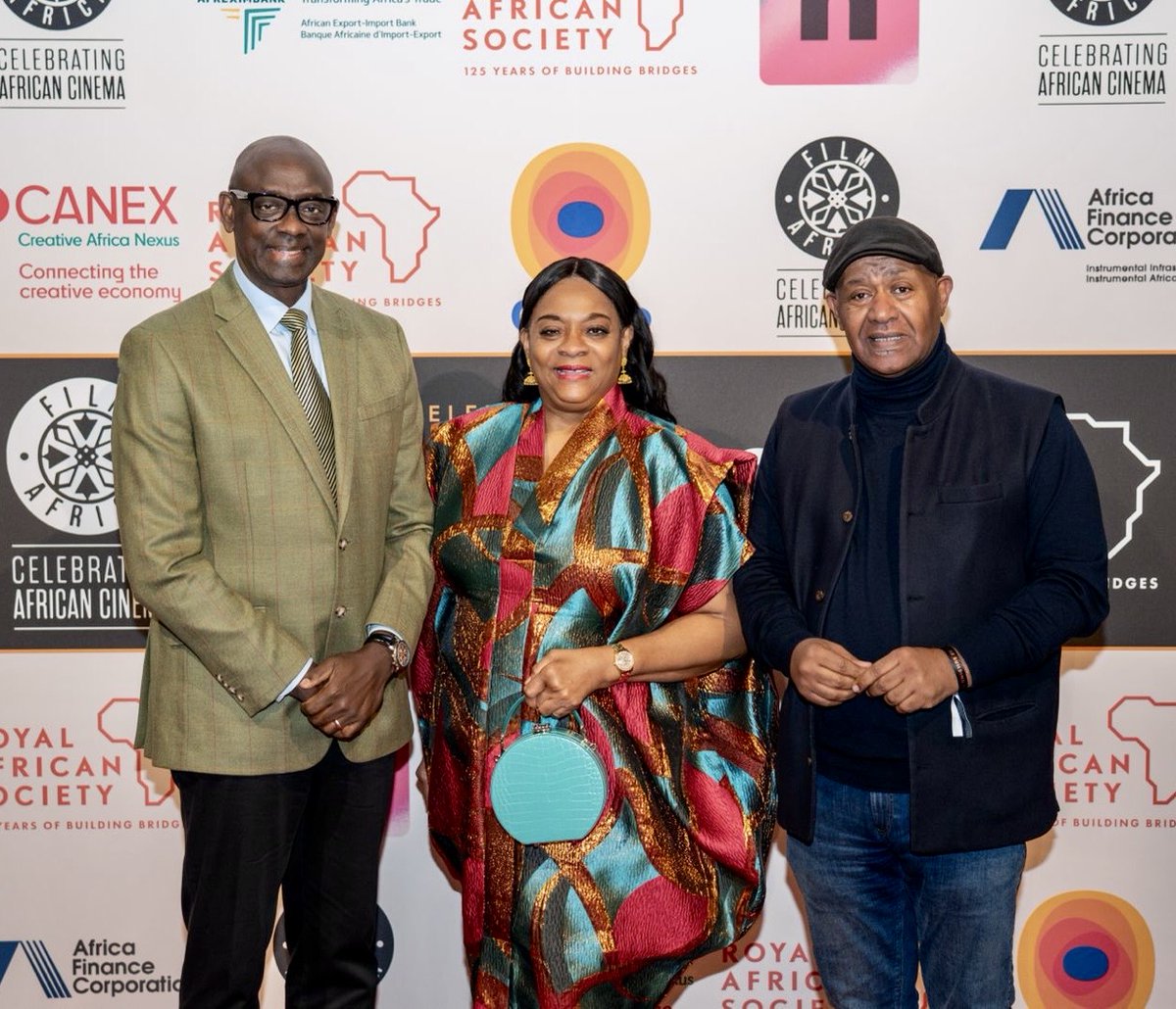
Arnuma Oteh, Chair of the Royal African Society, stands out as a passionate champion of African culture in the UK, inspiring others with her remarkable leadership and dedication! It was a pleasure to see her at the premiere of an African film alongside H.E. Johnston Busingye, Rwanda's High Commissioner to the United Kingdom. We watched *Ben'Imana*, a critically acclaimed drama directed by Marie-Clémentine Dusabejambo. This film made history as the first by a Rwandan director to be selected for the Cannes Film Festival's Official Selection and won the prestigious Caméra d'Or for Best Debut Feature at the 2026 festival. In October 2026, it reached another milestone, becoming Rwanda's first-ever official entry for Best International Feature Film at the Academy Awards. #FilmAfrica2026 #AfricanCinema #DiscoverEritrea #RoyalAfricanSociety #EmbassyMedia
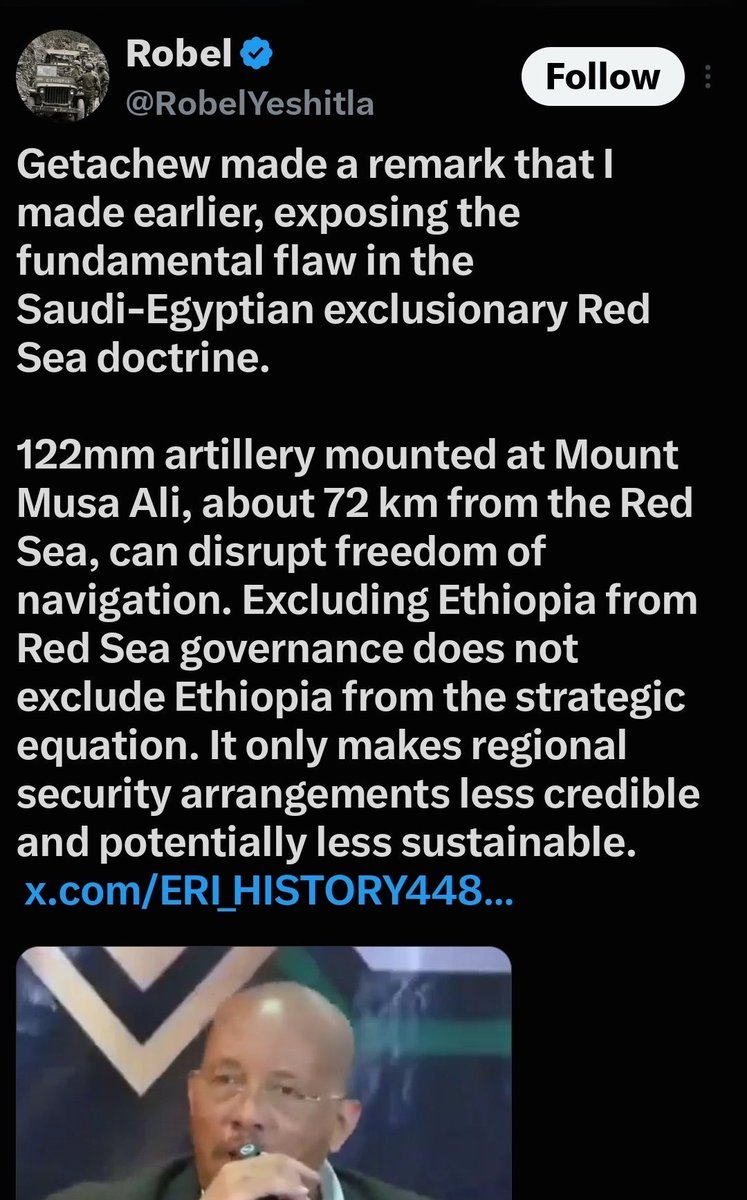
Again, we have consistently appealed to the international community that, the government in #Ethiopia is the sole reason of chaos in East Africa. In his recent vulgar speech, special adviser to @AbiyAhmedAli Mr @reda_getachew literally threatened “Bab Elmendeb” shipping line with an artillery stationed from Ethiopian border. @EU_Commission diplomat & @antonioguterres representative to Sudan Mr @Haavisto sat there & never corrected the vulgar language coming from Mr. Getachow.
If the international community failed to understand the consequences of such vulgar & literally “terrorist style speech’s”, then, we are playing with lives of millions of innocent lives.
@StateDept@SecRubio@WhiteHouse@EUSR_Weber@MFA_China@mfa_russia
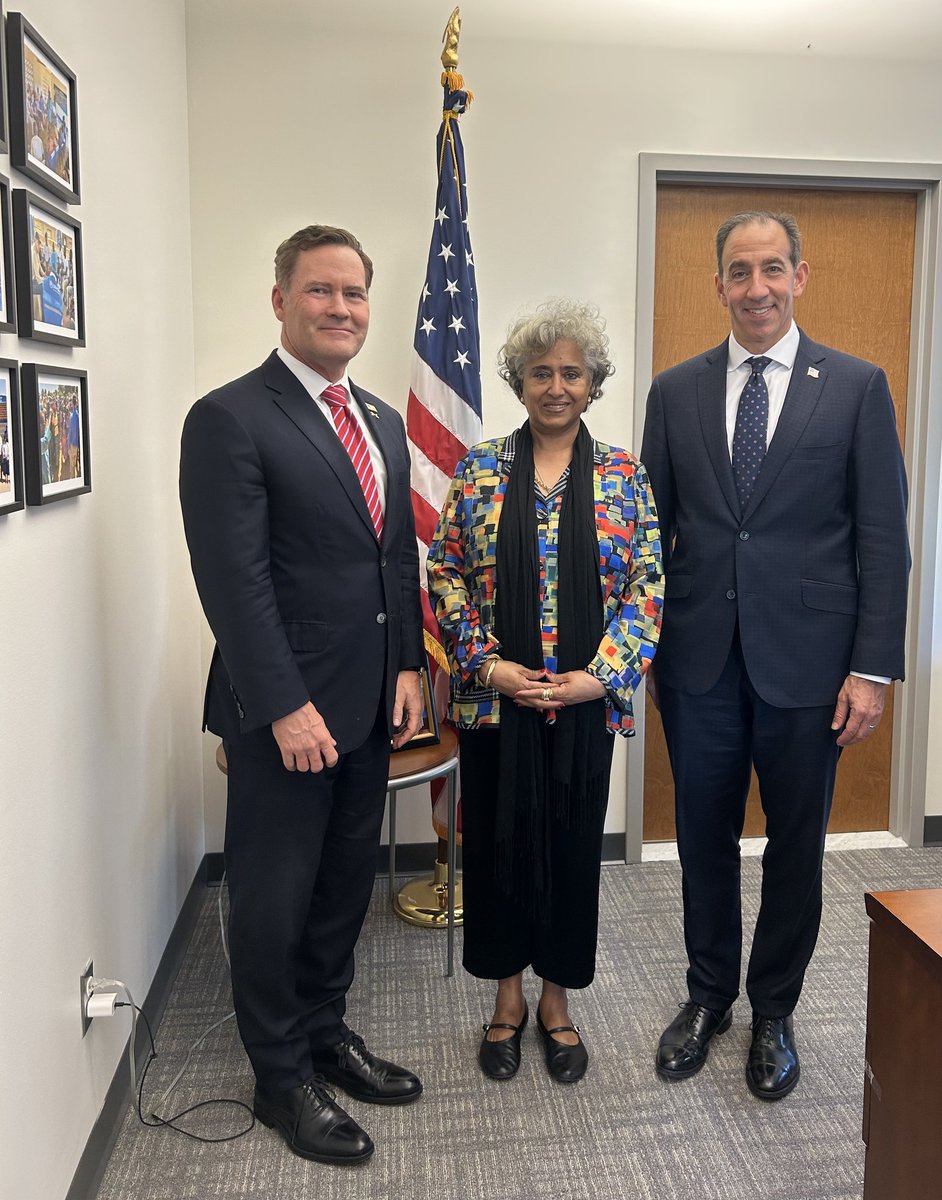
🇺🇸🇪🇷Ambassador Sofia Tesfamariam held constructive meetings with U.S. Ambassador Mike Waltz and Ambassador Jeffrey Bartos at the United Nations.
They discussed developments in the Horn of Africa and Eritrea’s perspective on regional tensions. Ambassador Tesfamariam stressed that-