Biomechanical and Neuromuscular Demands of Change of Direction: Implications for Athlete Physical Preparation
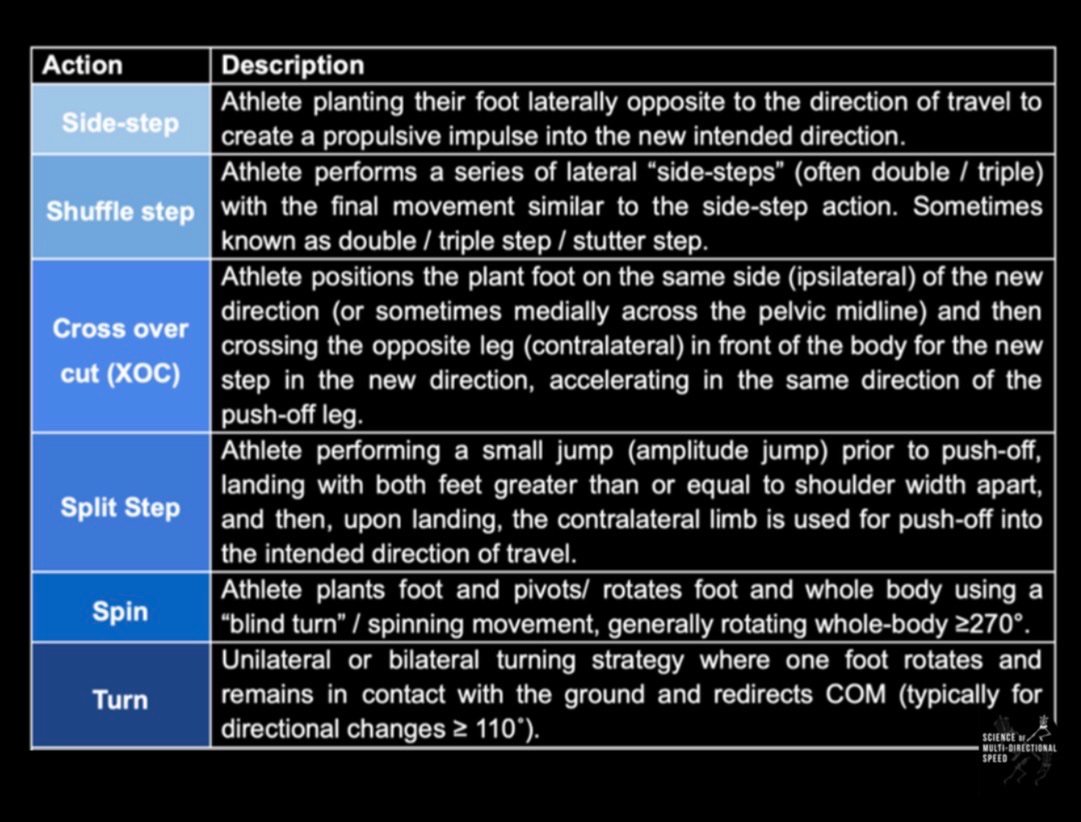
Table 1 📸 | Change of direction actions and descriptions
Author: @TomDosSantos91 ✍🏽
#performance#elite#sports#LearningJourney
🔗 https://t.co/PsyF8FlMVh
NVIDIA CEO, Jensen Huang:
"Nobody writes prompts anymore. The new job is to write and handle loops."
This is the shift that's going to define the rest of 2026.
53 minutes of pure insight from one of the richest men on earth.
Watch it, then read the full guide on how to actually use loops below.
This volume cheat sheet is from my @sportsmithhq course on "true" plyometrics
There's 4⃣ primary factors to establish plyo training volume:
- exercise intensity & training phase
- surface
- exercise variety
- athlete level
Here's how they influence plyo training volume
👇👇👇
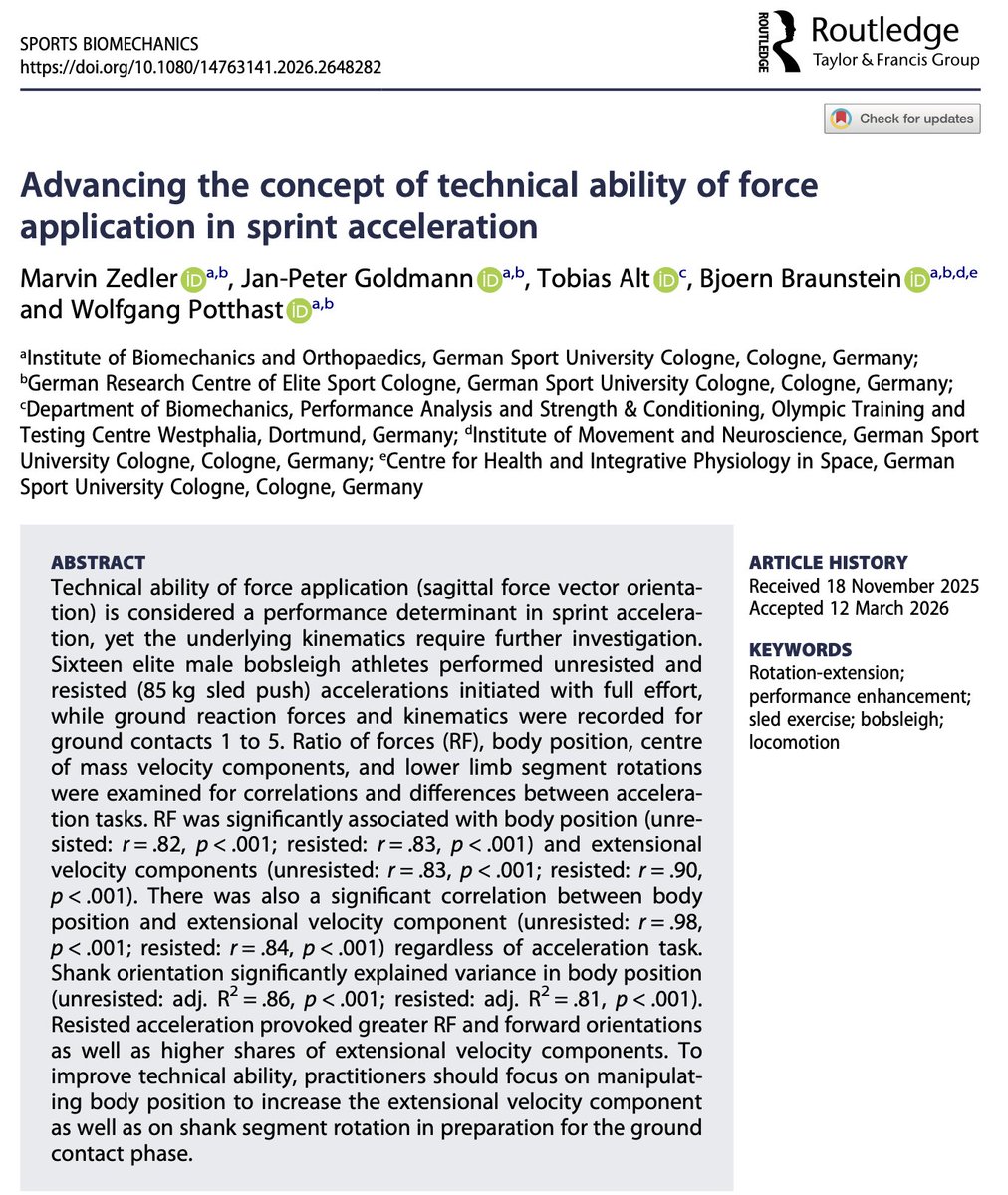
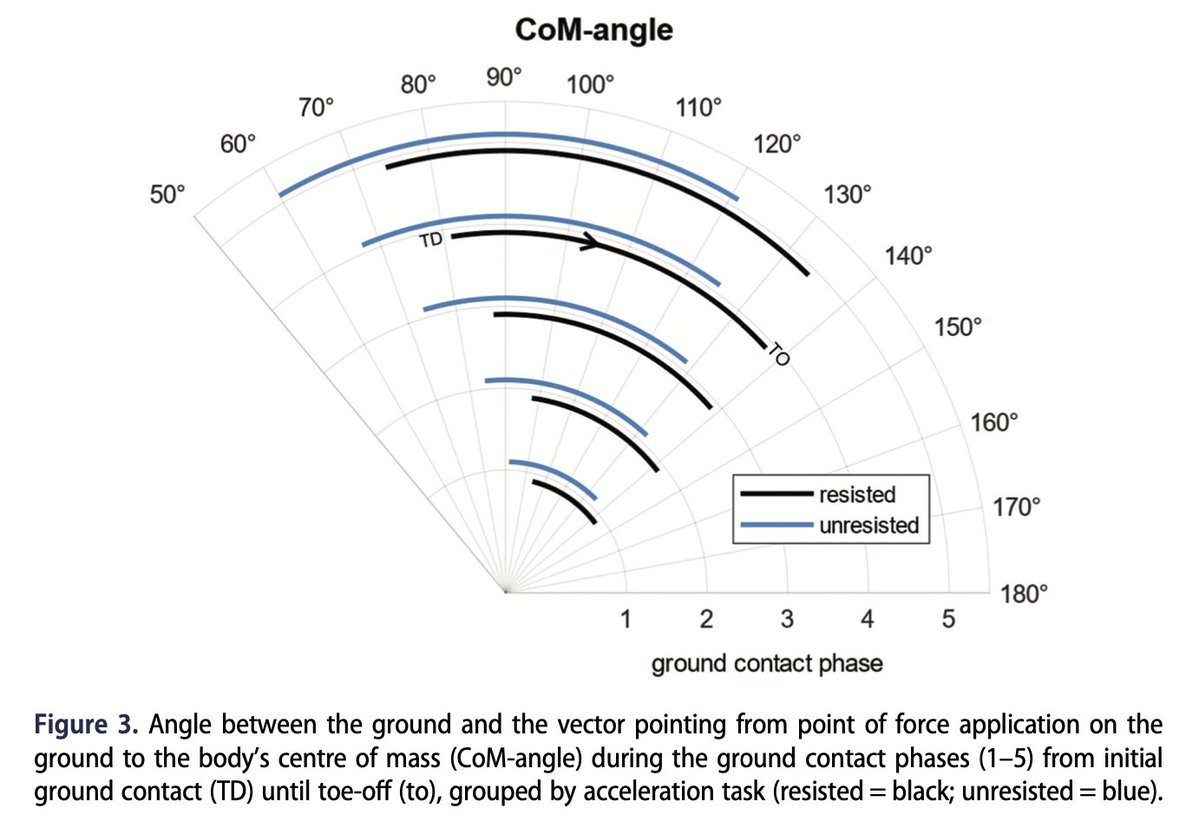
Pushing sprint propulsion 🔬forward 📄🧐
Interesting new paper by Zedler &al
Confirms the importance of GRF vector orientation ✅ and that shin angle 🦵is 🔑
Also confirms resisted sprint is a direct, practical way to have athletes "project" more forward
https://t.co/9UmxWTZgG1
A massive team effort to produce this joint ESSA & ACSM expert statement on “Physical Activity and Exercise Intensity Terminology”, which has been published in both JSaMS https://t.co/CqHzbleCht & https://t.co/XEnHHagwRC
Thread 🧵👇🏽
The current physical activity guidelines undervalue vigorous activity.
Vigorous activity may be 4–9× more potent than moderate activity for reducing all-cause mortality, cardiovascular disease, diabetes, and cancer risk.
The exercise guidelines assume a 2:1 ratio between moderate- and vigorous-intensity activity: two minutes of moderate activity equals one minute of vigorous. That's why the recommendations are 150–300 minutes of moderate or 75–150 minutes of vigorous activity each week.
But new data suggest that ratio is wrong.
In this brand-new journal-club episode, Brady Holmer (@Brady_H) and I unpack a groundbreaking study that should change how we think about activity for disease prevention.
The research identified that 1 minute of vigorous activity is roughly equivalent to 4–9 minutes of moderate activity, and 53–94 minutes of light activity, for disease risk reduction. It also shows a clear dose-response for vigorous activity that’s much weaker for moderate activity and barely detectable for light activity.
We also do a deep dive into why vigorous activity is so powerful, the underlying mechanisms, and discuss practical takeaways, including how even very brief bouts of vigorous movement (think “exercise snacks”) can produce meaningful health benefits.
Timestamps are below. You can find links to the episode on YouTube, Apple Podcasts, and Spotify in the next post.
Enjoy!
Timestamps:
0:00 - Introduction
2:14 - The 1:2 rule for exercise
6:28 - What counts as vigorous?
8:48 - Where exercise guidelines fail
9:32 - Inside the wearable-based study design
15:24 - Vigorous activity—easier than you think?
18:01 - Avoiding healthy user bias
19:12 - A better way to measure exercise
20:58 - Is vigorous 4–10x better?
25:08 - One vigorous min vs. one-hour walk
27:15 - Are light activity's benefits capped?
29:03 - Is vigorous 5x better for your heart?
30:12 - Does zone 2 count as vigorous?
31:24 - Dose-response comparison
32:35 - Vigorous exercise & younger arteries
38:29 - Why aging hearts need intensity
41:22 - Can intensity preserve VO₂ max?
42:40 - Moderate exercise & VO₂ max limits
44:34 - Is vigorous 10x better for diabetes?
51:01 - Why intensity boosts mitochondria
56:11 - Does intense exercise kill tumor cells?
1:02:28 - Hormonal benefits
1:03:19 - Preventing falls with intensity
1:07:49 - Fighting inflammation
1:09:42 - High-intensity training & brain aging
1:11:14 - The 2:1 ratio is out the door
1:13:03 - Could vigorous exercise become a pill?
1:14:21 - Short bursts for longer life
1:18:28 - Can short bouts match full workouts?
1:22:39 - Do wearables undervalue vigorous bursts?
1:25:19 - Can micro-workouts replace the gym?
1:30:23 - Updating exercise guidelines
1:41:48 - Is light activity useless?
1:44:17 - Is vigorous exercise safe for seniors?
1:48:41 - Is HIIT harmful to female hormones?
1:54:18 - Balancing intensity & recovery (80/20 rule)
1:56:43 - Brady’s exercise routine
2:00:30 - Vigorous activity & kids’ brainpower
2:03:27 - Are we undervaluing vigorous exercise?
2:05:16 - Why chasing steps doesn't work
One very common error in S&C is the assumption that making an athlete stronger automatically makes them faster. This fails to understand that maximum fiber force and maximum fiber velocity are completely separate factors with their own independent limitations.
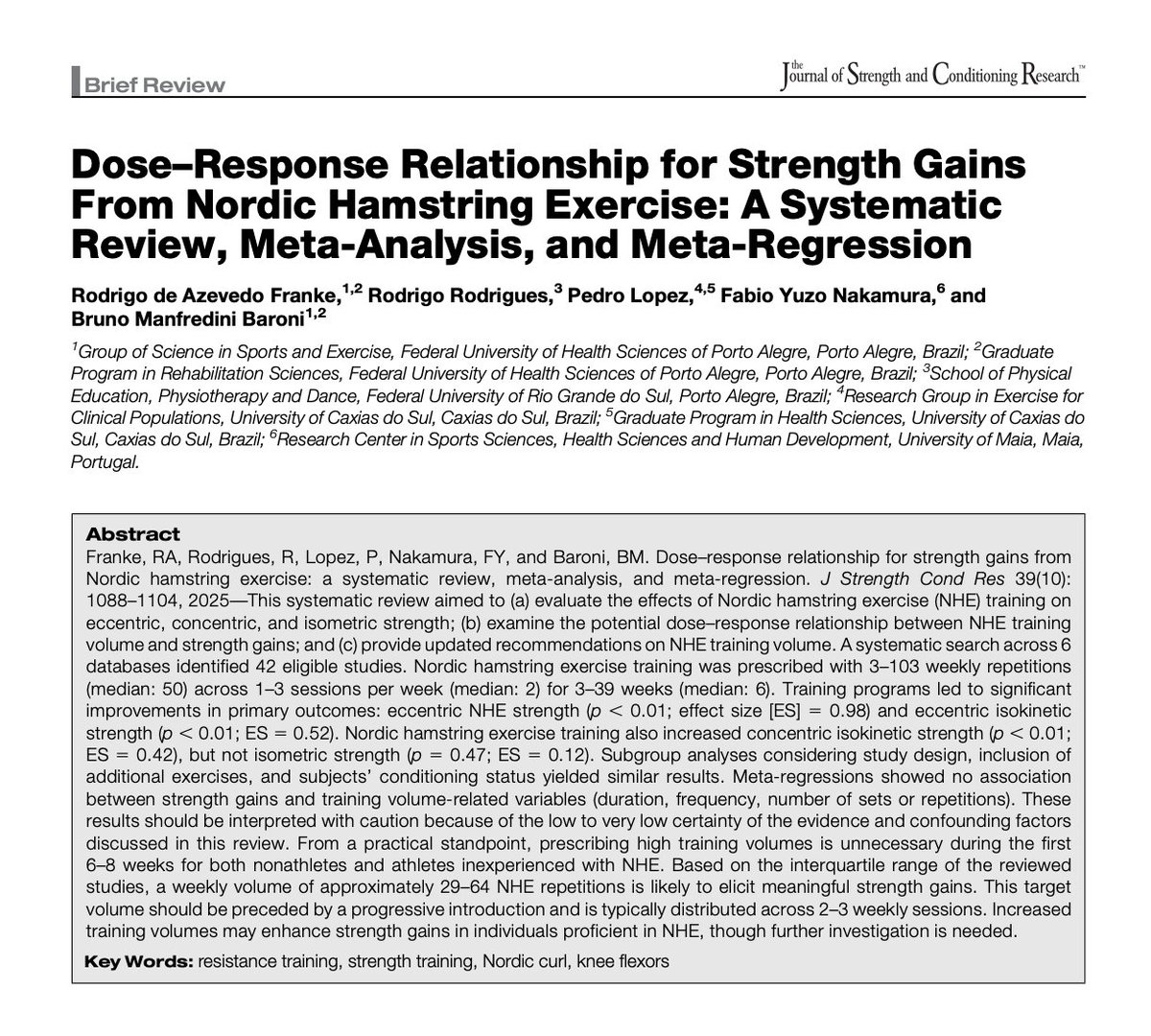
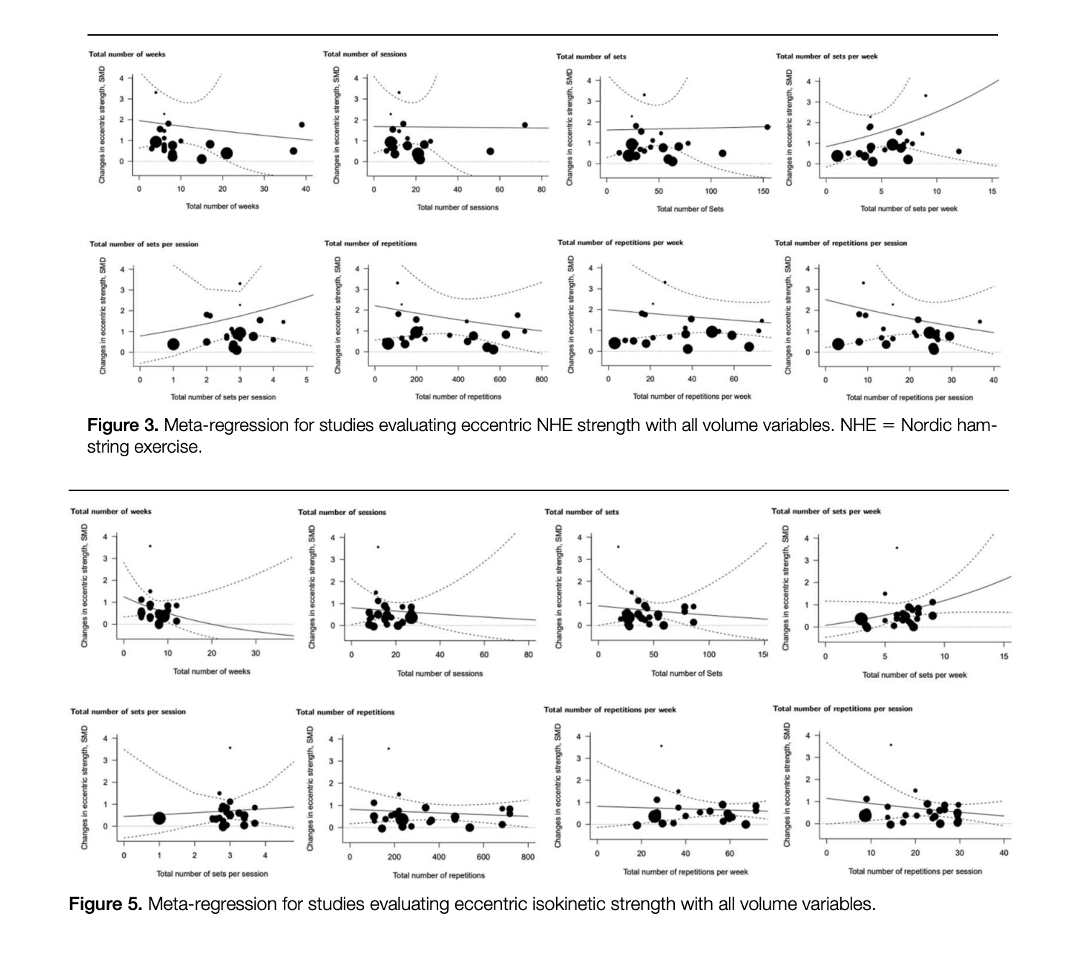
🆕"This review examined the effects of NHE training on muscle strength outcomes & evaluated the existence of a dose-response relationship"
➡️Large gains in ECC strength, moderate gains in CON strength
👉R. de Azevedo Franke et al, 2025 🇧🇷
📂Open Access: https://t.co/tC81yg6cHl
🏋️♂️💪Minimal-Dose Resistance Training for Improving Muscle Mass, Strength, and Function: A Narrative Review of Current Evidence and Practical Considerations
https://t.co/MeubhZUqBf
💪 Which Lower-Limb Muscles Work Hardest During Deceleration? 🛑🏃♂️
📊 Forces are normalised to body weight (BW), and velocities are shown relative to each muscle’s resting length.
🦵 The duration of muscle lengthening is presented as a percentage of ground-contact time.
⚠️ Hamstrings act concentrically (shortening), meaning they don’t lengthen during deceleration ground contact.
Understanding muscle dynamics is critical for injury prevention, return-to-play planning, and targeted strength training.
👉 https://t.co/NgpB6UUe6C
🎉New paper! This study examined performance data from men’s and women’s World Cups to uncover key differences in playing styles, physical output and tactical behaviors. Implications for training, scouting, and development strategies. Well done my friends!🇰🇷🐯
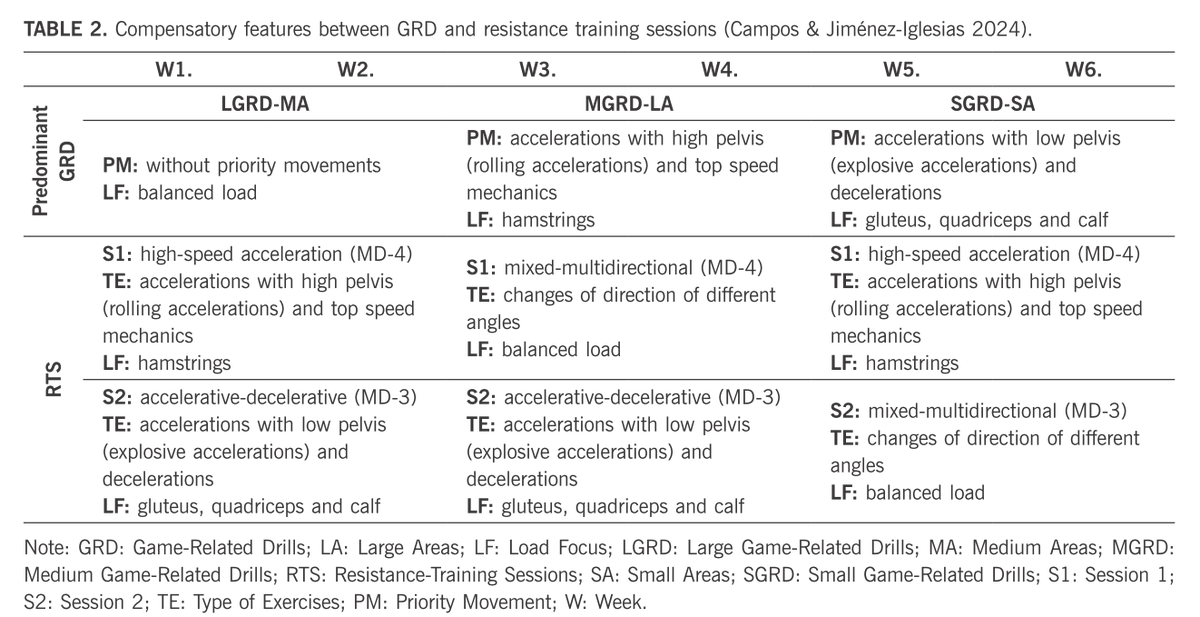
🆕Does integral periodization improve fitness and reduce non-contact injury risk more effectively than traditional resistance training in young soccer players?
📝Jose Jimenez-Iglesias, Oliver Gonzalo-Skok, Mario Landi-Fernández et al.
🔓#OpenAccess🔗 https://t.co/XnMEEHsZBs
🚨 The 3 Phases of Ground Contact in Horizontal Deceleration 🏃♂️💥
Understanding how the body absorbs force during deceleration is key for performance and injury reduction. In this visual breakdown:
🔴 High-load and 🟡 moderate-load areas are highlighted across the lower-limb joints and muscles
➡️ Striped arrows = external ground reaction forces (GRF)
➡️ Solid arrows = joint contact forces
➰ Curved arrows = joint moments
Read the full breakdown here:
🔗 https://t.co/NgpB6UUe6C
If you are interested in content like this, join our Sport Ireland Institute S&C Webinar series - in September we will deliver a FREE webinar on all things plyometric training and testing
https://t.co/pt9CaxURqK
Calf Muscle Injuries In The Athlete
✍️Written by: Carles Pedret, Stefano Palermi, Sandra Mechó, Gulraiz Ahmad, and Justin C. Lee.
Calf injuries are among the most common musculoskeletal issues in sports, particularly affecting amateur athletes due to frequent engagement in activities requiring explosive lower-limb movements.
These injuries often involve the triceps surae complex, a key functional unit comprising the medial and lateral gastrocnemius, the soleus, and their distal extension into the Achilles tendon. Understanding the anatomy and interplay of these structures is critical for accurate diagnosis, effective management, and minimizing return-to-play (RTP) time.
Accurate and early diagnosis is fundamental to optimizing outcomes. While ultrasound (US) is a widely used and accessible first-line imaging modality, especially effective for identifying injuries to the medial gastrocnemius and the plantaris, it has limitations in evaluating deeper structures such as the soleus. In such cases, magnetic resonance imaging (MRI) is considered the gold standard.
Despite advancements in imaging techniques, a standardized approach to prognosis and management particularly for soleus injuries, remains elusive due to the complex anatomy and variability in injury patterns.
This article provides a comprehensive, evidence-based overview of calf injuries, emphasizing anatomical variability, clinical presentation, imaging techniques, and management strategies. By integrating clinical and imaging insights, it aims to equip clinicians with practical tools to improve diagnosis, streamline treatment, and facilitate a safe return to sport.
🔗Read Full Article ➡️ https://t.co/DiLmgQKZ9b