Japanese actor Hiroyuki Sanada spoke about the contradictions of human nature:
“Some people dream of having a swimming pool at home, while those who have one hardly ever use it. Those who have lost a loved one feel a profound sense of loss, while others often complain about their living relatives. Those without a partner long for one, while those who have one often don't appreciate it. The hungry would give anything for a meal, while the satiated complain about the taste of their food. Those without a car dream of owning one, while those who have a car are always looking for a better one.”
The key to happiness is gratitude: truly seeing and appreciating what we already have, and understanding that somewhere, someone would give anything for what we take for granted.
Media theorist Neil Postman compared Aldous Huxley and George Orwell in his book Amusing Ourselves to Death. In he says Orwell predicts a future where people are controlled through pain, censorship, surveillance, and state violence; whereas Huxley predicts a world where people are controlled through pleasure, distraction, consumerism, and endless entertainment.
Sadly, it looks like the-powers-that-be plan a nasty mixture of both; the worst of both worlds.
“By means of ever more effective methods of mind-manipulation, the democracies will change their nature; the quaint old forms—elections, parliaments, Supreme Courts and all the rest—will remain. The underlying substance will be a new kind of non-violent totalitarianism. All the traditional names, all the hallowed slogans will remain exactly what they were in the good old days. Democracy and freedom will be the theme of every broadcast and editorial—but democracy and freedom in a strictly Pickwickian sense. Meanwhile the ruling oligarchy and its highly trained elite of soldiers, policemen, thought-manufacturers and mind-manipulators will quietly run the show as they see fit.”
— Aldous Huxley, Brave New World Revisited
What natural talent actually looks like behind the scenes:
Musicians → 10,000 hours of practice
Athletes → ice baths at 5am
Artists → 500 bad drawings first
Chefs → every dish burned at least once
Comedians → jokes that bombed for years
Writers → drafts nobody will ever see
Dancers → blisters before grace
Actors → hundreds of rejections before one yes
Architects → thousands of sketches before one building
Surgeons → years of watching before touching
Entrepreneurs → multiple failures before one win
Photographers → ten thousand bad shots before one great one
Swimmers → swallowed half the pool learning
Mathematicians → problems unsolved for months
Public speakers → terrified in empty rooms first
Filmmakers → short films nobody watched
There is a certain Zen-like peace in having the illusion of choice removed entirely.
When the menu of life has only one page you spend less time browsing and more time actually living.
From the 60s through the 80s, life ran on two-lane highways and metaphorically.
Want a big car? Ambassador.
Want a small one? Premier Padmini.
Scooter: Just “Hamara Bajaj”!
Colors? White. Or white that looked slightly green after a few summers.
Airline? Just one. Indian Airlines.
No comparison charts. No seat selection drama. Just go for it!
Train ticket? Sleeper or Second Class.
That was the ONLY dropdown menu.
Restaurant? South Indian or “Family Restaurant.”
Menu browsing did not require scrolling.
Morning soundtrack? All India Radio, Akashvani.
There was no “Discover Weekly” playlist. An entire nation woke up to the same signature tune.
Soft drink dilemma? Gold Spot, Limca, Thums Up.
But it wasn’t about the brand. It was about the glass bottle. No plastic/paper/environment issues! You stood by the roadside stall, finished it in one go, and handed the bottle back.
No plastic waste, no “venti” sizes, just 250 ml of pure, fizzy sugar.
Tea: Simple plain Chai
No green tea. No Chamomille tea. No Tulsi, No Lemongrass.
School supplies?
Geometry box: Camel or Nataraj.
Uniform: One set for the week, one white set for PT on Fridays.
Status symbol: A Hero Pen or a Pilot V5.
That was peak luxury.
You didn’t need a tablet. You needed a steady hand so the ink wouldn’t leak onto your shirt.
Photography? A roll of 36 exposures.
You didn’t take 400 selfies to find the right angle.
You took one photo, hoped nobody blinked, and waited a whole month or two for the studio to develop the prints.
Every photo was a surprise. Usually a blurry one. But we cherished it anyway.
Shopping trip? The local kirana store.
No pushing carts through endless aisles comparing “organic” vs “keto.”
You handed a handwritten slip of paper to the uncle behind the counter.
He weighed everything in brown paper bags tied with jute string.
Choice wasn’t a factor.
We didn’t have FOMO because everyone was missing out on the exact same things.
Life wasn’t just simpler. It was synchronised.
We all watched the same Sunday movie on the only TV channel Doordarshan!
Drank the same tea.
Used the same Godrej almirah to hide our treasures.
Rode the same “Hamara Bajaj”!
There was less variety.
Less noise.
Less comparison.
And strangely, less confusion.
Maybe we had fewer choices.
Life was simple.
Or maybe we were. 😉
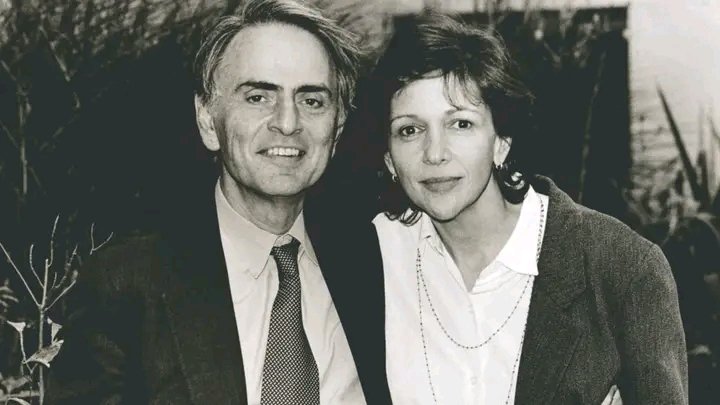
When my husband died, because he was so famous and known for not being a believer, many people would come up to me-it still sometimes happens-and ask me if Carl changed at the end and converted to a belief in an afterlife.
They also frequently ask me if I think I will see him again. Carl faced his death with unflagging courage and never sought refuge in illusions. The tragedy was that we knew we would never see each other again.
I don't ever expect to be reunited with Carl. But, the great thing is that when we were together, for nearly twenty years, we lived with a vivid appreciation of how brief and precious life is. We never trivialized the meaning of death by pretending it was anything other than a final parting.
Every single moment that we were alive and we were together was miraculous-not miraculous in the sense of inexplicable or supernatural. We knew we were beneficiaries of chance. . . .
That pure chance could be so generous and so kind. . . .
That we could find each other, as Carl wrote so beautifully in Cosmos, you know, in the vastness of space and the immensity of time. . . .
That we could be together for twenty years. That is something which sustains me and it’s much more meaningful. . . .
The way he treated me and the way I treated him, the way we took care of each other and our family, while he lived. That is so much more important than the idea I will see him someday.
I don't think I'll ever see Carl again. But I saw him. We saw each other. We found each other in the cosmos, and that was wonderful.”
― Ann Druyan
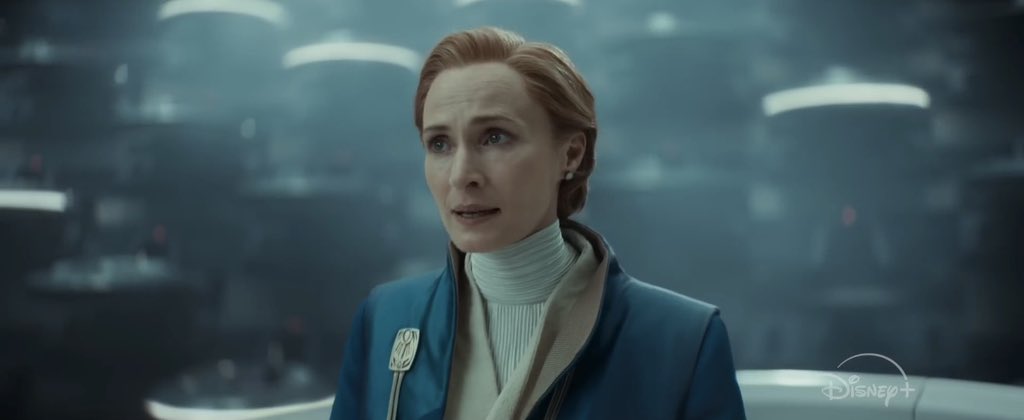
Every day that passes… Mon Mothma’s speech in Andor Season 2 feels uncomfortably close to reality.
"The death of truth is the ultimate victory of evil. When truth leaves us, when we let it slip away, when it is ripped from our hands, we become vulnerable to the appetite of whatever monster screams the loudest."
The uncle who "controls diabetes with karela juice" is on insulin.
The aunty who "managed BP with yoga" had a minor stroke last year.
Alternative medicine stories always skip the ending.
The RSS and Hindu Mahasabha Played No role in the Struggle for Freedom
As an organisation, the RSS did not participate in any anti-British movement during the entire period of its existence from 1925 -1947.
Mridula Mukherjee✍️
https://t.co/az9kWbXuKc
" Politically I have always been with the Congress... the biggest impact on me was the leadership of Gandhiji ... later on (at the same time) the Prime Minister ( Jawaharlal Nehru) whom I consider him as one of the architect of our country... "__ Lal Bahadur Shashtri.
What did 'rough travel' in India look like for a British judge in 1850?
https://t.co/6FbwaeGRSt
Ajay Kamalakaran ✍️about Erskine Perry's journey from Bombay to Punjab before the advent of the railways.