Paradoxes in Physics and Mathematics ✍️
1. Zeno's Paradoxes:
A set of philosophical problems that challenge the concept of motion and continuity. For example, Achilles and the tortoise paradox argues that Achilles can never overtake a tortoise given a head start, as he must first reach the point where the tortoise began.
2. Russell's Paradox:
A contradiction found in naive set theory, where the set of all sets that do not contain themselves leads to a logical inconsistency. This paradox highlights problems in defining a universal set.
3. The Barber Paradox:
A self-referential paradox where a barber shaves all those who do not shave themselves. The question arises: does the barber shave himself? If he does, he shouldn't; if he doesn't, he should.
4. The Liar Paradox:
A statement that declares itself false, such as "This statement is false." If it's true, then it must be false, and vice versa, leading to a contradiction.
5. The Sorites Paradox:
This paradox arises from vague predicates, such as "heap." If removing a single grain of sand from a heap doesn’t stop it from being a heap, how many grains can be removed before it ceases to be a heap?
6. The Monty Hall Problem:
A probability puzzle based on a game show scenario. Given a choice among three doors (with a prize behind one), switching after one non-prize door is revealed increases your chances of winning from 1/3 to 2/3.
7. The Birthday Paradox:
Refers to the surprising probability that in a group of just 23 people, there's about a 50% chance that at least two individuals share the same birthday, challenging intuitive understanding of probability.
8. The Banach-Tarski Paradox:
A theorem in set-theoretic geometry that states a solid ball in 3-dimensional space can be split into a finite number of pieces that can be reassembled into two identical copies of the original ball. This paradox challenges our understanding of volume and measure.
9. The Twin Paradox:
A thought experiment in relativity where one twin travels at a significant fraction of the speed of light while the other remains on Earth. Upon reunion, the traveling twin is younger than the stationary twin, illustrating the effects of time dilation.
10. The Grandfather Paradox:
A time travel paradox where a person travels back in time and inadvertently prevents their grandfather from meeting their grandmother, thereby preventing their own existence. This raises questions about causality and the nature of time.
J’ai longtemps vécu comme si ma vraie vie allait commencer plus tard. Je me disais : « Je vivrai vraiment quand j’aurai mon diplôme, quand je serai marié, quand j’aurai réussi, quand j’aurai plus d’argent… » Puis, chaque fois qu’un objectif était atteint, j’en inventais un autre. J’ai passé mon temps à repousser la vie… pendant que je la vivais déjà. À force d’attendre le moment idéal, on finit par traiter le présent comme une simple salle d’attente, alors qu’il est la seule vie dont nous disposons réellement.
À l'horizon, là-bas, se trouve la réussite, et le chemin qui mène à cet horizon est souvent parsemé d'embûches, d'obstacles, de peur, de risques, d'échecs, de leçons apprises, et d'apprentissage.
L'atteindre requière du courage, et l'avoir atteint est appelé : « La chance ».
Quand les gens se rendront compte que la fin du support physique est une grosse arnaque.
Si le DVD, que tu as acheté, t'appartient à vie, le film que tu regardes sur Netflix appartient à Netflix. Ils peuvent le supprimer quand ils voudront sans demander ton avis.
si vous saviez à quel point je suis fier du Maroc et de sa diaspora, le foot c'est la partie visible mais le vrai rayonnement du royaume il est ailleurs, il est dans tous ces marocains qui percent de l’X à Tsinghua en passant par le MIT et caltech réputés pour leur maîtrise des maths et qu'on retrouve chez meta,SpaceX, Xpeng,huawei…ou comme dans les incubateurs deeptech de Hangzhou ou depuis longtemps chez YC
le meilleur exemple du moment c'est sans doute harmattan première licorne de défense française fondée par un marocain, ils conçoivent des drones autonomes pilotés par IA capables de voir et de frapper sans gps sans cloud et sans liaison radio donc increvables face au brouillage électronique qui neutralise tout le reste sur un champ de bataille, 200 millions levés avec dassault et des contrats avec la France et l’UK
et le plus beau pour nous c’est que harmattan s'est aussi allié aux forces armées royales pour développer ces systèmes, un cerveau marocain formé en France qui revient armer son propre pays en souveraineté technologique et en sais qu’avec le nouvelle génération de talents marocains il y a tout un boulevard qui va s’agrandir
voilà ce qu'est vraiment notre diaspora, une génération qui bâtit du concret sur les sujets les plus durs de la planète de la robotique au quantique en osant par les l’IA et les biotech et on est qu'au tout début d’une diaspora légendaire
soyons fiers!!!!
DIMA MAGHREB 🇲🇦🇲🇦🇲🇦🇲🇦
Age of each of these countries:
USA: 250 years
Netherlands: 445 years
Sweden: 503 years
Spain: 547 years
Monaco: 729 years
Switzerland: 735 years
Thailand: 788 years
Mongolia: 820 years
Portugal: 883 years
Hungary: 1,026 years
Poland: 1,060 years
Denmark: 1,061 years
England: 1,099 years
Norway: 1,154 years
Russia: 1,164 years
France: 1,183 years
Morocco: 1,238 years
Bulgaria: 1,345 years
China: 2,246 years
Iran: 2,575 years
Japan: 2,685 years
Ethiopia: 3,000 years
Egypt: 5,125 years
A high school student has developed an artificial intelligence tool that diagnoses autism and attention deficit hyperactivity disorder with 89 percent accuracy using retinal scans.
Seventeen year old Edward Kang from Bergen County Academies in New Jersey created RetinaMind. Drawing inspiration from research linking eye structure to brain development he built a deep learning convolutional neural network. The system examines subtle variations in the macula and retinal nerve layers that are difficult for humans to detect. By combining multiple models through ensemble learning it reaches high diagnostic precision.
Traditional assessments for these conditions often depend on lengthy behavioral evaluations. RetinaMind offers a faster non invasive alternative. Kang also explored genetic connections such as the ABCA4 gene that may contribute to observed retinal differences.
His project earned second place and a $175,000 award at the 2026 Regeneron Science Talent Search. Experts note that further validation is needed as retinal changes can relate to other neurological issues. Nevertheless the work highlights the potential of artificial intelligence to identify biomarkers and enable earlier intervention.
mdr il écrit que « les maghrébins ne pas connus pour leur sérieux académique ni pour la physique la littérature ou la technologie » depuid un téléphone dont la batterie lithium-ion utiliise l'anode en graphite co-inventée par Rachid yazami un marocain sans compter que la + vieille université encore en activité au monde c'est al-qarawiyyin à Fès fondée par une femme 1000 ans avant la Sorbonne, difficile de faire + sérieux académiquement mdrrr
sans oublier ibn KHALDOUN le tunisien dont je parle souvent ici et qui a inventé la sociologie et l'économie moderne plusisurs siècles avant l'europe puis si on veut la jouer Maghreb united je pourrais aussi parler de Zerhouni l'algérien qui a dirigé le NIH c'est à dire la + grande institution de recherche médicale du monde… puis Assia Djebar qui siégeait à l'académie française mais bon pour connaître tout ça il faut lire autre chose que frontières ou le figaro et c’est pas donné à tout le monde mdr
et le plus drôle c'est que ces mêmes maghrébins qu’il méprises sont aussi très TRÈS présents en Chine car la France ne les intéresse pas dans la mesure où en Chine ils montent des boites hardware à Guangzhou et sortent diplômés des universités chinoises comme Tsinghua, un environnement qui récompense l'effort sans te mettre des bâtons dans les roues parce que tu as le mauvais nom de famille donc oui l'origine n'explique rien c'est le milieu qui révèle ou qui éteint et désolé de le dire ainsi mais l’écosystème français est culturellement à la ramasse et je ne vais pas me répéter sur tout ce qu’il ne va pas en France vous retrouverez mes centaines de threads très facilement
The human population is split into two, the upper class and the lower class. This is defined by what happens when you open the YouTube app on your phone. Are you a shorts slave, or do you get long form informative videos a la old YouTube?
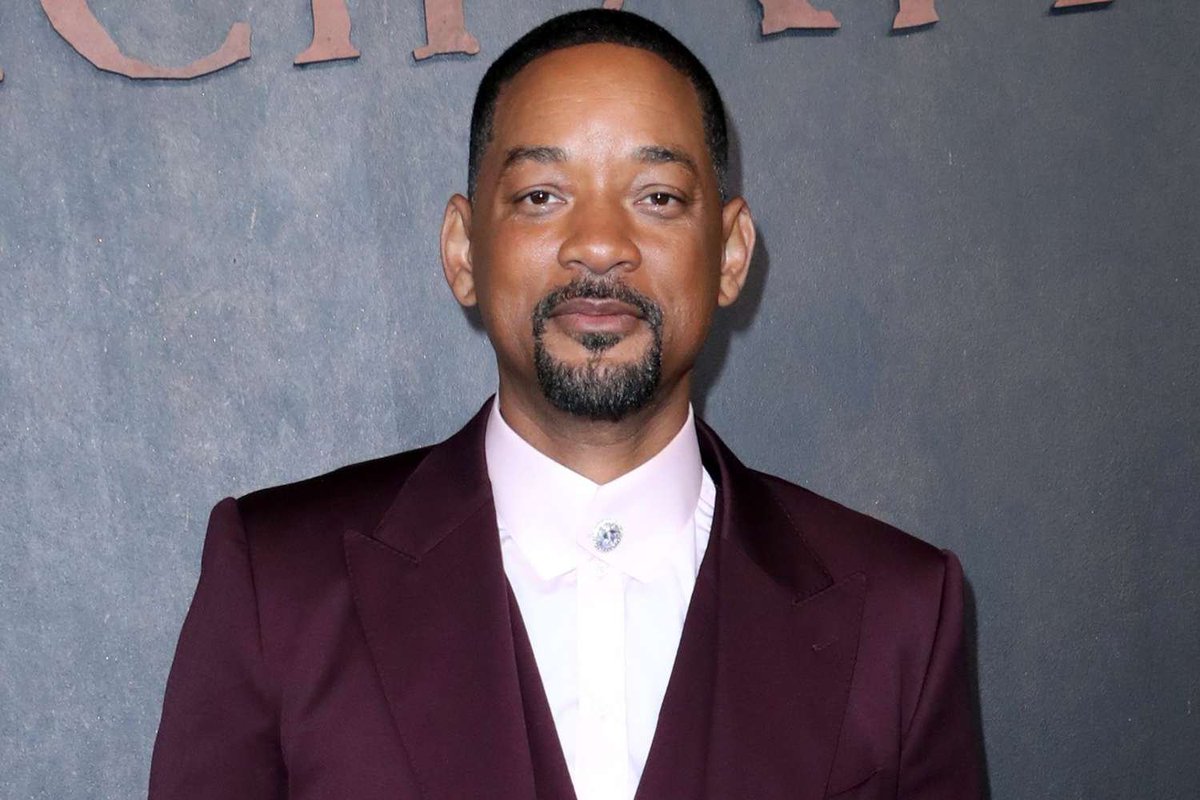
🤔💰❤️ « Le vrai bonheur vient de l'intérieur. » - À 50 ans, Will Smith RÉALISE que l’argent ne FAIT PAS le bonheur.
Dans une interview, Will Smith a confié qu'après avoir gagné, PERDU puis retrouvé une IMMENSE fortune, sa vision de l'argent avait totalement changé. « Une fois que vous avez acheté tout ce que vous voulez, vous réalisez que rien de tout cela ne peut vous rendre heureux », explique l'acteur.
Il affirme vouloir CONSACRER la seconde moitié de sa vie à donner plutôt qu'à accumuler. Selon lui, ni l'argent, ni la célébrité, ni même les relations ne peuvent apporter un BONHEUR DURABLE.
(People)
In order to be born, you needed:
2 parents
4 grandparents
8 great-grandparents
16 second great-grandparents
32 third great-grandparents
64 fourth great-grandparents
128 fifth great-grandparents
256 sixth great-grandparents
512 seventh great-grandparents
1,024 eighth great grandparents
2,048 ninth great-grandparents
For you to be born today from 12 previous generations, you needed a total of 4,094 ancestors over the last 400 years.
Think for a moment:
How many struggles?
How many battles?
How many difficulties?
How much sadness?
How much happiness?
How many love stories?
How many expressions of hope for the future? – did your ancestors have to undergo for you to exist in this present moment...
[theoretical calculation not considering the Pedigree Collapse]
The human brain makes approximately 35,000 decisions per day.
Around 200 of those are about food.
Fewer than 100 are genuinely conscious.
The rest are made on autopilot — habit, environment, emotion.
Every addiction, every habit, every impulse purchase happens in the 34,900 decisions you're not paying attention to.
The people who know this best aren't scientists.
They're advertisers.
SOURCE: Various cognitive science research, including Cornell / University of Leeds estimates.
A brief history of Quantum computers 👇
1905: Albert Einstein explains the photoelectric effect and suggests that light consists of quantum particles or photons
1924: Max Born uses the term quantum mechanics for the first time
1925: Werner Heisenberg, Max Born, and Pascual Jordan formulate matrix mechanics, the first formulation of quantum mechanics
1925-1927: Niels Bohr and Werner Heisenberg develop the Copenhagen interpretation, one of the earliest and most common interpretations of quantum mechanics
1930: Paul Dirac publishes The Principles of Quantum Mechanics, a standard textbook on quantum theory
1935: Albert Einstein, Boris Podolsky, and Nathan Rosen publish a paper highlighting the counterintuitive nature of quantum superposition and arguing that quantum mechanics is incomplete
1935: Erwin Schrödinger develops a thought experiment involving a cat that is simultaneously dead and alive, and coins the term “quantum entanglement”
1944: John von Neumann publishes Mathematical Foundations of Quantum Mechanics, a rigorous mathematical framework for quantum theory
1957: Hugh Everett proposes the many-worlds interpretation of quantum mechanics, which suggests that every possible outcome of a quantum measurement actually occurs in a parallel universe
1961: Rolf Landauer shows that erasing a bit of information dissipates a minimum amount of energy, known as Landauer’s principle
1965: John Bell proves that quantum entanglement cannot be explained by any local hidden variable theory, known as Bell’s theorem
1973: Alexander Holevo proves that n qubits cannot carry more than n classical bits of information, known as Holevo’s theorem or Holevo’s bound
1980: Paul Benioff proposes a model of a quantum Turing machine, a theoretical device that can perform any computation using quantum mechanical principles
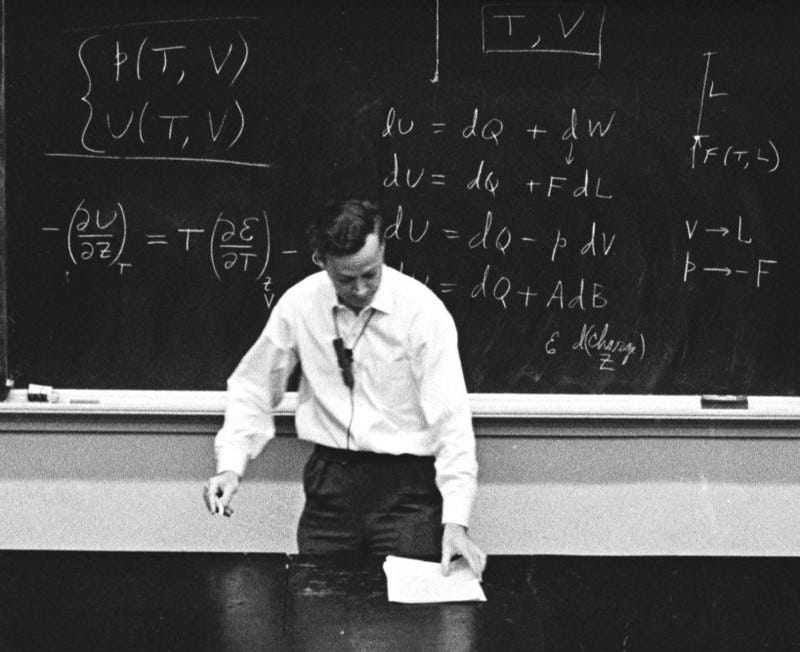
1981: Richard Feynman suggests that simulating quantum systems would require a new type of computer based on quantum mechanics
1982: David Deutsch generalizes Benioff’s model and proposes the concept of a universal quantum computer
1984: Charles Bennett and Gilles Brassard develop a protocol for quantum key distribution, which allows two parties to securely exchange cryptographic keys using quantum states
1985: David Deutsch and Richard Jozsa devise an algorithm that can solve a specific problem faster than any classical algorithm, known as the Deutsch-Jozsa algorithm
1991: Artur Ekert proposes another protocol for quantum key distribution based on quantum entanglement, known as the E91 protocol
1992: David Deutsch and Richard Jozsa extend their algorithm to handle multiple inputs, known as the Deutsch-Jozsa algorithm
1994: Peter Shor discovers an algorithm that can factor large numbers in polynomial time using a quantum computer, known as Shor’s algorithm
1996: Lov Grover invents an algorithm that can search an unsorted database in square root time using a quantum computer, known as Grover’s algorithm
1997: Isaac Chuang, Neil Gershenfeld, and Mark Kubinec demonstrate the first implementation of Shor’s algorithm using nuclear magnetic resonance (NMR) techniques
2000: David DiVincenzo proposes five criteria for building a practical quantum computer, known as the DiVincenzo criteria
2001: IBM researchers implement Grover’s algorithm using NMR techniques and achieve a modest speedup over classical algorithms
2007: D-Wave Systems claims to have built the first commercial quantum computer, but its validity is disputed by many experts
2019: Google announces that it has achieved quantum supremacy by performing a calculation on a 53-qubit quantum processor that would take a classical supercomputer thousands of years to complete
2020: IBM demonstrates that its 65-qubit quantum processor can perform calculations beyond the reach of any classical computer
📷 An IBM QC photographed by James Estrin
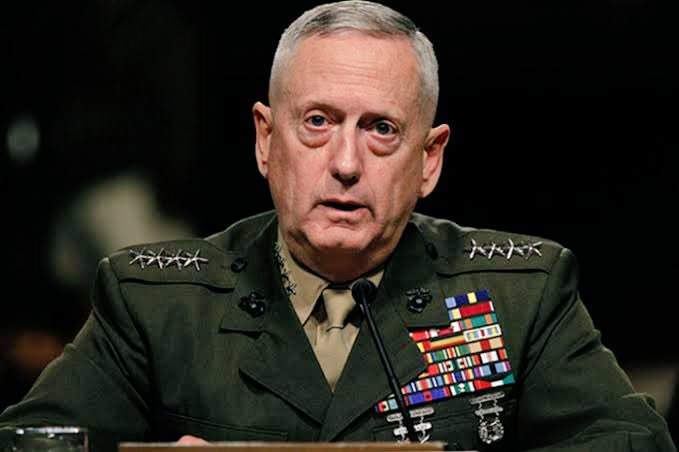
“If you haven't read hundreds of books, you are functionally illiterate, and you will be incompetent, because your personal experiences alone aren't broad enough to sustain you.”
— James N. Mattis
Yes: handwriting still matters.
A new study has confirmed that writing by hand activates far more complex and widespread neural networks in the brain than typing, underscoring its importance for learning and memory.
Researchers at the Norwegian University of Science and Technology used a high-density EEG cap with 256 electrodes to record brain activity in university students. They found that the intricate, sensory-rich movements involved in handwriting, especially cursive, trigger highly synchronized brain waves across extensive areas of the parietal and central regions. These coordinated patterns are strongly linked to memory formation, cognitive processing, and encoding new information.
In contrast, typing, which involves repetitive, simpler finger movements, produced significantly less neural connectivity and engagement. The difference was striking: the brain appears much less active during digital writing.
The researchers conclude that the unique motor and sensory experience of holding a pen plays a key role in brain development and learning. As a result, they argue that handwriting instruction should remain a core part of education to support deeper comprehension and cognitive growth in the next generation.
[ “Handwriting vs. Typing: A High-Density EEG Study on Brain Connectivity During Learning” — Norwegian University of Science and Technology (published in Frontiers in Psychology, 2025)]







![Rainmaker1973's tweet photo. In order to be born, you needed:
2 parents
4 grandparents
8 great-grandparents
16 second great-grandparents
32 third great-grandparents
64 fourth great-grandparents
128 fifth great-grandparents
256 sixth great-grandparents
512 seventh great-grandparents
1,024 eighth great grandparents
2,048 ninth great-grandparents
For you to be born today from 12 previous generations, you needed a total of 4,094 ancestors over the last 400 years.
Think for a moment:
How many struggles?
How many battles?
How many difficulties?
How much sadness?
How much happiness?
How many love stories?
How many expressions of hope for the future? – did your ancestors have to undergo for you to exist in this present moment...
[theoretical calculation not considering the Pedigree Collapse]](https://pbs.twimg.com/media/HMDs0oBWkAAtERK.png)

![Rainmaker1973's tweet photo. Yes: handwriting still matters.
A new study has confirmed that writing by hand activates far more complex and widespread neural networks in the brain than typing, underscoring its importance for learning and memory.
Researchers at the Norwegian University of Science and Technology used a high-density EEG cap with 256 electrodes to record brain activity in university students. They found that the intricate, sensory-rich movements involved in handwriting, especially cursive, trigger highly synchronized brain waves across extensive areas of the parietal and central regions. These coordinated patterns are strongly linked to memory formation, cognitive processing, and encoding new information.
In contrast, typing, which involves repetitive, simpler finger movements, produced significantly less neural connectivity and engagement. The difference was striking: the brain appears much less active during digital writing.
The researchers conclude that the unique motor and sensory experience of holding a pen plays a key role in brain development and learning. As a result, they argue that handwriting instruction should remain a core part of education to support deeper comprehension and cognitive growth in the next generation.
[ “Handwriting vs. Typing: A High-Density EEG Study on Brain Connectivity During Learning” — Norwegian University of Science and Technology (published in Frontiers in Psychology, 2025)]](https://pbs.twimg.com/media/HL1GBDjWUAAHLf9.jpg)


