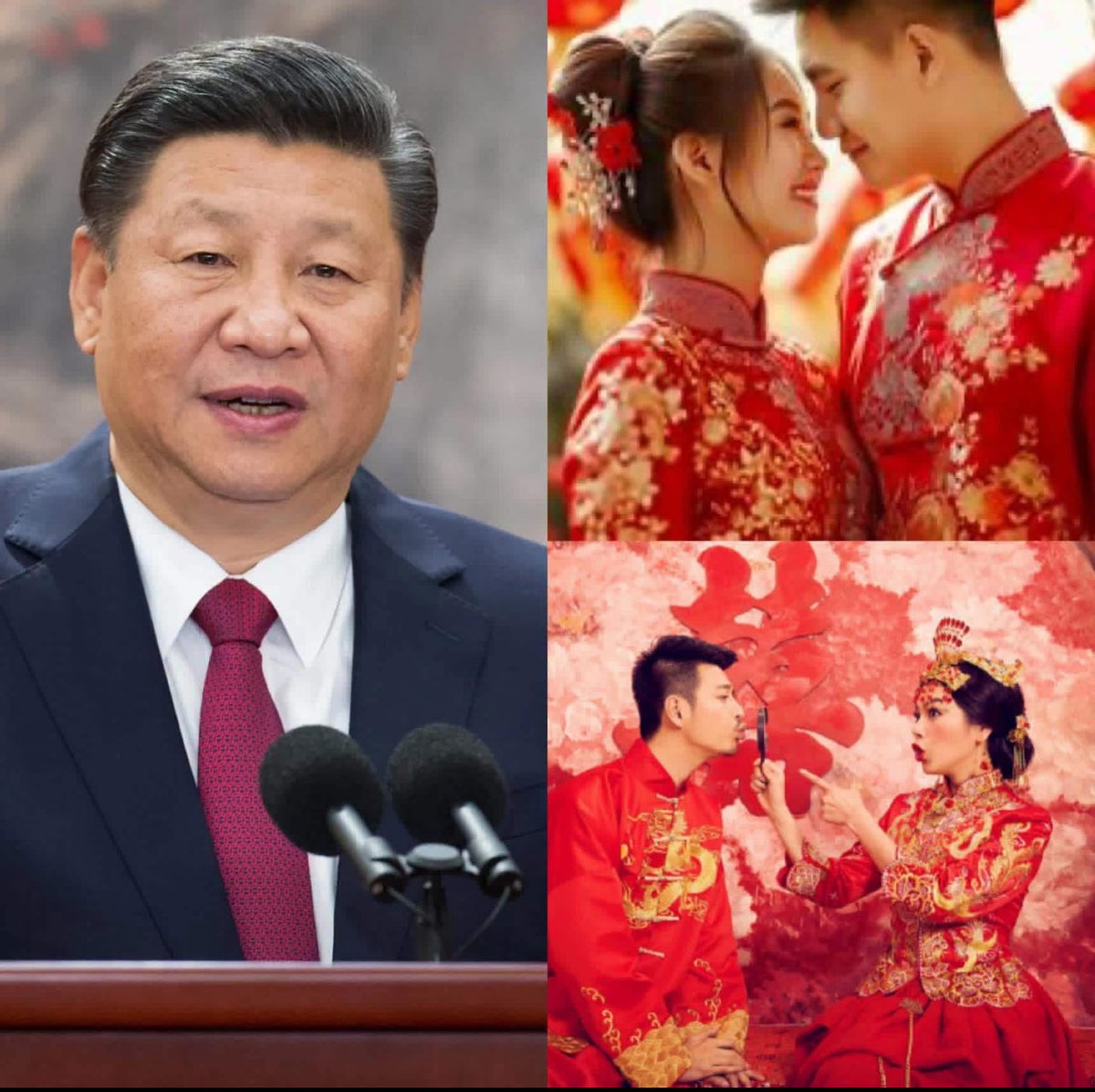
Breaking News 🚨🚨🚨
China has introduced a new divorce laws which says properties will no longer be shared 50/50 . You only take what you bought or what you contributed for .
If a man owned properties before marrying you , it remains his properties . A man is no longer going to lose millions to you just because you married him and want a divorce . You will take just what you brought or contributed in . . With this new law , some women have expressed disappointment and dissatisfaction in it .
Moral lesson : With this new law ? Divorce rate might decrease by the end of the year ❤️❤️❤️
Northern Governors Inaugurate Security Trust Fund Board, Pledge ₦1 Billion Monthly to Fight Insecurity
Board of Trustees Appointments:
Co-Chairs
a) Alhaji Mahmoud Yayale Ahmed, CFR
b) General Martin Luther Agwai, CFR
Nominated Members
1. Lt Gen. Umar Farouk Yahaya (rtd) – Sokoto | Former Chief of Army Staff
2. DIG Hafiz Mohd Inuwa (rtd) – Jigawa | Deputy Inspector General of Police i/c Research & Statistics Force HQs
3. AVM Kabiru Aliyu (rtd) – Taraba | Director of Sports, Defence HQs
4. Prof. Usman Tar – Borno | Commissioner for Security, Borno State
5. AVM Napoleon Bali (rtd) – Plateau | Senator of the Federal Republic of Nigeria
6. Maj. General A. M. Dikko (rtd) – Niger | National Coordinator, National Center for Control of Small Arms & Light Weapons
7. AIG Sunday Babaji (rtd) – Gombe | AIG FCID Annex Kaduna
8. AVM Farouk Omeiza Umar (rtd) – Kogi | Chief of Policy and Plans, Defence HQs
9. Maj. Gen. Muhammad Sani (rtd) – Kano | Chief of Army Standards & Evaluation
10. Muhammad Mujtaba Isa – Zamfara | former Head of Service
11. Alh. Adamu Tanko Umar – Nasarawa | Chief Superintendent of Customs (rtd)
12. Malam Abubakar Mustafa – Kaduna | former Head of Service
13. DIG Sani Usman Mohammed (rtd) – Bauchi | Chief Security Officer, Bauchi State
14. Maj-Gen. Bello Sarkin Yaki (rtd) – Kebbi | Coordinator, Counter Terrorism Center, Office of the National Security Adviser
15. Barr. Boss Mustafa, CFR – Adamawa | Former Secretary to the Government of the Federation
16. Alhaji Falalu Bawale – Katsina | Head of the Civil Service, Katsina
17. Brig. Gen. Ibrahim Bolakala Agbab (rtd) – Kwara | Chief of Staff, 82 Division, NA
18. Maj. Gen John Seyina Malu (rtd) – Benue | Chief of Defence Standards and Evaluation
19. IGP Usman Alkali Baba (rtd) – Yobe | Former Inspector General of Police
NELFUND: Everything You Need to Know About Nigeria's Student Loan Scheme
The Nigerian Education Loan Fund (NELFUND) is a Federal Government initiative established to remove financial barriers preventing many Nigerians from accessing higher education. It was created under the Student Loans (Access to Higher Education) (Repeal and Re-enactment) Act, 2024, signed into law by President Bola Ahmed Tinubu on 3 April 2024. The Fund officially commenced operations later in 2024.
Why Was NELFUND Created?
For decades, thousands of Nigerian students abandoned their education due to rising tuition fees, accommodation costs, and other academic expenses. The previous student loan law faced implementation challenges, prompting the Federal Government to repeal and replace it with a more practical framework.
NELFUND was therefore established to:
Improve access to tertiary education.
Ensure no qualified Nigerian is denied education because of financial hardship.
Support vocational and skills acquisition programmes.
Promote equal educational opportunities across the country.
What Does NELFUND Cover?
NELFUND provides two major forms of financial support:
1. Institutional Fees
Tuition (where applicable)
Registration fees
Other approved institutional charges
Importantly, these funds are paid directly to the student's institution, not to the student.
2. Upkeep Allowance Eligible students also receive monthly upkeep support to assist with living expenses such as transportation, feeding, study materials, and other essential costs.
Who Can Apply?
To qualify, applicants generally must:
Be Nigerian citizens.
Have secured admission into an approved public tertiary institution or approved vocational institution.
Meet NELFUND's verification requirements through the application portal.
Unlike the earlier version of the law, the current Act significantly broadened eligibility and removed many restrictive conditions.
How Does Repayment Work?
NELFUND is interest-free. Beneficiaries are expected to begin repayment after completing school and becoming employed, according to the repayment provisions contained in the law. The repayment system is designed to reduce financial pressure on graduates while ensuring the sustainability of the scheme.
Impact So Far
Since its launch, NELFUND has become one of Nigeria's largest education financing programmes.
According to official reports released in 2025:
More than 600,000 students had registered.
Over 550,000 loan applications had been successfully processed.
More than ₦56 billion had been disbursed for tuition payments and student upkeep.
These figures demonstrate the increasing acceptance of the programme among Nigerian students.
Challenges Facing NELFUND
Despite its achievements, the scheme has faced several challenges, including:
Delays in processing some applications.
Verification issues involving institutional data.
Allegations that some institutions made unauthorized deductions from students' loan disbursements, leading the Federal Ministry of Education to launch investigations and strengthen transparency measures.
Why NELFUND Matters
Education remains one of the strongest tools for national development. By easing the financial burden on students and their families, NELFUND has the potential to reduce school dropouts, increase university enrolment, improve workforce development, and contribute to Nigeria's long-term economic growth.
While the programme is still evolving, its long-term success will depend on transparent administration, timely disbursement of funds, accountability by participating institutions, and responsible repayment by beneficiaries after graduation.
NELFUND represents a significant shift in Nigeria's approach to funding higher education. If effectively managed, it could become one of the country's most impactful education policies, ensuring that financial hardship is no longer a barrier to academic achievement.