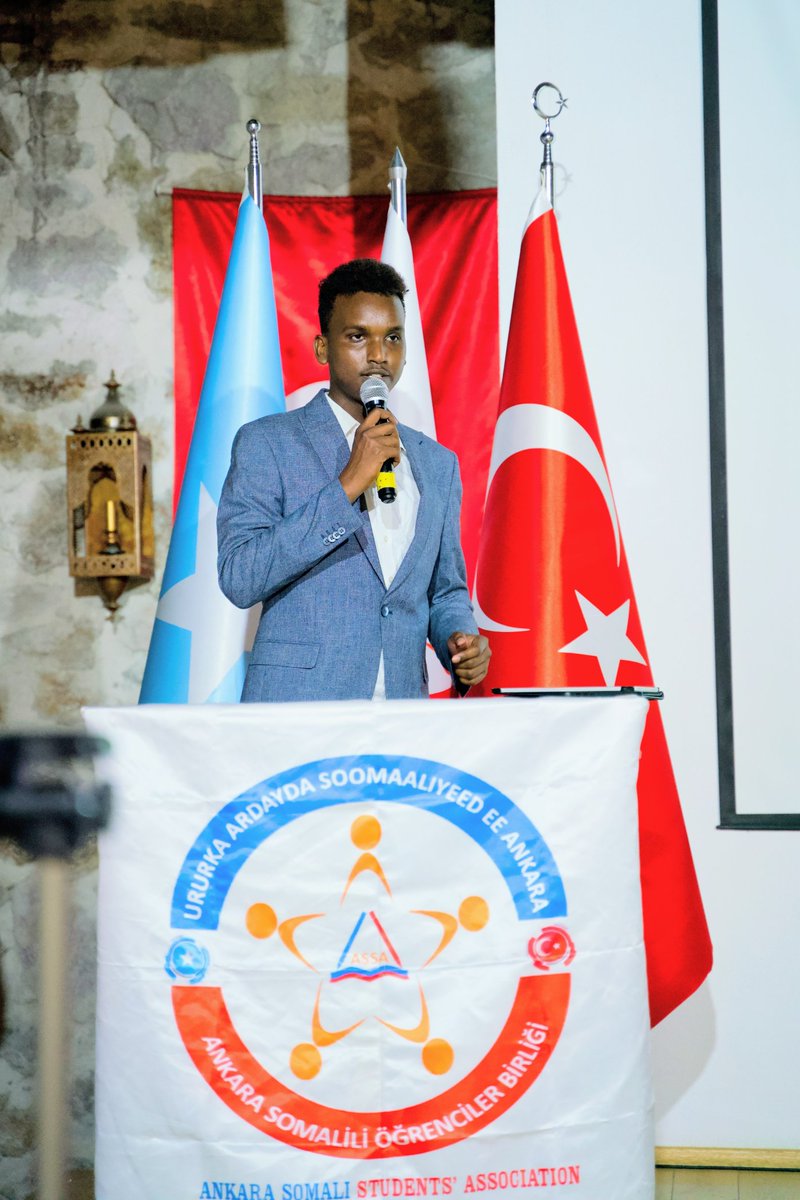
Last night, I presented the preliminary findings of my upcoming research on Somalia–Türkiye relations, focusing on education diplomacy at a graduation event organized by the Somali Students’ Union in Ankara with nearly 100 students graduating from different universities in Ankara
Years of hardwork and we are almost there🎉
Happy to share that our handbook on Asia-Africa engagement will soon be out.
Throughout 31 chapters,
distinguished experts elaborate different aspects of this relationship, placing African agency and the theoretical debates at the heart of the discussion👇
@ASBU_BCE
https://t.co/xAbx8cmfqg
Prof. Dr. @ElemEyrice ve Prof. Dr. @MurselBayram'dan ders almış, ayrıca @ElemEyrice ile yakından çalışma ayrıcalığını yaşamış biri olarak söyleyebilirim ki; @ASBU_BCE, yalnızca ders anlatan değil,alanlarına yön veren akademisyenlerin bulunduğu bir kurum. Kesinlikle tavsiye ederim
Continuing our introduction to the distinguished faculty of @ASBU_BCE, here are more scholars whose research and teaching contribute to the Institute's diverse expertise in Area Studies.
Prof. Dr. Elem Eyrice-Tepeciklioğlu
Elem Eyrice-Tepeciklioğlu is a full professor in the Department of African Studies at the Social Sciences University of Ankara, Türkiye. She also serves as the Head of the Department of Area Studies and is a non-resident research fellow in the Security Institute for Governance and Leadership in Africa (SIGLA) at Stellenbosch University, South Africa. She received her PhD in International Relations in 2013 and conducted her post-doctoral research at the Centre for African Studies, University of Cape Town, South Africa between 2014-2015. Her research focuses on African affairs, migration dynamics in Africa, Türkiye-Africa relations and Africa’s external relations. She has authored and edited books and other works including Turkey in Africa: A New Emerging Power? (Routledge, 2021); Turkey’s Pivot to the African Continent: Strategic Crossroads (Routledge, 2024) and The Routledge Handbook on Asia-Africa Engagement (forthcoming, 2026). She teaches Political Economy of Africa and Comparative Politics of Sub-Saharan Africa courses.
Prof. Dr. Mürsel Bayram
Prof. Dr. Mürsel Bayram is a Turkish academic specializing in international relations, with an expertise in African political history and foreign policy. He currently serves as the Head of the Department of African Studies and Vice Director at the Institute for Area Studies at ASBÜ. He is also the Editor of Bölge Çalışmaları Dergisi (Journal of Area Studies). His primary research revolves around the political histories of individual African states, and the geopolitical strategies of global actors on the continent. He is well-known for his comprehensive book series detailing the political and diplomatic landscapes of various African regions. Some of his notable published books include Mağrib Diplomasisi (Maghreb Diplomacy), Orta Afrika’da Siyaset ve Diplomasi (Politics and Diplomacy in Central Africa), Batı Afrika’da Siyaset ve Diplomasi (Politics and Diplomacy in West Africa), Doğu Afrika’da Siyaset ve Diplomasi (Politics and Diplomacy in East Africa), and Güney Afrika’da Siyaset ve Diplomasi (Politics and Diplomacy in South Africa). In addition to his books, he contributes academic articles, book chapters, and strategic analyses regarding Türkiye-Africa relations and global South-South cooperation.
Assoc. Prof. Muhammet Koçak
Muhammet Koçak is Associate Professor at the Institute for Area Studies, Social Sciences University of Ankara (SSUA). His research focuses on Russian foreign policy, Russia–Türkiye relations, Eurasian geopolitics, the Organization of Turkic States, and security dynamics in the post-Soviet space. His broader research interests include great power competition, regional security, and foreign policy analysis.
He has published extensively on Russian foreign policy, Türkiye’s regional strategy, the Turkic World, and Eurasian security in leading international journals and edited volumes. At our institute he teaches graduate courses on Russian Foreign Policy, Eurasian Politics, and Regionalization.
Asst. Prof. Barın Kayaoğlu
Dr. Barın Kayaoğlu is Assistant Professor and Chair of American Studies at the Institute for Area Studies, Social Sciences University of Ankara (SSUA / ASBÜ). Kayaoğlu's research covers the history of U.S. foreign relations, Türkiye-U.S. and Iran-U.S. ties, U.S. policy in the Middle East, and the broader Global Cold War.
His academic work has appeared on such journals as Insight Turkey, Cold War History, Iranian Studies, and the Oxford Research Encyclopedia of American History, and he has several research projects in progress.
In addition to producing content for his own YouTube channels, Kayaoğlu also comments on current affairs for the news outlets AL-MONITOR, Al Jazeera, Anadolu Agency, TRT World, and Türkiye Today, among others.
Had an interesting discussion on “Navigating Somalia’s Political Stalemate” with
@LisaMusumbu and @Aweis_ahmedsom of the @ChatheHouse’s @AfricaProg Podcast. You can listen the discussion at https://t.co/wWz6iCotbb
Cumar Artan ma gaarin #FIFAWorldCup oo keliya. Wuxuu taariikh dhigay isagoo noqday garsoorihii kubadda cagta ugu horreeyay ee Soomaaliyeed ee halkaas gaara, isla markaana ka mid ah garsoorayaasha ugu wanaagsan #Afrika. Guushaas cidina kama qaadi karto, wax kasta ha dhacaane.
Cumar, aad baan uga xumahay waxa dhacay. Waxaad gaartay heerka ugu sarreeya ee xirfaddaada, waxaadna dhiirrigelisay jiil dalka jooga adigoo halkaas gaaray. In lagaa hor istaagay fursaddii aad u qalantay ma beddelayso taas.
Tani ma noqon doonto halka ay ku dhammaato sheekadaadu. Dunidu way ku garab taagan tahay, waxayna kuu rajaynaysaa samir, adkaysi, iyo in aad mar kale garsoorto kulamo waaweyn oo caalami ah.
Waan ku garab taaganahay, Cumar.
#Somalia
As a World Cup host, the U.S. shouldn't be flippantly barring officials from entering the country to do their jobs.
It's terribly backward.
It's also counterproductive.
Global sports competitions should improve international exchange and relations, not the reverse.
Omar Artan didn’t just make the #FIFAWorldCup, he made history as the first Somali referee to get there, and as #Africa’s best. That milestone stands no matter what. So sorry to see this, Omar. You reached the summit of your profession and inspired a generation back home just by getting there, and being kept off the pitch you earned doesn’t change that. This won’t be the end of your story on the world stage. The world stands with you as one family, wishing you resilience now and many more major finals to come. Solidarity. #Somalia
History in the making! 🇸🇴🇸🇪 Taha Ali has been called up by Sweden and could become the first person of Somali heritage to play at a FIFA World Cup. A proud moment for Somalis everywhere and an inspiration for the next generation. ⚽🌍 #TahaAli#SomaliPride#WorldCup.
My two cents:
I have been covering Somali politics and security for 35 years now. Whenever Somalia has political crises and difficulties, most of its elites tend to blame foreigners for the majority of the shortcomings - from Boutros Boutros-Ghali and Egypt, to Ethiopia and Meles Zenawi, Italy and Bettino Craxi, Mohamed Sahnoun, Mahiga, Turkey, and the UAE.
I’m not saying all foreigners are blameless, but Somalis should also look at themselves in the mirror. Somalis are front and center in their own challenges, and only they can overcome them.
Some helpful actors were maligned and eventually forced to completely abandon Somalia. We are seeing it happen all over again, time and again, over the years. We know who they are. If you don’t know, read the history.
You can’t stop foreigners from pursuing their own national interests - that is not in your hands. But you can solve your own problems, because that is in your hands!
Dr. Maryam Du'ale, earning your PhD is a remarkable achievement that reflects years of dedication, sacrifice, and hard work. Your commitment & perseverance are truly inspiring to many Somali women, including myself. Congratulations on this milestone, & may Allah continue to bless you with greater achievements ahead.
Çok teşekkür ederiz sayın Büyükelçim @torunkani. Değerli tavsiyelerinizin her iki tarafça da dikkate alınacağını ve hayata geçirileceğini ümit ediyorum. TR-SOM arasındaki dostluğu daha sistematik bir şekilde güçlendirmek, ikili ilişkilerimizin daha gelişmesine katkı sağlayacaktır
After a 20-year period of civil war, Somalia gained a permanent government in 2012 with the support of Turkiye.
People of Somalia have respect and sympathy for Turkiye and President Erdogan, regardless of any political and clan affiliation.
In the coming days, Somalia will face a test of democracy, and as Turkiye, we must, as we have in the past, stand with the Somali people, not any particular political group.
@HassanSMohamud@M_Farmaajo@HESharifShAhmed@HESaidADeni
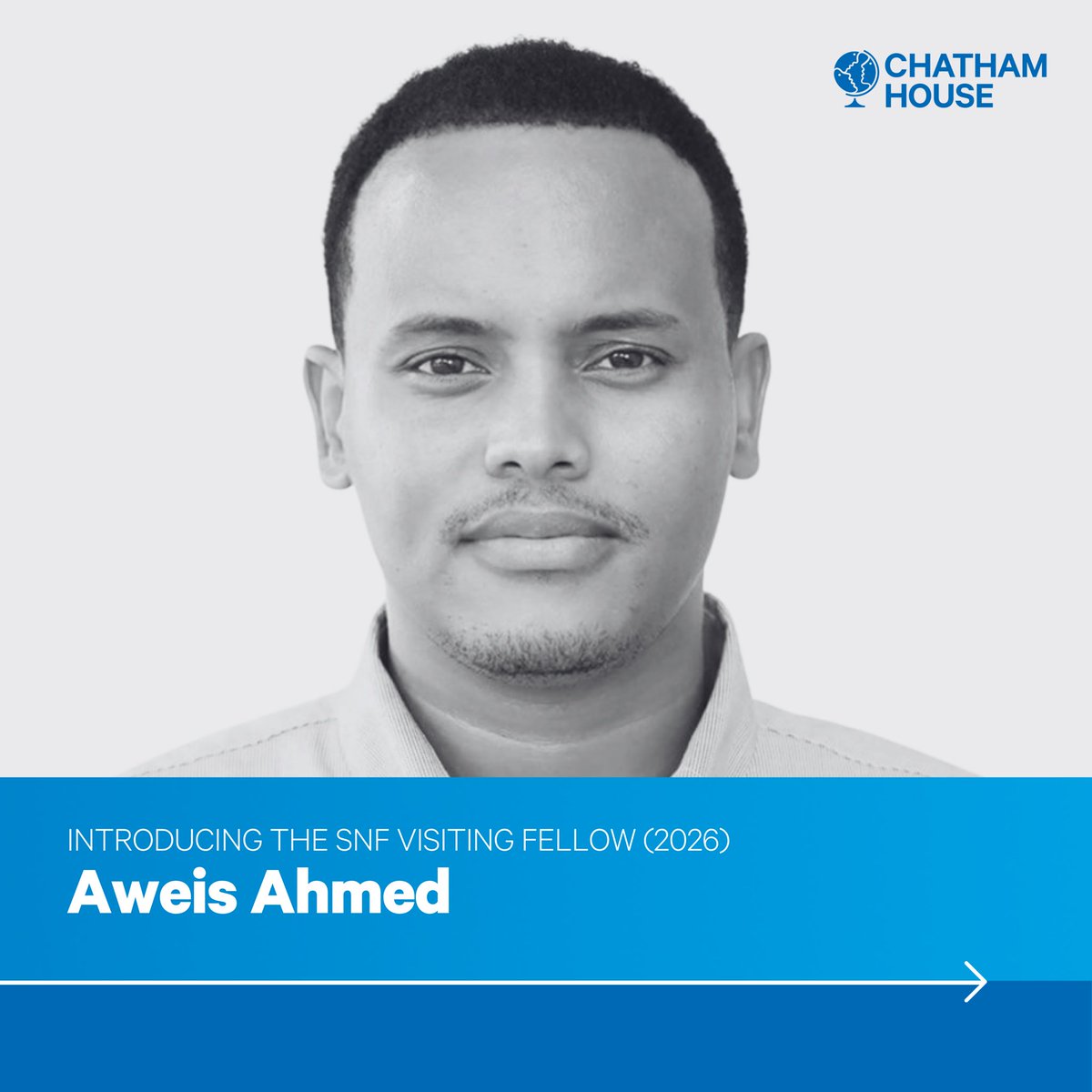
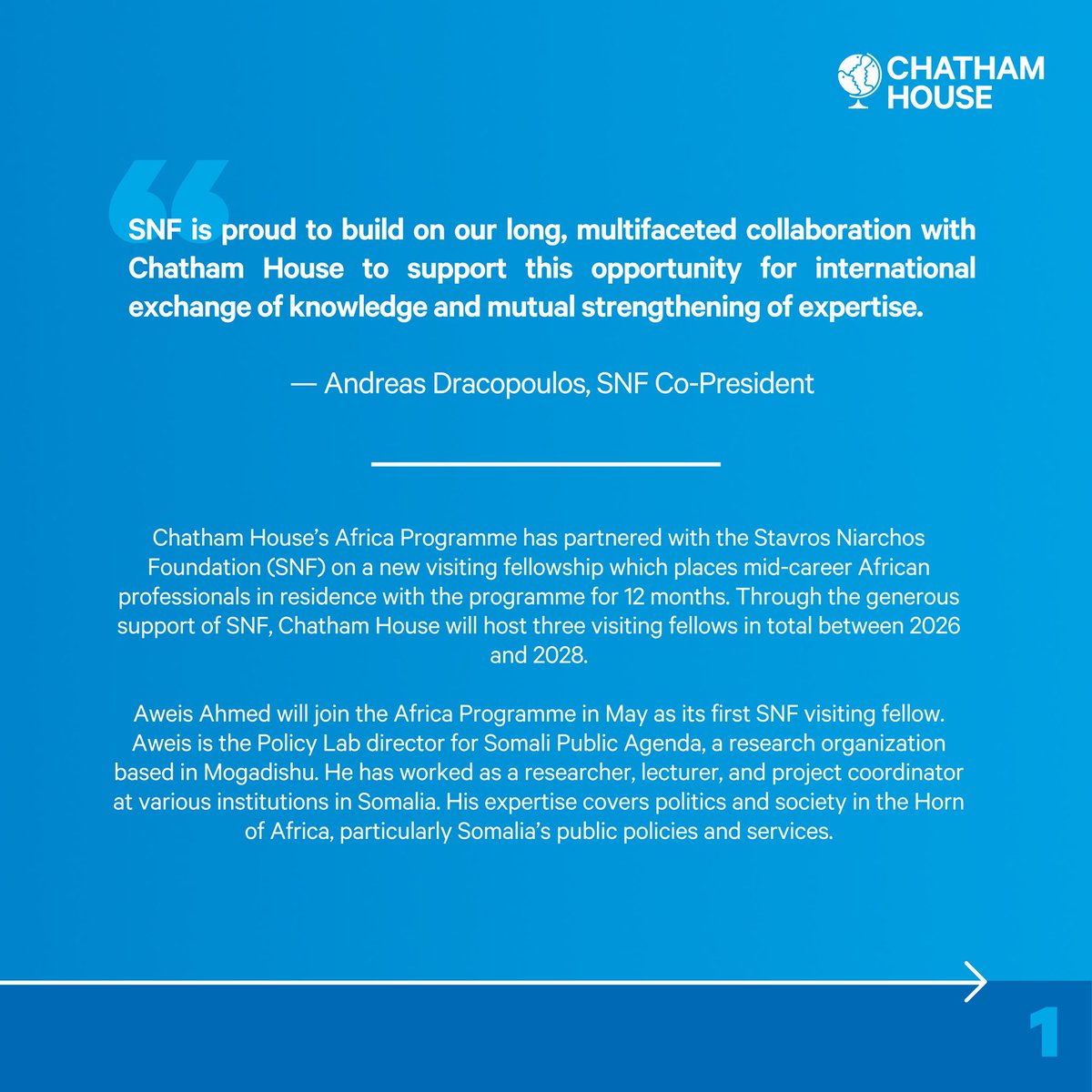
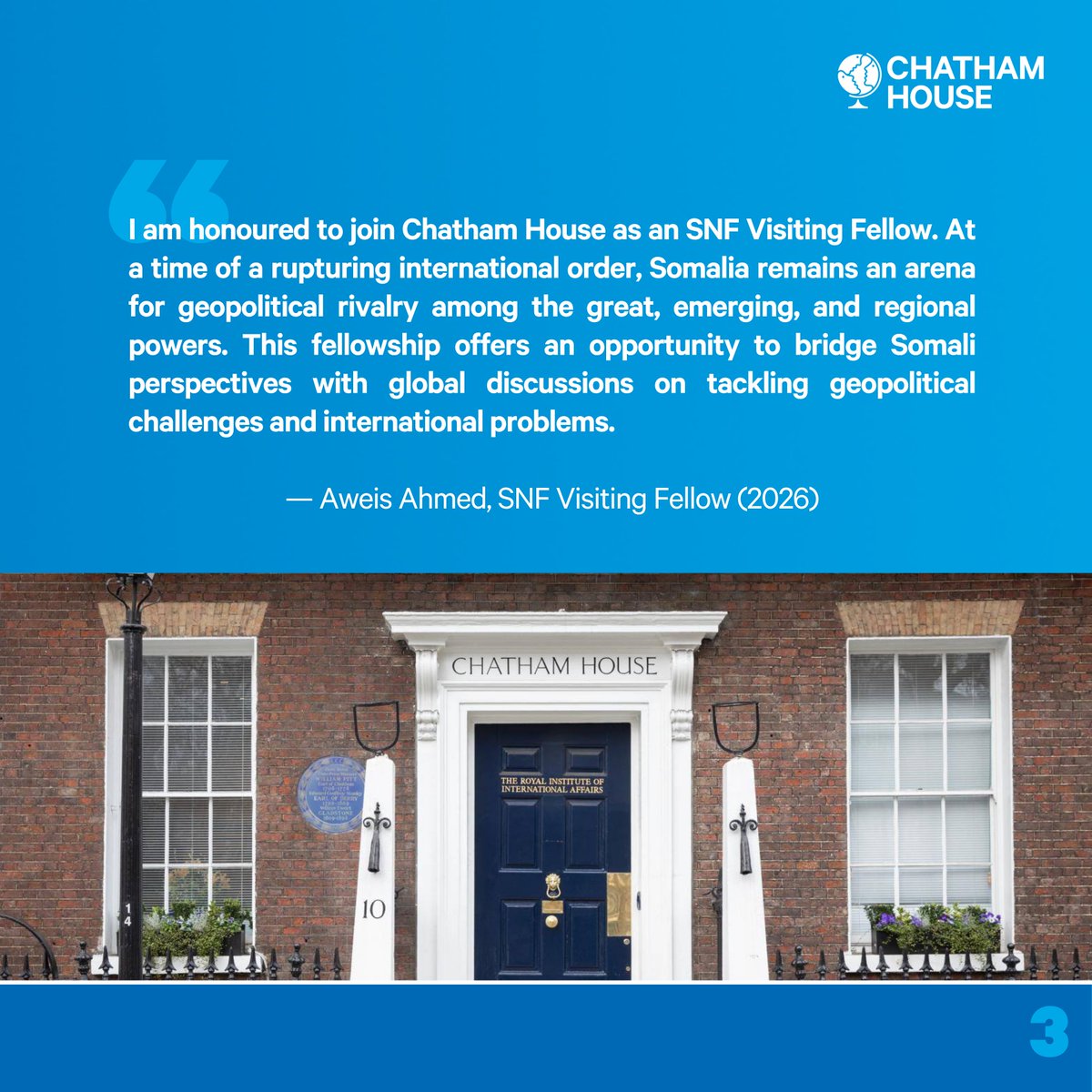
Pleased to share that our @SPAPolicyLab Director @aweis_ahmedsom joins @ChathamHouse’s Africa Programme (@AfricaProg) as an @SNForg Visiting Fellow and will be based in London for one year.
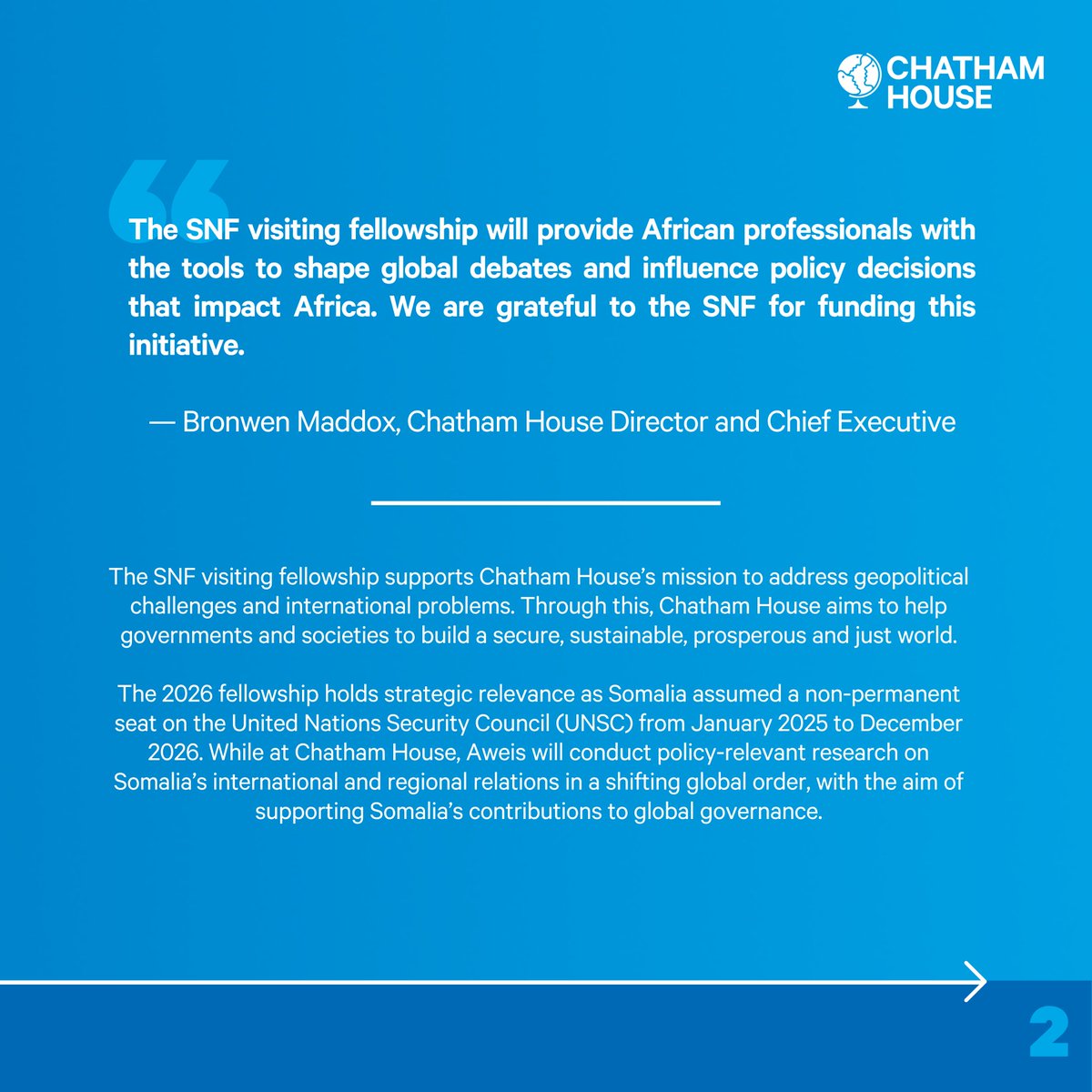
While at Chatham House, Aweis will conduct policy-relevant research on Somalia’s international and regional relations in a shifting global order, with the aim of supporting Somalia’s contributions to global governance. The research outputs will be jointly published by Chatham House and Somali Public Agenda.
The fellowship builds on the Chatham House Africa Programme’s success in hosting visiting fellows from Mozambique and Sierra Leone between 2023 and 2025, whose work focused on supporting their countries as non-permanent members of the UN Security Council.
Enstitümüz öğretim üyesi Prof. Dr. Elem Eyrice Tepeciklioğlu (@ElemEyrice), Tripoli Üniversitesi'nde düzenlenen Türkiye-Libya ilişkileri çalıştayına, Libya'nın uluslararası medyada çerçevelenmesi ile ilgili sunumuyla katkı sunmuştur. @ASBUedu
We have concluded yet another edition of the Antalya Diplomacy Forum.
As a scholar of African politics, I can say that all the panels on Africa have been well-thought, very timely and highly relevant.
I had the privilege to be the responder from the floor of the panel, Security-Development Nexus: Priorities for West Africa where the panelists discussed how security and development are deeply intertwined concepts and therefore cannot be treated as separate domains.
Overall, what stood out this year in the Africa-focused panels was the stronger emphasis on local ownership and regional priorities, as well as the need to address the root causes of conflicts rather than privileging short-term security responses over longer-term developmental solutions.
Participation from African countries, was, as always, remarkably strong and highly visible across the discussions.
@AntalyaDF
Thanks to the Somali Institute of Peace (SIP) for promoting my book, Somalia: A State in Search of Exceptional Leadership. We must recognize that leaders can either build or break nations; they are at the center of resolving a country’s political, social, economic, and security challenges. Great leaders safeguard nations and transform their people. Somalia once had such exemplary leaders, President Adan Abdulle, Prime Minister Abdullahi Issa, and Abdirizak Haji Hussein, and this history can be repeated. I also extend my appreciation to Dr. Hussein, Director of SIP.